 Blaine Siding
 Dakota Creek's Siding Environment Is Harder on a House Than It Looks
Homes in the Dakota Creek area sit close to the water and creek corridor that runs through Blaine, and that proximity shapes everything about how siding ages here. Salt-laden air off the nearby bay works its way into fasteners, trim joints, and any exposed wood over time. Add Whatcom County's long, wet winters and the driving rain that comes with Pacific storm systems, and you have a climate that never really lets siding fully dry out for months at a stretch. Shaded, tree-lined lots near the creek make it worse — north-facing walls and anything tucked under fir or cedar cover stay damp longer, which is exactly the recipe for the moss and algae growth that shows up on so many Whatcom County homes.
None of this is unique to any one house in Dakota Creek — it's the baseline condition for siding anywhere in this part of Blaine. The difference between a wall that holds up for decades and one that needs attention in five or six years usually comes down to two things: the material itself, and whether it was installed correctly for these specific conditions.
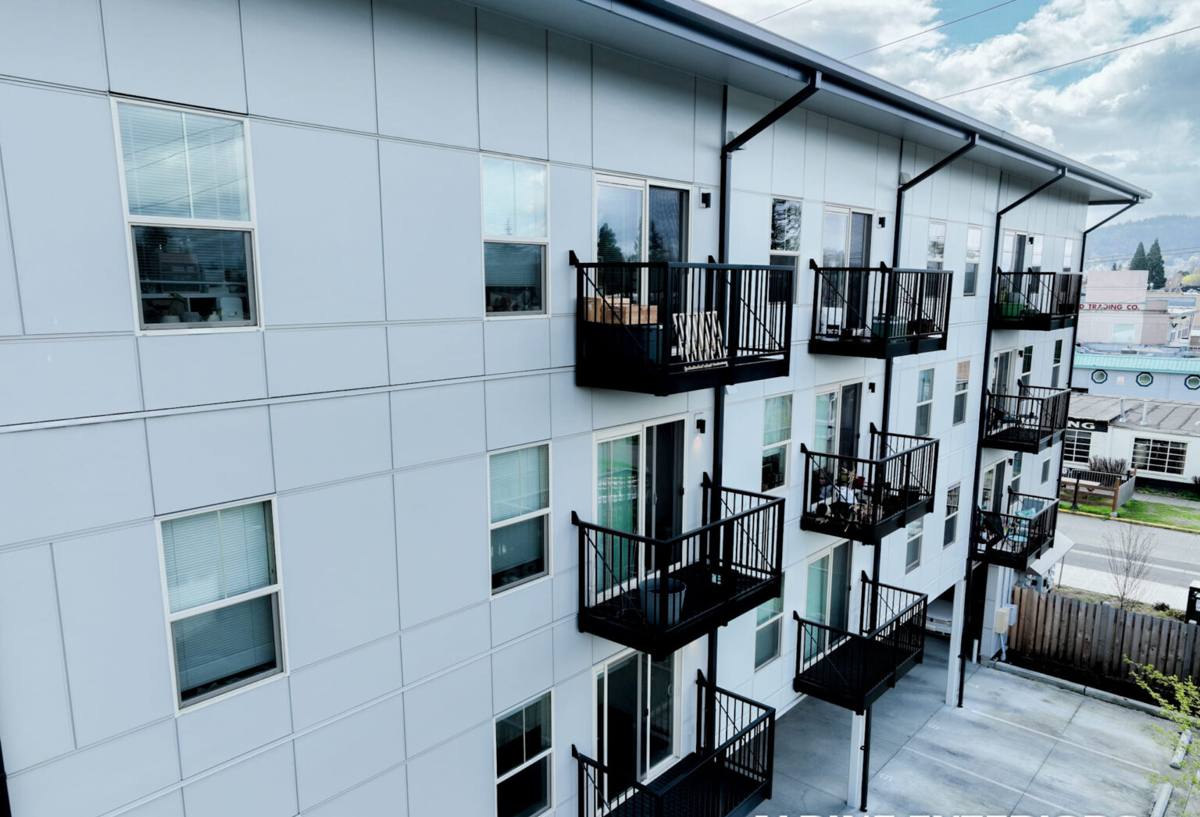
Why We Only Install James Hardie Fiber Cement
We made a decision years ago to install one siding system and stand behind it, rather than offer a menu of products with different trade-offs baked in. James Hardie fiber cement is manufactured from cement, sand, and cellulose fiber — it does not rot, it is not a food source for moss or algae the way wood-based products can be, and it will not ignite the way vinyl or engineered wood panels can under direct flame exposure. For a property near Dakota Creek's tree cover and damp ground conditions, that combination matters more than it does in a drier climate.
We're upfront that this isn't the only siding product on the market, and other materials have real strengths. Vinyl is inexpensive and low-maintenance in mild climates. LP SmartSide and similar engineered wood products are lighter and easier to handle. Cedar has a look some homeowners genuinely prefer. But in a marine, high-moisture climate like Blaine's, each of those comes with a maintenance burden or a failure mode we're not willing to install and then have to explain later. That's a professional standard we hold, not a claim that those products are worthless everywhere.
What James Hardie Gets Right for This Climate
- Non-combustible core — meaningful given how dry summers have become even in western Washington
- Engineered moisture resistance that doesn't rely on a surface paint film to keep water out
- Factory-applied ColorPlus finish, baked on and warranted separately from the substrate, instead of field-painted
- HZ5 product formulation, engineered specifically for the Pacific Northwest's freeze-thaw and moisture cycle
- A transferable warranty structure that holds up if the home changes hands
HZ5 and Why the "HZ" Designation Isn't Just Marketing
James Hardie makes climate-specific formulations, not one universal product. The HZ5 line is engineered for regions like ours — areas that see sustained moisture, moderate freeze-thaw cycling, and higher humidity than the sunbelt products are designed around. It's a different composition than what gets shipped to hot, dry climates, and it's the correct choice for Whatcom County, including Dakota Creek's damper, shadier lots. Installing the wrong regional formulation, or installing the right one incorrectly, is one of the more common ways fiber cement siding underperforms — the material gets blamed for what was actually a specification or installation error.
What a Correct Installation Actually Involves
Fiber cement siding is only as good as the details behind it. This is where most of the long-term performance difference between a good job and a mediocre one gets decided — not in the product itself.
The Details That Matter Most
- Proper starter strip and clearance at the foundation line so water sheds away from the sill
- Correct fastener type, spacing, and depth — over-driven or under-driven nails are a leading cause of premature failure
- Rain screen or drainage plane behind the siding so incidental moisture has somewhere to go
- Flashing integrated at windows, doors, and every horizontal trim transition, not just caulk alone
- Correct field-cut sealing on factory-finished panels, since a raw cut edge left unsealed is a moisture entry point
- Manufacturer-specified gaps at butt joints and corners to allow for expansion without cracking the finish
Every one of these is a place where a rushed or unfamiliar crew can quietly set a home up for problems that don't show up for a few years — long after the invoice is paid and the job is forgotten. It's also why a manufacturer's product warranty typically only holds if the installation follows their published specifications.
Our Process for Dakota Creek Projects
A siding project near the creek corridor gets treated a little differently than one on a dry, open lot elsewhere in Blaine, mainly because of moisture management and access around mature landscaping.
| Stage | What Happens | Why It Matters Here |
|---|---|---|
| Site assessment | Inspect existing wall assembly, moisture readings where accessible, drainage grading around the foundation | Identifies hidden moisture issues before they're sealed behind new siding |
| Tear-off and sheathing check | Remove old siding, inspect sheathing for rot or soft spots, especially on shaded or north-facing walls | Shaded walls near tree cover are where hidden moisture damage most often turns up |
| Weather barrier and drainage plane | Install or verify housewrap and rain screen furring per Hardie's specification | Gives the wall a way to dry out between storms instead of trapping moisture |
| Hardie panel installation | Install HZ5 boards or panels with correct fasteners, clearances, and flashing details | This is where warranty compliance and long-term performance are actually determined |
| Trim, caulk, and touch-up | Seal cut edges, finish trim work, address any field-cut color matching | Prevents water intrusion at the small joints that get overlooked |
| Final walkthrough | Review the completed job with the homeowner | Confirms drainage paths, gutters, and grading all work together with the new siding |
How the Options Actually Compare
Homeowners near Dakota Creek often ask us to compare James Hardie against the alternatives directly, so here's an honest breakdown of the trade-offs as we see them in this climate.
| Factor | James Hardie Fiber Cement | Vinyl | LP SmartSide / Engineered Wood | Cedar |
|---|---|---|---|---|
| Moisture behavior in marine climate | Engineered for it (HZ5) | Doesn't rot but traps moisture behind it if not vented properly | Wood-based core, vulnerable if edges aren't sealed | Absorbs moisture; needs regular sealing/staining |
| Fire performance | Non-combustible | Can soften/melt under heat | Combustible wood-based product | Combustible |
| Moss/algae resistance | Cement-based, not an organic food source | Resistant but can trap moisture behind panels | Susceptible if finish is compromised | Susceptible, especially in shaded areas |
| Finish durability | Factory ColorPlus, separately warranted | Color molded through but can fade/chalk | Field or factory finish, repaint cycle needed | Repaint or restain every few years |
| Typical lifespan when correctly installed | Multiple decades | 15-25 years | Variable, installation-sensitive | Shorter without diligent upkeep |
Living With Salt Air and Moss Season After Installation
Correctly installed Hardie siding is low-maintenance, not zero-maintenance. Homes near Dakota Creek's water and tree cover still benefit from some basic seasonal attention, especially given how long moss season runs in this part of Whatcom County.
What We Recommend Homeowners Check
- Rinse siding gently once or twice a year to clear salt residue and organic buildup, especially on shaded walls
- Keep gutters clear so overflow doesn't run down the face of the siding
- Trim back vegetation and tree limbs that keep a wall shaded and damp longer than necessary
- Watch caulk lines at trim and window flashing for cracking or separation over time
- Have any visible moss patches addressed early rather than left to spread across a wall
None of this is heavy maintenance — it's the kind of upkeep that takes an afternoon a couple of times a year and prevents the small issues that turn into bigger ones in a climate this wet.
Why Local Experience in This Specific Area Matters
A crew that has worked houses along the Dakota Creek corridor already knows what tends to go wrong here before it happens: which wall orientations hold moisture longest, how much drainage a lot with mature tree cover actually needs behind the siding, and how the salt air off nearby water accelerates wear on fasteners and trim compared to a lot a few miles inland. That's not something you get from a general contractor bio — it comes from having done the work in this exact area, in this exact climate, more than once.
Hiring locally also means a crew that's easy to reach if a question comes up two or three years after the job — not a company that was in Blaine for one project and moved on. For a material like James Hardie, where correct installation is what actually delivers the multi-decade performance the product is capable of, that continuity is part of what you're paying for.
Get a Straight Answer for Your Home
If you're weighing a siding replacement or repair on a Dakota Creek property, we're happy to take a look and give you an honest read on what your walls actually need — no pressure, no inflated scope. Fill out the form below for a free estimate.