 Blaine Siding
 Dakota Creek runs along the western edge of Blaine, and the homes set along its banks and the low-lying, tree-covered lots nearby live with a slightly different set of roofing conditions than a house on higher, more open ground a mile away. The creek corridor holds shade and moisture longer through the day, the same salt-tinged marine air that moves through the rest of Blaine reaches these properties too, and the combination shows up on a roof faster than most homeowners expect. Roof repair here isn't just patching whatever's leaking this week — done right, it accounts for why that particular spot failed on a roof that gets very little chance to fully dry out between storms. This page covers what roof repair for a Dakota Creek home actually involves, the problems we see most often in this pocket of Blaine, and how our process works from the first look to the final check.
What Makes Roof Repair Different Along Dakota Creek
Salt Air Off Semiahmoo Bay and Drayton Harbor
Blaine sits on the water, and Dakota Creek properties, even set back from the shoreline, still pick up a steady dose of the salt-laden air moving in off Semiahmoo Bay and Drayton Harbor. Salt accelerates corrosion on fasteners, flashing, and any exposed metal on a roof, which means hardware that holds up fine forty miles inland can start rusting within a handful of years out here. On a repair, that's one of the first things worth checking — a leak traced back to a corroded fastener or a flashing seam that's lost its coating needs different hardware the second time around, not just a fresh bead of sealant over the same failure point.
Driving Rain Off the Water
Storms coming off the water don't fall straight down. Wind pushes rain sideways into valleys, around chimneys and vent penetrations, and under flashing that would stay dry in a calmer weather pattern. That sideways load is exactly why the same fix — say, new shingles laid over the same old flashing — can fail again within a season if the flashing detail underneath isn't corrected at the same time.
Shade, Moisture, and a Long Moss Season by the Creek
The tree cover along Dakota Creek keeps a lot of roof surfaces shaded and slow to dry compared to more open lots elsewhere in town. Combined with Whatcom County's already-long wet season, that shade gives moss and algae more time to take hold and stay established. Moss does real damage over time — it holds water against the roofing material, works under shingle tabs, and can lift or loosen a section of roof that would otherwise still have years of life left in it.
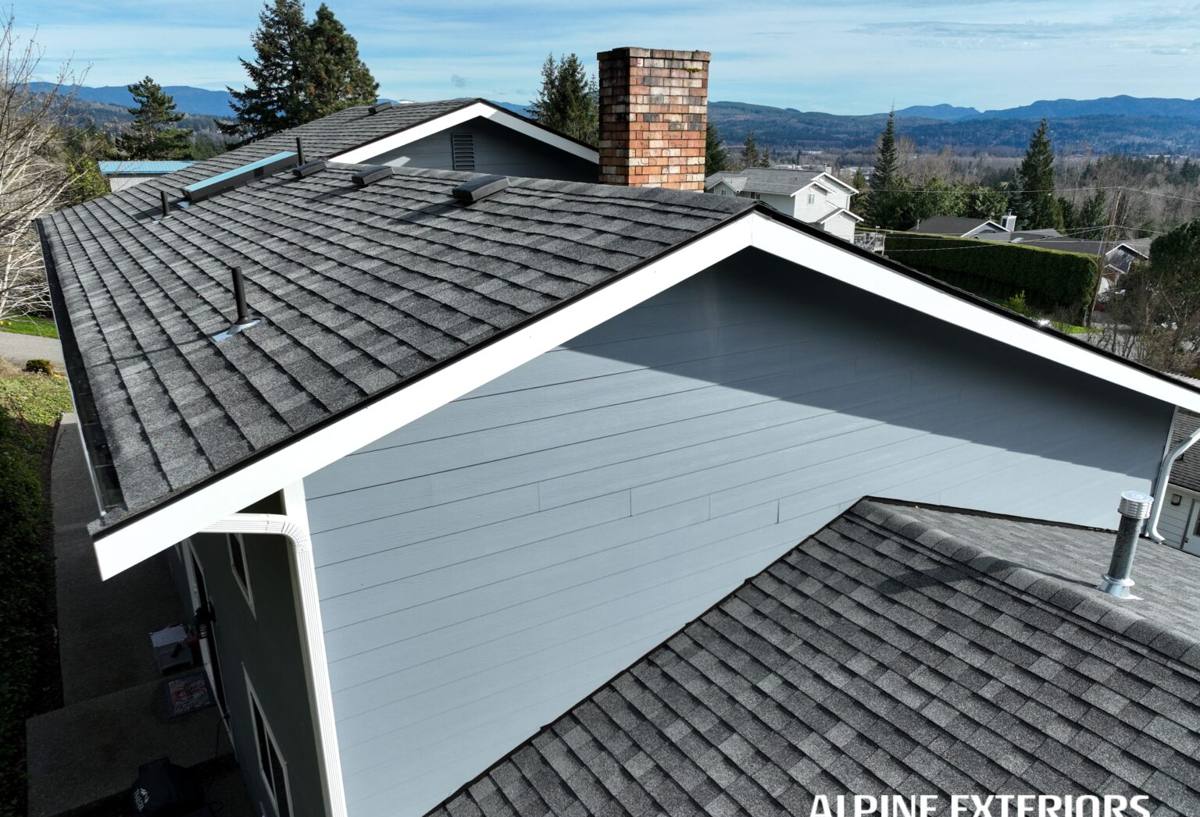
The Repairs We See Most Often on Dakota Creek Roofs
Every roof is different, but a handful of problems show up again and again on homes in this part of Blaine:
- Flashing failures at chimneys, skylights, and valleys, worsened by both salt-air corrosion and near-constant flashing rain exposure
- Moss-lifted shingles on shaded, creek-facing slopes where moss has been established for more than a season
- Clogged valleys and gutters from the leaf and needle debris that heavier tree cover near the creek sheds year-round
- Soft or spongy decking under a section of roof that's stayed wet longer than it should have, usually found once the roofing material is pulled back
- Corroded or failing fasteners on older roofs installed with standard rather than corrosion-resistant hardware
Signs a Dakota Creek Roof Needs Repair
- Moss that returns quickly after cleaning, especially on shaded or north-facing slopes
- Water staining on an interior ceiling near an exterior wall, chimney, or skylight
- Granules building up in gutters beyond normal light shedding
- A section of roof that looks darker or stays visibly wet longer than the rest after rain
- Rust staining at fasteners, flashing, or vent stacks
- Soft spots or a slight give underfoot when the roof is walked
- Debris that keeps collecting in the same valley without clearing between rains
What a Correct Roof Repair Actually Involves
Diagnosing the Actual Cause, Not Just the Symptom
A visible leak inside the house often shows up several feet from where water is actually getting in, especially on a roof with any real pitch or a finished attic space. Patching the ceiling stain's rough location without tracing the water's actual path is one of the more common ways a repair fails to hold. We trace the leak back to its real entry point — a flashing seam, a valley, a cracked or lifted shingle — before deciding what actually needs to be fixed.
Matching Materials and Integrating Flashing Correctly
A patch that doesn't match the surrounding roofing material's age, exposure, and profile can create its own weak point, either as a visible mismatch or a seam that doesn't shed water the way the rest of the roof does. Flashing repairs get integrated with the surrounding underlayment and roofing courses rather than caulked over the top, since sealant alone buys time — it doesn't fix the underlying problem.
Corrosion-Resistant Hardware
Given how much salt air reaches Dakota Creek properties, we don't replace failed fasteners or flashing with standard hardware. Corrosion-resistant materials cost a little more up front and hold up for years longer in this specific environment, which matters most on repairs meant to actually last rather than buy a season or two.
Addressing Moss, Not Just Removing It
Where moss contributed to a failure, we remove it as part of the repair, but we also look at why that section of roof stayed wet long enough for moss to take hold in the first place — shade, poor ventilation, or a low spot that drains slowly are the usual culprits. Removing moss without addressing the underlying moisture pattern usually means it's back within a year or two.
Repair or Replace? How We Help You Decide
Not every roof problem on a Dakota Creek home calls for full replacement, and we don't default to recommending one. The right call usually comes down to a few factors we can only really evaluate once we've opened up the affected area:
| Factor | Leans Toward Repair | Leans Toward Replacement |
|---|---|---|
| Roof age | Well within its rated service life | At or past the manufacturer's expected lifespan |
| Extent of damage | Isolated to one section or penetration | Moss, corrosion, or wear spread across multiple slopes |
| Deck condition | Decking underneath is solid once exposed | Soft or rotted sheathing found at the repair site |
| Repair history | First real repair the roof has needed | Third or fourth repair attempt in the same general area |
We'll explain what we find once the affected area is opened up, including any deck or structural issues that weren't visible beforehand, and give you a straightforward read on which option actually makes sense rather than steering you toward whichever is more profitable for us.
Our Roof Repair Process
- Inspection. We look at the affected area from outside and, when relevant, from inside the attic, and check nearby flashing points, valleys, and shaded sections that tend to be related problems on Dakota Creek homes.
- Diagnosis. We trace the actual water path and identify the root cause, not just the spot where it showed up inside.
- Written scope and options. You get a clear explanation of what we found, what the repair involves, and whether replacement makes more sense given the roof's age and condition.
- The repair. Affected roofing, flashing, or decking gets corrected using materials suited to this climate's salt air and moisture exposure.
- Moss and debris cleanup. Any contributing moss or debris buildup nearby is addressed as part of the same visit.
- Final check. We confirm the repair is sound and walk through what to watch for going forward.
Why a Crew That Already Works Dakota Creek Matters
A roofer who mostly works drier, more inland jobs isn't wrong about roofing in general — they're just working from a different set of defaults. Fastener specs, flashing choices, and moss expectations that are reasonable on a typical inland roof are often undersized for a shaded, salt-exposed, creekside property in Blaine. A crew that's already repaired roofs in this specific pocket of town has a working sense of which slopes hold moss longest, which flashing details tend to fail first in this air, and how a low-lying, tree-covered lot behaves differently than an open one a short drive away. That's the kind of thing a general roofing background doesn't automatically cover, and it's the difference between a repair that holds and one that's back on the schedule next wet season.
Get a Free, No-Pressure Estimate
If your Dakota Creek home has a leak, moss-damaged shingles, or a section of roof that just doesn't look right, we're glad to take a look and give you an honest read on what it actually needs. Reach out using the form below to schedule a free estimate — no pressure, no upsell script.