 Blaine Siding
 Building a Deck That Can Actually Handle Birch Bay
Birch Bay sits right on the water, and that changes what a deck has to survive. You're not just dealing with normal Pacific Northwest rain — you're dealing with salt-laden air blowing in off the bay, wind-driven rain that gets pushed sideways into ledger boards and railing posts, and a long, damp moss season that can run from fall through spring. A deck built to a generic spec sheet will show its age fast out here. A deck built for this specific stretch of Whatcom County coastline will still be solid a decade or two later.
We build and repair decks throughout Blaine and Birch Bay, and the difference between a deck that lasts and one that doesn't almost never comes down to the decking boards themselves. It comes down to what's underneath — the framing, the fasteners, the flashing, and the drainage details that nobody sees once the project is finished.
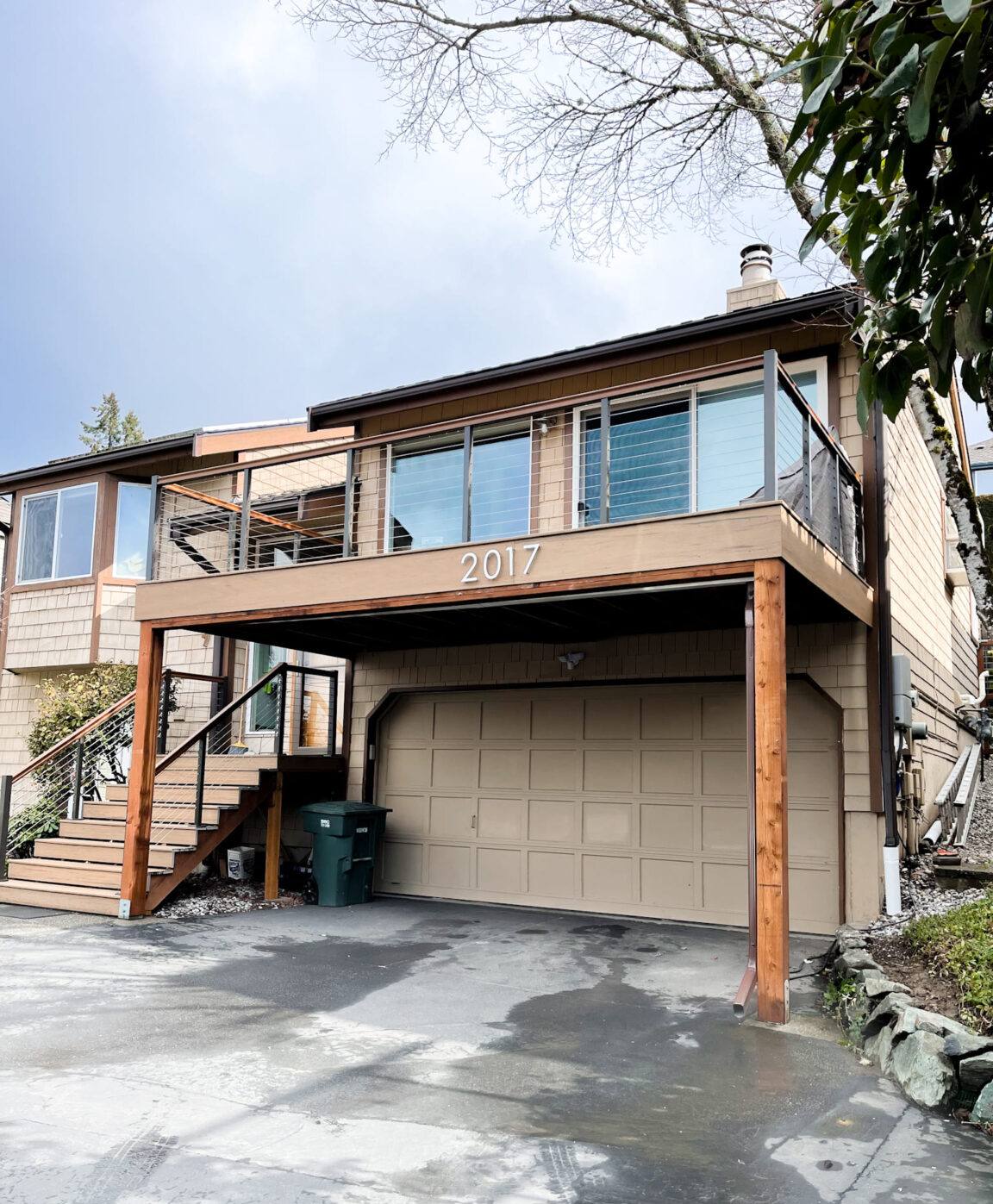
What Salt Air and Marine Exposure Actually Do to a Deck
Homes closer to the shoreline in Birch Bay take on airborne salt that inland Blaine properties simply don't deal with as much. Salt is corrosive, and it doesn't need direct ocean spray to do damage — a steady breeze off the water is enough over years of exposure. The parts of a deck most at risk are the ones you'd least expect to fail first:
- Fasteners. Standard coated screws and nails can corrode from the inside out, staining the wood and eventually losing their grip.
- Metal connectors and joist hangers. These are structural — if they corrode, the deck's framing strength is compromised, not just its looks.
- Railing hardware and post bases. Exposed metal at railing connections sees more direct weather than almost anything else on the structure.
- Fastener heads on the decking surface. Even a small amount of rust bleed around a screw head is a sign the wrong hardware was used.
None of this means a deck near the water is a bad idea — it just means the hardware and connector specification matters more here than it would for a deck built twenty miles inland.
Driving Rain and Where Decks Actually Rot
Most deck failures we find in this area aren't from rain hitting the top of the boards — decking is designed to get wet and dry out. The real damage happens where water gets trapped and can't escape:
The Ledger Board Connection
This is the board that attaches the deck to your house, and it's the single most common point of failure on decks throughout Whatcom County, not just Birch Bay. If it isn't flashed correctly, wind-driven rain works its way behind the ledger and into the house rim joist. That's not just a deck problem at that point — it's a structural and moisture problem for the home itself.
Post Bases and Footings
Posts that sit directly on concrete, or footings that don't shed water away from the base, stay damp far longer than they should during our wet months. That constant dampness is exactly what wood rot and fungal decay need to take hold.
Board-to-Board Gaps
Decking installed too tight, or without attention to spacing for wood movement, traps water and debris between boards. That trapped moisture is also where moss gets its start.
Moss Season and Long-Term Deck Maintenance
Anyone who has owned a home in Birch Bay for more than one winter knows moss doesn't wait for an invitation. On a deck, moss isn't just cosmetic — it holds moisture against the wood surface, keeps that surface from drying between rain events, and can make boards slippery and unsafe underfoot. A well-built deck fights moss with design, not just cleaning:
- Correct board spacing so water and debris fall through rather than collecting on top
- A slight slope built into the frame so water sheds away from the house instead of pooling
- Open space or proper ventilation underneath the deck so air can circulate and framing can dry out
- Keeping soil, mulch, or plantings from piling up against ledger boards and posts
No deck material is moss-proof. But a deck that's built to dry out quickly after a storm will stay cleaner and last longer than one that holds water, regardless of what the decking surface is made of.
Choosing a Decking Material for a Marine Environment
There's no single "best" decking material for every home — it depends on your budget, how much upkeep you want to do, and how close you are to the water. Here's how the common options actually compare for a Birch Bay property:
| Material | Salt Air / Moisture Behavior | Maintenance | Typical Lifespan |
|---|---|---|---|
| Pressure-treated fir/pine | Good if properly sealed and re-coated; framing-grade treatment resists rot but surface still needs protection | Annual cleaning, periodic sealing or staining | 15-20+ years with upkeep |
| Cedar | Naturally resists decay and holds up well to moisture; still benefits from finish to slow graying and moss growth | Cleaning and refinishing every 2-3 years | 20-25+ years with upkeep |
| Composite decking | Doesn't absorb water or rot; surface is stable but can still get slippery with moss/algae film if shaded and damp | Periodic washing, no staining or sealing | 25-30+ years, varies by product warranty |
Composite tends to make the most sense for homes with heavy shade, close water exposure, or owners who don't want a recurring maintenance schedule. Cedar and pressure-treated wood remain solid, more budget-friendly choices when they're properly maintained. We'll walk you through the honest trade-offs for your specific lot rather than pushing one product line.
Fasteners and Hardware — the Detail That Actually Matters Most
Whatever decking material you choose, the hardware holding it together deserves more attention than most homeowners realize. For homes in and around Birch Bay, we specify stainless steel or high-grade coated fasteners and connectors rated for coastal or treated-lumber exposure — not the standard hardware that's fine for an inland deck twenty miles away but starts corroding here within a few seasons.
Permits, Setbacks, and Local Code Considerations
Deck projects in Blaine and unincorporated Whatcom County (which includes Birch Bay) are subject to building permit review, and requirements can depend on the deck's height above grade, its size, and its proximity to property lines or shoreline regulations. Because Birch Bay includes areas closer to the water, shoreline setback rules can factor into what's allowed on some lots. We handle the permit process as part of every project and pull the correct permit for your specific address rather than assuming your lot fits a generic rule — that's not something worth guessing on.
Our Deck Building Process
We approach every deck build in Birch Bay the same methodical way, whether it's a full replacement or new construction:
- On-site assessment. We look at sun exposure, wind direction, drainage patterns, and how close the site is to salt air influence.
- Design and material discussion. We talk through decking material, railing style, and layout based on your budget and how much maintenance you want long-term.
- Permitting. We handle the paperwork with the city or county so the project is built to code from the start.
- Framing and structural work. Proper footings, ledger flashing, joist spacing, and connector hardware rated for coastal exposure.
- Decking and railing installation. Correct board spacing, fastening, and finish work.
- Final walkthrough. We go over care and maintenance specific to your material and your lot's exposure.
A quick checklist worth keeping in mind whether you hire us or anyone else for a Birch Bay deck project:
- Is the ledger board properly flashed and sealed against the house?
- Are fasteners and connectors rated for coastal or high-moisture exposure?
- Does the deck have a slight slope and adequate board spacing for drainage?
- Is there airflow underneath the deck to allow framing to dry out?
- Has the project been permitted correctly for your specific property?
- Does the contractor have current local experience, not just general deck-building experience?
Why a Crew That Already Works in Birch Bay Makes a Difference
Deck building isn't complicated in theory, but building one that holds up in a specific coastal microclimate takes local judgment. A crew that's worked throughout Birch Bay and Blaine already knows which hardware grade holds up near this shoreline, how far moss season pushes into the calendar here compared to inland Whatcom County, and how the county and city handle permitting for waterfront-adjacent lots. That kind of familiarity isn't something you can get from a general contractor who's never built this close to Puget Sound before.
We're not interested in cutting corners on the parts you won't see once the deck is finished — the flashing, the fasteners, the framing. Those are exactly the details that decide whether your deck is still solid in fifteen years or needs major repair in five.
If you're planning a new deck or need to replace one that's showing its age, we're happy to take a look and talk through honest options for your property. Reach out for a free, no-pressure estimate using the form below.