 Blaine Siding
 Building a Deck That Holds Up on Cherry Point's Shoreline
Cherry Point sits close enough to the water that the air itself is part of the building problem. Salt-laden wind off the Strait of Georgia, long stretches of driving rain through fall and winter, and the shade and dampness that bring on moss all put more stress on an outdoor deck here than in a typical inland Whatcom County yard. A deck built to a generic spec might look fine the first season and start showing corrosion streaks, soft spots, or slick green moss within a couple of years. A deck built for this specific stretch of coastline is a different job from the start — different fasteners, different material choices, different attention to drainage and airflow underneath.
This page covers what actually matters when building a deck in Cherry Point: what the climate does to a deck over time, how we choose materials and hardware to handle it, and what our process looks like from first visit to final walkthrough.
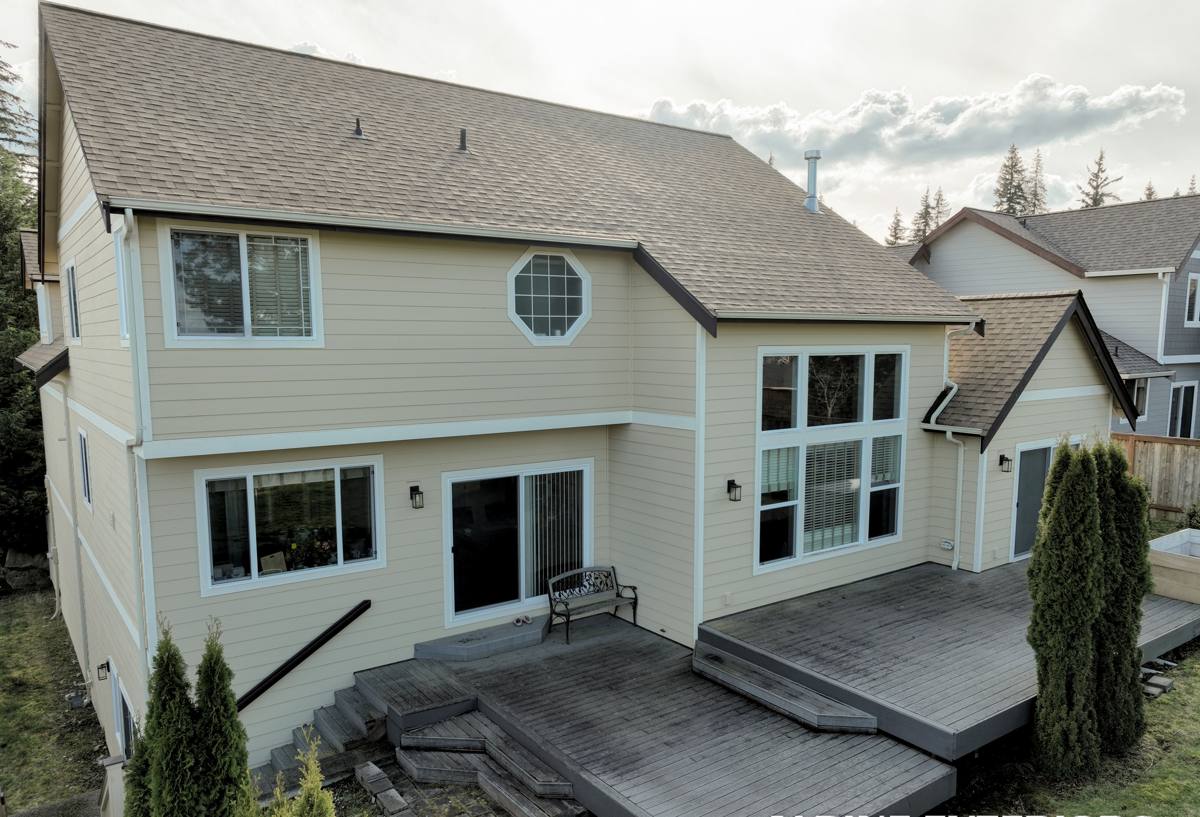
What Salt Air, Rain, and Moss Actually Do to a Deck
Salt Air and Corrosion
Airborne salt accelerates corrosion on anything metal — nails, screws, joist hangers, post bases, railing brackets. Standard electro-galvanized fasteners that would last for years further inland can start rusting within a season or two this close to the water. Once a fastener corrodes, it loses holding strength long before it looks obviously bad, which is exactly why hardware selection matters more here than the framing lumber itself.
Driving Rain and Wood Movement
Wind-driven rain doesn't just fall on a deck — it gets pushed sideways into joints, under boards, and behind ledger boards where they meet the house. Wood that stays damp longer than it should swells, then dries and shrinks, over and over. That cycle is what opens up gaps, pulls fasteners loose, and eventually leads to rot in framing members that were never designed to stay wet.
Moss and Constant Dampness
Cherry Point's tree cover, marine humidity, and long wet season give moss everything it needs: shade, moisture, and time. Moss on decking isn't just cosmetic — it holds water against the board surface, which speeds up wood decay and makes the deck surface genuinely slippery underfoot, especially on stairs and near shaded railings.
Choosing the Right Decking Material for This Climate
There's no single "best" decking material — every option is a trade-off between upfront cost, maintenance, and how it behaves in a wet, salty, moss-prone environment. Here's how the common choices actually compare for a Cherry Point property:
| Material | Moisture Behavior | Moss/Algae Resistance | Maintenance |
|---|---|---|---|
| Pressure-treated wood | Absorbs and releases moisture; prone to swelling/cupping if not sealed | Low — needs regular cleaning and re-sealing | Annual cleaning, periodic re-staining/sealing |
| Cedar | Naturally moisture- and rot-resistant, but still needs sealing near the coast | Moderate — still grows moss if shaded and damp | Regular cleaning, re-oiling every 1-2 years |
| Capped composite (e.g. Trex, TimberTech-style boards) | Doesn't absorb water or swell | Better resistance, but still needs washing — moss will grow on any surface left wet and shaded | Periodic washing, no sealing/staining |
| PVC decking | Fully water-resistant, won't rot | Best resistance of the common options | Occasional washing only |
Wood costs less to install upfront but asks for more upkeep over the years, especially with the rain and shade Cherry Point gets. Composite and PVC cost more initially but hold up with far less attention — often the better math over 15-20 years once you factor in the labor and materials for repeated sealing or staining. We'll walk through the honest trade-offs for your specific yard — sun exposure, tree cover, and budget all factor into which material actually makes sense.
Framing, Fasteners, and Hardware Built for Marine Exposure
The decking surface gets most of the attention, but the framing underneath is what actually holds the deck together — and it's the part most likely to be under-specified by a crew that doesn't build in coastal conditions regularly. For a Cherry Point deck, that means:
- Stainless steel or heavy-duty coated fasteners rated for coastal/high-corrosion exposure, not standard electro-galvanized hardware
- Joist hangers, post bases, and structural connectors matched to the same corrosion-resistance standard as the fasteners — mixing metals invites galvanic corrosion
- Proper ledger board flashing where the deck meets the house, so wind-driven rain can't work its way behind the band board
- Gaps between decking boards sized to let water drain and air circulate, rather than trap moisture against the joists
- Structural framing lumber rated for ground contact or exterior use where it sits close to grade or in persistently damp shade
None of this shows up in a finished photo, but it's the difference between a deck that's still solid in ten years and one that starts needing structural repairs in three or four.
Footings, Drainage, and Whatcom County Ground Conditions
Deck footings need to go below the frost line and bear on stable soil, and that's true anywhere in Whatcom County. What's specific to a property like Cherry Point is how wet the ground around those footings tends to stay through the winter — soil that drains poorly holds water against post bases and framing longer, which works against everything the hardware and flashing are trying to do above ground. We check drainage around the footing locations before we pour, and grade or add drainage where needed so the deck isn't sitting in standing water every time it rains hard.
Underneath the deck matters too. A low deck built tight to the ground with poor airflow will stay damp and grow moss and mildew on the framing even if the surface above looks fine. Where clearance allows, we build in enough airflow underneath to let the structure actually dry out between storms.
Permits and Code Considerations
Most new decks and significant deck rebuilds in Whatcom County require a building permit, with requirements tied to deck height, guardrail height, stair geometry, and attachment to the house. Decks near the water or within shoreline jurisdiction can also involve additional review depending on setback and shoreline management rules. We handle the permit process as part of the job — pulling the right permit, building to the load and guardrail requirements that apply, and scheduling inspections so the finished deck is fully compliant, not just close enough.
Our Deck Building Process
Every Cherry Point deck we build follows the same basic sequence, adjusted for the specific site conditions:
- Site visit and assessment — we look at sun exposure, tree cover, drainage, and how exposed the site is to wind and salt air off the water
- Material and layout discussion — honest trade-offs between wood, composite, and PVC based on your budget and how much upkeep you want to take on
- Permit submittal — handled on your behalf with Whatcom County
- Footings and framing — footings set below frost depth, framing built with corrosion-resistant hardware throughout
- Decking, railing, and stairs — installed with proper board spacing for drainage and airflow
- Final inspection and walkthrough — we confirm the deck passes inspection and walk you through basic care for whatever material you chose
Keeping a Cherry Point Deck in Good Shape Year After Year
Even a correctly built deck needs some ongoing attention in this climate. A simple seasonal routine goes a long way:
- Sweep debris and standing leaves off the deck regularly, especially in fall — trapped organic matter feeds moss and holds moisture
- Wash the surface at least once a year to remove moss, algae, and salt residue before it builds up
- Check railings, stair connections, and any visible fasteners annually for looseness or corrosion
- Re-seal or re-stain wood decking on the schedule the product calls for — don't wait until it's visibly gray and dry
- Keep gutters and downspouts near the deck clear so roof runoff isn't dumping extra water onto or under the deck
- Trim back overhanging branches where practical to reduce shade and speed up drying after rain
Why Local Deck-Building Experience Matters in Cherry Point
A deck built to a generic, one-size-fits-all spec can still fail early in a spot like Cherry Point, even if it would have held up fine forty miles inland. Knowing which fasteners actually hold up against salt air, how much drainage a footing needs in wet coastal soil, and how much airflow a low deck needs to fight off moss isn't something you learn from a manual — it comes from building decks in this exact kind of exposure, repeatedly, and seeing what holds up and what doesn't. That local track record is what separates a deck that needs real repairs in year three from one that's still solid well past year fifteen.
If you're planning a new deck or replacing one that's showing its age in Cherry Point, we're happy to take a look and talk through what makes sense for your property. Reach out for a free, no-pressure estimate using the form below.