 Blaine Siding
 Why Bellingham Decks Wear Out Faster Than the Manufacturer's Warranty Suggests
If you own a deck in or around Bellingham, you already know it doesn't behave like a deck three states inland. Whatcom County sits close enough to the water that salt-laden air reaches yards well back from the shoreline, and it settles into wood grain, metal fasteners, and railing hardware year-round. Add in the region's long stretch of driving rain each fall and winter, plus a moss and mildew season that can run from October through April in shaded or north-facing yards, and you have a set of conditions that ages a deck on a schedule most manufacturers never tested for.
None of that means a deck repair here is doomed to fail again in a year or two. It means the repair has to account for what's actually attacking the structure — moisture intrusion at joints, corrosion at fastener points, and moss holding water against the wood longer than it should sit. A patch job that ignores those factors tends to come back as a bigger problem. A repair that's built for this climate holds up the way it should.
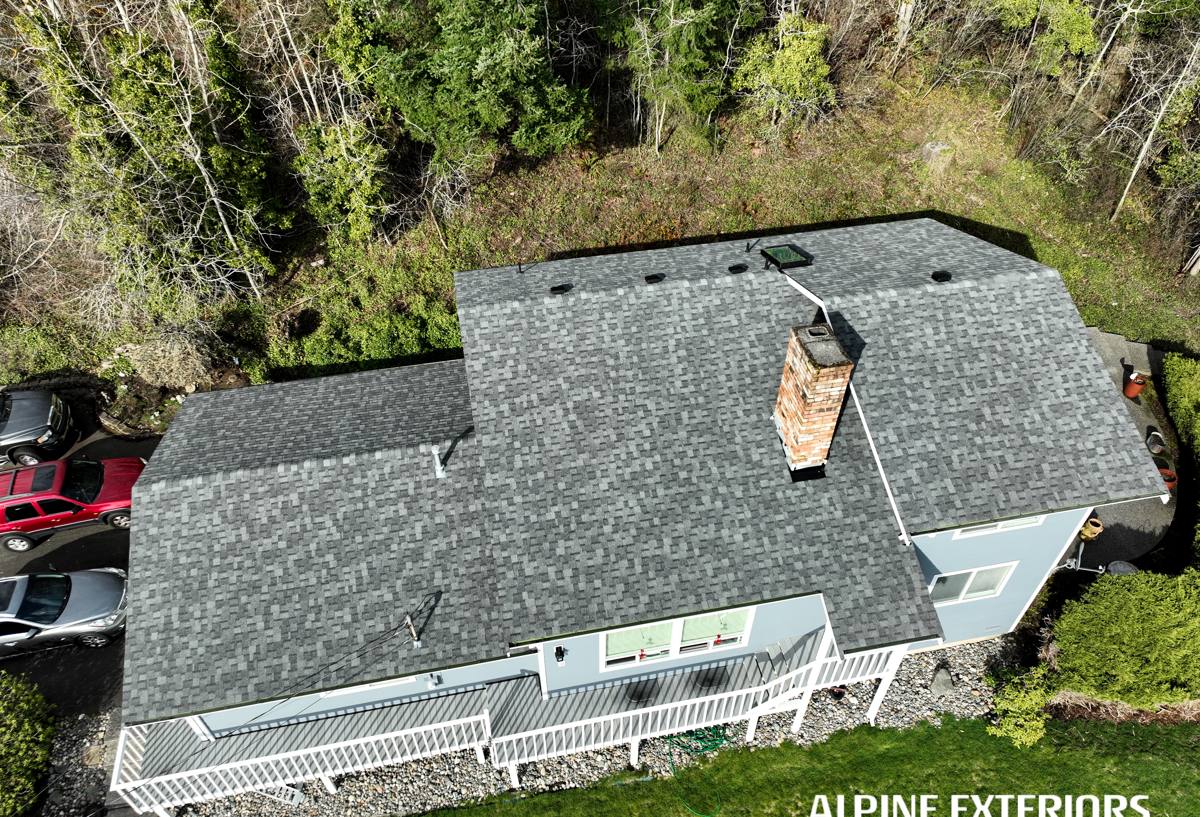
Signs Your Bellingham Deck Needs Repair — Not a Full Rebuild
Most decks don't fail all at once. They give you warning signs first, and catching them early is usually the difference between a repair bill and a replacement bill. Walk your deck and check for the following:
- Soft or spongy spots underfoot, especially near the house or where boards meet a post
- Boards that have cupped, cracked lengthwise, or pulled away from their fasteners
- Rust streaks bleeding out from screws, nails, or metal connectors
- Green or black film building up on shaded boards or the north side of the structure
- A railing or post that wobbles or flexes when you lean on it
- Gaps opening up where the deck ledger board meets the house siding
- Standing water that doesn't drain within an hour or two after rain stops
If what you're seeing is limited to a handful of boards, surface staining, or a loose railing, that's typically a repair. If the framing underneath is soft, the ledger connection has failed, or rot has spread into multiple structural members, that's a different conversation — and an honest contractor will tell you which one you're actually dealing with before any work starts.
What a Correct Deck Repair Actually Involves
Checking the Frame Before Touching the Surface
The decking boards you walk on are the least important part of the structure from a safety standpoint. The joists, beams, posts, and especially the ledger board where the deck attaches to the house are what actually hold everything up. A repair that replaces worn-out boards but skips inspecting the frame underneath is only addressing what's visible, not what's load-bearing. We check for soft or delaminated wood at every connection point, not just where a homeowner points us to.
Flashing and Drainage at the Ledger
Most of the deck failures we see that go beyond simple board replacement trace back to water getting behind the ledger board where the deck meets the house. Without proper flashing, water works its way in slowly, and by the time it's visible as staining or soft siding, the framing behind it has often been wet for a long time. Correcting this properly means addressing the flashing detail, not just caulking over the symptom.
Fasteners That Match the Environment
Standard galvanized fasteners corrode faster in a salt-air environment than most homeowners expect, and corroding fasteners lose holding strength long before they look obviously rusted through. Matching the right fastener and connector hardware to coastal conditions is a small line item that has an outsized effect on how long a repair lasts.
Board Replacement and Fit
When individual boards need replacing, spacing and fastening them correctly matters more here than in a dry climate — boards need room to move seasonally without trapping water in the gaps, and that spacing shifts depending on whether you're working with wood or composite decking.
Repair or Replace? A Straightforward Way to Think About It
Homeowners often ask us to just "fix what's broken," which is reasonable, but sometimes the honest answer is that a full section — or the whole deck — makes more sense than chasing repairs on a structure that's failing in multiple places. Here's a general framework, not a quote, since every deck is different:
| Situation | Repair usually makes sense | Replacement usually makes sense |
|---|---|---|
| Framing condition | Joists and beams are solid; only surface boards are worn | Multiple joists or the ledger show rot or soft spots |
| Age of deck | Under 15 years old, built to a reasonable standard | Original construction is 20+ years old or under-built |
| Extent of damage | Isolated boards, railings, or stair sections | Damage is spread across the whole surface or structure |
| Moisture history | Recent or one-time water exposure | Years of standing water or a chronically failed ledger flashing |
| Your plans for the home | Staying put, want to extend the deck's life a decade or more | Wanting a different footprint, size, or material entirely |
We'll always give you our honest read on which side of that table your deck falls on, including telling you when a repair is the smarter money even if a bigger job would be more profitable for us.
Decking Materials: What Holds Up in This Climate
When boards need replacing, homeowners usually ask what to replace them with. There's no single right answer — it depends on your budget, how much maintenance you're willing to do, and how the deck is used.
| Material | Maintenance | How it handles our climate |
|---|---|---|
| Pressure-treated lumber | Needs re-staining or sealing every 2-3 years | Affordable and repairable board-by-board, but exposed end grain and fastener holes are where moisture gets in if not sealed |
| Cedar | Needs regular sealing to hold its color and resist moisture | Naturally more rot-resistant than most softwoods, but still needs upkeep near the coast |
| Composite decking | Low — no staining or sealing | Resists rot and doesn't absorb moisture the way wood does, but requires periodic cleaning where moss and mildew can still build up on the surface |
We don't push one material over another as a default. Composite costs more up front but cuts down on the maintenance cycle that wood requires in a wet climate. Wood costs less initially and is easier to repair in small sections down the road. We'll walk through the honest trade-offs for your specific deck rather than steering you toward whatever's easiest for us to install.
How We Approach a Deck Repair Job
- On-site assessment. We walk the full deck — surface, railings, stairs, and underneath where accessible — and check the framing, not just what's visible from the top.
- Honest scope. We tell you what actually needs repair, what's cosmetic, and what we'd flag as a bigger concern, in plain terms.
- Written estimate. No surprise add-ons partway through. If we find something once we open up a section, we tell you before we proceed.
- Repair work. Framing and flashing issues get corrected first, then board and railing replacement, then fastening and finish work.
- Walkthrough. We go over the finished work with you and explain what maintenance, if any, will keep it holding up.
Moss, Mildew, and the Maintenance That Keeps a Repair Lasting
A good repair buys you time, but Whatcom County's moss season doesn't take a break just because the deck is fixed. Shaded decks, north-facing yards, and anything under overhanging trees are prone to moss and algae buildup through the wet months, and that buildup holds moisture against the wood surface far longer than open sun exposure would. A simple annual or twice-yearly cleaning — and keeping gutters and downspouts clear so runoff isn't draining straight onto the deck — does more to protect a repair than almost anything else a homeowner can do between visits from a contractor.
If you're seeing moss return to the same spots year after year, that's usually a sign of a shade or drainage pattern specific to your yard, not a defect in the repair itself. We can talk through options for that when we're on site.
Why It Matters That We're a Blaine Crew Who Works Bellingham Regularly
Deck repair isn't a one-size-fits-all trade. A crew that mostly works drier inland climates can do competent work and still miss the details that matter here — proper ledger flashing for constant rain exposure, fastener choices that account for salt air, board spacing that accounts for our humidity swings. Working Whatcom County regularly means we're not guessing at what the coastal climate does to a deck over five or ten years; we've seen it firsthand across the homes we've worked on in this area.
It also means we're not disappearing after the invoice is paid. If something about a repair needs a second look down the road, we're local, not a crew that drove in from out of the area for one job.
If your deck in Bellingham or the surrounding area is showing wear, soft spots, or just isn't holding up the way it used to, we're happy to take a look and give you a straight answer — repair, partial rebuild, or replacement — with a free, no-pressure estimate. Fill out the form below and we'll set up a time to come out.