 Blaine Siding
 Deck Repair Built for Ferndale's Weather
Ferndale sits close enough to the water and to the open farmland of Whatcom County that decks here take a beating most inland homes never see. Salt-laden air off the bay corrodes fasteners and hardware faster than manufacturers' ratings assume. Driving rain off the Strait pushes water sideways into joints and ledger boards that were only ever designed to shed water falling straight down. And the long, gray moss season — often six or seven months of the year in this part of Washington — leaves organic growth sitting on deck boards and framing long enough to hold moisture against wood that would otherwise dry out between storms.
None of that means decks in Ferndale are doomed. It means deck repair here has to account for conditions a contractor in a drier climate would never plan around. We've worked on decks throughout Blaine and Ferndale long enough to know which failures are cosmetic and which are structural, and we don't treat every soft board or gray patch of moss the same way.
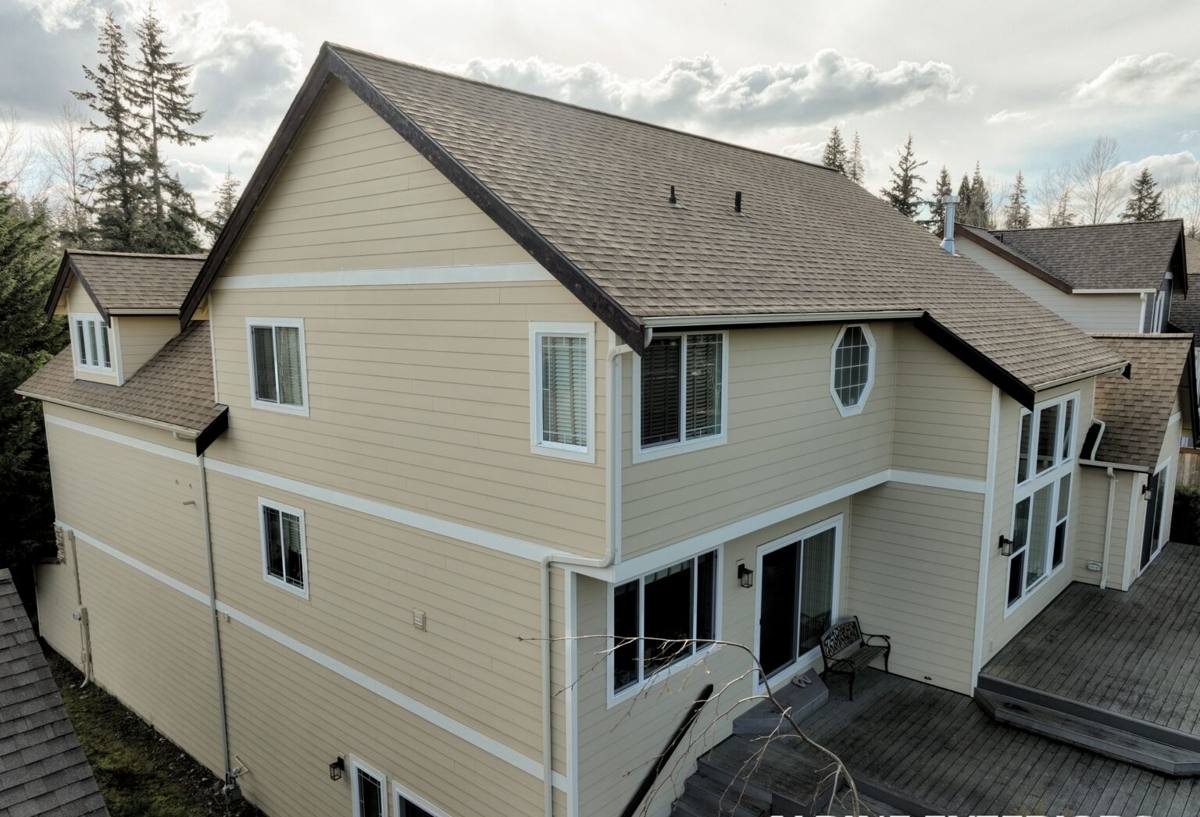
What Actually Fails on Decks Around Here
Moisture-Driven Rot
The most common call we get isn't a dramatic collapse — it's a homeowner who presses a thumb into a board near the house and feels it give. Rot in this region almost always starts at the ledger board (where the deck attaches to the house), at post bases sitting in or near standing water, and at butt joints where two boards meet and water collects instead of running off. Whatcom County's rainfall pattern — frequent, moderate rain rather than occasional downpours — means wood stays damp for long stretches rather than getting a hard soak followed by real drying time.
Moss and Algae Buildup
Moss doesn't just look bad. It holds a wet layer directly against the wood surface, blocks the wood from drying between rain events, and on stairs and ramps it becomes a slip hazard. A deck that's been neglected through two or three moss seasons in a row often has surface damage that looks worse than the structure underneath actually is — and sometimes it's the reverse, where a clean-looking surface is hiding soft wood just below.
Fastener and Hardware Corrosion
This is the one people miss. Salt air moving inland from the water accelerates corrosion on nails, screws, and structural connectors — joist hangers, post bases, ledger bolts — even when the wood around them still looks sound. A deck can have solid-looking lumber and compromised hardware at the same time. That combination is exactly the kind of thing a visual-only inspection from the ground will miss.
Ledger Board Separation
Where the deck meets the house is the single highest-risk connection point on any deck, and it's where we find the most serious problems. Flashing that was never installed correctly, or has failed over time, lets water track behind the ledger board and rot both the ledger and the rim joist it's bolted to. This is a structural issue, not cosmetic, and it's one we check closely on every Ferndale repair regardless of what the homeowner called us about.
How We Approach a Repair
We don't start with a price — we start by figuring out what's actually wrong, because a deck repair estimate is only honest if it's based on what's underneath the surface, not just what's visible from the yard.
- Full structural walk-through. We check the ledger connection, posts, beams, joists, and every fastener we can access, not just the boards a homeowner points out.
- Probe testing on suspect areas. A screwdriver or awl tells us more about actual wood condition than a visual check ever will — soft, spongy resistance means compromised wood even if the surface looks fine.
- Hardware inspection. Given how fast salt air corrodes fasteners here, we check joist hangers, post bases, and ledger bolts specifically, not just deck boards.
- Written scope before work starts. We tell you what's cosmetic, what's structural, and what can reasonably wait, so you're not paying to replace things that don't need it.
- Repair or replace, board by board or section by section. Most decks don't need a full teardown — they need the compromised sections replaced correctly and the drainage or flashing issue that caused the damage actually fixed, not just patched over.
Repair vs. Replacement: How We Decide
| Condition Found | Typical Approach | Why |
|---|---|---|
| Isolated soft boards, structure sound | Board-by-board replacement | No reason to replace framing that tested solid |
| Rot at ledger board or rim joist | Structural repair, re-flash connection | This is the failure point most likely to worsen and affect safety |
| Corroded hardware, wood still sound | Hardware replacement only | Fasteners fail years before framing in salt-air exposure |
| Widespread rot across multiple structural members | Partial or full rebuild | Patching individual members no longer addresses the underlying moisture problem |
| Surface moss/graying, wood underneath sound | Clean, treat, and address drainage | Cosmetic issue with a moisture-management fix, not a structural one |
Why Drainage and Flashing Matter More Than the Boards
A lot of deck repair conversations focus on the wood itself — what species, what treatment, whether to switch to composite. Those choices matter, but they're secondary to something less visible: whether water actually leaves the deck once it lands on it. A deck with perfect boards and bad drainage will fail again within a few years. A deck with modest boards and correct drainage, flashing, and gaps for airflow underneath will outlast it by a wide margin.
In Ferndale's climate specifically, we pay close attention to three things on every repair: the ledger flashing (does water get diverted away from the house structure), the gap between boards (too tight and water sits, too wide and it's a hazard), and airflow underneath the deck (a deck built low to the ground or against a slope with no ventilation stays wet longer after every rain, which speeds up rot regardless of what the boards are made of).
Material Choices for a Salt-Air, High-Moisture Climate
We'll talk through options honestly rather than pushing whatever's easiest for us to install. Pressure-treated lumber is the budget-conscious standard and performs fine when detailing (flashing, fasteners, gaps) is done correctly — it's rarely the wood itself that fails prematurely, it's poor detailing around it. Cedar holds up well aesthetically and has natural rot resistance, but it's a softer wood and needs more attention to fastener corrosion in this environment. Composite decking trades a higher material cost for lower ongoing maintenance, but it still requires correct substructure ventilation and drainage — composite doesn't rot, but the framing underneath it still can if water management is ignored. None of these is a universal right answer; the right choice depends on your budget, how the deck is used, and how much maintenance you want to do.
Fastener and Hardware Standards We Use
Given how much of what we see traces back to corrosion, we default to fasteners and structural connectors rated for high-corrosion, coastal-adjacent environments rather than standard-grade hardware, even when it costs a bit more upfront. It's a small cost difference against the labor cost of redoing a repair in five years because the connectors failed while the wood was still fine.
A Homeowner's Quick-Check List
Between professional inspections, here's what's worth checking yourself once or twice a year, especially after the wet season:
- Press firmly on boards near the house and near stairs — any give or sponginess is worth a closer look
- Look at the ledger board where the deck meets the house for staining, gaps, or dark streaking
- Check post bases for standing water or soil buildup that keeps the wood wet
- Note any moss that's been sitting in the same spot for more than a season
- Look underneath the deck (if accessible) for daylight gaps in flashing or obvious water staining on framing
- Check railings for looseness — connector failure often shows up here before it's visible elsewhere
Why Local Experience Matters for This Job
Deck repair isn't a one-size-fits-all trade. A crew that mostly works drier inland climates will often under-spec fasteners, skip ventilation details, or miss ledger flashing issues because those failure modes just don't show up as often where they're used to working. We work Blaine, Ferndale, and the surrounding Whatcom County area regularly, so we're not guessing at how salt air, sustained rain, and long moss seasons affect a deck over years — we're seeing it on repair calls throughout the year and building our approach around it.
If you've got a deck in Ferndale that's showing soft spots, persistent moss, loose railings, or you're just not sure how the structure underneath is holding up, we're happy to come take a look and give you a straight answer — no pressure, no inflated scope. Reach out for a free estimate using the form below.