 Blaine Siding
 Why Blaine Harbor Decks Wear Out Faster
Blaine Harbor sits where the Salish Sea meets Whatcom County, and that location is exactly why decks here age faster than decks built the same year fifteen miles inland. Salt-laden air moves off the water on most days, driving rain comes in sideways during fall and winter storms, and the shoulder seasons bring long stretches of damp, shaded weather that keeps horizontal wood surfaces wet for days at a time. Layer in a moss season that can run from early fall through spring, and you get a set of conditions that finds every weak point in a deck within a handful of years rather than a couple of decades.
Homeowners near the harbor often ask why their deck looks tired at year eight or nine when a similar deck further from the water is still holding up fine. The honest answer is exposure, not bad luck. Wind off the harbor carries fine salt particles that settle on wood, metal hardware, and composite decking alike. Salt holds moisture against a surface longer than plain rainwater would, which keeps fasteners wet, speeds up corrosion, and feeds the moss and algae that thrive in shaded, damp waterfront yards. None of this means a deck near Blaine Harbor can't last as long as one built anywhere else in the county. It means the build has to account for that environment from the ledger board down to the screw heads, not just at the surface.
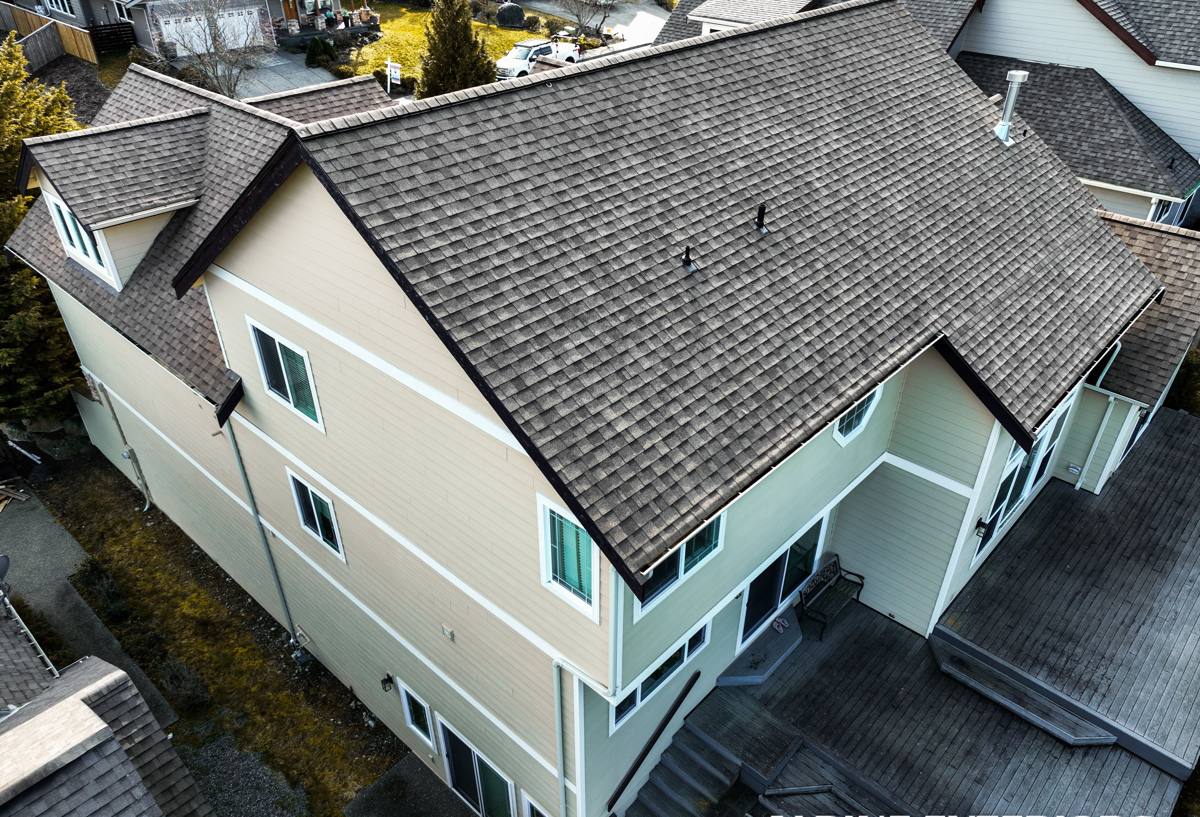
Signs a Deck Needs Replacement, Not Another Repair
Not every tired-looking deck needs a full tear-out. But in this microclimate, certain signs mean patching is throwing money at a structure that's already compromised underneath.
- Soft or spongy decking anywhere, especially near the house or at board ends — this usually means moisture has gotten past the surface and into the wood fiber itself.
- Rust streaking below fasteners or hardware, a common sign in salt-exposed areas that standard coated screws are breaking down faster than expected.
- Persistent moss or black algae that returns within weeks of cleaning, which usually points to a drainage or airflow problem in the framing, not just a surface cleaning issue.
- Gaps or movement at the ledger board where the deck attaches to the house — this is a structural red flag, not a cosmetic one.
- Railings that flex or posts that feel loose when pushed, which often means post anchoring has corroded or rotted below the surface.
- Visible checking, cupping, or splitting across most of the deck surface rather than a few isolated boards.
If you're only seeing one or two of these on a deck that's otherwise sound, a repair may genuinely be the right call. When several of these show up together, replacement is usually the more honest recommendation, because the framing and fasteners underneath have likely been absorbing the same damage as the surface.
What a Correct Deck Replacement Involves Here
The Substructure and Ledger Connection
The part of a deck that fails first in a salt-air, high-moisture environment is almost never the decking boards you can see — it's the framing and the ledger connection underneath. A proper replacement starts by removing the old structure down to the ledger and confirming the house's flashing and sheathing behind it are sound before anything new goes up. Any rot found at this stage gets addressed before framing begins, not covered over. Joists, beams, and posts are set with proper spacing for the decking material chosen, and every ledger connection is flashed to shed water away from the house rather than trap it against the rim joist.
Drainage and Airflow Underneath
Decks near the water tend to sit in shadier, damper yards than decks further inland, which means the space underneath the deck matters as much as the surface. Proper joist spacing, ventilation gaps, and grading beneath the structure keep air moving so moisture doesn't sit and feed moss growth on the underside of boards or on nearby siding and fencing. Skipping this step is one of the most common reasons a "new" deck starts showing moss again within its first year.
Fasteners and Hardware Rated for Salt Exposure
This is where a lot of decks in coastal pockets of Whatcom County get shortchanged. Standard exterior-rated screws and joist hangers are built for general outdoor use, not for daily salt air. Our standard for anything within a mile or so of open water is stainless steel or marine-grade coated fasteners and hardware throughout the structure, not just on the visible decking. It costs more up front than mixed-grade hardware, but replacing rusted fasteners under a deck a few years down the road costs far more in labor than the difference would have been at install.
Decking Material Options for a Harbor Environment
There's no single "best" decking material for every home — the right choice depends on how much maintenance you want to do, how much sun and shade the deck gets, and your budget. Here's how the main options actually behave in this climate, based on how they perform in daily practice rather than marketing claims.
| Material | Moisture / Salt Behavior | Moss & Algae Resistance | Maintenance |
|---|---|---|---|
| Pressure-treated wood | Good if sealed regularly; end grain and fastener holes are the weak points | Needs periodic cleaning and treatment to stay ahead of growth | Highest — annual inspection and resealing recommended |
| Cedar or other natural wood | Handles moisture well when finished, but finish breaks down faster in salt air | Moderate; still needs regular cleaning in shaded areas | High — refinishing every 1–3 years depending on exposure |
| Composite decking | Very good; won't rot, but can trap surface moisture if boards aren't properly gapped | Can still grow surface moss without periodic cleaning | Low — occasional washing, no sealing or staining |
| PVC / capped composite | Excellent; fully moisture-sealed board with no wood fiber to absorb salt or water | Best resistance, though still benefits from seasonal cleaning | Lowest — wash only, no sealing needed |
Our professional standard on harbor-adjacent jobs leans toward composite or capped composite decking for most homeowners, simply because it removes the annual sealing and re-staining cycle that salt air and moss season make miserable to keep up with. That said, we still install quality wood decking for homeowners who prefer the look and are willing to keep up with maintenance — the key is setting expectations honestly at the estimate, not after the first winter.
How Our Process Works
- On-site assessment. We inspect the existing deck, ledger connection, and substructure to determine what's driving the damage — this tells us whether repair is realistic or replacement is the honest recommendation.
- Written estimate. You get a clear scope of work and material options in plain language, with cost factors explained rather than a single lump number with no breakdown.
- Permitting. Deck replacements of most sizes require a permit through the local building department; we handle that paperwork so you're not chasing it down yourself.
- Tear-out and structural inspection. Old decking and framing come off, and we check the ledger, rim joist, and any framing behind siding for hidden rot before rebuilding.
- Rebuild. New framing, flashing, and fasteners go in to spec, followed by the decking and railing system you chose.
- Final walkthrough. We check railing stability, board spacing, and drainage with you before calling the job finished.
Moss Management and Long-Term Care
Even the best-built deck near the water will see some moss and algae pressure — it's a function of the climate, not a sign of a bad build. What changes with a correct build is how easy that growth is to manage. Proper board gapping and airflow underneath mean a seasonal wash with a deck cleaner and a soft brush (not a pressure washer turned up too high, which can damage wood fiber and strip composite finishes) is usually enough to keep growth from becoming a slip hazard. Gutters and downspouts that discharge near or onto the deck are worth checking too — a surprising amount of "deck moss" is really just runoff water finding the shadiest, dampest surface in the yard.
Why Hiring a Blaine Harbor Crew Matters
A deck replacement done by a crew that hasn't worked this stretch of waterfront before often looks fine on day one and starts showing problems by year three — not because the workmanship was careless, but because standard-grade fasteners, generic framing specs, and assumptions about drainage don't hold up the same way here as they do twenty miles inland. Working regularly in Blaine and elsewhere in Whatcom County means we already know to spec stainless or marine-grade hardware by default near the water, to plan drainage and airflow for a shaded, damp yard rather than a dry inland lot, and to walk the local permitting process without back-and-forth delays. That local familiarity shows up less in the sales pitch and more in how the deck is still holding up five winters later.
Questions Worth Asking Before You Hire
- Are fasteners and hardware upgraded for salt-air exposure, or is the bid using standard-grade materials by default?
- Will the ledger board and house flashing be inspected and repaired if needed, not just covered over?
- Does the estimate include permitting, or is that left for the homeowner to arrange?
- What's the plan for drainage and airflow underneath the deck, given the shade and moisture in this yard specifically?
- Is the maintenance schedule for the chosen decking material explained clearly before you sign, not after the first year?
Cost Factors to Expect
Every deck is different, so we won't post a number here that doesn't reflect your actual project. In general, cost is driven less by square footage alone and more by these factors:
- Extent of substructure repair needed once the old decking comes off
- Decking material chosen — treated wood, cedar, composite, or capped PVC
- Railing system and any stairs, given current code requirements
- Height of the deck and any structural support needed for taller builds
- Permit requirements based on size and attachment to the home
We'll walk through each of these with you on-site so the estimate reflects your deck, not a generic average.
If your deck near Blaine Harbor is showing soft spots, rust, persistent moss, or just isn't holding up the way it used to, we're happy to take a look and give you a straight answer about whether it needs repair or replacement. The estimate is free, there's no pressure attached to it, and you can use the form below to get on our schedule.