 Blaine Siding
 Deck Replacement for Everson Homes
Everson sits inland from Blaine, out in the farm country along the Nooksack River east of Lynden, but it still falls inside the same weather system that shapes exterior work across Whatcom County. Salt-tinged marine air moving in off the Sound reaches this far into the valley, driving rain arrives sideways more often than it falls straight down, and the moss season here runs close to as long as it does anywhere closer to the water. Add in Everson's low, river-adjacent position, and a deck out here has to handle ground moisture on top of everything else the regional climate throws at it.
A deck that's aging out in this part of the county rarely fails because of one bad board. It fails at the structural level — framing, ledger connections, and fasteners that have been absorbing moisture and stress season after season — and that kind of failure doesn't get solved with a fresh coat of stain or a handful of swapped boards. This page covers how to tell an Everson deck actually needs full replacement rather than repair, what a correct replacement involves given this area's conditions, and how our process works when we take that job on here.
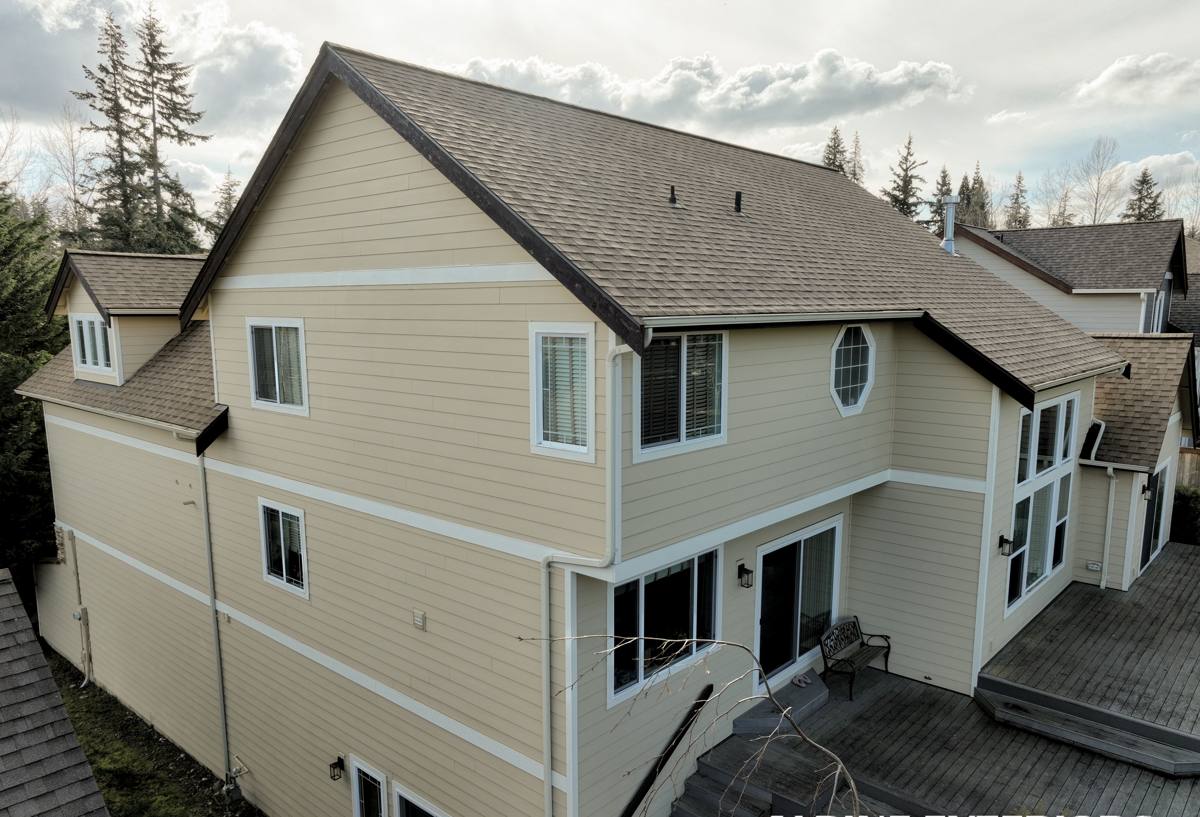
What Everson's Climate Does to an Aging Deck
Driving Rain Off the Valley
Storms moving through this part of Whatcom County don't drop rain straight down; wind pushes it sideways, up under railings, into ledger connections, and between deck boards that weren't gapped correctly to begin with. A deck built or repaired without that wind-driven pattern in mind can look fine in calm weather and still trap water the moment a real storm rolls through, which in this valley is a regular occurrence rather than an exception.
Salt Air That Reaches This Far Inland
Homes right on Semiahmoo Bay or Drayton Harbor take the heaviest dose of salt-laden air in the county, but that marine influence doesn't stop at the shoreline — it rides inland on the prevailing weather and still reaches a place like Everson in a lighter, but real, form. On an outdoor deck with no wall or roofline to block it, even a lighter dose of salt exposure adds up year after year, working on fasteners, brackets, and any exposed metal hardware faster than a dry inland climate would allow.
A Moss Season That Runs Most of the Year
Mild temperatures and near-constant moisture give moss and mildew a long growing season across this whole region, and a deck's horizontal surface is one of the first places it takes hold — it holds water longer than a vertical wall and stays damp between rain events. Shaded decks and anything under mature trees, common on the larger lots out this way, are usually first to show it.
Ground Moisture Near the Nooksack
Everson sits low in the Nooksack River valley, and a lot of properties out here have ground that holds moisture longer than a well-drained hillside lot would, with some close enough to the river to have dealt with high water in past years. For a deck, that means post footings and ledger connections need to be set and detailed with that ground moisture in mind rather than built to a generic spec written for a dry, well-drained yard.
Signs Your Deck Needs Full Replacement, Not Just Repair
Not every problem on an aging deck calls for tearing the whole thing out. A single split board, a loose baluster, or an isolated spot of surface rot can often be repaired without touching the rest of the structure. But once the problems show up at the structural level — the framing, footings, or ledger connection — patching around them usually just delays a bigger job while the underlying damage keeps spreading. Signs it's time to talk about full replacement rather than another round of repairs:
- Soft, spongy, or spreading rot in the joists or beams underneath the deck surface
- A ledger board connection that's separating from the house, or shows staining and soft wood around it
- Post footings that have shifted, heaved, or no longer sit solidly in the ground
- Fasteners and hardware showing heavy rust or corrosion, especially anything original to an older build
- Visible give, bounce, or movement underfoot that wasn't there a few years ago
- Railings that wobble or have separated slightly from their posts
- A deck built to code standards that are well out of date for current load and railing requirements
If you're only seeing one or two of these and the rest of the structure is sound, a repair may still make sense. Once several show up together, or the framing itself is compromised, replacement is usually the more honest answer — and the more cost-effective one over time, since a repair on a failing structure rarely lasts as long as a homeowner hopes.
Choosing the Right Decking Material for a Replacement
Because Everson's climate puts real, sustained demands on a deck surface — driving rain, a long moss season, and salt-tinged air that reaches even this far inland — material choice matters more here than it would in a milder, drier setting. The three main categories homeowners weigh are wood, capped composite, and cellular PVC.
Wood
Pressure-treated lumber and cedar are the traditional choice and can look great right after installation, but both need regular sealing or staining to hold up against sustained moisture, and both are more vulnerable to fastener corrosion over time. Left unmaintained even a season or two in this climate, wood is usually the first material to show moss, graying, and soft spots.
Capped Composite
Capped composite boards have a plastic shell around a wood-fiber composite core, which resists moisture absorption, staining, and UV fade far better than uncapped composite or wood. In a climate with this much sustained rain and a long moss season, that cap layer does real work — it's the difference between a board that needs occasional washing and one that needs ongoing sealing to keep looking decent.
Cellular PVC
PVC decking contains no wood fiber at all, so it doesn't absorb moisture the way even capped composite can at cut edges or fastener holes. It typically costs more than composite and can flex more under heavy point loads, but for a deck on a low, moisture-prone lot near the river, some homeowners find the extra cost worth the added protection.
| Material | Handling Rain & Moisture | Moss Resistance | Upkeep |
|---|---|---|---|
| Cellular PVC | Excellent — no wood fiber to absorb moisture | Strong, smooth non-porous surface | Occasional washing |
| Capped composite | Strong — cap layer resists moisture and staining | Good on most product lines | Occasional washing |
| Uncapped composite | Moderate — some moisture absorption at exposed fiber | Fair; more prone to buildup over time | Periodic cleaning |
| Cedar | Moderate — natural resistance, but needs sealing | Fair when sealed and maintained | Regular oiling or sealing |
| Pressure-treated wood | Weak against sustained moisture over time | Poor without regular treatment | Regular sealing or staining |
What a Correct Deck Replacement Involves
A deck replacement is a chance to fix everything a repair can't touch — the framing, the fasteners, and the drainage details that determine how long the next deck actually lasts. Done right for a property in Everson, that includes:
- Full removal of the old deck surface and framing down to the ledger and footings, so nothing hidden gets built over
- Inspection of the ledger attachment point and the house framing behind it for moisture damage before anything new goes up
- Footings sized and set for the specific soil conditions on a low, moisture-holding lot rather than a generic minimum
- Stainless steel or coastal-grade corrosion-resistant fasteners throughout, given the salt-tinged air that reaches this area
- Correct board gapping for drainage and material movement, so wind-driven rain and standing moisture can drain and dry between boards
- Proper ledger flashing where the new deck ties into the house — one of the most common places water gets into a wall on a poorly built deck
- Joist spacing matched to the specific decking product's span rating rather than a generic framing layout
- Railing and post attachment that meets current code requirements, which older decks in this area often predate
- A permit pulled and inspected through Whatcom County, rather than treated as an optional step
How Our Process Works
We start with a site visit to look at the existing deck honestly — what's failing, what's original, how the ledger connection and footings are holding up, and how the lot's grade and drainage are affecting the structure underneath. From there we talk through what actually needs replacing versus what can be worked around, and which decking material fits the budget and how the space gets used day to day.
Permitting for a deck replacement in Everson and the rest of Whatcom County generally follows standard setback, structural, and railing-height requirements, and we handle that as part of the job rather than leaving it for the homeowner to sort out. Once permitted, the old deck comes out down to the ledger and footings, we address anything we find behind or underneath it, and the new structure goes up in sequence — framing and footings first, sized for the site's actual moisture exposure, then decking, railing, and any stairs or trim. We finish with a walkthrough covering what your specific material actually needs going forward, which for most modern decking is minimal, but not nothing.
Cost Factors for a Deck Replacement in Everson
| Factor | What It Affects | Why It Matters Here |
|---|---|---|
| Extent of hidden damage | Framing and footing repair costs found during tear-off | Sustained ground moisture near the river can affect footings and framing that look fine from the surface |
| Decking material | Material cost and long-term upkeep | Higher moisture and moss exposure change the payoff of composite or PVC over wood |
| Deck size and layout | Framing, fastener, and labor quantities | Multi-level decks or stairs add complexity beyond a simple rectangle |
| Ledger and footing condition | Structural repair scope before new decking goes on | A compromised ledger or footing has to be corrected, not built around |
| Permitting and code updates | Design changes to meet current railing and structural codes | Older decks in this area often predate current code requirements |
Exact costs depend on what we find once the old deck comes off, which is why we walk the property and, where needed, look underneath the existing structure before giving a real number rather than a phone estimate.
Why It Matters That We Already Work Everson
A crew that mostly builds and replaces decks closer to the water can still do competent work here, but an Everson property has variables that don't come up as often on a coastal lot — ground moisture from sitting low in the Nooksack valley, footings that need to be set with that in mind, and salt exposure that's real but lighter than it is right on the bay. Working this area regularly means we're not guessing at those conditions on your project. We've seen how footings and framing hold up on low, river-adjacent lots out here, and which fastener grades and drainage details are worth the extra time rather than an unnecessary upsell.
That familiarity also shows up in the smaller judgment calls — how to detail a ledger connection on a house that's seen its share of moisture over the years, or being straightforward with a homeowner about whether a deck really needs full replacement or just an honest repair.
Get a Straight Answer About Your Deck
Whether your Everson deck is showing soft spots and rot, has an outdated railing that wouldn't pass inspection today, or you just want an honest read on repair versus replacement, we're happy to walk the site with you and lay out the options plainly. Reach out below for a free, no-pressure estimate.