 Blaine Siding
 Windows Built for the Cherry Point Waterfront
Cherry Point sits right where Whatcom County's coastline meets some of the harshest window conditions in the region. Homes out here take a steady beating from salt-laden air off the Strait of Georgia, wind-driven rain that finds its way into anything less than a tight seal, and a damp, moss-friendly climate that never really dries out for long stretches of the year. Windows in this area work harder than windows almost anywhere else in Whatcom County, and it shows up first in the details: pitted hardware, foggy double-pane glass, sashes that stick or rattle, and trim that stays damp long after the rain stops.
An energy-efficient window replacement here isn't just about a lower power bill, though that matters. It's about choosing glass, frame material, and installation details that can actually hold up to salt exposure and constant moisture cycling without failing early. We've worked enough homes in and around Cherry Point to know which corners get skipped by installers who aren't used to this environment, and where those shortcuts show up two or three winters later.
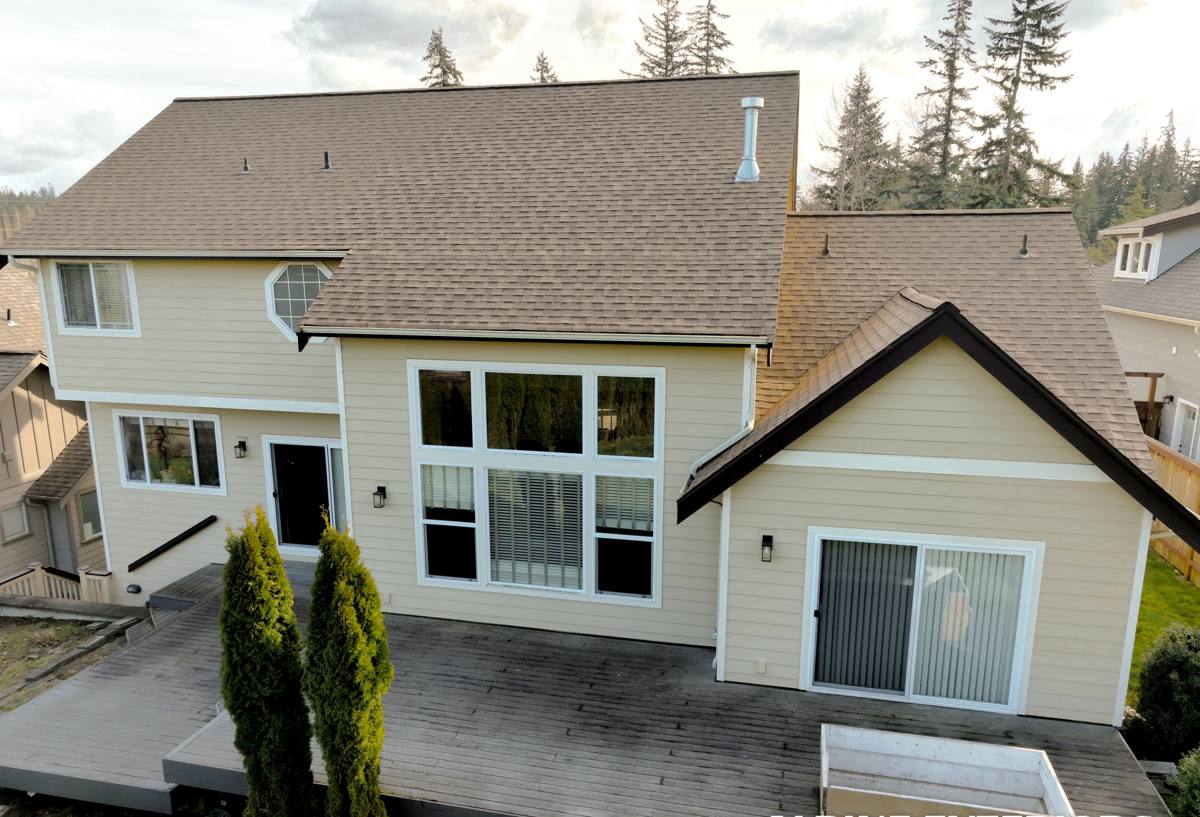
Why the Cherry Point Climate Is Tougher on Windows
Salt Air and Corrosion
Proximity to the water means airborne salt settles on everything, including window hardware, screen frames, and metal flashing. Cheaper hinges, locks, and balance systems corrode faster here than they would even a few miles inland. Once hardware starts to seize or pit, windows stop sealing properly, and that's when air and water infiltration really start.
Driving Rain
Storms off the Strait don't just drop rain straight down — they push it sideways into siding and window openings. A window that would be fine in a calmer inland setting can leak here if the flashing, sill pan, and sealant details aren't done correctly. Most of the moisture problems we find during window replacements trace back to poor flashing or a missing sill pan, not the window unit itself.
Moss and Prolonged Dampness
Cherry Point's long moss season means wood trim, sills, and even vinyl cladding stay damp longer than in drier parts of the state. That extended moisture exposure accelerates wood rot around older window openings and can trap water behind poorly sealed replacement units, which is exactly the kind of hidden damage that costs far more to fix than it would have cost to prevent.
What "Energy-Efficient" Actually Means for This Location
Energy efficiency in a Cherry Point home isn't only about U-factor and R-value on a spec sheet. It's about a window system that keeps performing after a few winters of salt spray and driving rain. A window that loses its seal or lets moisture behind the frame will lose its energy performance right along with its weather resistance — the two problems show up together.
When we talk about efficient windows for this area, we're looking at three things together: how well the glass package resists heat loss, how well the frame and hardware resist salt corrosion, and how well the installation keeps water out of the wall assembly. Skimping on any one of those undermines the other two.
Glass Packages Worth Considering
- Double-pane with low-E coating — the practical baseline for this climate and budget range
- Argon-filled units — modest but real improvement in insulating value, standard on most quality double-pane windows now
- Triple-pane — worth discussing for north-facing rooms or homes with high heating costs, though the added weight and cost don't pencil out for every opening
- Low-E coatings tuned for solar heat gain control, which helps on south and west exposures that get direct sun despite the region's overcast reputation
Frame Materials: What Holds Up Near the Water
| Frame Material | Salt Air Performance | Maintenance | Our Take |
|---|---|---|---|
| Vinyl (quality-grade) | Does not corrode; UV-stable formulations resist fading | Low — occasional cleaning | Solid, cost-effective default for most Cherry Point homes |
| Fiberglass | Excellent; very stable in temperature and moisture swings | Low | Strong option where budget allows, especially on larger openings |
| Aluminum | Prone to pitting and corrosion in salt air over time | Moderate to high | We generally steer homeowners away from it this close to the water unless it's a marine-rated product with a strong track record |
| Wood (unclad) | Poor without diligent upkeep; absorbs moisture | High — regular refinishing | Only recommended with a durable exterior cladding system, given the moss season here |
| Wood-clad (vinyl or aluminum exterior) | Good, as long as cladding seams are sealed correctly | Moderate | Good middle ground for homeowners who want a wood interior look |
Hardware and Small Details That Matter More Here
On a Cherry Point job, hardware choice deserves as much attention as the glass. Locks, hinges, and balance systems should be stainless steel or otherwise corrosion-resistant — standard-grade hardware can start showing rust or seizing within a couple of seasons this close to the water. We also pay close attention to weep hole placement and screen frame material, since ordinary aluminum screens pit and discolor quickly out here.
Weatherstripping matters too. Compression seals hold up better than older fin-style seals under constant damp-dry cycling, and they're worth asking about specifically if you're comparing window lines.
Installation: Where Most Window Failures Actually Start
We say this on every window job, but it's especially true at Cherry Point: the window unit itself is rarely the reason a replacement fails early. It's almost always the installation. A correct install in this climate includes:
- A properly sloped sill pan that directs any water that gets past the window back outside, not into the wall cavity
- Correctly lapped flashing tape, installed shingle-style so water always sheds downward and outward
- Backer rod and quality exterior sealant rated for UV and moisture exposure, not a bead of caulk over a gap
- Proper shimming so the frame isn't stressed out of square, which can compromise the seal over time
- Insulated but not overpacked gaps between the frame and rough opening — overfilled gaps can bow the frame and cause air leaks
Skip any one of these steps and you can end up with a window that's rated for excellent energy performance on paper but leaks air or water within a year or two. That gap between the spec sheet and the real-world result is the single biggest source of window complaints we hear about from homeowners who hired based on price alone.
Signs Your Cherry Point Home Needs New Windows
- Visible condensation or fogging between panes — a sign the seal has failed
- Drafts you can feel near the frame, especially during a windy storm off the water
- Sashes that are hard to open, close, or lock, often from swollen wood or corroded hardware
- Soft or discolored trim and sills, which can point to moisture getting behind the frame
- Visible corrosion or pitting on hardware, hinges, or screen frames
- A noticeable jump in heating costs without another clear explanation
Our Process for Cherry Point Window Replacements
We start with an on-site look at your current windows and openings, not just a quote based on photos or a phone call. That matters here because we're checking for water damage around the frames, the condition of the sheathing behind the trim, and how exposed each elevation of the house is to wind-driven rain off the water. South and west-facing openings, and anything on the more exposed side of the house, often need extra attention to flashing detail regardless of which window product you choose.
From there we walk through glass, frame material, and hardware options based on your budget and how exposed your particular openings are — a sheltered window on the lee side of the house doesn't need the same spec as one facing straight into prevailing storms. Installation follows the flashing and sealing standards outlined above on every opening, not just the ones that are easy to reach.
What to Expect During the Job
| Stage | What Happens |
|---|---|
| Assessment | On-site inspection of existing windows, framing, and moisture condition |
| Product selection | Review of glass, frame, and hardware options suited to your home's exposure |
| Prep and removal | Careful removal of old units, inspection of the rough opening for hidden rot |
| Flashing and sill pan | Sill pan and shingle-lapped flashing installed before the new window goes in |
| Installation and sealing | Window set, shimmed, insulated, and sealed to manufacturer and local best-practice standards |
| Final check | Operation, seal, and weatherproofing checked before we call the job done |
Why Local Experience Matters for This Job
Whatcom County covers a lot of different microclimates, and Cherry Point's combination of salt exposure and driving rain isn't the same challenge a crew faces on an inland Blaine street or further south in the county. A contractor who mostly works drier, more sheltered areas may not think twice about standard aluminum screens or a quicker flashing method that would hold up fine there but not here. Hiring a crew that already works this specific stretch of coastline means the flashing details, hardware choices, and product recommendations account for what actually happens to a window out here after a few winters, not just what looks good on installation day.
If you're weighing your options for windows on a Cherry Point home, we're happy to take a look and walk you through what makes sense for your specific exposure and budget. Fill out the form below for a free, no-pressure estimate.