 Blaine Siding
 Windows Built for the Nooksack Climate
Homes in the Nooksack area sit in a part of Whatcom County that gets the worst of both worlds: Pacific storm systems that drive rain sideways for days at a time, and long stretches of gray, damp weather that keep siding, trim, and window frames wet far longer than they'd like to be. Add in a moss season that can run from fall through spring on shaded or north-facing walls, and it's easy to see why windows here take more abuse than windows in drier parts of the state.
Older single-pane or early-generation dual-pane windows weren't built for this. Wood frames swell and stick. Aluminum frames sweat and conduct cold straight into the room. Seals that were fine for the first ten or fifteen years start to fail, and once moisture gets between the panes or into the frame cavity, it doesn't leave. It just sits there, feeding rot and mildew and driving up your heating bill every month it goes unaddressed.
Energy-efficient windows done right aren't just about a lower utility bill, though that matters. They're about keeping water out of your wall assembly, keeping frames from warping in our wet-dry cycles, and keeping the inside of your home comfortable when the wind is coming off the valley in January.
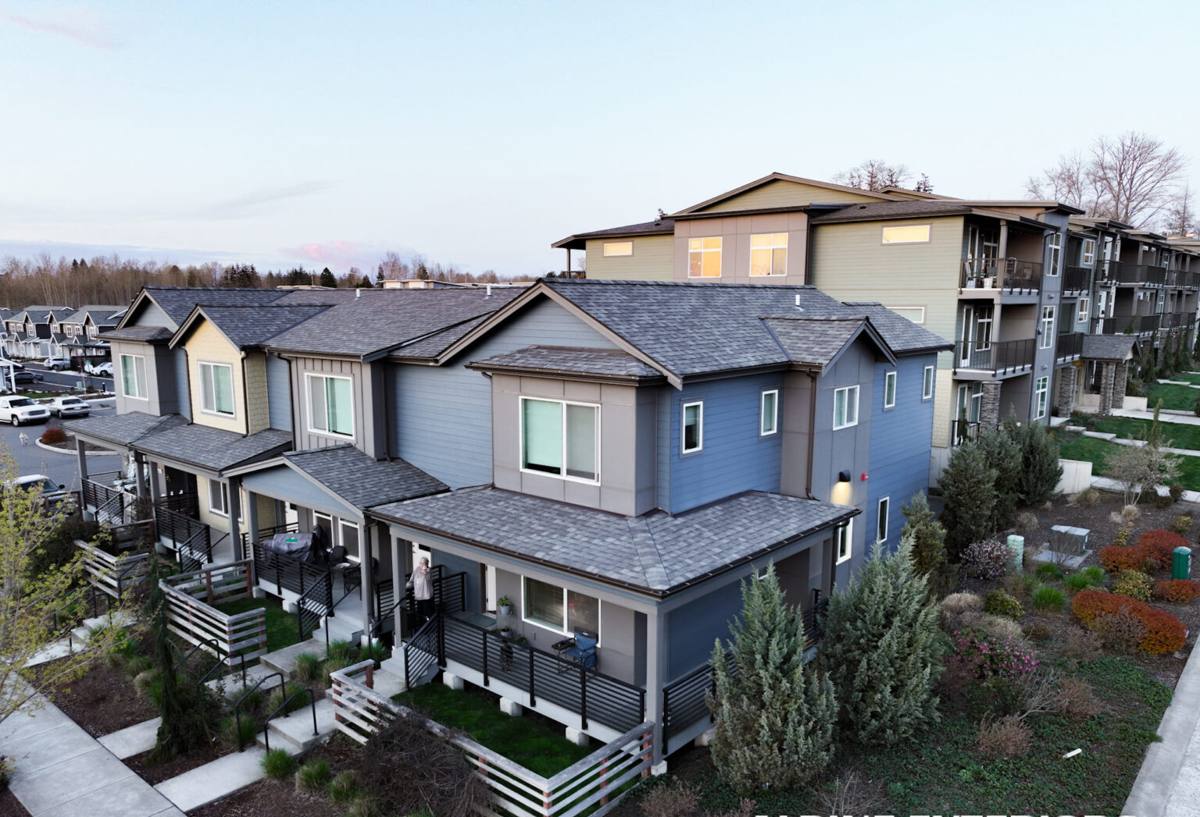
Signs Your Current Windows Are Costing You
Most homeowners don't replace windows because they woke up one day and decided to. They replace them because something finally got annoying enough to act on. If any of these sound familiar, it's worth having your windows looked at:
- Cold drafts near the window frame even when it's fully latched
- Visible condensation or fogging between the panes (a sign the seal has failed)
- Frames that are soft, discolored, or show black staining at the corners
- Windows that are hard to open, close, or lock properly
- Noticeably higher heating bills compared to similarly sized rooms in the house
- Moss or algae staining building up on the sill or exterior trim
None of these are cosmetic problems only. Fogged glass means the insulating gas between the panes is gone and the window is now performing like a single pane. Soft or stained frames mean moisture has already gotten past the finish and into the wood or substrate. The earlier these get caught, the less it costs to fix.
What Actually Makes a Window Energy-Efficient
"Energy-efficient" gets used loosely in this industry. A window earning an ENERGY STAR label in the Pacific Northwest still needs to be matched to the specific exposure of your home — a west-facing wall that takes the brunt of driving rain needs different attention at the flashing and sill than a sheltered wall does. A few things matter more than the marketing language on the box.
Frame Material
Frame material determines how the window handles our wet-dry, freeze-thaw cycle over the long run. Vinyl, fiberglass, and wood-clad frames each behave differently in this climate, and the right choice depends on your budget, your home's style, and how exposed that particular wall is to wind-driven rain.
Glass Package
Double-pane, low-E, argon-filled glass is the baseline we'd recommend for almost any home in this area. The low-E coating reflects heat back into the room in winter and blocks solar heat gain in summer, while the argon fill (an inert gas between the panes) slows heat transfer better than plain air. Triple-pane glass adds another layer of insulation and is worth considering on north- and west-facing rooms that take the most weather, though it comes at a real cost premium that isn't always justified on every elevation of a house.
Installation Details
This is where most window jobs actually succeed or fail, regardless of what glass or frame you bought. A high-efficiency window installed with a poor flashing detail or bad sealant work will leak and underperform no matter how good the label on the glass is. The flashing, the housewrap integration, the shimming, and the sealant used around the perimeter matter as much as the window itself — in some cases more.
| Frame Type | How It Handles Our Climate | Maintenance | General Cost Range |
|---|---|---|---|
| Vinyl | Won't rot; performs well against driving rain; can expand/contract with big temperature swings | Low — occasional cleaning | $ |
| Fiberglass | Very stable dimensionally; holds up well to moisture and temperature cycling | Low | $$ |
| Wood-clad | Good insulating properties but the cladding seams need attention on wet, shaded walls | Moderate — watch seams and caulking | $$$ |
| Aluminum | Conducts cold and can sweat/condense in our damp winters unless thermally broken | Low, but performance issues are structural, not cosmetic | $ |
We don't push any one frame material as the "right" answer for every house. A vinyl window with a well-detailed install can outperform a premium frame that was flashed poorly. The material matters, but the installation is what determines whether that material's advantages actually show up in your energy bill and your wall's condition ten years from now.
How We Approach a Window Job
Every window job we take on in the Nooksack area follows the same basic sequence, because skipping steps is exactly how water gets behind a wall and nobody notices for two years.
- Assessment. We look at each window opening individually — not just the glass, but the sill, the surrounding siding, and any signs of past water intrusion or rot in the framing.
- Product selection. We talk through frame material, glass package, and grille style based on your budget, the wall's exposure, and how the window will be used day to day.
- Removal. Old windows come out carefully, and we inspect the rough opening for hidden rot or damage before anything new goes in — this is often where problems from years of moisture exposure finally surface.
- Flashing and weatherproofing. Proper flashing tape, sill pans, and integration with the existing housewrap or building paper, sequenced correctly so water sheds outward and down, never inward.
- Installation. The window is shimmed level and square, fastened per manufacturer spec, and sealed with the right sealant for the substrate — not just whatever tube is on the truck.
- Interior and exterior finish. Trim, caulking, and touch-up work so the finished opening looks clean inside and out.
- Walkthrough. We test operation, check the seal, and walk the job with you before we consider it done.
Mistakes We See From Rushed Installs
A large share of the window callbacks we get aren't glass failures — they're installation shortcuts that took a few years to show themselves. The most common ones we run into on this side of Whatcom County:
- Skipping a sill pan, so any water that does get past the window sits directly on bare wood sheathing
- Foam or caulk used as the only air seal, with no proper flashing tape integration to the housewrap
- Windows fastened before they're properly shimmed, leaving them slightly out of square and hard to operate within a year or two
- Reusing old, compressed trim or casing over a new window instead of resetting it properly
- Caulking over active moss or algae growth instead of cleaning the surface first, which just traps the problem
None of these show up on install day. They show up two, three, five winters later as a soft spot under the sill or a draft that wasn't there before. Correcting rushed work like this usually costs more than doing it right the first time, because by the time it's noticed, there's often hidden damage to repair as well.
What to Ask Before You Hire
Whatcom County has plenty of contractors who will sell you a window. Fewer will stand behind the flashing detail that determines whether that window actually keeps water out for the next twenty years. Before signing anything, it's reasonable to ask:
- Who is doing the physical installation — the company you're talking to, or a subcontractor you haven't met?
- What flashing and sealing method do they use, and will they explain it in plain terms?
- What happens to the old windows and any debris from the job?
- What's covered under warranty — the product, the labor, or both — and for how long?
- Do they have current experience working on homes in this specific area, with this specific weather exposure?
- Will they inspect the rough opening for hidden rot before installing, and what happens if they find some?
A contractor who answers these clearly and without hesitation has probably done the job enough times to know where the real risks are. One who brushes past the flashing question and goes straight back to the glass specs is focused on the sale, not the install.
Living With Energy-Efficient Windows in This Climate
Even a well-installed window needs a little seasonal attention here. Track and weep hole channels can collect debris and organic buildup during our wetter months, which is worth clearing out a couple times a year so water drains the way it's designed to instead of pooling at the sill. Exterior caulking should be checked periodically, especially on walls that face the prevailing weather, since UV and constant moisture cycling will eventually wear any sealant down. And if you notice moss creeping onto a sill or trim board, it's worth cleaning promptly rather than letting it sit — moss holds moisture against the surface far longer than open air does, which is exactly the kind of slow, steady exposure that shortens a window's life in this part of the state.
None of this is heavy maintenance. It's the same low-effort upkeep that any exterior feature needs in a marine climate — but skipping it is how a twenty-year window turns into a twelve-year window.
Why a Local Crew Matters
A window that performs perfectly in eastern Washington's dry heat can behave completely differently on a wall in the Nooksack area that faces months of driving rain and shade-driven moss growth. Knowing how local exposure affects flashing details, sealant choice, and even where rot tends to hide first isn't something you get from a product catalog — it comes from working on homes in this exact climate, season after season. That's the difference between a window install that looks fine on day one and one that's still performing the way it should ten winters from now.
If your windows are drafty, fogged, hard to operate, or just old enough that you're wondering whether they're worth another winter, we're happy to take a look and give you an honest read on what you're working with. Reach out for a free, no-pressure estimate using the form below — we'll walk the exterior with you, answer your questions, and lay out real options without any pressure to decide on the spot.