 Blaine Siding
 Decking Built for Everson's Wet, Mossy Climate
Everson sits inland from Blaine along the Nooksack River corridor, but it shares the same weather pattern that defines exterior work across Whatcom County: long stretches of low, driving rain, heavy fall and winter humidity, and short summers that don't give surfaces much time to fully dry out between storms. Add in tree cover and shaded yards common around Everson properties, and you get ideal conditions for moss, algae, and slow-drying wood — the exact combination that wears out a poorly built deck years before it should.
Composite decking exists specifically to handle this kind of environment better than wood, but only when it's installed correctly. A composite deck put together with the wrong fastener spacing, no drainage gap, or a rushed ledger connection will still trap moisture, grow moss in the seams, and eventually fail at the frame — the composite boards just hide the problem longer than wood would, which can make it worse when it finally shows up.
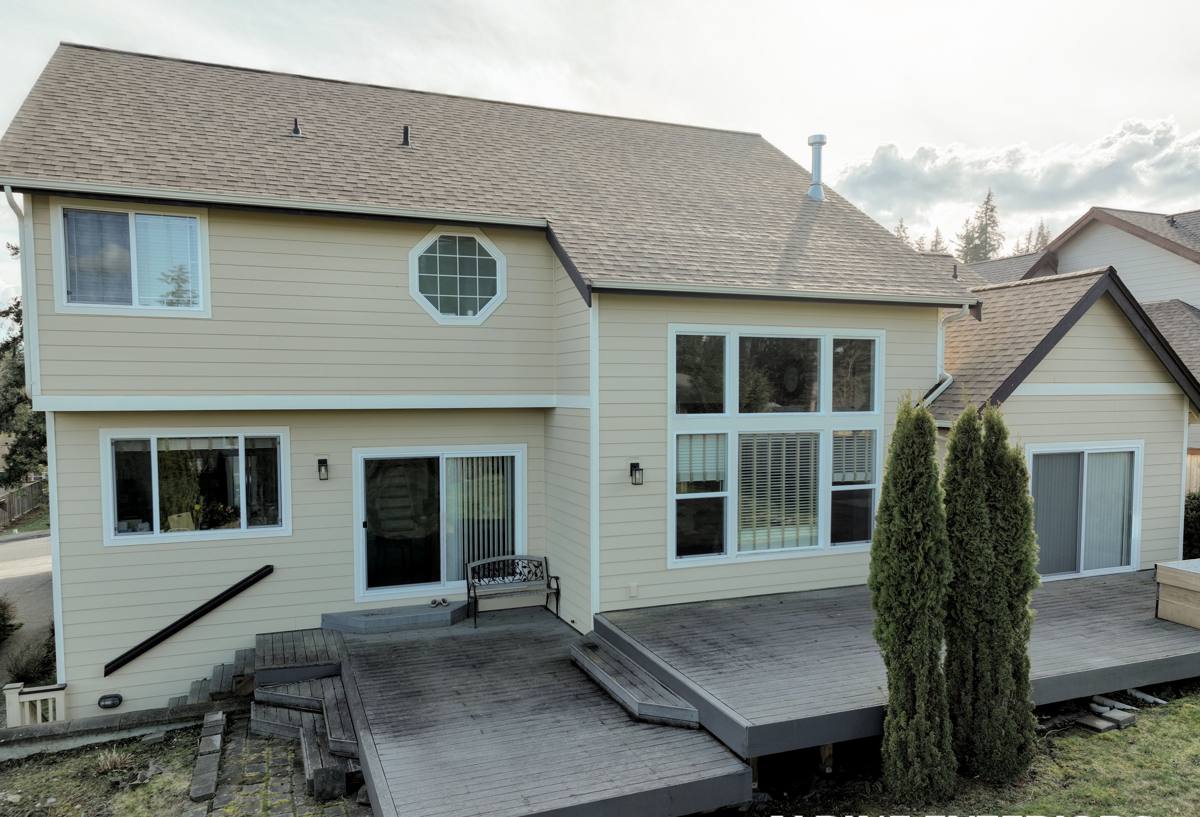
What a Correct Composite Deck Build Actually Involves
The board you choose matters, but the substructure and installation details matter more. This is where most of the long-term problems we get called out to fix actually started.
Framing and Joist Spacing
Composite boards flex differently than wood and most manufacturers require tighter joist spacing than a traditional wood deck — commonly 12" on-center for angled or diagonal board patterns, and never wider than the manufacturer's published span rating. Building composite decking on a wood-spec frame is one of the most common corners we see cut, and it leads to bounce, soft spots, and voided warranties.
Hidden Fasteners and Drainage Gaps
Proper board spacing lets water shed through the deck surface instead of pooling on top of it. In a climate that stays damp as long as this one does, that gap is what keeps organic debris — pollen, needles, leaf litter — from sitting wet against the board and feeding moss growth in the grooves. Hidden fastener clip systems, installed to the manufacturer's spec, keep that spacing consistent across the whole deck rather than tightening up unevenly the way face-screwed boards sometimes do.
Flashing and Ledger Connections
Where a deck ties into the house, the ledger board connection is the single most important waterproofing detail on the entire project. Correct flashing — installed behind the siding or house wrap, not just caulked over the top of it — is what keeps rainwater from working its way into the rim joist and wall framing over time. This is a detail that's invisible once the deck is finished, which is exactly why it has to be done right the first time.
Choosing the Right Composite Board for This Area
Not all composite decking performs the same way in a wet, shaded climate. The honest differences come down to how the board's outer layer handles standing moisture and organic growth.
| Board Type | Moisture Behavior | Moss/Algae Resistance | Trade-Off |
|---|---|---|---|
| Basic (uncapped) composite | Absorbs some surface moisture over time | Lower — porous surface holds organic film | Lowest upfront cost, more maintenance long term |
| Capped composite | Outer polymer shell resists absorption | Good, especially with textured/streaked finishes | Mid-range cost, strong balance for this climate |
| Solid PVC decking | Doesn't absorb moisture at all | Best — fully sealed, non-organic surface | Highest cost, less "wood-like" feel to some owners |
For most Everson properties with partial shade and regular rain exposure, capped composite hits the right balance of upfront cost and long-term low maintenance. Fully sun-exposed decks with less tree cover can sometimes get by with a well-maintained basic composite, while heavily shaded, low-airflow decks — common on lots backed up to trees or fencing — often do better with the extra moisture resistance of capped composite or PVC.
Moss and Mildew: What Actually Prevents It
Moss doesn't grow because composite decking is a bad product — it grows wherever moisture, shade, and organic debris sit together long enough. On a deck, that means the same three factors every time: inadequate drainage gap, debris left to accumulate in the board grooves, and airflow blocked underneath the structure.
Underdeck ventilation is the piece homeowners overlook most. A deck built low to the ground, skirted in tight on all sides with no venting, holds humidity underneath it year-round in this climate. We build in ventilation gaps or vented skirting wherever deck height allows, so air can actually move through the substructure instead of just sitting damp.
Our Process, Start to Finish
- On-site assessment — we look at grade, drainage, shade exposure, and the existing ledger/house connection before quoting anything.
- Board and structure recommendation — based on sun exposure, tree cover, and how the deck will actually be used, not a one-size-fits-all pitch.
- Permit and code check — Whatcom County has specific requirements for deck footings, guardrails, and ledger attachment depending on size and height; we confirm what applies before work starts.
- Frame and flashing installation — correct joist spacing, ledger flashing, and footing depth for our frost and drainage conditions.
- Board installation — manufacturer-spec fastening and spacing, with drainage gaps maintained throughout.
- Final walkthrough — we go over care basics for the specific board installed, including what "normal" seasonal buildup looks like versus something worth addressing.
Maintenance Checklist for Everson Composite Decks
Composite decking cuts maintenance significantly compared to wood, but "low maintenance" isn't "no maintenance" in a climate this wet. A short seasonal routine keeps a well-built deck looking and performing the way it should for the long haul.
- Sweep debris out of board grooves and gaps regularly through fall, when leaf litter is heaviest
- Rinse the deck surface with a garden hose every few weeks during the wet season
- Use a soft-bristle brush and a composite-safe cleaner for any early moss or algae film — avoid pressure washing directly into board seams
- Check that underdeck vents or skirting gaps aren't blocked by landscaping, stored items, or debris buildup
- Inspect the ledger flashing and house connection once a year for any signs of trapped moisture or staining
- Clear gutters and downspouts near the deck so runoff isn't draining directly onto or under the deck surface
Why a Crew That Already Works This Area Matters
A deck built to a generic spec sheet without accounting for local conditions is a deck that underperforms here. Crews working regularly across Whatcom County — from the saltwater-influenced air near Blaine to the damper, tree-shaded lots further inland around Everson — see firsthand which board finishes hold up, which drainage details actually matter, and which shortcuts show up as callbacks two or three winters later. That local track record is the difference between a deck that's guessed at and one that's built for the conditions it will actually sit in.
We also know the Whatcom County permitting process, typical soil and drainage conditions in this part of the county, and the realistic timeline for getting footings inspected and approved before the rainy season sets in — all things that slow a project down when a crew is figuring them out for the first time.
What This Costs and What Drives the Price
Composite decking costs more upfront than pressure-treated wood, but the honest comparison has to include the maintenance and replacement wood requires over the same 20-30 year window. Final pricing depends on a handful of straightforward factors.
| Cost Factor | Why It Matters |
|---|---|
| Board tier (basic composite vs. capped vs. PVC) | Material cost and long-term moisture/moss resistance both scale together |
| Deck size and shape | Cuts, angles, and picture-frame borders add labor beyond raw square footage |
| Substructure condition | New footings and full framing cost more than reusing a sound existing structure |
| Height and railing requirements | Guardrail code requirements kick in at certain deck heights per Whatcom County rules |
| Site access and grade | Sloped lots or limited equipment access add time to footing and framing work |
We'll walk through actual numbers for your specific deck during an on-site estimate rather than quoting blind — too many of these factors are site-specific to give an honest number without seeing the property.
Ready to Talk About Your Deck?
If you're planning a new composite deck or replacing a tired wood one in Everson, we're happy to come take a look, walk the site, and give you a straightforward assessment of what it'll take. The estimate is free, there's no pressure, and you'll get a clear answer on board options, timeline, and cost before you decide anything. Use the form below to get started.