 Blaine Siding
 Why Ferndale Decks Wear Out Faster Than You'd Expect
Ferndale sits close enough to the water and low enough in Whatcom County that decks here take a different kind of beating than decks in drier parts of the state. It's not one big storm that does the damage — it's the daily grind of salt-tinged air off the Strait, driving rain that comes in sideways for days at a time, and a moss season that can stretch from October well into April. Add in freeze-thaw cycles most winters, and you've got a structure that's under constant low-grade stress twelve months a year.
Homeowners often call us thinking they need a repair — a few boards replaced, some fasteners tightened — when the deck has actually crossed the line into needing full replacement. There's a real difference between a deck that needs maintenance and one that's structurally past its useful life, and knowing which one you're looking at matters, because patching a failing frame just delays the inevitable and wastes money.
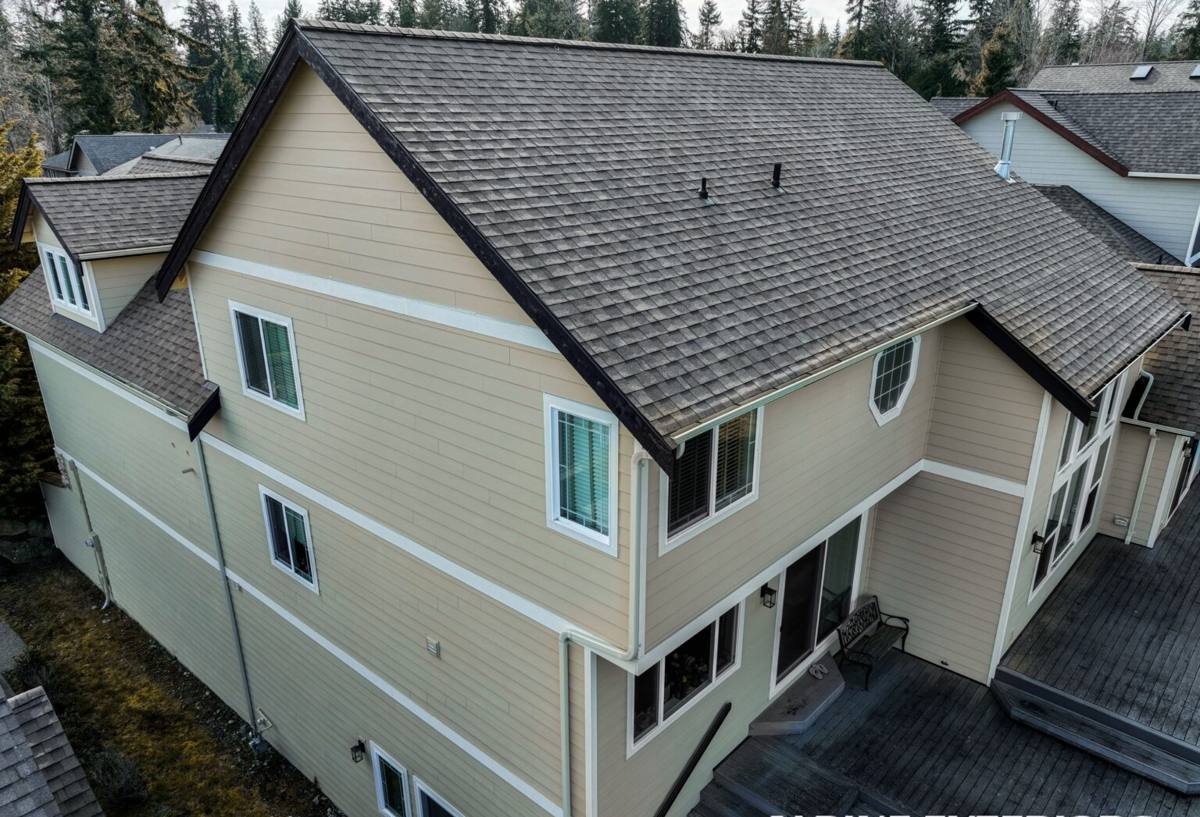
What Ferndale's Climate Actually Does to a Deck
Salt Air and Metal Fasteners
Even homes a few miles inland from Drayton Harbor and the Strait of Georgia get enough salt-laden air to accelerate corrosion in lower-grade fasteners and hardware. Nails and screws that aren't rated for coastal exposure can start rusting from the inside of the wood out, which means the surface can look fine while the connection underneath is failing. This is one of the most common causes of a deck that "seems okay" until a board or railing post suddenly doesn't.
Driving Rain and Ledger Board Rot
Wind-driven rain doesn't just fall on a deck — it gets pushed sideways into every gap, seam, and joint. The ledger board (where the deck attaches to the house) and the framing underneath the decking are the parts most at risk, because they're the hardest to inspect and the last place moisture drains from. Once water gets trapped between the decking boards and the joists, or behind improperly flashed ledger connections, rot can spread for years before it shows up as a soft spot on the surface.
Moss, Algae, and Surface Degradation
A long, wet, mild moss season means organic growth gets a real foothold on horizontal wood and composite surfaces, especially in shaded yards or under tree cover, which is common in and around Ferndale. Beyond being slippery and unattractive, moss and algae hold moisture against the deck surface far longer than open air would, which speeds up wood decay and can stain or degrade some composite materials over time.
Signs Your Ferndale Deck Needs Replacement, Not Repair
- Soft, spongy, or springy spots anywhere in the decking or framing when you walk across it
- Visible rot, splitting, or crumbling wood at the ledger board, posts, or joists
- Rust streaks running from fasteners, or fasteners that back out or spin freely
- Railings or stair stringers that feel loose or flex under normal use
- A deck more than 15-20 years old that has never had its structural connections inspected
- Persistent moss or algae that returns within weeks of cleaning, even in dry stretches
- Gaps opening up between boards, or boards that have cupped, twisted, or pulled away from fasteners
If you're seeing two or more of these, it's worth having someone look at the framing before deciding whether repair is even a realistic option.
What a Correct Deck Replacement Involves
A proper replacement isn't just swapping old boards for new ones on the same frame. In our experience working on homes throughout Whatcom County's wetter microclimates, most deck failures start below the visible surface — so a replacement done right addresses the whole system, not just the top layer.
1. Full Structural Assessment
Before any demolition, we check the ledger board attachment, the condition of the posts and footings, joist spacing and condition, and how the deck was originally flashed against the house. This tells us whether the existing frame can be reused or whether it needs to come out along with the decking.
2. Ledger Flashing Done Right
Given how much of Ferndale's deck damage traces back to water intrusion at the house connection, proper ledger flashing isn't optional — it's the single most important detail in preventing the next round of rot. This means correctly layered flashing that sheds water away from the house framing, not just caulk over a gap.
3. Corrosion-Resistant Fasteners and Hardware
Given the coastal air, we use fasteners and structural hardware rated for exterior and corrosive-exposure use, not standard interior-grade hardware that will start failing within a few seasons. This is a small cost difference upfront that prevents hidden fastener failure down the road.
4. Proper Drainage and Spacing
Board spacing, joist ventilation, and grading beneath the deck all affect how quickly water leaves the structure after a storm. A deck that traps water — even slightly — will always underperform in this climate, no matter how good the surface material is.
5. Code-Compliant Structural Work
Railing height, guard spacing, stair rise and run, and footing depth all need to meet current building code, which matters both for safety and for resale. Older decks built to outdated or informal standards often need real corrections here, not just cosmetic ones.
Choosing Decking Material for a Ferndale Property
There's no single "best" decking material — the right choice depends on how much upkeep you want to do, your budget, and how much shade and moisture exposure your specific yard gets.
| Material | Moss/Moisture Behavior | Maintenance | Typical Lifespan |
|---|---|---|---|
| Pressure-treated wood | Prone to moss and staining in shaded, damp yards; needs regular sealing | Annual cleaning and periodic re-sealing | 10-15 years with upkeep |
| Cedar | Naturally rot-resistant but still needs sealing to resist moss staining | Regular cleaning, re-oiling every 1-2 years | 15-20 years with upkeep |
| Composite decking | Resists rot; some lower-grade composites can still stain from algae in heavy shade | Periodic washing, no sealing needed | 25-30+ years |
| PVC decking | Fully resists moisture absorption and rot | Occasional washing | 30+ years |
In yards with heavy tree cover or limited sun exposure — common in parts of Ferndale — composite or PVC decking generally holds up with far less fight against moss than wood does. For homeowners who like the look and feel of real wood and are willing to keep up with sealing, cedar remains a solid choice, but it's a genuine maintenance commitment in this climate, not a one-and-done material.
Our Deck Replacement Process
- Site visit and assessment — we inspect the existing deck, ledger connection, and framing to determine full scope
- Honest recommendation — we tell you plainly whether repair is realistic or replacement is the better long-term move
- Material walkthrough — we go over decking and railing options based on your yard's sun/shade exposure and your maintenance preferences
- Permitting — we handle the permit process where required so the finished deck meets current code
- Demolition and disposal — old decking, framing, and debris removed and hauled off
- Structural rebuild — proper ledger flashing, corrosion-resistant hardware, and code-compliant framing
- Decking and railing installation — installed to manufacturer spec, with attention to drainage and spacing
- Final walkthrough — we review the finished work with you before calling the job done
Why a Locally Experienced Crew Matters Here
Deck failures in this part of Whatcom County follow patterns that aren't the same as what you'd see in a drier inland climate. A crew that mostly works dry-climate jobs may not think twice about ledger flashing details or fastener grade, because in their usual conditions it simply doesn't fail as fast. Working regularly on homes exposed to Ferndale's combination of salt air, driving rain, and moss season means we've seen firsthand which shortcuts cause callbacks two or three years down the line — and we build to avoid them from the start.
Local experience also means a more accurate assessment on day one. We know what a ledger board exposed to a decade of this weather typically looks like once opened up, so we can give you a realistic scope and cost range before demolition starts, not a surprise change order once the old boards come off.
Cost Factors to Expect
Every deck is different, so we won't quote a number without seeing the site, but the main factors that move the price are worth knowing upfront:
- Deck size and whether it's single-level or multi-level
- Height off the ground and whether stairs, landings, or multiple railings are involved
- Condition of the existing framing — reusable footings and posts cost less than full structural replacement
- Decking material chosen (pressure-treated wood through PVC span a wide cost range)
- Railing style and material
- Permit requirements based on deck height and attachment to the home
- Site access — decks that are hard to reach with equipment take more labor
We walk through each of these with you during the estimate so there are no surprises once work begins.
Get a Free, No-Pressure Estimate
If your deck is showing signs of wear, or you just want an honest read on whether it's time to replace rather than repair, we're happy to take a look. Fill out the form below to schedule a free estimate — no pressure, no obligation, just a straight answer about what your deck actually needs.