 Blaine Siding
 New-Construction Windows Built for Ferndale's Climate
Ferndale sits back from the open water compared to towns like Blaine or Birch Bay, but that distance doesn't buy a new build much protection. Marine air off Bellingham Bay and the Strait of Georgia still moves inland across the Nooksack lowlands, wind-driven rain still hits walls sideways rather than falling straight down, and the mix of shade, mild temperatures, and consistent moisture that drives Whatcom County's moss season settles onto north-facing walls here just as readily as it does closer to the coast. Ferndale has also seen steady residential growth over the years — new subdivisions filling in around the older downtown core, additions and infill going up on lots that used to be farmland — which means new-construction window work is a regular part of what we do in this area, not an occasional job.
A new build is the one point in a home's life when a window installer has the best possible shot at getting the details right, because the wall is still open and there's no old caulk, failed sealant, or hidden rot to work around. This page covers new-construction window installation specifically for Ferndale builds — how it differs from replacing windows in an existing home, what a correct install involves at the framing stage, and how we coordinate with builders and homeowners so the window openings on your new home hold up to this climate instead of fighting it for the next twenty years.
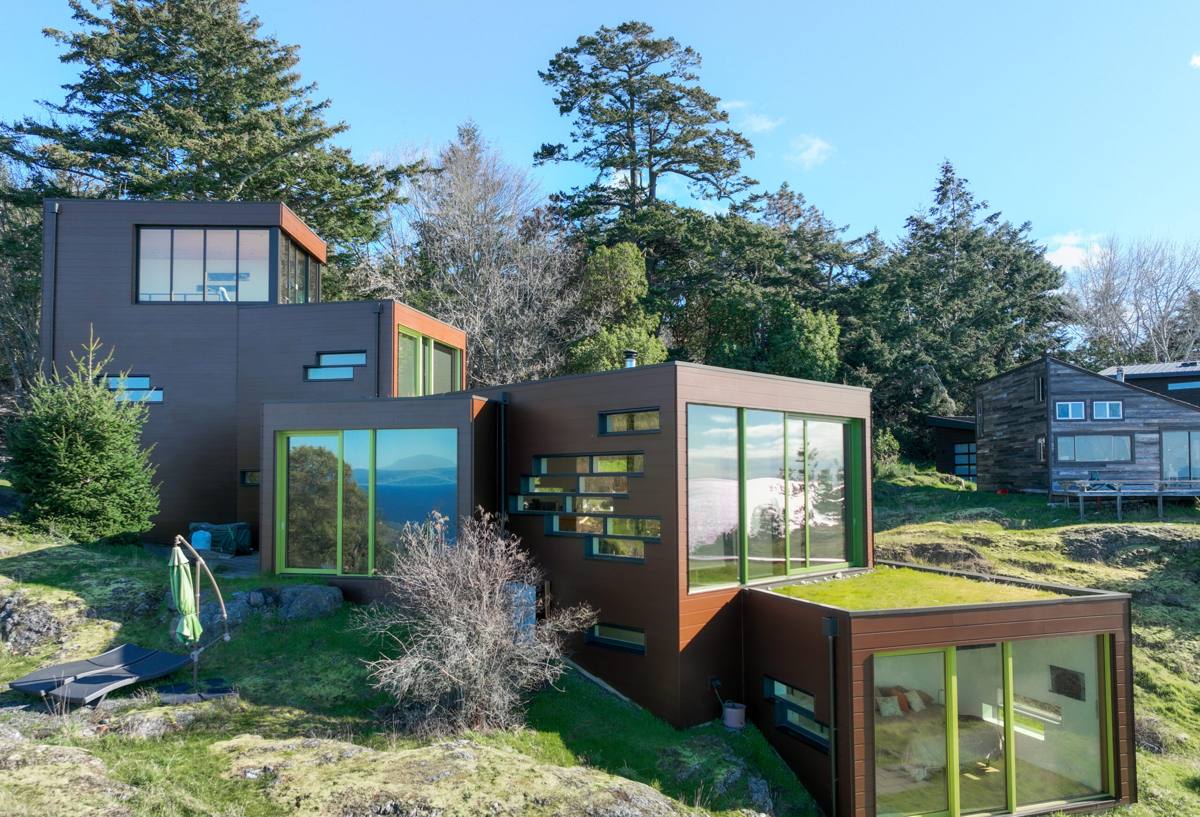
New Construction vs. Replacement Windows: Two Different Jobs
New-construction windows and replacement windows are built differently and installed differently, and treating them as interchangeable is one of the more common mistakes on a build. New-construction units have a nailing fin around the frame that fastens directly to the stud framing before the weather-resistive barrier (WRB) and siding go on. That fin, tied into a correctly lapped flashing sequence, becomes part of the wall's drainage plane from the start. Replacement or insert windows are built to drop into an existing, already-finished opening without disturbing the surrounding siding, and they rely on a different sealing approach because the wall around them is already closed up.
On a new Ferndale build, that distinction is an advantage worth using. A nail-fin window installed at the right point in framing lets us build the flashing sequence properly, layer by layer, tied into the housewrap rather than caulked over an existing wall as a repair. It's the single biggest reason a new-construction install, done correctly, outperforms almost any retrofit over the long run.
What Ferndale's Climate Asks of a New Window Opening
Salt-Tinged Air, Carried Further Than You'd Think
Ferndale isn't waterfront, but the marine air that moves through this part of Whatcom County still carries enough salt to accelerate corrosion on window hardware, fasteners, and lower-grade flashing metal over time. On a new build, that means specifying corrosion-resistant fasteners and flashing from the start, rather than finding out in ten years that budget hardware pitted and stiffened on the walls that catch the prevailing weather.
Wind-Driven Rain and Sill Pan Drainage
Rain here rarely falls straight down. Wind pushes it sideways into window openings, which means the sill pan under every new window needs a real pitch and a clear drainage path outward — not a flat sill relying on a bead of caulk to stay dry. It's a detail that's far easier to get right on open framing than it ever is once a wall is closed up.
A Moss and Mildew Season That Runs Long
Shaded elevations and slow-draining sills hold moisture longer here than they would in a drier climate, and that supports mildew growth and, given enough years, slow rot at the sill and lower corners of a window opening. Building the drainage plane correctly while the framing is still exposed is the most effective way to keep that moisture out of the wall assembly permanently, instead of managing it with paint and caulk touch-ups later.
The Build Sequence: What a Correct Install Actually Involves
A window opening on a new build goes through a specific order of operations, and skipping or reversing steps is exactly how a problem gets built into a house that won't show itself until a wet season or two down the road.
Rough Opening Prep
The rough opening has to be square, plumb, and sized correctly to the window unit before anything else happens. An opening that's out of square forces shims and gaps that compromise the window's operation and its seal at the same time.
Sill Pan Flashing
A properly formed, pitched sill pan goes in first, sloped to carry any water that gets past the window outward and away from the framing rather than left flat where it can pool under the frame.
Setting the Window and Fastening the Nailing Fin
The window is set into the opening, checked for level, plumb, and square, and the nailing fin is fastened to the framing following the manufacturer's pattern with corrosion-resistant fasteners suited to this region's air.
WRB and Flashing Tape Integration
This is the step that separates a correct install from a rushed one. Flashing tape and housewrap have to go in a specific shingle-lap order — sill first, then jambs, then head flashing lapped over the top — so any water that reaches the wall behind the siding drains down and out instead of getting trapped behind the window frame.
Head Flashing and Drip Cap
A head flashing or drip cap above the window sheds water outward before it can track down behind the top of the frame, which matters more here than it would somewhere rain falls straight down instead of wind-driven.
Interior Sealing and Insulation
Once the exterior sequence is complete, the gap between the window frame and the rough opening gets sealed and insulated from the inside in a way that doesn't trap moisture against the framing, keeping the assembly efficient and dry at the same time.
A Practical Checklist for New Window Openings
- Rough openings framed square, plumb, and sized correctly for the specified window units
- Sill pan pitched to drain outward, not left flat
- Nailing fin fastened per manufacturer specification with corrosion-resistant fasteners
- Flashing tape integrated with the WRB in the correct shingle-lap order at sill, jambs, and head
- Head flashing or drip cap installed above every opening
- Specified windows meet current Washington State Energy Code U-factor requirements
- Every opening inspected and signed off before siding crews close the wall in
Frame Material Options for New Builds in This Climate
Budget, sun exposure on a given elevation, and how long you plan to be in the home all factor into the right frame choice. Here's how the common options actually hold up under Ferndale's mix of marine air, wind-driven rain, and shade.
| Frame Material | How It Handles This Climate | Typical Maintenance | Realistic Lifespan Here |
|---|---|---|---|
| Vinyl | Won't rot or corrode; performance depends heavily on correct installation | Low — occasional track and weep-hole cleaning | 20-30 years |
| Fiberglass | Dimensionally stable across temperature swings, resists moisture well | Low | 30-40+ years |
| Wood, clad exterior | Clad exterior shields the wood from direct weather; strong interior look | Moderate — interior finish upkeep, cladding condition to monitor | 20-30+ years depending on cladding |
| Aluminum | Can corrode in salt-influenced air over time unless well-finished; conducts cold | Moderate | 20-30 years |
We'll walk you or your builder through which material fits the home's design, the budget, and each wall's actual exposure, rather than defaulting to whichever product is easiest to move. A shaded north wall and a sun-exposed south wall on the same Ferndale build don't always call for the same answer, and pretending otherwise is how homeowners end up with premature failures on the one elevation that needed a different spec.
Washington Energy Code and Glazing Choices
New-construction windows in Washington have to meet the U-factor and performance requirements in the Washington State Energy Code, regardless of who's doing the install. Past the minimum code number, it's worth thinking about glazing and low-E coatings suited to each elevation's actual sun exposure rather than putting the same glass package on every window in the house. We'll review the U-factor and NFRC ratings on whatever window package you or your builder has specified, confirm it meets current code, and flag it before any opening gets closed in behind siding — that's the last easy point to make a change.
Our Process for New-Construction Window Installs
- Plan review and takeoff: We check the window schedule and rough opening sizes against the plans before framing is finalized, so a discrepancy gets caught early instead of on install day.
- Scheduling with the build timeline: Windows go in at the right point in the sequence — after rough openings are framed, before siding closes the wall.
- Sill pan, window set, and fin fastening: Each opening is prepped, the window set square and plumb, and the nailing fin fastened to spec.
- Flashing and WRB integration: Sill, jamb, and head flashing tied into the housewrap in the correct lapped order, at every opening, not just the convenient ones.
- Quality check before siding: Every opening gets walked before siding crews start, since that's the last point a flashing issue can be fixed without tearing into finished exterior work.
- Final walkthrough: Once siding and trim are finished, we check window operation, hardware, and visible seals with you or your builder.
Working With Your Builder or GC in Ferndale
Most new-construction window work here happens as part of a larger build under a general contractor, and we're set up to work inside that structure rather than around it — showing up on the schedule the GC sets, coordinating directly with framing and siding crews on sequencing, and flagging a rough opening or flashing problem immediately instead of letting it turn into a change order later. If you're an owner-builder managing your own trades on a Ferndale lot, we'll walk you through what needs to happen and when, so nothing gets rushed past the point where it can still be corrected easily.
Why a Crew That Already Works Ferndale Builds Matters
A crew that regularly installs new-construction windows around Ferndale has already seen how salt-tinged air corrodes underspecified hardware, how wind-driven rain finds a poorly lapped sill pan, and which walls on a given lot need extra attention because of shade or how the property sits relative to prevailing weather. That knowledge shows up in decisions that never come up in a sales conversation — how much lap a flashing course needs at a given corner, whether a particular elevation justifies a different frame material, when a sill pan needs a steeper pitch than the standard detail calls for. Those are the calls that decide whether a new build's windows are still performing cleanly in twenty years or showing drafts and soft trim in five.
It also means working with a crew that fits into a builder's schedule without becoming the trade that holds everything else up, and one that's still around and reachable if a warranty question comes up years after the siding crew has moved on to other projects.
If you're building a new home in Ferndale and want the window openings done right the first time — sill pan, flashing, and fin work included — we're glad to review your plans and walk through the process with you or your builder. Use the form below to request a free, no-pressure estimate.