 Blaine Siding
 Ferndale Roofs Work Harder Than Most
Roofs in Ferndale deal with a combination of stresses that a lot of roofing crews from outside Whatcom County simply aren't calibrated for. You've got salt-laden air drifting in off the water, long stretches of driving rain that hits roof edges and walls at an angle instead of falling straight down, and a moss season that can run most of the year in shaded, north-facing sections. None of those things by themselves is unusual for the Pacific Northwest. Together, over years, they wear down flashing, lift shingle edges, and quietly rot decking in spots nobody checks until there's a stain on the ceiling.
A roof repair here isn't just about patching what's visible. It's about understanding why that spot failed in the first place, so the same repair doesn't have to happen again in two winters.
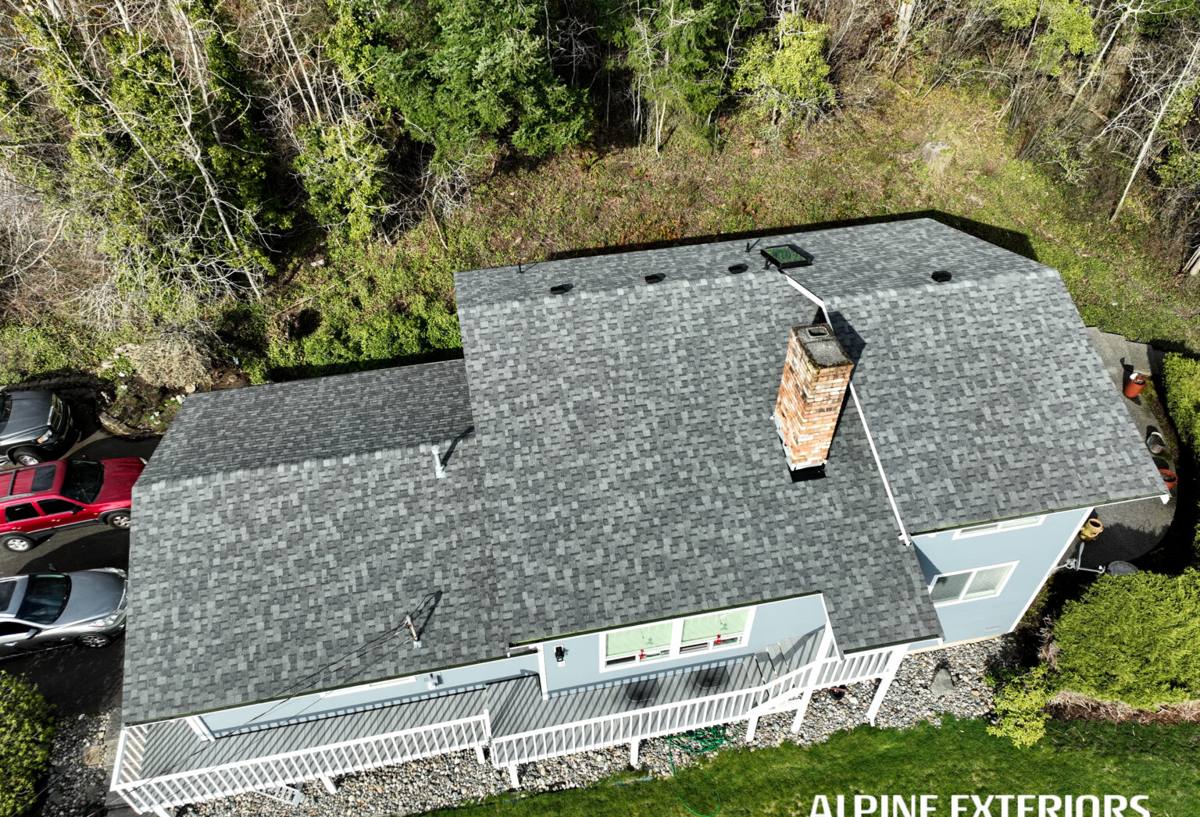
What's Actually Damaging Ferndale Roofs
Salt Air and Corrosion
Homes closer to the water pick up airborne salt that settles on metal roof components — nails, flashing, gutters, vent caps — and speeds up corrosion well beyond what you'd see on a roof twenty or thirty miles inland. Galvanized fasteners and cheaper flashing metals can start showing rust streaks and pitting years before a manufacturer's rated lifespan would suggest. Once a fastener corrodes and loosens, water has a path in, even if the shingle above it still looks fine.
Driving Rain and Wind-Driven Moisture
Whatcom County storms don't always fall straight down. Wind-driven rain gets pushed sideways into roof-wall intersections, under shingle tabs, and behind poorly lapped flashing at chimneys and dormers. Standard shingle installation assumes water flows downhill in a straight line; wind-driven rain breaks that assumption, which is why so many leaks trace back to valleys, step flashing, and low-slope transitions rather than open field shingle.
Moss and Trapped Moisture
A long moss season means moss isn't just a cosmetic problem here — it's a moisture-retention problem. Moss holds water against the roof surface far longer than bare shingle would, keeping granules and underlayment damp between rain events. On shaded, north-facing slopes especially, that constant dampness accelerates granule loss and can work its way under shingle edges over a few seasons.
Signs a Ferndale Roof Needs Repair
Most roof problems give warning signs well before there's an active leak inside the house. Worth checking for, or having checked, at least once a year:
- Moss growth on shaded slopes, especially where it's thick enough to hold shingle tabs slightly raised
- Granules collecting in gutters or at downspout outlets
- Rust streaking below metal flashing, vent caps, or fasteners
- Soft or spongy spots when walked, particularly near valleys and roof-wall intersections
- Daylight visible through the attic roof deck, or damp insulation below it
- Ceiling stains that appear only during heavy wind-driven storms, not steady rain
- Curling, cracking, or missing shingle tabs near eaves and rakes
- Gaps or lifted caulking at chimney, skylight, or plumbing vent flashing
Any one of these can be minor on its own. Several at once, especially combined with an older roof, usually means it's time to have someone look closely rather than wait.
What a Correct Repair Actually Involves
Diagnosis Before Anything Else
A repair is only as good as the diagnosis behind it. Water rarely leaks straight down from where it enters — it travels along decking, framing, and underlayment before showing up somewhere else entirely. That means a proper repair starts with tracing the leak back to its actual source, not just patching the spot where the stain appeared. Rushing this step is the most common reason a "repaired" roof leaks again the next season.
Removing, Not Covering
Correct repair work means pulling back shingles and flashing far enough to see and replace anything damaged underneath — soft decking, saturated underlayment, corroded fasteners — rather than sealing over the top of a problem with caulk or roofing cement. Surface patches can buy a little time, but they don't stop rot from continuing underneath, and they make the next repair harder to diagnose.
Matching Materials and Methods
Flashing, underlayment, and shingles all need to tie back into the surrounding roof correctly — proper laps, proper fastening patterns, and materials suited to this area's conditions rather than whatever's fastest to install. A repair that doesn't match the existing roof's slope, material, and drainage pattern often just relocates the leak instead of fixing it.
Repair or Replacement? How We Help You Decide
Not every roof problem calls for a full replacement, and not every roof is a good candidate for another round of patching. The right call usually comes down to a few factors:
| Factor | Favors Repair | Favors Replacement |
|---|---|---|
| Age of roof | Roof is within its expected service life | Roof is near or past its expected lifespan |
| Extent of damage | Isolated to one area (a valley, a flashing detail, a slope) | Widespread granule loss, multiple failure points |
| Decking condition | Decking is sound where exposed | Decking is soft or rotted in several areas |
| Moss/algae history | Recent, treatable growth | Long-term moss damage across large sections |
| Underlying cause | Fixable detail (flashing, fastener, sealant) | Systemic issue (ventilation, slope, material failure) |
We'll tell you honestly which side of that table your roof falls on. There's no benefit to us patching a roof that needs replacing — it just means a call back to the same problem later.
Our Process, Start to Finish
- Inspection. We get on the roof (and in the attic, if needed) to trace the actual source of the problem, not just the symptom.
- Honest assessment. You get a clear explanation of what's causing the issue, what repair options make sense, and what a full replacement would involve if that's the better long-term answer.
- Written estimate. Scope and cost factors are laid out before any work starts — no surprises mid-repair.
- The repair itself. Damaged material is removed, decking and underlayment are addressed where needed, and flashing and shingles are reinstalled to proper lap and fastening standards.
- Final check. We confirm the repair area, and the surrounding roof, is sealed and shedding water correctly before we consider the job done.
Materials and Methods Suited to This Climate
Corrosion-Resistant Flashing and Fasteners
Given how much salt air accelerates corrosion locally, we favor flashing metals and fasteners rated for coastal exposure over the cheapest standard option, particularly on homes closer to the water. It costs a little more up front and pays for itself by not needing to be replaced again in a few years.
Moss Treatment and Prevention
Where moss is a factor, repair work includes physically clearing growth from the repair area (never pressure-washing shingles, which strips granules) and addressing conditions that let moss take hold in the first place — shade, poor airflow, debris buildup. We can also talk through simple ongoing moss control so the same section doesn't need repair again next moss season.
Underlayment That Handles Wind-Driven Rain
In areas prone to wind-driven rain — valleys, eaves, roof-wall intersections — we use underlayment and ice-and-water membrane products suited to that exposure rather than the minimum a roof would need in a calmer climate.
Why Local Experience Matters for This Job
A crew that regularly works Ferndale and the rest of Whatcom County already knows which roof details tend to fail first in this climate, what moss growth patterns look like on local roofs at different points in the season, and how to sequence repair work around this area's weather rather than fighting it. That local familiarity shows up in small ways that matter: knowing which flashing details are worth upgrading during a repair instead of just matching what failed, and knowing how to schedule work so it isn't undone by the next storm system moving through.
It also matters for something less visible — knowing when a repair is genuinely enough, and when a homeowner is better served hearing that a replacement is coming sooner than they'd hoped. That's a harder conversation to have honestly if you don't see the long-term results of your own repair work in this specific area, season after season.
Between Repairs: Keeping a Ferndale Roof Ahead of the Weather
A few habits go a long way toward stretching the life of a repair and catching the next issue before it becomes a bigger one:
- Keep gutters and downspouts clear so water isn't backing up under roof edges
- Have moss growth addressed early in the season rather than left to spread
- Trim back overhanging branches to reduce shade and debris buildup on the roof
- Have flashing at chimneys, skylights, and vents checked every year or two, since these fail before open shingle field does
- Address small leaks right away — a small, isolated repair now is almost always cheaper than the damage six months of slow leaking causes
If you're dealing with a leak, moss buildup, or just want an honest opinion on what your roof actually needs, we're happy to take a look. Reach out for a free, no-pressure estimate using the form below.