 Blaine Siding
 Fiber Cement Siding in Birch Point
Birch Point sits along the water on the western edge of Whatcom County, close enough to Blaine that it shares the same weather system: salt-laden air off the water, storms that arrive with real wind behind them, and a wet season that runs longer than most of Washington sees. Homes here take a different kind of beating than houses ten or fifteen miles inland, and the siding on a Birch Point house has to answer for it every single day, not just during the worst storms of the year. This page is about that one job — fiber cement siding, done for this specific stretch of shoreline — not a general overview of siding options.
We install James Hardie fiber cement siding exclusively, and Birch Point is part of our regular service area alongside Blaine proper. That matters more than it might sound like it should. A crew that only shows up here occasionally learns the climate in theory. A crew that works this shoreline routinely learns it from callbacks, tear-offs, and the small failures that show up two or three years after a rushed install — and adjusts accordingly.
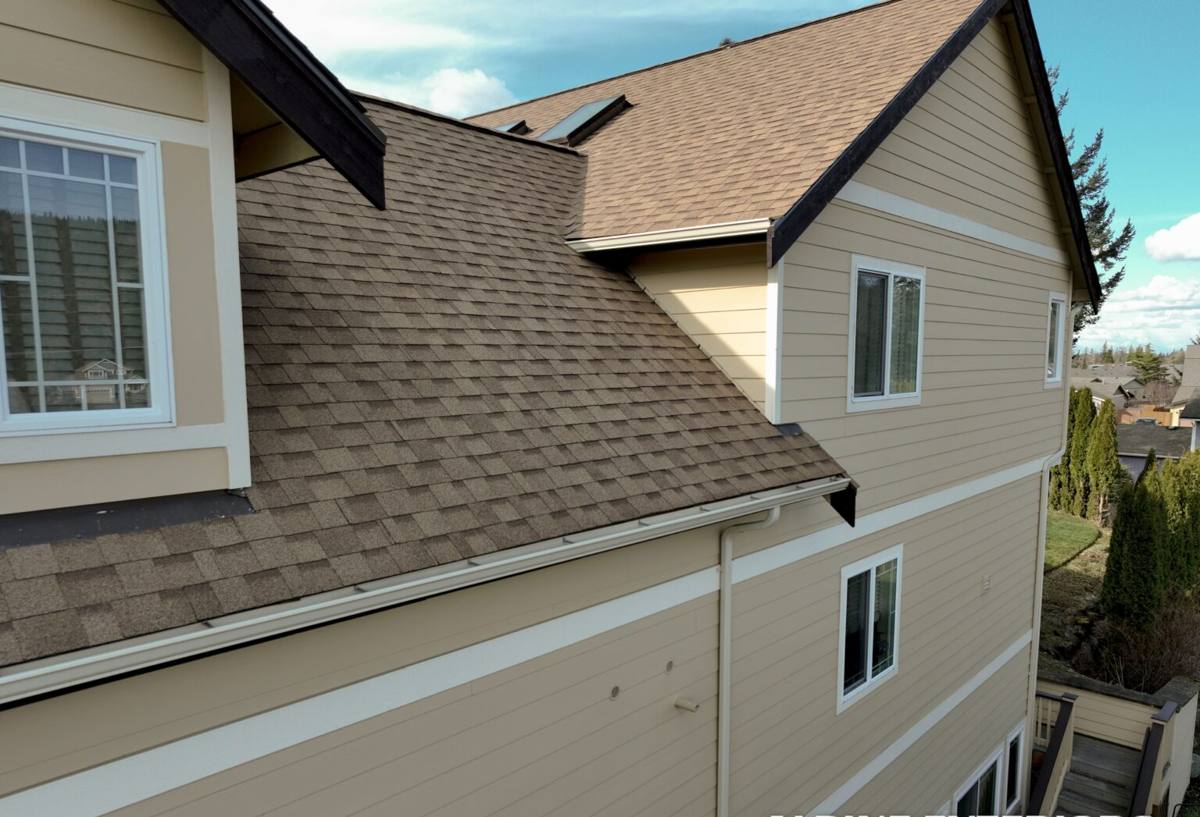
What the Birch Point Climate Does to Siding
Salt Air, Close to the Water
Being this close to the water means Birch Point homes take a steadier dose of salt-carrying air than houses further inland get. Salt accelerates corrosion on fasteners, flashing, and any exposed metal trim, and it breaks down lower-grade paints and coatings faster than a dry inland climate ever would. On a waterfront or near-waterfront lot, the siding material and the hardware behind it both need to be chosen for that exposure, not just for looks.
Driving Rain
Storms coming off the water rarely fall straight down. Wind pushes rain sideways into wall assemblies, into window and door flashing, and into the seams where trim meets siding. That sideways, wind-driven load is harder on a house than the same amount of rainfall would be somewhere calmer, and it finds any gap a careless installation left behind. Birch Point's open, exposed position means this pattern isn't occasional — it's a regular feature of the local weather.
A Long Moss Season
Mild temperatures combined with near-constant moisture add up to a moss and mildew season that can stretch across most of the year on shaded or north-facing walls. Surfaces that hold moisture longest are the first to grow something on them, and any siding material with even a little surface porosity gives moss and mildew a foothold. Around Birch Point, tree-shaded lots and walls that don't get much winter sun are usually the first places it shows up.
Why Fiber Cement Fits This Location
Fiber cement is a cement, sand, and cellulose fiber composite, engineered specifically to hold up under conditions like these — moisture, salt, wind, and temperature swings — without the swelling, warping, or rot that wood-based products are prone to. We install James Hardie's fiber cement systems exclusively, and in a location like Birch Point that decision isn't a brand preference, it's a response to what we've seen fail and what's held up on tear-offs and service calls in coastal Whatcom County.
- Non-combustible core: Fiber cement doesn't feed a fire the way wood-based siding can, which matters for both safety and insurance considerations.
- Factory-applied ColorPlus finish: Color is baked on under controlled factory conditions rather than field-applied, so it resists fading, chalking, and moisture staining far longer than a job-site paint job.
- Climate-engineered HZ formulation: Hardie's HZ5 product line is built for regions with sustained moisture exposure and freeze-thaw cycling, which describes this shoreline well.
- Dimensional stability: Fiber cement doesn't swell, cup, or warp the way engineered wood or OSB-based siding can after repeated wetting.
- Strong transferable warranty: Provided the installation follows Hardie's spec, the manufacturer backs the product with one of the stronger warranty structures in the industry.
We don't install LP SmartSide, vinyl siding, Cemplank, Allura, primed spruce, or cedar. Each of those has a place in the broader market and homeowners who are satisfied with them elsewhere. But on a shoreline exposure like Birch Point, we've made a professional call to stand behind one system rather than offer a cheaper alternative that quietly shifts moisture and maintenance risk onto the homeowner a few years down the road.
What a Correct Installation Involves Here
Fiber cement performs the way it's engineered to only when the installation matches the manufacturer's spec, and on an exposed, salt-air site the details matter more than they would inland. A few of the basics we won't shortcut:
- Rain screen gap: A drainage cavity behind the siding lets any moisture that gets past the exterior surface drain and evaporate rather than sit against the wall sheathing.
- Correct fastener type and spacing: Hardie specifies corrosion-resistant fastener types and precise spacing for a reason — loose spacing or the wrong fastener is one of the more common causes of early failure we find on coastal tear-offs.
- Properly lapped house wrap and flashing: Every seam and penetration needs to shed water downward and outward, especially on elevations that catch wind-driven rain off the water directly.
- Sealed butt joints and trim transitions: Open or poorly sealed joints are where salt-laden moisture finds its way behind the siding first, and where moss gets its first foothold on a shaded wall.
- Proper clearance at grade and hardscape: Siding installed too close to soil, decking, or paving stays damp longer and is more prone to wicking moisture at the bottom edge.
None of this is exotic work. It's the manufacturer's own published installation spec, followed consistently — including on the parts of the job that are hardest to see once the siding is up and the crew has moved on.
Signs Birch Point Homeowners Should Watch For
Because of how this climate works, certain warning signs show up here before they would on a more sheltered inland property. Catching them early is usually the difference between a repair and a full replacement.
| What You See | What It Usually Means |
|---|---|
| Green or black staining on shaded walls | Moss or mildew taking hold on a surface that isn't drying out fast enough between rain events |
| Rust streaks below fasteners or trim | Corroding hardware, often from fasteners that weren't rated for coastal salt exposure |
| Soft or swollen spots near the bottom courses | Moisture wicking in at grade, often on wood-based or engineered wood siding rather than fiber cement |
| Chalky or faded color on south- and west-facing walls | A field-applied paint finish breaking down under sun and salt exposure faster than a factory finish would |
| Gaps opening at butt joints or trim seams | Caulking or sealant failing, giving wind-driven rain a path behind the siding |
None of these are emergencies the moment they appear, but on a shoreline property they tend to get worse faster than they would elsewhere in the county, simply because the conditions driving them don't let up for long.
Our Process for a Birch Point Job
The steps are the same ones we'd use anywhere, but every one of them gets adjusted for this location's exposure rather than treated as a generic checklist.
- Site walk and assessment: We look at wall orientation relative to the water and prevailing wind, existing moisture damage, tree cover, and drainage at grade before recommending anything.
- Tear-off and sheathing inspection: Old siding comes off and the wall sheathing gets inspected for rot or damage that needs to be addressed before new siding goes on — skipping this step just buries an existing problem.
- House wrap and flashing: Weather-resistant barrier and flashing get installed and lapped correctly at every seam, window, and penetration, with extra attention on elevations facing the water.
- Rain screen and fastening: The drainage gap goes in, followed by Hardie panels or lap siding fastened to spec with corrosion-resistant hardware.
- Trim, sealing, and finish detail: Joints, corners, and trim transitions get sealed correctly, and the job gets a final walk-through before we call it done.
Cost Factors on a Shoreline Property
Pricing depends on the specifics of the house, but a few factors tend to move the number more on a Birch Point property than they would on a typical inland job:
| Factor | Why It Matters Here |
|---|---|
| Existing sheathing condition | Coastal moisture exposure makes hidden rot behind old siding more common, which can add repair scope once tear-off begins |
| Wall orientation and exposure | Elevations facing the water or prevailing wind often warrant extra flashing and sealing detail |
| Access and site conditions | Waterfront and shoreline lots can have tighter access, slopes, or landscaping that affect scaffolding and staging |
| Product line and profile | HZ5 formulations and specific Hardie profiles or ColorPlus finishes vary in material cost |
| Trim and detail complexity | Homes with more corners, dormers, or trim transitions require more labor to seal and finish correctly |
We walk every property in person before giving a number, because guessing at coastal-specific scope from a photo or a phone call tends to be wrong in exactly the ways that matter later.
Why Local Experience Matters for This Job
Siding crews that don't regularly work shoreline properties tend to treat every job the same way, using standard fastener schedules and standard flashing details regardless of exposure. That approach can hold up fine inland. On a property like Birch Point, it's often the reason siding that looked fine at installation starts showing rust streaks, open joints, or moss growth within a few years. We work this stretch of Whatcom County regularly enough to know which walls need the extra attention before the first callback, not after.
That local pattern recognition is also why we limit ourselves to one siding system. Every product has installation quirks, and trying to be expert in six different systems across a demanding coastal climate means being genuinely expert in none of them. Standardizing on James Hardie fiber cement lets our crew get deeply familiar with one manufacturer's spec, one set of fastening and flashing details, and one warranty structure — and apply that expertise consistently on every Birch Point home we work on.
Get a Free Estimate for Your Birch Point Home
If your siding is showing staining, rust streaks, soft spots, or open joints, or if it's simply due for replacement, we're happy to take a look and give you a straightforward, no-pressure estimate for James Hardie fiber cement siding built for this exact climate. Use the form below to get started.