 Blaine Siding
 Custer's Siding Has to Work Harder Than It Does Inland
Custer sits close enough to the water that homes here take on a different set of stresses than a house twenty miles inland in Whatcom County. Salt-laden air off the coast works into seams and fasteners year-round. Wind-driven rain doesn't just fall straight down — it gets pushed sideways into laps, corners, and trim by the same weather systems that roll through Blaine off the Strait. And the long, wet shoulder seasons here mean moss and algae get a real head start on any surface that stays damp for more than a day or two at a time.
None of that is unusual for this part of Washington. But it means siding choices that hold up fine in a drier climate — or even just twenty miles east — don't always hold up the same way in Custer. The siding on a Custer home is doing more work than the label on the box suggests, and the installation has to account for that from the first course to the last piece of trim.
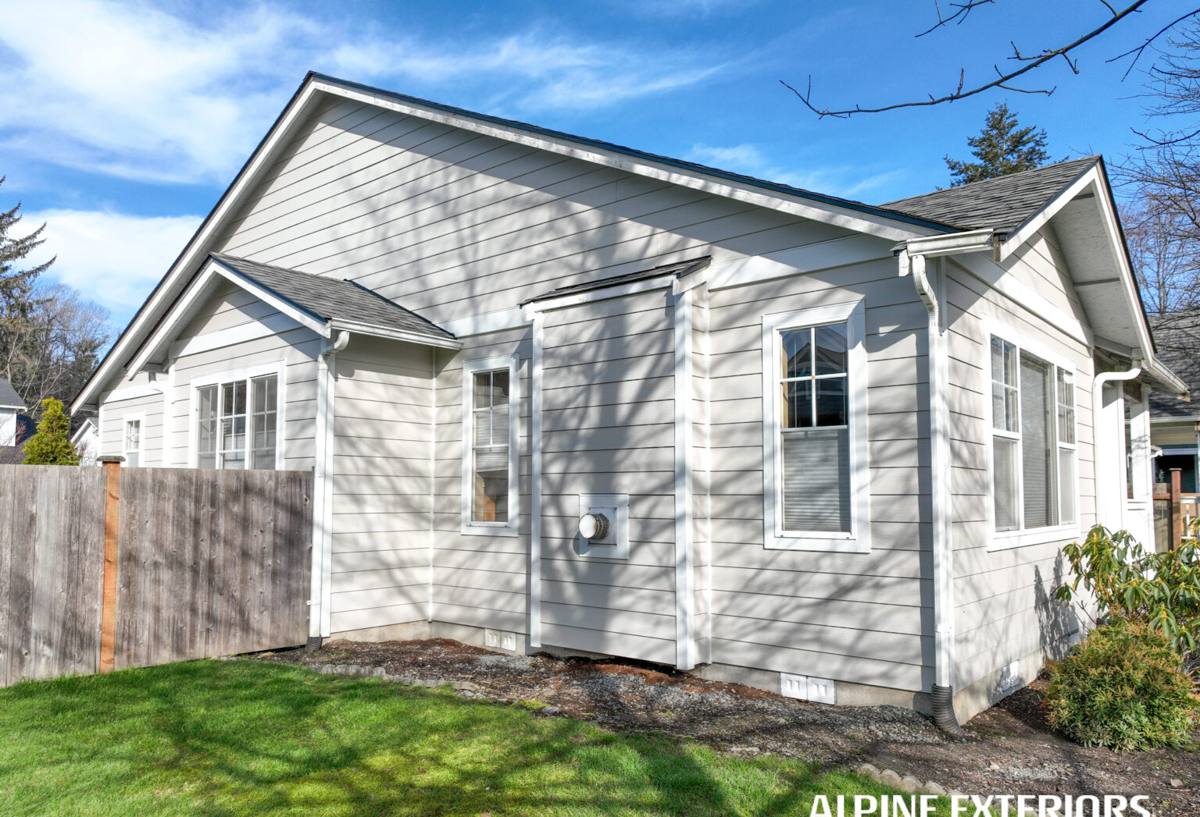
What Salt Air, Rain, and Moss Actually Do to Siding Over Time
Salt Air
Salt in the air doesn't just sit on the surface — it works into any exposed fastener, seam, or crack in a coating. On wood-based products, that moisture exposure accelerates swelling, checking, and rot at the edges. On metal fasteners that aren't corrosion-resistant, it accelerates rust, which eventually shows up as staining bleeding through the paint.
Driving Rain
Rain that comes in at an angle finds every gap a straight-down rain would never reach — behind trim boards, into butt joints, up under j-channel. If the water-resistive barrier, flashing, and clearances behind the siding aren't right, that moisture gets trapped instead of shedding, and you don't see the damage until it's already in the sheathing.
Moss and Algae
Anywhere shade, moisture, and organic debris meet — north-facing walls, areas under trees, spots near gutters that overflow — moss and algae get a foothold. On a porous or absorbent siding surface, that growth holds moisture against the wall even longer, which compounds the problem instead of just being cosmetic.
| Climate Factor | Why It Matters in Custer | What the Siding System Needs |
|---|---|---|
| Salt air | Accelerates corrosion of fasteners and trim, breaks down weaker coatings faster | Corrosion-resistant fasteners and a factory finish rated to hold up outdoors |
| Wind-driven rain | Pushes water sideways into seams, corners, and trim intersections | Correct flashing, house wrap integration, and proper clearances behind every course |
| Long moss season | Shaded, damp walls stay wet longer, feeding organic growth | A dense, non-porous material and adequate drainage/ventilation gap behind the siding |
| Coastal humidity swings | Repeated wet-dry cycling stresses joints and finishes | A product engineered for moisture cycling, not just moisture resistance |
Why We Only Install James Hardie Fiber Cement
We install James Hardie fiber cement siding exclusively — not vinyl, not LP SmartSide, not cedar or primed spruce, not other fiber cement brands. That's a standard we set for our own crews, not a knock on every alternative on the market. Each of those products has situations where it performs reasonably well. But for the conditions Custer and the greater Blaine area actually deliver — salt air, sideways rain, and a moss season that runs longer than most of the state — we've found Hardie's engineered fiber cement gives homeowners the best combination of moisture performance, durability, and finish life, backed by a warranty structure that actually transfers if the home changes hands.
Fiber cement is non-combustible, which matters for wildfire-adjacent risk even in a coastal county, and it doesn't feed moss and algae growth the way untreated or lightly treated wood products can. It holds paint and factory finish far longer than wood, and it doesn't have the expansion-contraction behavior that causes vinyl to buckle or gap over time in wide temperature swings.
The Hardie Product Line Built for This Kind of Climate
James Hardie engineers its siding by climate zone, and homes in Whatcom County fall into the zone that calls for their HZ5 formulation — engineered specifically for regions with damp, moderate climates and freeze-thaw cycling rather than hot, dry conditions. That's not a marketing distinction; it changes how the board is formulated to handle moisture absorption and expansion over the decades it's expected to be on the wall.
On top of the board formulation, Hardie's ColorPlus finish is baked on in a factory setting under controlled conditions, which gives it a more consistent, longer-lasting bond than field-applied paint. For a Custer home dealing with salt air and UV exposure off the water, that factory finish is a meaningful part of why the siding still looks right ten and fifteen years in, rather than needing an early repaint.
What a Correct Installation Actually Involves
Fiber cement is only as good as the installation behind it. A lot of the failures we get called out to inspect on other contractors' work aren't material failures — they're installation shortcuts that let water get where it shouldn't. In a climate like Custer's, those shortcuts show up faster than they would somewhere drier.
- Correct clearance between the siding's bottom edge and roof lines, decks, and grade — too tight and capillary action pulls water up into the board
- Proper weather-resistive barrier installation and integration with window and door flashing, not just siding stapled over existing wrap
- Fastener placement and spacing per Hardie's published installation instructions, using corrosion-resistant fasteners suited to coastal exposure
- Correct butt joint treatment — caulked and backed, not just butted together and hoping the caulk holds long-term
- A drainage plane or rainscreen approach where conditions call for it, so any incidental moisture behind the siding has somewhere to go
- Field-cut edges properly sealed and primed, since factory finish doesn't extend to a fresh cut made on site
Skip any one of these and the siding may look fine for a year or two before the underlying problem — trapped moisture, a failing seal, a corroding fastener — starts to show. In a salt-air, high-rainfall environment, that timeline compresses.
Mistakes We See Most Often on Homes in This Area
When we're called to inspect or repair siding installed by someone else on a Custer or Blaine-area home, a handful of issues come up repeatedly. Caulk used as the primary defense against water intrusion instead of proper flashing is probably the most common — caulk is a maintenance item, not a substitute for correct detailing, and it fails first in exactly the wind-driven rain conditions this area sees. Siding installed with insufficient clearance to grade or roof surfaces is another, since it invites the kind of standing moisture that accelerates both rot at the substrate and moss growth on the surface. We also see fastener corrosion on jobs where standard fasteners were used instead of ones rated for coastal exposure — it's a small cost difference during installation that shows up as rust staining a few years down the road.
Maintenance That Actually Matters Here
Fiber cement is low-maintenance compared to wood, but "low-maintenance" doesn't mean "no maintenance," especially with Custer's moss season and coastal air working against it. A little attention goes a long way toward protecting the installation and the finish.
- Rinse the siding down at least once a year, more often on shaded or north-facing walls prone to moss and algae
- Keep gutters clear so overflow isn't running down the wall and staying trapped against the siding
- Trim back vegetation and tree cover that keeps a wall shaded and damp longer than necessary
- Check caulked joints periodically — caulk is a wear item and should be refreshed if it's cracking or pulling away
- Watch for any staining near fasteners or trim, which can be an early sign of corrosion worth addressing before it spreads
How We Approach a Custer Project
We start with an on-site look at the home, not a phone estimate, because the details that matter — wall exposure, existing moisture damage, roofline and grade clearances, how much of the home faces prevailing weather off the water — only show up in person. From there we walk through what a correct installation looks like for that specific house, what condition the sheathing and water-resistive barrier are in underneath the existing siding, and where the home's exposure calls for extra attention, whether that's additional flashing detail or a drainage gap on the walls that take the worst of the weather.
We install to Hardie's published specifications, not a shortcut version of them, and we use fasteners and flashing components chosen for coastal exposure rather than whatever's cheapest. That's slower and it costs more in labor than a rushed install, but it's the difference between siding that still looks and performs correctly in fifteen years and siding that needs early repairs.
Why It Matters That We Already Work This Area
A crew that installs siding across a range of inland climates and only occasionally sees a coastal Whatcom County job can miss the details that matter here — because most of the time, those details don't matter where they usually work. A crew that regularly works Custer, Blaine, and the surrounding coastline sees the failure patterns specific to this climate often enough to design around them by default: the flashing details that matter more with wind-driven rain, the fastener choice that matters more with salt air, the drainage considerations that matter more with a long moss season. That familiarity isn't something you can fully substitute with a generic installation manual, no matter how good the manual is.
If you're weighing a full re-side or replacing damaged siding on a Custer home, we're happy to take a look and walk you through what your specific house needs — no pressure, no obligation. Use the form below to request a free estimate.