 Blaine Siding
 Why Grandview Siding Takes a Different Kind of Beating
Grandview sits inside Blaine, out at the far northwest corner of Washington State in Whatcom County, close enough to the water that the air itself carries salt. That's not a small detail. Salt-laden air behaves differently on a house than the dry inland air most siding products are tested against — it works into fastener heads, seams, and any spot where a finish has thinned, and it keeps surfaces damp longer than they'd stay in a drier climate.
Add in the rain pattern typical of this part of Whatcom County — long stretches of steady winter drizzle broken up by wind-driven storms that push rain sideways instead of straight down — and siding here is being asked to do more than shed water off a flat wall. It has to resist water being forced up and under laps, into trim joints, and around windows and doors from the side.
Then there's shade and moisture combining to grow moss and algae faster than most homeowners expect. Moss doesn't just look bad. It holds water against the siding surface for days at a time, which is exactly the condition that breaks down caulk, lifts paint, and — on wood-based products — starts the slow process of swelling and rot. Homes in Grandview deal with all three of these stresses at once, which is why siding here tends to show wear sooner than the same product would on a house twenty miles inland.
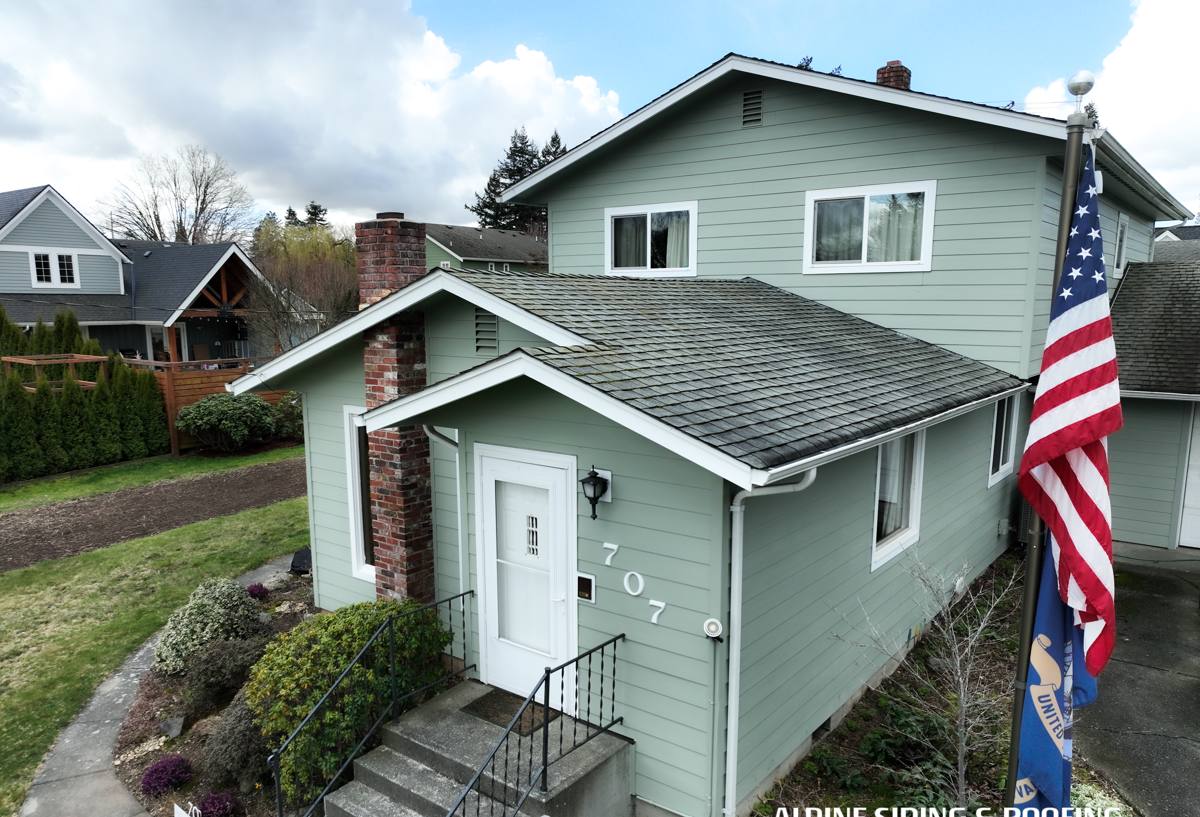
What "Siding Repair" Actually Covers
Siding repair isn't one job — it's a category, and the right fix depends entirely on what's actually failing. Some of what we see on repair calls in this area is cosmetic and some of it is a warning sign of something happening behind the wall. Being able to tell the difference is most of the job.
Common repair categories
- Cracked, split, or impact-damaged boards — often from storm debris, ladders, or age-related brittleness
- Failed caulk and sealant joints — the most common entry point for water once a home is a few years old
- Swelling, delamination, or soft spots — typically on wood-based siding that's absorbed moisture over time
- Moss, algae, and mildew staining — a surface problem that, left alone, becomes a moisture problem
- Popped, corroded, or backed-out fasteners — accelerated by salt air and freeze-thaw cycling
- Damaged trim, corner boards, and flashing — often the real source of a leak that shows up as a stain elsewhere on the wall
- Water damage behind the siding — soft or discolored sheathing found once boards are pulled
The first four are usually visible from the ground. The last three are why a proper inspection has to go past what's easy to see.
Signs Your Siding Needs Repair — Not Just a Cleaning
A lot of siding problems get mistaken for a dirt or moss issue that a pressure wash will solve. Sometimes that's true. Other times a wash just delays a repair that's already needed. Here's what should make you stop and call someone instead of grabbing a hose:
- Boards that feel soft, spongy, or give slightly when pressed
- Paint or finish that's bubbling, peeling, or flaking rather than just fading
- Visible gaps or cracks at seams, corners, or around windows and doors
- Dark streaking or staining that returns quickly after cleaning
- Moss or algae growth concentrated in one area, especially on north- or shade-facing walls
- A musty smell near an exterior wall, or a stain appearing on interior drywall near that same wall
- Fasteners that are visibly rusted, backed out, or leaving rust streaks below them
- Warping, bowing, or boards that no longer sit flush against the wall
Any one of these on its own might be minor. Two or three together, especially in the same section of wall, usually means water has been getting in for a while.
What a Correct Repair Actually Involves
A repair that only addresses what's visible from the driveway tends to fail again within a season or two, especially in a climate that stays wet as much of the year as this one does. A repair done right starts with diagnosis, not patching.
Diagnosis before demolition
That means checking moisture content in and around the damaged area, not just at the obvious failure point — moisture travels sideways and down behind siding, so the visible damage is rarely the full extent of it. It also means checking the flashing and water-resistive barrier behind the siding wherever it's exposed, since a lot of "siding failures" actually start with a flashing detail that was never right in the first place.
Matching materials properly
Repairs should match the existing siding in profile, exposure, and thickness, not just color. A close-but-not-exact match creates a new seam where water can get behind the wall, which defeats the purpose of the repair.
Fixing the water path, not just the symptom
Correct caulking at the right joints (and no caulk at joints that are supposed to drain), proper kick-out flashing where a roof line meets a wall, and lap spacing that lets water shed rather than pool are all part of a repair that actually holds. Caulking over a problem without addressing why water got in there is a temporary fix at best.
Repair or Replace?
Not every damaged section needs a full re-side, and not every repair is worth doing on siding that's already at the end of its life. Here's how we generally weigh it:
| Factor | Repair usually makes sense | Replacement usually makes more sense |
|---|---|---|
| Extent of damage | Isolated to one or two sections | Spread across multiple walls or elevations |
| Moisture readings | Localized, sheathing behind it is dry | Elevated readings in multiple areas, sheathing showing damage |
| Age of siding | Well within expected service life | Already near or past it, especially wood-based products |
| Material match | Product still available or close match exists | Discontinued profile or color, patch would stand out |
| Root cause | A single fixable detail (caulk, flashing, fastener) | A systemic issue — wrong product for this climate, failed original installation |
A straight answer up front on which category a given problem falls into is part of a fair repair estimate — not every visit should end in a sales pitch for a full replacement.
Why the Material Behind the Repair Matters
Part of doing repair work honestly in this climate is being upfront about what different siding materials do when they take on the kind of moisture exposure that's normal for Grandview. We install exclusively James Hardie fiber cement siding, and it's worth explaining why, since it affects how a repair holds up over time.
Wood-based composite siding can perform well for years, but sustained moisture exposure — the kind that comes from salt air, driving rain, and shaded, moss-prone walls — is exactly the condition that leads to edge swelling and delamination in that category of product over time. Vinyl siding handles moisture fine but moves with temperature swings, can crack in impacts, and its color is baked into the material itself rather than a separate finish, so it fades rather than being refinished. Cedar is a real, attractive product, but it demands ongoing maintenance — refinishing, sealing, and vigilance against exactly the moss and moisture issues that are common here — to avoid the rot that untreated or under-maintained wood is vulnerable to.
James Hardie fiber cement doesn't share those failure modes. It's non-combustible, it doesn't absorb and swell the way wood-based products can, and the HZ5 product line is specifically engineered for wetter climate zones like this one. The ColorPlus factory finish holds color and resists the kind of peeling and bubbling that shows up on field-painted siding here, and it's backed by a long, transferable manufacturer warranty. When we're called out for a repair on Hardie siding, we're usually fixing an installation detail or storm damage — not the material itself failing under normal exposure.
Our Repair Process
- Inspection and moisture check — we look at the full wall, not just the reported problem area, and check moisture behind the siding wherever we can access it
- Diagnosis and scope — we identify the actual cause (material failure, flashing detail, caulk failure, impact damage) and explain what we found in plain terms
- Material sourcing and matching — we match profile, exposure, and finish as closely as the existing siding allows
- Repair execution — remove and replace only what needs it, correct any underlying water-management issue at the same time
- Water path check — confirm flashing, laps, and caulk joints are doing their job before we consider it done
- Cleanup — the site is left the way we found it, minus the problem
Why a Crew That Already Works Grandview Matters
Siding repair isn't identical from one neighborhood to the next, even within the same county. A crew that regularly works Grandview and the surrounding Blaine area has already seen how homes in this specific exposure — this close to the water, with this much shade and moss pressure — tend to fail, and where. That's the difference between a repair that guesses at the cause and one that's seen the same failure pattern enough times to know what to check first.
It also means faster response when something needs attention, familiarity with the permitting and inspection expectations for exterior work in Whatcom County, and a crew that isn't learning the local climate on your house. For a repair to actually last through another wet season here, that local knowledge is worth as much as the material going into the wall.
If you're seeing signs of trouble on your siding — or just want an honest read on whether a section needs a repair or something more — we're happy to take a look. Fill out the form below for a free, no-pressure estimate.