 Blaine Siding
 Why California Creek Homes Need a Different Approach to Siding
California Creek sits close enough to the water that salt air is a daily fact of life for the siding on your house, not an occasional nuisance. Add Whatcom County's long, wet winters and the moss and mildew season that stretches from fall through spring, and you've got a climate that is genuinely hard on exterior building materials. Wood-based products absorb moisture and swell. Vinyl gets brittle and can warp under the freeze-thaw cycles we get on cold, clear nights. Paint film on wood siding chalks and fails faster near the water than it does further inland. None of this is dramatic on its own, but it adds up year after year, and it's why the siding choice matters more here than it would in a drier, more sheltered part of the state.
We install James Hardie fiber cement siding exclusively, and California Creek is one of the areas where that decision pays off most clearly. This page walks through what the local climate actually does to siding, what a correct James Hardie installation looks like for a property like yours, and how we approach the job from first estimate to final walkthrough.
What Salt Air, Driving Rain, and Moss Actually Do to Siding
Salt Air
Airborne salt is corrosive to metal fasteners and trim, and it accelerates the breakdown of finishes that aren't engineered to resist it. On wood and engineered wood products, salt-laden moisture works its way into seams, fastener holes, and butt joints, feeding rot from the inside out long before it's visible from the street. Fiber cement doesn't absorb moisture the way wood-based products do, which is a big part of why it holds up better this close to the water.
Driving Rain
Blaine gets weather that comes in sideways off the water more often than most homeowners expect. Driving rain finds every weak point in a siding system: unsealed butt joints, undersized flashing, caulk used as a substitute for proper water management. A siding product can be excellent and still fail early if it's installed without correct clearances, flashing, and joint treatment. This is as much an installation issue as a materials issue.
Moss and Mildew Season
Whatcom County's moss season isn't a two-week event — for homes with shaded north or east-facing walls, it can be a near-constant condition from October through April. Moss and mildew don't just look bad; sustained organic growth traps moisture against the siding surface, which shortens the life of the substrate underneath and holds the surface finish wet longer than it should be. A siding material's ability to resist moisture absorption directly affects how well it stands up to this.
Why James Hardie Fits This Climate
James Hardie fiber cement is engineered specifically to handle the conditions California Creek deals with:
- Non-combustible core — fiber cement won't feed a fire the way wood-based siding can, which matters for insurance and for peace of mind.
- Moisture-resistant composition — fiber cement doesn't swell, warp, or rot the way wood and wood-composite products can when repeatedly saturated.
- ColorPlus factory finish — a baked-on finish applied under controlled conditions, which holds color and resists the fading, chalking, and moisture-related finish failure that field-applied paint is more prone to near salt air.
- HZ5 and climate-engineered product lines — Hardie manufactures regional formulations suited to different climate demands, including moisture and moss-prone Pacific Northwest conditions.
- Strong transferable warranty — a real, documented warranty backing the product, which matters when you're planning to own the home for years or eventually sell it.
We won't tell you fiber cement is maintenance-free — nothing installed on the exterior of a house in this climate is. But it starts from a materially stronger position against water, rot, and salt exposure than the alternatives, and that difference compounds over a 20-plus-year ownership horizon.
What a Correct Installation Involves Here
The product is only half the equation. In a climate like California Creek's, installation quality determines whether that product performs for 30 years or fails at year eight. A correct James Hardie installation on a property exposed to salt air and driving rain includes:
- Proper water-resistive barrier and flashing at every window, door, and penetration — not caulk substituting for flashing
- Correct fastener type and spacing, driven to Hardie's specification (not overdriven, which cracks the board's edge and creates a moisture entry point)
- Manufacturer-specified clearances from grade, roofline, and decks so water doesn't wick into the bottom edge of the siding
- Properly lapped and caulked joints using Hardie-approved sealants rated for this climate
- Ventilated rainscreen or drainage plane detailing where the wall assembly calls for it, so moisture that does get behind the siding can drain and dry
- Careful field-cutting and touch-up of ColorPlus finish edges to maintain the factory warranty
Skip any one of these steps and you can end up with premature failure even though the siding material itself is rated for exactly this kind of exposure. This is the core reason installer experience matters as much as product choice.
Comparing Approaches: What Homeowners Near the Water Are Actually Choosing Between
| Factor | James Hardie Fiber Cement | Vinyl Siding | Untreated/Primed Wood |
|---|---|---|---|
| Moisture absorption | Very low — won't swell or rot | Doesn't absorb, but seams can trap moisture | High — absorbs and retains moisture |
| Performance in driving rain | Strong when flashed and lapped correctly | Adequate, but panels can flex and open seams in high wind | Weakest — end grain and joints are entry points |
| Salt air resistance | High — engineered finish resists chalking/fading | Moderate — can become brittle over time near salt exposure | Low — finish breaks down faster, exposing wood |
| Moss/mildew resistance | Good — low moisture retention limits growth conditions | Fair — growth sits on the surface but doesn't damage the panel | Poor — trapped moisture accelerates rot under growth |
| Fire rating | Non-combustible | Combustible | Combustible |
| Typical repaint/refinish interval | 15+ years (ColorPlus factory finish) | Does not repaint (replace when faded/damaged) | 5-8 years |
This isn't a knock on every alternative product across every use case — it's a summary of why, for the specific exposure a California Creek home deals with, we've standardized on one material and refuse to install the others.
Our Process for a California Creek Job
1. On-Site Assessment
We look at your home's actual exposure — which walls face the water and prevailing wind, where moss and mildew are already showing, where past caulk-only "repairs" have masked underlying flashing problems, and what the current siding and sheathing condition tells us about moisture history.
2. Product and Line Selection
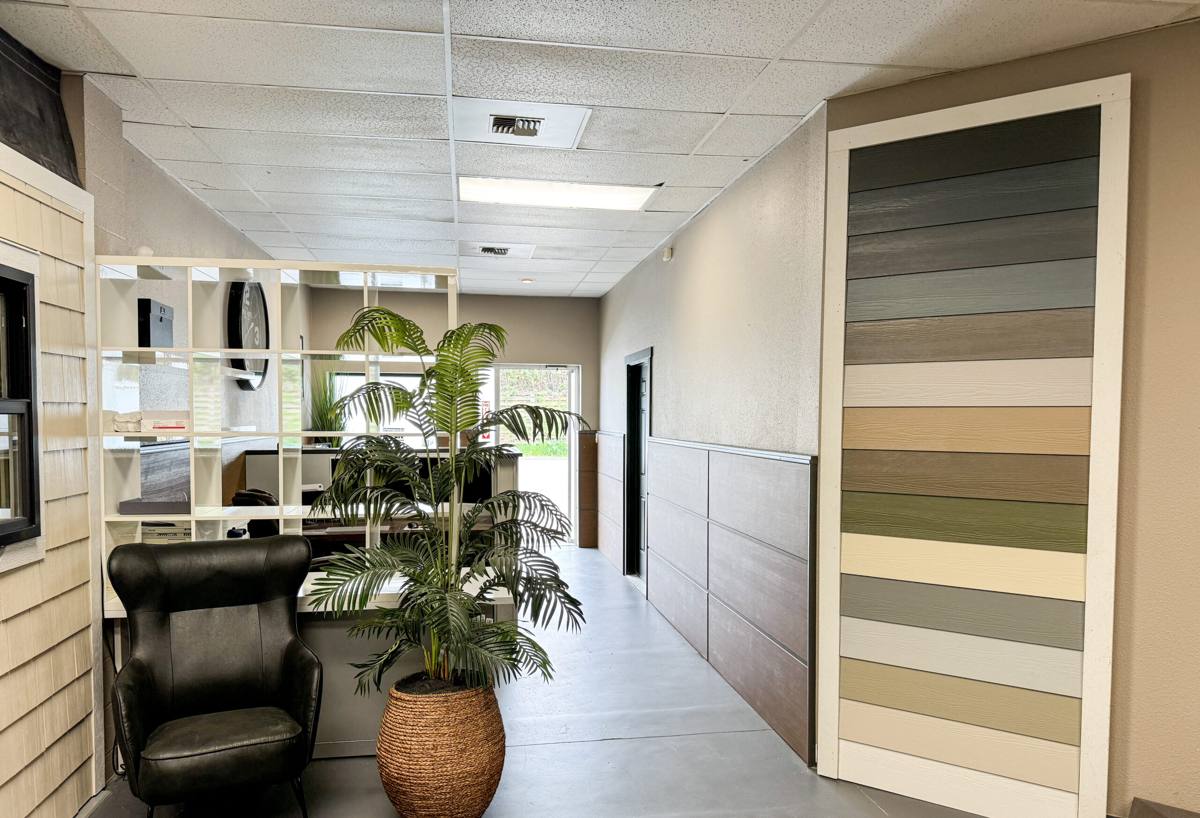
We help you choose the right Hardie product line, profile, and color for your home and this climate, including ColorPlus factory-finished options that reduce long-term maintenance.
3. Removal and Substrate Check
Old siding comes off and we inspect the sheathing and water-resistive barrier underneath. Any rot or moisture damage gets addressed before new siding goes up — covering a wet wall assembly with new siding just hides the problem.
4. Installation to Manufacturer Spec
Flashing, fastening, clearances, and joint treatment are done to Hardie's published installation guidelines, not shortcut for speed. This is the step that determines whether the siding actually performs the way it's rated to.
5. Final Walkthrough
We walk the property with you, review the work, and make sure you understand the warranty and any basic care recommendations specific to your home's exposure.
Before You Hire: A Practical Checklist
Whoever you choose to do this work, these are worth confirming before a crew starts:
- Do they install James Hardie specifically, or are they substituting a cheaper fiber cement or composite alternative without telling you upfront?
- Will they inspect and address sheathing/moisture issues before installing new siding, not just siding over the old problem?
- Do they follow Hardie's published fastening and flashing specifications, or "install it like we always have"?
- Is the warranty — both manufacturer and workmanship — explained in writing before work starts?
- Have they worked on homes with similar water exposure in this area before, and can they speak specifically to how they handle it?
Why Local Experience in This Specific Area Matters
A crew that regularly works in and around California Creek and the greater Blaine area already knows what a property this close to the water is going to face — which wall orientations get hit hardest by driving rain, how aggressive the moss growth gets on shaded elevations, and how salt air changes the maintenance conversation compared to a house fifteen miles inland. That's not something you can fully learn from a spec sheet. It shows up in small decisions on the job: where to add extra flashing attention, which joints need more careful sealing, how tight to run clearances at grade. Hiring a crew with that local, repeated experience reduces the chance of the kind of installation mistakes that don't show up until year three or four, when it's much more expensive to fix.
Get a Straightforward Estimate
If you're weighing siding options for a California Creek property, we're happy to take a look, tell you honestly what condition your current siding and substrate are in, and walk you through what a correct James Hardie installation would involve for your specific home. There's no pressure and no obligation — just a straight assessment from a crew that installs this product and only this product, every day, in this climate. Fill out the form below to schedule a free estimate.