 Blaine Siding
 Ferndale's Climate Is Harder on Siding Than It Looks
Ferndale sits in coastal Whatcom County, close enough to the Salish Sea to pull in salt-laden air on a regular basis, and far enough north that winter storms roll through wet, wind-driven, and relentless. Add the shade from mature conifers and the long gray stretch between fall and spring, and you get a moss season that can run half the year. None of that is unusual for this part of Washington. What's unusual is how much siding damage traces back to builders treating a Whatcom County home like it sits somewhere dry.
Salt air corrodes fasteners and finishes faster than inland exposure. Driving rain finds every unsealed seam, every short flashing lap, every caulk joint that was never really necessary in a drier climate. And moss doesn't just look bad — it holds moisture against a wall for months at a time, which is exactly the condition that rots wood trim, delaminates cheap composite panels, and traps water behind vinyl that was never designed to be watertight in the first place. A siding job that ignores these three factors will look fine for a year or two and then start failing quietly, behind the surface, where you can't see it until it's expensive.
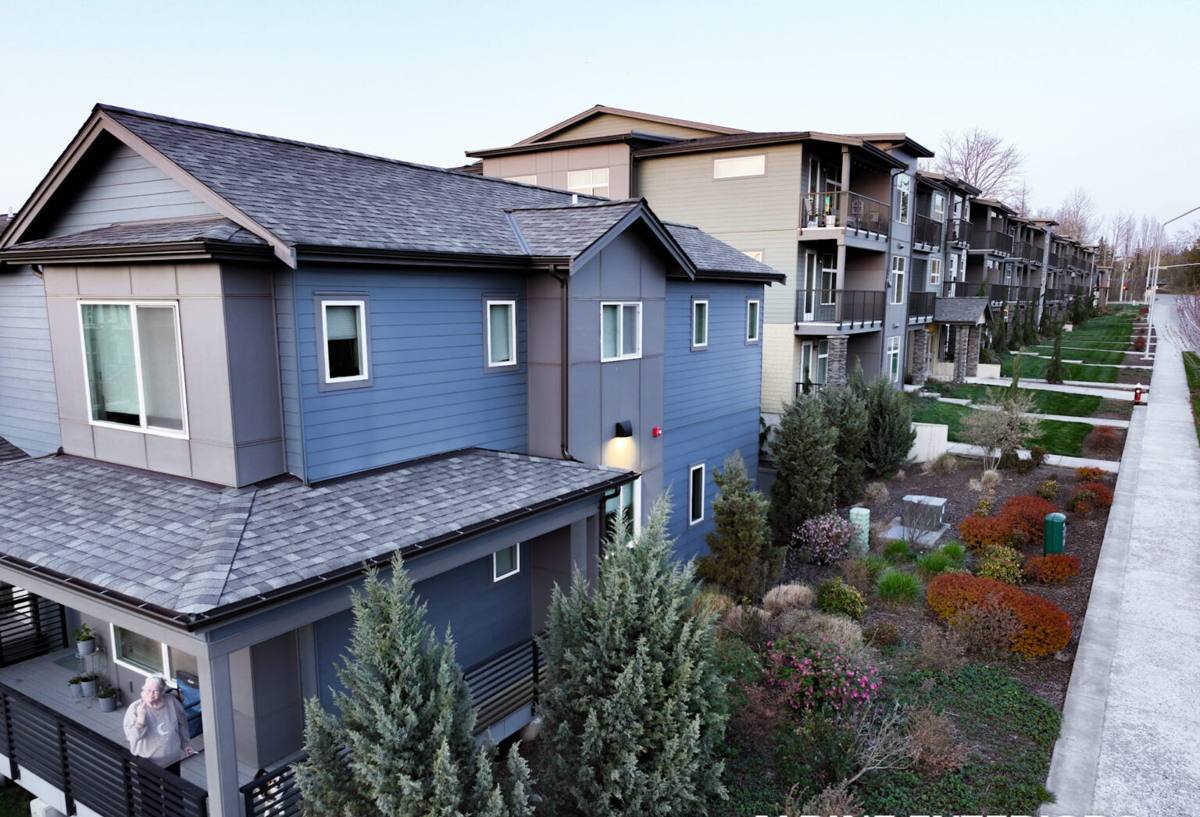
Why We Install Only James Hardie Fiber Cement
We get asked why we don't offer vinyl, LP SmartSide, or cedar alongside James Hardie. The honest answer is that we looked at what actually holds up in this climate and standardized on one product line rather than sell homeowners something we don't fully stand behind.
Vinyl
Vinyl is inexpensive and low-maintenance in mild climates, and we're not going to pretend otherwise. But it expands and contracts with temperature swings, its seams rely on overlap rather than a true seal, and wind-driven rain can work behind it over time. It doesn't stop moss and mildew from growing on its surface, and once it's damaged by wind or impact, matching faded panels years later is often impossible.
LP SmartSide and other engineered wood
Engineered wood siding is a wood-strand product with a resin binder — better than raw wood, but still wood at its core. Any breach in the factory coating, at a cut edge, a fastener hole, or a poorly flashed joint, gives moisture a path in, and once ferndale-style wet weather gets behind an engineered wood panel, swelling and edge deterioration follow. It's a maintenance-sensitive product in a climate that doesn't forgive missed maintenance.
Cedar and primed spruce
Real wood siding is handsome and has a long tradition in the Pacific Northwest, but it demands a repainting and recaulking schedule that most homeowners underestimate, and it's the material most vulnerable to the rot that comes from prolonged moss and moisture contact.
James Hardie fiber cement is cement, sand, and cellulose fiber — it doesn't rot, it isn't a food source for the mold and mildew that thrive in a shaded, damp climate, and it's non-combustible. The factory-applied ColorPlus finish is baked on under controlled conditions, which holds color and resists the fading and chalking that field-applied paint suffers under years of coastal UV and salt exposure. It's not the cheapest option up front. It's the one we're willing to warranty and stand behind on a Ferndale roofline.
The James Hardie Product Lines That Make Sense Here
James Hardie engineers its siding by climate zone (HZ), and for the marine, wet-winter conditions of Whatcom County, that distinction actually matters rather than being a marketing detail.
- HardiePlank lap siding — the most common choice for Ferndale homes, available in several exposures and profiles, engineered for wet climates with moisture- and freeze-resistant formulations.
- HardiePanel vertical siding — used for accent sections, gables, and modern facades where a clean vertical line is wanted.
- HardieShingle — a straight-edge or staggered shingle profile for homes wanting a Craftsman or cottage look without the maintenance burden of real cedar shingles.
- HardieTrim — fiber cement trim boards used around windows, doors, and corners so the whole envelope, not just the field siding, resists moisture and insects.
All of it comes with the factory ColorPlus finish in a range of regionally appropriate colors, so you're not relying on a field-applied paint job to hold up through a Whatcom County winter.
What a Correct Installation Actually Involves
James Hardie siding is only as good as the installation behind it. The product is engineered to shed water — the installation has to be engineered to keep water from getting behind it in the first place. That means:
A drainage plane, not just a house wrap
In a climate with this much driving rain, we install a rain screen or properly furred drainage gap behind the siding so any moisture that does get past the cladding has somewhere to go, instead of sitting against the sheathing.
Correct flashing at every penetration
Windows, doors, hose bibs, light fixtures, and roof-to-wall intersections are the places water actually gets in. Flashing has to be layered so water sheds outward and downward at every one of these points, lapped correctly rather than caulked over as a substitute for proper flashing.
Fastener pattern and placement
James Hardie specifies fastener type, spacing, and placement relative to the plank edge. Get this wrong and you get splitting, blow-outs in high wind, or a plank that isn't actually holding to manufacturer spec — which can also void the warranty.
Sealed cut edges and correct gaps
Factory edges come primed and sealed, but every field cut exposes raw fiber cement that needs to be sealed before installation. Panels also need the manufacturer's specified gap at butt joints and corners to allow for seasonal movement without cracking the finish.
Comparing Siding Options in Ferndale's Climate
| Factor | Vinyl | LP SmartSide | Cedar / Primed Wood | James Hardie Fiber Cement |
|---|---|---|---|---|
| Moisture behavior in wet, shaded conditions | Can trap moisture behind panels | Vulnerable at cut edges and fastener points | Absorbs moisture, prone to rot | Does not rot; engineered for wet climates |
| Moss and mildew resistance | Surface growth common | Surface growth common | Prone to growth in shaded areas | Resistant surface, factory finish |
| Salt air / coastal durability | Fair; fasteners and trim can corrode | Fair to moderate | Moderate with diligent upkeep | Strong, non-combustible, engineered for coastal exposure |
| Finish longevity | Fades, can't easily repaint | Factory finish, edge-sensitive | Requires repainting every few years | ColorPlus factory finish holds color long-term |
| Typical maintenance | Occasional washing | Edge sealing, moisture monitoring | Regular repainting, caulking | Periodic washing, minimal upkeep |
Our Process for a Ferndale James Hardie Project
We approach every Ferndale project the same methodical way, because skipping steps is how moisture problems get built into a wall for the next twenty years.
- Assessment and moisture check. Before we quote anything, we look at the existing siding, sheathing, and trim for signs of past water intrusion — soft spots, staining, or rot that needs to be addressed before new siding goes on, not covered up by it.
- Tear-off and sheathing repair. Old siding comes off, damaged sheathing gets replaced, and we don't install over a compromised substrate.
- Weather-resistive barrier and drainage plane. A proper moisture barrier and rain screen gap go on before a single piece of Hardie touches the wall.
- Flashing at every opening. Windows, doors, and penetrations get flashed correctly, in the right order, before siding closes around them.
- Installation to manufacturer spec. Fastener pattern, gaps, and sealed cut edges follow James Hardie's published installation guidelines, which keeps your warranty intact.
- Trim, caulking, and final detailing. HardieTrim goes in around all openings and corners, with sealant only where it's actually specified, not as a substitute for flashing.
- Final walkthrough. We go over the finished job with you before we consider it done.
Living With Hardie Siding Through Whatcom County's Moss Season
Fiber cement dramatically reduces the maintenance burden compared to wood or vinyl, but "low maintenance" isn't "no maintenance," especially with the shade and dampness that drive moss growth in this region. A few habits keep a Hardie installation performing the way it's designed to for decades:
- Rinse siding down once or twice a year, especially on shaded, north-facing walls where moss and algae are most likely to take hold.
- Trim back vegetation and tree limbs that keep siding damp and shaded for extended periods.
- Keep gutters and downspouts clear so overflow doesn't run down the wall surface during heavy rain events.
- Check caulking around trim and penetrations every year or two, since sealant is a maintenance item even on a fiber cement wall.
- Address any impact damage or chipped finish promptly, since exposed fiber cement should be sealed before it sits through a wet season.
Why It Matters to Hire a Crew That Already Works Ferndale
James Hardie siding is a forgiving, durable product when it's installed correctly — and an expensive, warranty-voiding mistake when it isn't. A crew that regularly works Whatcom County's coastal conditions already knows how much rain-screen gap this climate actually calls for, how local wind exposure affects fastener spacing near corners and gable ends, and what moisture damage from years of unaddressed moss actually looks like when they open up a wall. That local pattern recognition is the difference between a crew that follows a generic install checklist and one that adapts it to what Ferndale's weather actually does to a house.
It also means faster access to the specific Hardie profiles and ColorPlus colors that work well against this region's light and landscape, and a crew that's used to coordinating around this area's wet-season working conditions rather than treating every rain delay as a surprise.
If your Ferndale home's siding is showing moss staining, soft trim, faded panels, or you're simply planning ahead for a replacement, we're happy to take a look and walk you through what correct James Hardie installation would involve for your specific home. Reach out for a free, no-pressure estimate — there's no obligation, just a straight assessment of what your siding actually needs.