 Blaine Siding
 Roof Repair Built for Lynden's Climate, Not a Generic Checklist
Lynden sits inland from Blaine but still gets the full weather package that defines this corner of Whatcom County: long wet winters, persistent moss growth, and enough wind-driven rain to find every weak point in a roof system. A roof repair here isn't the same job as a roof repair in a dry climate — the failure patterns are different, and so is the fix. We work roofs in this area regularly, and most of the repair calls we get fall into a short list of causes that repeat year after year, house after house.
This page is specifically about roof repair for Lynden-area homes — not a full tear-off, not a whole-house siding job, just the targeted work of finding what's actually letting water in and fixing it correctly the first time.
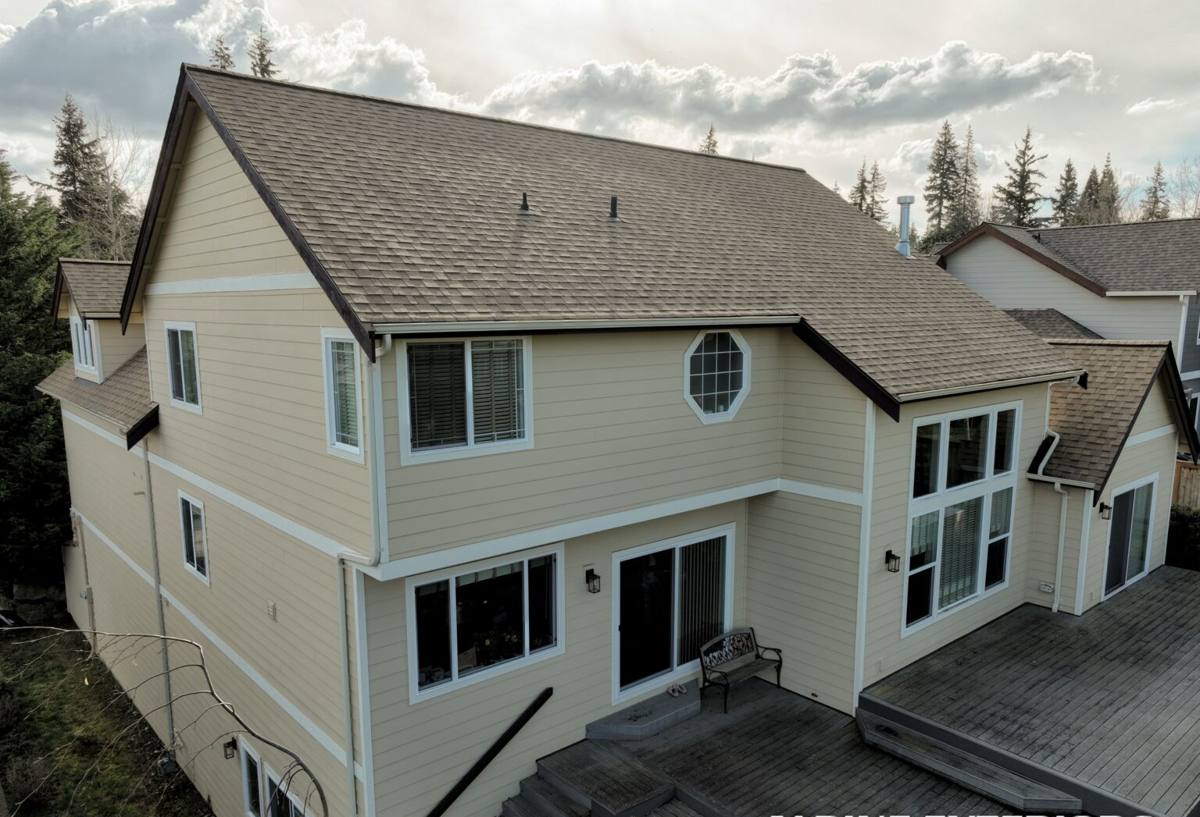
Why Roofs Fail Faster Around Here
Moss and Organic Growth
Shaded roof sections, north-facing slopes, and anything under overhanging trees stay damp for days after a storm. Moss takes hold in that moisture, and as it spreads it lifts shingle edges, holds water against the roof deck, and creates channels for wind-driven rain to work underneath the roofing material. Left alone, a moss patch that started as a cosmetic issue becomes a leak point within a season or two.
Driving Rain and Wind
Storms coming off the water don't just fall straight down — they push rain sideways under shingle tabs, around flashing, and into any gap that a calmer climate would never test. Roofs that were installed or repaired without accounting for wind-driven rain tend to develop leaks at exactly the spots where two roof planes meet, or where a roof meets a wall or chimney.
Salt Air and Corrosion
Being close to the water means metal components — flashing, fasteners, gutter hardware, vent caps — corrode faster than they would inland. Corroded flashing is one of the most common hidden causes of a "mystery leak," because the metal looks intact from the ground but has thinned or pitted enough to let water through at seams and nail penetrations.
Freeze-Thaw and Prolonged Wet
Whatcom County doesn't get deep freezes often, but the combination of near-constant moisture and occasional cold snaps stresses roofing materials that stay saturated for long stretches. Wet roof decking takes longer to dry out between storms than most homeowners realize, and that extended dampness accelerates rot in the substrate underneath the visible roofing.
What a Correct Roof Repair Actually Involves
A lot of roof "repairs" are really just patch jobs — caulk over a visible gap, a shingle swapped out, done. That approach treats the symptom and ignores the reason water got in to begin with. A correct repair follows a sequence:
- Find the real entry point. Water often travels along the underlayment or decking before it shows up as a stain inside, so the visible damage and the actual leak source can be several feet apart.
- Check the surrounding material condition. If shingles near the leak are brittle, cracked, or moss-lifted, patching just the failure point leaves the next leak already forming nearby.
- Inspect flashing and penetrations. Chimneys, vents, skylights, and roof-to-wall transitions are where the majority of leaks originate — these need to be checked even if the visible damage is elsewhere.
- Assess the decking underneath. If water has been getting in for a while, the plywood or board sheathing under the roofing may be soft or delaminated and needs to be addressed, not just covered back over.
- Repair with matching, compatible materials. Mismatched shingle types, wrong flashing metal against certain materials, or incompatible sealants can create new problems even while fixing the old one.
- Confirm drainage and ventilation aren't part of the problem. A repair that ignores a clogged gutter or a blocked vent often fails again within a year.
Our Process for a Lynden-Area Repair Call
1. Inspection First, Always
We start on the roof and in the attic (or crawlspace above the ceiling) if there's access, because interior staining rarely lines up directly with the exterior leak point. We're looking at flashing, moss coverage, shingle condition, valleys, and any prior repair work that may have been done incorrectly.
2. A Straight Answer, In Writing
We'll tell you what we found, what's causing it, and what it will take to fix — including if we think the issue is small enough that it doesn't need a full crew visit, or if it's pointing toward a bigger problem you should know about before spending money on a patch.
3. The Repair Itself
Depending on scope, this covers replacing damaged shingles or roofing sections, re-flashing around penetrations and transitions, treating and removing moss, sealing and re-securing lifted material, and replacing any deteriorated decking we find underneath.
4. Cleanup and Debris Removal
Old shingle material, moss debris, and any removed flashing leave the property — we don't leave roofing debris in gutters, gardens, or against the siding.
5. Follow-Up Guidance
Most roof repairs benefit from a little homeowner maintenance afterward — we'll tell you what to keep an eye on, especially around moss regrowth in shaded areas.
Common Roof Repair Scenarios We See in This Area
| Symptom | Likely Cause | Typical Fix |
|---|---|---|
| Ceiling stain near a chimney or vent pipe | Corroded or improperly sealed flashing | Remove and replace flashing, check decking underneath |
| Dark green/black patches on north-facing slope | Moss holding moisture against shingles | Moss removal, treatment, inspection of shingle condition beneath |
| Leak only during wind-driven storms | Wind-lifted shingle tabs or gaps at roof valleys | Re-secure or replace affected shingles, seal valley properly |
| Soft or spongy spot on roof deck | Long-term moisture intrusion, rotted sheathing | Cut out and replace damaged decking before re-roofing that section |
| Granules collecting in gutters | Aging or sun/weather-degraded shingles | Assess remaining shingle life; targeted replacement or plan for future full roof |
Repair vs. Full Roof Replacement
Not every leak means you need a new roof, and we're not going to tell you that you do if a repair will genuinely hold. The honest factors that push toward replacement instead of repair:
- The roof is already near or past its expected material lifespan and repairs are becoming frequent
- Moss and moisture damage has spread across a large portion of the roof rather than one isolated area
- Multiple layers of prior patch repairs have left the surface uneven or unreliable
- Decking damage extends well beyond the immediate leak area
- The cost of doing the repair correctly starts to approach a meaningful share of replacement cost
When a repair makes sense, we'll say so plainly. When it doesn't, we'll explain exactly why — not to upsell, but because a roof patched past its reasonable point just means another call in a year.
What Roof Repair Typically Costs
Exact pricing depends on roof pitch, access, material type, and how much decking (if any) needs replacing, but broadly:
- Small, isolated repairs (a section of flashing, a handful of shingles) tend to be the lowest-cost visits
- Moss removal and treatment across a full slope adds time and labor depending on coverage area
- Any decking replacement adds material and labor cost beyond a surface-only repair
- Steep pitches or roofs with limited safe access take longer and typically cost more than a simple walkable roof
We give a firm number after inspection, not a phone-quote guess — roof damage is too variable to price accurately without eyes on it.
A Simple Homeowner Checklist Between Visits
- Look for moss or dark streaking on north-facing or shaded roof slopes each spring
- Check gutters for granule buildup, which signals shingle wear
- Watch for ceiling stains after major windstorms, not just heavy rain
- Keep overhanging branches trimmed back to reduce shade and debris buildup
- Note any musty smell in the attic — often a sign of moisture before a visible leak appears
Why Hiring a Crew That Already Works Lynden and Blaine Matters
A roofer who works this specific stretch of Whatcom County has already seen how moss behaves on local roof orientations, how salt air affects flashing over time, and which failure points show up first when storms roll in off the water. That's not something you get from a crew that mostly works a drier inland region and treats every roof the same way. We show up knowing what to check first, which shortens the diagnostic time and gets to the real fix faster.
If you're dealing with a leak, a suspicious ceiling stain, or a roof that's showing its age around Blaine or Lynden, we're glad to take a look. Fill out the form below for a free, no-pressure estimate — we'll tell you honestly what we find.