 Blaine Siding
 Metal Roofing in Nooksack: Matched to the Weather, Not Just the Look
Nooksack sits inland along the Nooksack River in Whatcom County, but "inland" doesn't mean sheltered. The same marine weather system that soaks the rest of the county still reaches this part of the valley — moisture-laden air moves in off the water and settles across the river bottomland, rain arrives wind-driven more often than straight down, and mild year-round temperatures give moss a growing season that barely takes a break. A roof chosen or installed without that pattern in mind tends to show wear here faster than a homeowner expects, regardless of what the material is rated for on a spec sheet.
We work siding, roofing, windows, and decks across Whatcom County, and Nooksack is regular territory for our crew, not an occasional stop. On roofing, metal has become the material we recommend most often for homeowners in this area who are planning a full replacement and want something that genuinely holds up to sustained moisture and a long moss season, rather than one that just gets them through the next few winters. This page covers what that actually looks like for a Nooksack home — the climate reasoning, the install details that matter, and what to expect from the project itself.
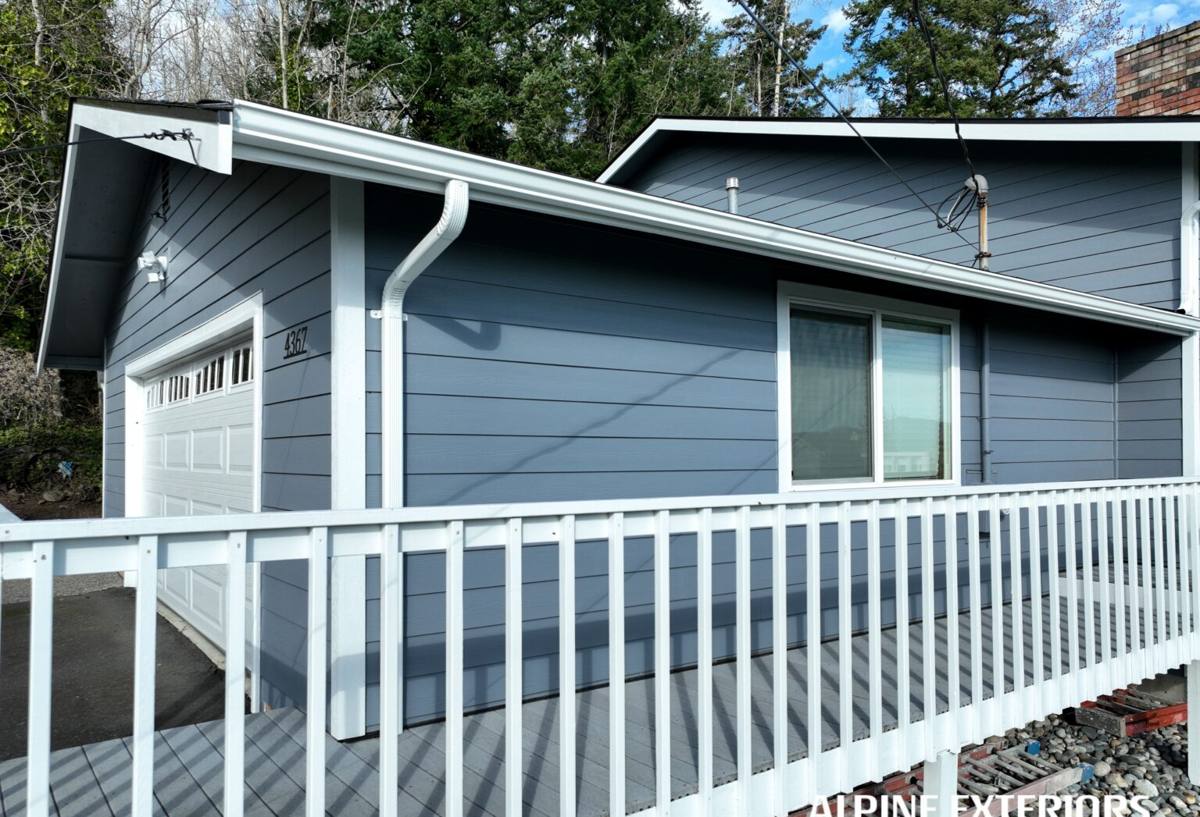
What Local Weather Actually Does to a Roof
Driving Rain and Wind-Loaded Water
Rain moving through this part of the valley is frequently pushed sideways by wind rather than falling straight down. That matters because wind-driven rain finds its way into places a simple annual rainfall number doesn't account for — under lifted shingle edges, around vent pipes and chimneys, and through flashing that was lapped correctly for a calm day but not for a genuine storm. Roofs that fail early in this climate usually aren't failing because the material was bad; they're failing at a flashing detail or a fastener that wasn't built for this specific load.
Marine Air and Slow-Drying Surfaces
Even set back from the coast, Nooksack sits inside the marine air pattern that moves across Whatcom County off the Strait and the Sound. That means humidity stays elevated for long stretches, and any roof surface that traps moisture rather than shedding it stays damp longer between rain events. Slow-drying surfaces are exactly where corrosion on lower-grade fasteners and flashing shows up first, and where organic growth gets the foothold it needs.
A Moss Season That Runs Most of the Year
Shaded roof planes, north-facing slopes, and anything under mature trees hold moisture longer than sun-exposed sections, and in this climate that turns into moss on a timeline of a couple of wet seasons rather than several dry ones. Moss isn't just cosmetic — it holds water directly against roofing material, works into laps and seams, and on porous surfaces can lift or loosen the roofing itself if it's left unaddressed. A river-valley setting with tree cover on multiple sides of a property, which describes a lot of Nooksack lots, tends to see this pressure on more of the roof than a more open, sun-exposed site would.
Why Metal Roofing Fits This Climate Well
Metal roofing isn't automatically the right answer for every home or every budget, but its physical properties line up well with what a Nooksack roof actually needs to handle. The smooth, non-porous surface sheds water fast and gives moss very little to grip onto compared to a shingle's granular surface. Properly installed panel seams and fasteners hold up to wind-driven rain better than a shortcut installation on any material would. And a correctly installed metal roof simply lasts longer in sustained-moisture conditions than most alternatives, which matters on a property that's going to see decades of this weather pattern rather than just a handful of seasons.
None of that means metal is maintenance-free or immune to problems. A metal roof installed with the wrong fastener type, inadequate flashing at penetrations, or panels that can't expand and contract with temperature swings will develop the same kind of leaks any other roof would — often at points that are harder to diagnose after the fact. The material's advantage only holds if the installation matches it.
Panel Systems: What We Install and Why
"Metal roofing" covers more than one product, and the differences matter for a Nooksack home more than they would somewhere drier.
| System | How It Handles Moisture & Moss | Fastening | Typical Fit |
|---|---|---|---|
| Standing seam | Concealed fasteners and raised seams shed water fastest; least surface for moss to hold onto | Hidden clips, no exposed screw heads to fail over time | Full replacements, homes prioritizing longest service life |
| Exposed-fastener ribbed/corrugated panel | Sheds water well; exposed fasteners are the weak point if not correctly spaced and gasketed | Screws through the panel face with rubber-gasketed washers | Budget-conscious replacements, outbuildings, secondary structures |
| Stone-coated steel shingle/tile profile | Good moisture shedding; coating and profile add some surface texture moss can find over time | Nailed similarly to a traditional shingle roof | Homeowners wanting a traditional shingle or tile look with metal's durability underneath |
Standing seam is what we recommend most often for full roof replacements in this area, specifically because the concealed fastening removes the most common long-term failure point on a metal roof. Exposed-fastener panel is a legitimate, less expensive option when it's installed with the correct screw spacing and gasket condition maintained over time. We'll walk through which fits a given roof's pitch, budget, and how much shade and tree cover the property has before recommending one.
What a Correct Metal Roof Installation Involves
Underlayment and Moisture Barrier
Metal panels are the visible layer, but the underlayment underneath is what protects the roof deck if wind-driven rain ever gets past the panel seams or a fastener works loose over time. We use underlayment rated for sustained moisture exposure rather than a bare minimum-code product, with added protection at eaves and valleys where water and debris collect.
Flashing at Every Transition
Chimneys, vent pipes, valleys, and roof-to-wall transitions are where the overwhelming majority of roof leaks actually start, on metal or any other material. Every one of those transitions gets properly formed and lapped flashing, not a generic trim piece and a bead of sealant standing in for a real flashing detail.
Fastening and Panel Movement
Metal panels expand and contract with temperature swings, and fasteners or clips that don't account for that movement eventually work loose, crack sealant, or distort panel seams. Correct fastener type, spacing, and clip selection for the specific panel system are not optional steps — they're the difference between a roof that stays tight for decades and one that develops slow leaks within a few years.
Ventilation
A roof deck that can't vent trapped moisture stays damp longer regardless of what's covering it, which shortens the life of the deck itself and can contribute to condensation issues inside the attic. We check existing ventilation as part of every roofing job and address gaps as part of the same project rather than leaving it for a homeowner to discover later.
Our Process for a Nooksack Roofing Project
We start with an on-site inspection of the existing roof, the deck underneath it, and the specific shade, slope, and moisture conditions on that property — a Nooksack lot with mature trees on multiple sides gets evaluated differently than an open, sun-exposed one. From there we give you a straightforward read on whether the existing deck is sound enough to roof over or needs repair as part of the job, walk through panel system options and realistic pricing, and provide a clear written scope before any work begins.
On installation day, that means removing the old roofing down to the deck when a tear-off is warranted, addressing any deck damage found underneath, installing correctly rated underlayment, and running the panel system with the flashing and fastening details above followed consistently rather than shortcut wherever they're harder to see once the job is finished. We clean up debris and fasteners from the site daily, not just at the end of the job, and walk the finished roof with you before we consider the project done.
Maintaining a Metal Roof in This Climate
A correctly installed metal roof needs less upkeep than most alternatives, but "less" isn't "none." A short annual routine goes a long way toward getting the full service life out of the system:
- Clear gutters and downspouts each fall before the heaviest rain arrives, since a metal roof still relies on clean drainage paths to shed the water it sheds so well
- Check for moss or organic debris collecting in valleys or against roof-to-wall transitions, where it holds moisture even on a surface that resists it elsewhere
- Look for panel fasteners or clips that appear loose, lifted, or corroded, especially after a significant windstorm
- Trim back tree branches that overhang the roof and keep shaded sections damp longer than the rest of the roof
- Have flashing at chimneys, vents, and valleys visually checked every few years rather than assuming it's maintenance-free indefinitely
None of this requires special equipment or a specialist visit every year, but it does require actually doing it. Most of the metal roof problems we get called out for in this area trace back to a blocked gutter or debris left to sit against a valley for a season or two, not a failure of the panel material itself.
What Drives the Cost of a Metal Roof Here
Metal roofing costs more upfront than a basic asphalt shingle roof, and the honest answer to "how much" depends on several factors specific to the property:
| Factor | Why It Matters |
|---|---|
| Panel system chosen | Standing seam runs higher than exposed-fastener panel due to material and labor differences in forming and installing concealed seams |
| Roof pitch and complexity | Steep roofs, multiple valleys, and dormers all add labor time regardless of panel type |
| Tear-off vs. overlay | Removing an existing roof down to the deck costs more upfront but lets us inspect and address deck damage before it's covered again |
| Deck condition | Rot or moisture damage found underneath old roofing adds repair cost that isn't visible until tear-off begins |
| Accessories and penetrations | Chimneys, skylights, and multiple vent penetrations each add flashing work |
We give a written estimate after seeing the actual roof, not a phone-quote range that changes once we're on site. If tear-off reveals deck damage that wasn't visible beforehand, we'll show you what we found and what it takes to address before any additional cost is added to the job.
Why a Crew That Already Works in Nooksack Matters
A roofing crew that works this part of Whatcom County regularly has seen how tree cover, river-valley humidity, and wind-driven rain actually play out on real roofs over years, not just how a panel system performs on a manufacturer's data sheet. That shows up in decisions a less familiar crew might miss — which roof orientations on a shaded Nooksack lot need extra attention at the eaves, how much flashing a given valley genuinely needs given the tree cover around it, and which fastener details are worth the extra time on install day so you're not dealing with a callback a few winters later. It also means someone who treats a river-valley property differently than a coastal one, rather than applying the same approach to every roof in the county.
Beyond the Roof
Roofing is the focus of this page, but the same climate that wears on a roof wears on the rest of a home's exterior too. We also handle siding, windows, and deck work, and on siding specifically we install James Hardie fiber cement as our standard, for similar reasons to why we favor metal on roofing — it's built to handle sustained moisture and moss rather than just get by. If a roofing project turns up moisture damage at a wall-to-roof transition or aging trim nearby, we can address it as part of the same conversation instead of sending you to find a second contractor.
If you're weighing a metal roof for a Nooksack home, or just want an honest read on whether your current roof still has real life left in it, we're glad to take a look. Reach out using the form below to schedule a free, no-pressure estimate.