 Blaine Siding
 Roofing Built for Blaine Harbor's Marine Climate
Blaine Harbor sits right where the Strait of Georgia meets Semiahmoo Bay, and that location shapes everything about how a roof ages here. Homes in this part of Blaine take on salt-laden air, wind-driven rain off the water, and a moss season that can run eight or nine months out of the year. A roof that would hold up fine twenty miles inland can wear out early here if it wasn't chosen and installed with this specific exposure in mind.
We install new roofs across Whatcom County, but Blaine Harbor gets treated differently in our planning. The proximity to saltwater changes what fasteners, flashing metals, and even underlayment products make sense. Ignoring that isn't a shortcut worth taking — it's the difference between a roof that looks good for two years and one that performs for two decades.
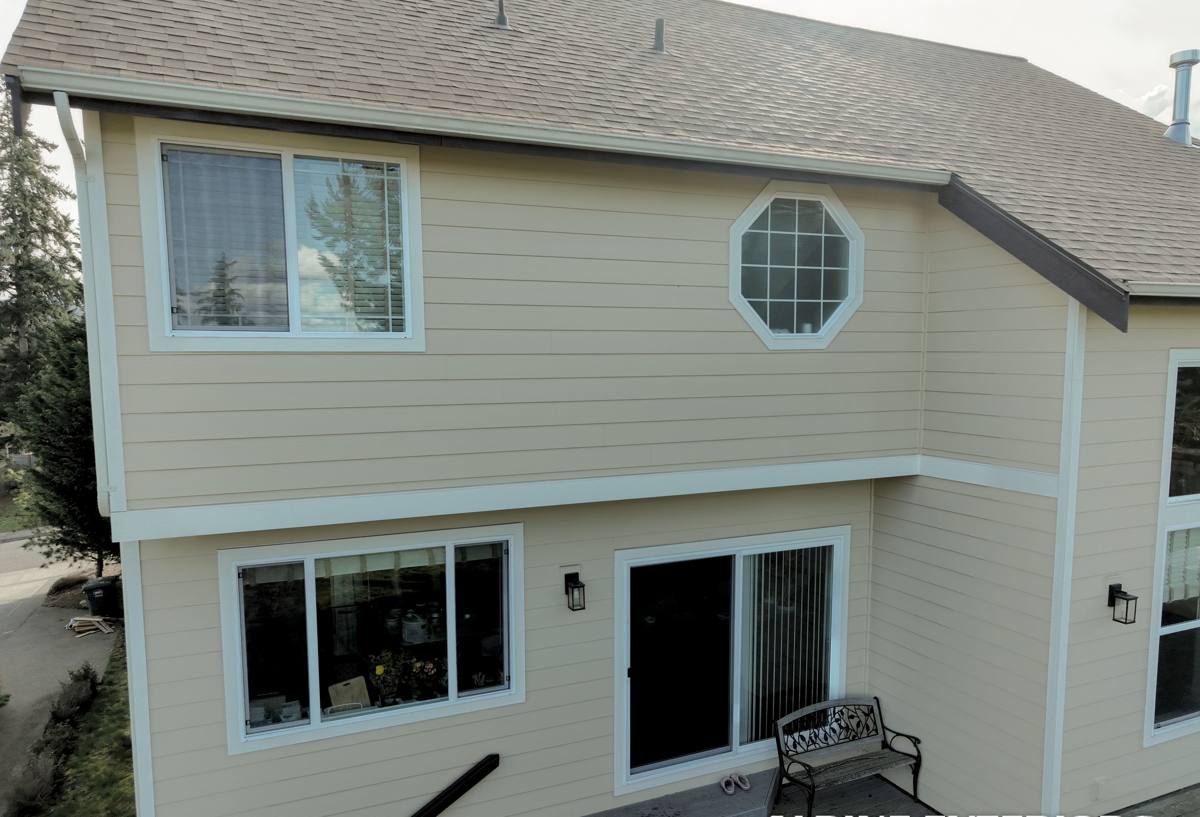
What Salt Air Actually Does to a Roof
Salt air is corrosive, and it doesn't need direct ocean spray to do damage — a steady marine breeze carries enough salt content to accelerate corrosion on exposed metal over time. On a roof, that shows up in a few predictable places:
- Galvanized fasteners and flashing that rust and stain years before they should
- Exposed nail heads that weep rust streaks down shingles or siding
- Gutter hangers and drip edge that pit and thin faster than inland installations
- Vent boots and pipe flashing that harden and crack sooner under salt and UV combined
None of this means a roof near the harbor is doomed to fail — it means the materials and hardware need to be matched to the exposure. That's a spec decision we make before the first shingle goes down, not a repair we make after the fact.
Metal Choices Matter More Here
For flashing, drip edge, and any exposed fasteners, we favor corrosion-resistant metals and coatings suited to coastal exposure over standard galvanized product whenever the budget allows it. It costs a bit more up front. It also means we're not back out replacing rusted flashing in year six.
Driving Rain and How a Roof Actually Sheds Water
Blaine sits in a wetter, wind-exposed corner of Whatcom County, and near the harbor that wind often drives rain sideways rather than straight down. A roof system that only manages water falling vertically will eventually let water find its way under shingles at edges, valleys, and penetrations. Correct installation accounts for wind-driven rain specifically:
- Ice-and-water shield or equivalent self-adhered membrane at eaves, valleys, and around all penetrations — not just where code minimums require it
- Properly lapped underlayment with enough overlap to resist wind-forced water intrusion
- Valley metal or woven valleys installed with enough width margin for heavy runoff
- Step flashing at every wall intersection, never caulk used as a substitute for proper flashing
These aren't upgrades — they're the baseline for a roof that's actually going to hold up two blocks from open water.
Moss, Shade, and the Long Wet Season
Blaine Harbor's tree cover and marine humidity combine to create a long moss season. Moss holds moisture against the roof surface, works its way under shingle tabs as it grows, and can lift edges enough to let water in. It also adds weight and traps organic debris that keeps a roof damp long after the rain has stopped.
A new roof install is the right time to get ahead of this, not just react to it later. We typically discuss with homeowners:
- Zinc or copper strips near the ridge, which release trace metal ions that discourage moss growth as rain washes over the roof
- Shingle products with built-in algae and moss resistance where it fits the homeowner's budget and aesthetic
- Whether nearby tree limbs should be trimmed back to cut down on shade and debris buildup
- A realistic maintenance schedule for gentle moss removal so it never gets built into the shingle mat
None of this eliminates moss entirely — nothing does in this climate — but it buys years of extra roof life and keeps maintenance manageable.
What a Correct New Roof Installation Involves
A roof is only as good as what's underneath the shingles. Here's what we consider non-negotiable on every install, harbor-adjacent or not:
| Step | Why It Matters in This Climate |
|---|---|
| Tear-off and deck inspection | Reveals hidden rot or soft spots from years of moisture exposure — common on older Blaine Harbor homes |
| Deck repair or replacement | A new roof over a compromised deck fails early no matter how good the shingles are |
| Self-adhered underlayment at vulnerable areas | Backstops wind-driven rain at eaves, valleys, and penetrations |
| Corrosion-resistant flashing and fasteners | Resists salt-air corrosion that standard galvanized hardware can't stand up to long-term |
| Proper ventilation (intake and exhaust balance) | Controls attic moisture, which is already elevated by regional humidity |
| Moss-resistant treatment options | Extends roof life through Blaine's long wet, shaded moss season |
| Final inspection and cleanup | Confirms every detail was installed to spec before we call the job done |
Choosing Materials for This Location
Most Blaine Harbor homes we work on land on architectural asphalt shingles, and for good reason — they perform well in this climate, come with strong warranty structures, and are cost-effective to install and repair. We steer homeowners away from lower-grade three-tab shingles for this area specifically, since their thinner profile and shorter lifespan don't hold up as well against sustained wind-driven rain and salt exposure.
Metal roofing is also an option some homeowners consider for its longevity, but it comes with its own coastal trade-offs: fastener corrosion resistance becomes even more critical, and panel expansion/contraction needs to be detailed correctly at every seam. It's a good fit for the right home and budget, but it requires a crew that installs it with those specifics in mind rather than treating it like a standard inland install.
A Straightforward Cost Range
Costs vary based on roof size, pitch, tear-off complexity, and material choice, so we won't quote a number without seeing the roof. In general, a full architectural shingle replacement on a typical single-family home in this area runs into the low-to-mid five figures, with metal roofing and larger or steeper roofs pushing higher. We'll walk you through exact numbers during a free estimate — no pressure, no inflated "today only" pricing tactics.
Our Process for a Blaine Harbor Roof Replacement
- On-site inspection of the current roof, deck, ventilation, and any moss or moisture issues
- Written estimate with material options suited to the home's exposure and budget
- Scheduling that accounts for weather windows — we don't rush a tear-off into a forecast we don't trust
- Tear-off, deck inspection and repair, and installation using coastal-appropriate flashing and fasteners
- Final walkthrough so you understand what was done and how to maintain it
We don't start a tear-off without a realistic dry-weather window planned, since an exposed deck in a Blaine Harbor rain event is a problem nobody wants.
Why Local Experience on This Specific Coastline Matters
A roofing crew that mostly works drier, inland parts of Whatcom County can still do competent work — but they may not default to corrosion-resistant hardware, extra underlayment at wind-exposed edges, or moss-mitigation options unless a homeowner specifically asks. Working Blaine Harbor regularly means those decisions are already built into how we spec a job, not an upsell added later.
We've seen how roofs in this specific area age, what fails first, and what holds up. That's the kind of knowledge that only comes from working the same coastline over and over, not from a general roofing checklist.
Signs Your Blaine Harbor Roof May Need Replacing
- Granule loss showing up heavily in gutters or downspouts
- Curling, cupping, or cracked shingles, especially on wind-exposed slopes
- Rust streaking from fasteners or flashing
- Persistent moss growth that keeps returning after cleaning
- Soft spots or sagging visible from the attic or ground level
- Daylight visible through the roof deck from inside the attic
- A roof approaching or past 20-25 years old with no major upgrades
If you're seeing two or more of these, it's worth getting an inspection before a winter storm turns a maintenance issue into an emergency repair.
If your roof is showing its age or you just want an honest read on how much life it has left, we're happy to take a look. Reach out for a free, no-pressure estimate using the form below — we'll walk the roof, tell you what we actually see, and give you real numbers to work with.