 Blaine Siding
 Semiahmoo's Location Asks More of a Roof Than a Typical Neighborhood
Semiahmoo sits out on the water, and that changes what a roof has to deal with day to day. Homes here catch wind off Semiahmoo Bay and Drayton Harbor that inland Blaine properties simply don't see, along with a steady dose of salt-laden air that speeds up corrosion on anything metal. Add in Whatcom County's long, wet winters and the shaded, damp conditions that let moss take hold on north-facing slopes, and you've got a roofing environment that punishes shortcuts. A roof installed the same way you'd do it three miles inland won't hold up the same way out here.
That's not a reason to overbuild or upsell every job — it's a reason to be deliberate about material choice, flashing details, and ventilation from the start. Get those right and a new roof in Semiahmoo can perform as well as anywhere else in the region. Get them wrong and you're looking at premature fastener corrosion, moss-driven shingle damage, or leaks at the valleys within a handful of years.
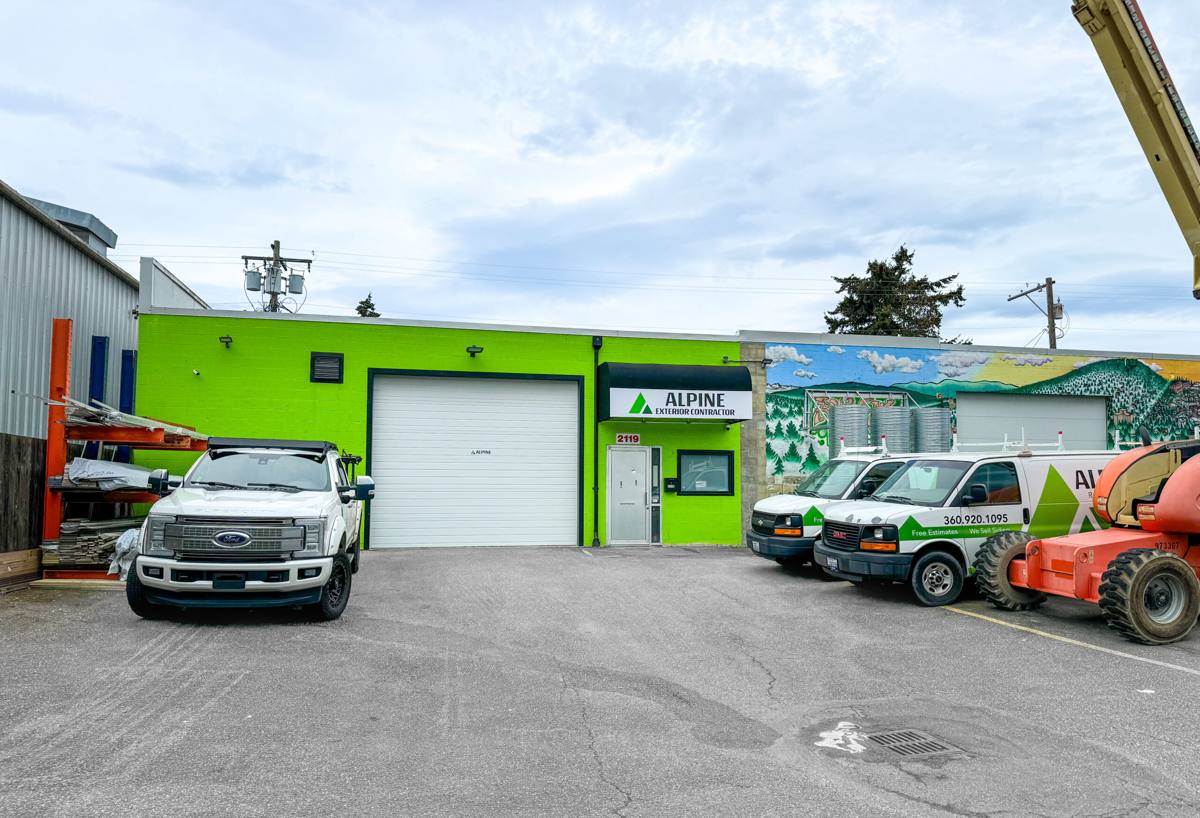
What Local Conditions Actually Do to a Roof
Salt Air and Metal Components
Flashing, fasteners, and any exposed metal trim are the first things salt air attacks. Standard galvanized fasteners can start showing rust streaks on a roof near the water well before they would inland. We spec corrosion-resistant fasteners and flashing material for anything on or near Semiahmoo's waterfront exposure, because replacing a roof over rusted-out flashing in eight years costs more than doing it right the first time.
Wind Off the Water
Being out on a point or peninsula means more sustained wind and more gusts than a sheltered inland lot. Shingles need proper nailing patterns and, in more exposed spots, a higher wind-rated product. Ridge caps and hip lines — the parts of a roof wind gets under first — need extra attention during installation, not just at the field of the roof.
Moss and Sustained Moisture
Blaine's moss season runs long, and shaded or north-facing roof planes near mature trees hold moisture for days after a storm passes. Moss isn't just cosmetic — it lifts shingle edges, traps water against the roof deck, and accelerates granule loss. New roofs need algae-resistant shingles and enough attic ventilation to keep the deck from staying damp underneath, not just on top.
Driving Rain
Storms off the water tend to come in sideways rather than straight down, which pushes water into places a calmer rain never would — under shingle tabs, behind step flashing, into valleys. Underlayment and flashing details matter more here than in a typical dry-climate installation.
Choosing a Roofing Material for a Semiahmoo Property
There's no single "best" material for every home — it depends on your roof's exposure, slope, and budget. Here's how the common options stack up against the specific conditions Semiahmoo homes face:
| Material | Wind performance | Salt air / corrosion | Moss resistance | Typical lifespan | Upfront cost |
|---|---|---|---|---|---|
| Architectural asphalt shingle (algae-resistant) | Good with proper nailing; high-wind lines available | Good — minimal exposed metal beyond flashing/fasteners | Good with copper or zinc strips at ridges | 25–30 years | Moderate |
| Standing seam metal | Excellent | Requires marine-grade coating or aluminum to avoid corrosion | Excellent — moss struggles to grip smooth metal | 40–50+ years | Higher |
| Cedar shake | Fair — more susceptible to wind lift | Neutral, but wood absorbs and holds moisture | Poor without regular treatment; highest moss risk | 20–30 years with upkeep | Higher, plus ongoing maintenance |
| Composite/synthetic shake | Good | Good — no bare metal to corrode | Good | 30–50 years | Higher |
For most Semiahmoo homes, a quality architectural asphalt shingle with algae-resistant granules is the practical choice — it balances cost, wind performance, and moss resistance well. On highly exposed waterfront lots or for homeowners planning to stay 20+ years, metal earns its higher price tag through corrosion resistance and moss shedding. We'll walk your specific roof and give you a straight answer on which makes sense, rather than pushing whatever has the best margin.
What a Correct Installation Actually Involves
A new roof is only as good as what's underneath the shingles. On a Semiahmoo project, we treat these steps as non-negotiable:
- Full tear-off to bare deck — never install over existing layers, which traps moisture and hides deck damage
- Deck inspection and repair of any soft, rotted, or water-stained sheathing before anything new goes down
- Ice-and-water shield membrane at all valleys, eaves, and roof penetrations, sized for our wind-driven rain exposure
- Synthetic underlayment across the full roof, not just the areas that "need it"
- Corrosion-resistant drip edge and step/counter flashing at every wall, chimney, and skylight intersection
- Stainless or coated fasteners rated for coastal exposure
- Balanced intake and exhaust ventilation sized to the actual attic volume
- Algae-resistant shingles with a wind rating matched to the roof's exposure
- Ridge cap installed with extra attention to nailing pattern given wind off the water
- Full magnetic sweep and debris cleanup before we call the job done
Skipping any one of these doesn't usually show up as a problem in year one — it shows up as a leak, a moss colony, or a rusted flashing seam five or ten years down the road, which is exactly when it's most expensive to fix.
Ventilation: The Step Homeowners Rarely Think About
Ventilation doesn't get much attention because you can't see it from the ground, but it's one of the biggest factors in how long a roof lasts in this climate. An attic that can't breathe traps warm, moist air against the underside of the deck. In winter that condensation soaks sheathing from below — the same problem moss causes from above. A properly balanced system (intake at the eaves, exhaust at the ridge) keeps the deck dry from both directions and reduces the damp conditions moss needs to establish itself in the first place. We size ventilation to your actual attic, not a generic rule of thumb, because a house tucked under trees needs different airflow than one wide open to the wind.
Our Process, Start to Finish
Inspection and Estimate
We start with a full roof and attic inspection — checking deck condition, existing ventilation, flashing points, and any moss or moisture damage already present. You get a written estimate that spells out material options and what we found, not a vague number.
Material Selection
We walk through the tradeoffs for your specific roof — exposure, slope, budget, how long you plan to stay in the home — and help you land on a material that fits, without pressure toward the most expensive option.
Installation
Most residential re-roofs in this size range take one to a few days depending on roof complexity and weather windows — and in Blaine, we plan around rain rather than fight it. Tear-off and deck repair happen first, followed by underlayment, flashing, and shingle installation in sequence, with the roof never left open to weather overnight.
Final Walkthrough and Cleanup
Before we consider the job finished, we walk the roof and the property with you, confirm ventilation and flashing details, and do a full magnetic sweep of the yard and driveway for stray fasteners.
Why It Matters That We Already Work Semiahmoo
A crew that mostly works inland can install a technically fine roof and still miss the details that matter out here — under-speccing fasteners for salt exposure, skipping extra ridge attention on a wind-exposed lot, or not accounting for how long a shaded slope stays wet. Having done roofs in this specific stretch of Whatcom County, we already know which slopes on a Semiahmoo property tend to hold moss, which orientations catch the worst of the wind, and which flashing details actually hold up near the water. That's the difference between a roof that looks right on installation day and one that's still performing correctly in year fifteen.
After Installation: What Keeps a Semiahmoo Roof Performing
A well-installed roof still benefits from basic upkeep in this climate. Keep gutters clear so water isn't backing up under eave flashing during heavy rain. Have moss treated or gently removed before it establishes a foothold rather than after it's spread across a slope. And have the roof looked at after any major windstorm — a quick check for lifted shingles or displaced flashing catches small issues before they become deck damage.
If you're planning a roof replacement on your Semiahmoo property, we're happy to take a look and give you a straightforward, no-pressure estimate — just fill out the form below and we'll get in touch.