 Blaine Siding
 Metal Roofing in the Peace Arch Area: A Different Climate Problem Than Most of the Country
Homes near the Peace Arch border crossing sit right where Pacific storm systems come ashore off the Salish Sea, pick up salt off the bay, and dump it on rooftops for months at a time. That combination — salt-laden air, driving horizontal rain, and long stretches of shade and dampness that never fully dry out — is exactly the kind of environment metal roofing was built to handle, provided it's specified and installed correctly for this location. A metal roof bought off a generic spec sheet and installed the same way it would be in a dry inland climate is not the same job as one engineered for Whatcom County's coastline.
This page is about that one job: metal roofing for houses in and around the Peace Arch area, what the climate actually demands of the materials and the installation, and what we do differently because we've been working roofs in this exact stretch of Blaine for years.
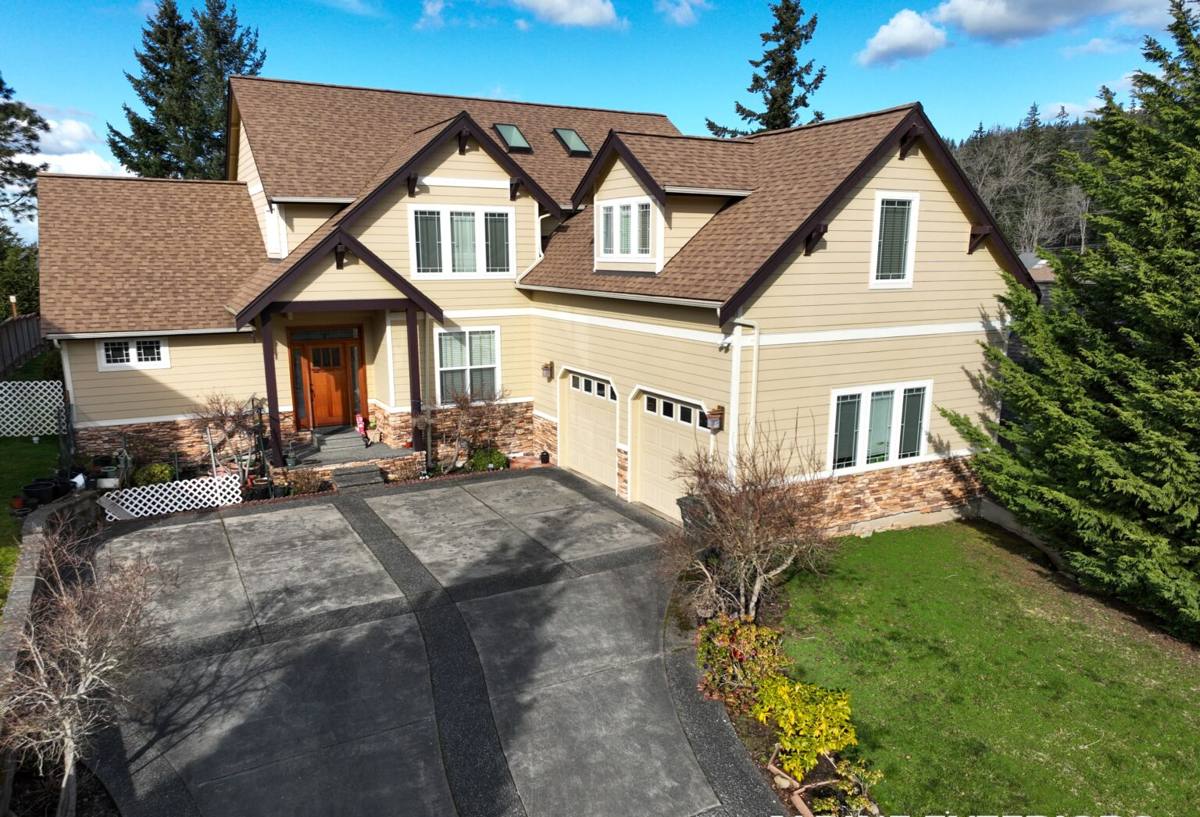
What Salt Air and Coastal Moisture Actually Do to a Roof Over Time
It's worth being specific about the failure modes we're designing against, because "salt air is corrosive" doesn't tell you where the actual weak points are.
- Fastener and flashing corrosion — exposed screws, nails, and cut edges are where rust starts first, especially if the fastener metal doesn't match the panel metal.
- Galvanic corrosion — when two dissimilar metals touch in a wet, salty environment (say, a steel fastener against an aluminum panel, or copper flashing draining onto steel), one metal degrades the other faster than either would corrode alone.
- Wind-driven rain intrusion — Blaine's storms don't just fall straight down, they come in sideways off the water, which pushes water sideways under laps, around penetrations, and into seams that would stay dry in a calmer climate.
- Sustained dampness and shade — north-facing slopes and tree-shaded roof sections here can stay damp for days after a storm, which is what feeds moss and biological growth even on materials that don't rot.
None of these are reasons to avoid metal roofing — metal handles salt air and heavy rain better than most roofing materials when the coatings, fasteners, and flashing details are chosen for this environment specifically.
Panel Types We Install, and How They Compare for This Climate
Not every metal roofing system is a good fit for a coastal, high-rainfall property. Here's how the main options stack up for a Peace Arch area home.
| Panel Type | Corrosion Resistance Near Salt Air | Best Use | Maintenance Load |
|---|---|---|---|
| Standing seam (concealed fastener) | Best — no exposed fastener heads to corrode or leak | Full roofs, especially on homes closest to open water or exposed to wind | Low |
| Exposed-fastener panel | Good, but fastener seals and washers wear faster in salt air and need eventual attention | Budget-conscious full roofs, outbuildings, additions | Moderate — seals should be checked periodically |
| Stone-coated steel | Good when the coating is intact; damage to the coating exposes steel to faster corrosion | Homes wanting a shingle or tile look with metal's durability | Moderate |
For most homes in this immediate area we lean toward standing seam because it removes the single biggest long-term liability — exposed fasteners sitting in salt air for decades. That said, exposed-fastener systems are a legitimate, more affordable option for the right project, and we'll tell you honestly when that's the better call for your budget and roof shape.
Coatings Matter as Much as the Metal
The steel or aluminum underneath is only half the equation — the paint or coating system on top is what actually faces the weather day to day. Higher-grade PVDF (often sold under names like Kynar 500) finishes hold color and resist chalking and fading in coastal UV and salt exposure noticeably longer than standard polyester coatings. We don't push one finish as "the only option," but on a home this close to the water, we'll walk you through why the better coating is usually worth the difference over the life of the roof.
The Details That Actually Determine Whether a Metal Roof Leaks Here
Metal panels themselves rarely fail. Roofs fail at the transitions — and in a wind-driven rain climate, those transitions need more attention than the manufacturer's minimum spec.
- Fastener compatibility — matching fastener metal to panel metal to avoid galvanic corrosion, and using proper neoprene-washered fasteners rated for exterior exposure.
- Underlayment — a high-quality synthetic or self-adhered underlayment beneath the panels, not just builder's felt, so the roof has a second line of defense if wind ever forces water past a seam.
- Flashing at valleys, walls, and penetrations — these need wider laps and more sealant attention here than they would in a drier, calmer climate, because wind-driven rain finds the shortest path under a lap that would otherwise be adequate.
- Panel end laps and seam direction — oriented and lapped to shed the prevailing wind-driven rain direction for this property, not just laid out for visual symmetry.
- Drip edge and gutter integration — sized and pitched so heavy rain events don't overwhelm the edge and back water up under the panels.
Moss, Algae, and Roof Ventilation
Whatcom County's long wet season and shaded lots mean moss and algae growth are a fact of life here, on any roofing material. Metal roofing has a real advantage: moss can grow on a metal panel's surface, but it can't root into or degrade the panel the way it can degrade organic shingle material over time. That said, a metal roof isn't moss-proof, and a few things reduce buildup:
- Proper attic and roof ventilation so heat and moisture don't sit trapped under the deck, which contributes to surface dampness
- Keeping overhanging branches trimmed back where practical, since shaded, debris-covered sections stay damp longest
- Occasional gentle rinsing of shaded or north-facing slopes rather than pressure-washing, which can damage coatings and seals
We size and place ridge and soffit ventilation as part of the roofing plan itself, not as an afterthought, because ventilation affects both moss growth and the long-term health of the roof deck underneath the panels.
How Our Process Works
Assessment
We start on the roof and in the attic, not just with a drive-by estimate. We look at existing deck condition, ventilation, current moisture staining, and how the roof is currently shedding wind-driven rain — all of which shape the plan for your specific property.
Tear-Off and Deck Prep
Any soft, rotted, or water-stained decking gets identified and replaced before a single panel goes down. Installing a durable metal roof over a compromised deck just hides the problem under a longer-lasting material.
Underlayment and Flashing
This is where most of the long-term weather resistance actually gets built in — proper underlayment, correctly lapped and sealed flashing at every valley, wall, and penetration, before panels are installed.
Panel Installation
Panels go down with fasteners and clips matched to the panel metal, laid out to shed this property's prevailing wind-driven rain pattern, with seams and laps sealed to spec rather than "close enough."
Final Walk-Through
We walk the finished roof with you, cover what maintenance (if any) it needs, and make sure you know what a properly performing seam and flashing detail should look like on your own roof going forward.
What to Expect Over the Life of the Roof
A correctly installed metal roof in this climate is a low-maintenance investment, not a no-maintenance one. Realistically, plan on:
- An occasional visual check after major windstorms, particularly around flashing and penetrations
- Keeping gutters and valleys clear of needles and debris so water keeps moving off the roof
- Periodic fastener and sealant checks on exposed-fastener systems specifically
- Rinsing off heavy moss or debris buildup on shaded slopes rather than letting it sit for years
Done right, that's a short list for a roof that's meant to outlast several cycles of asphalt shingle replacement.
Why Hiring a Crew That Already Works the Peace Arch Area Matters
Metal roofing installation isn't uniform across Washington. A crew used to drier, inland conditions can install a technically correct roof that still isn't set up for what this stretch of Blaine actually throws at it — the wind direction off the water, the salt exposure, the shaded lots that hold moisture longer. We work roofs in this immediate area regularly, which means we already know which slopes on which orientations tend to hold moss, where wind-driven rain tends to find weak transitions, and which fastener and flashing choices hold up here rather than just on paper. That local pattern recognition is the difference between a roof that's "installed to spec" and one that's actually built for where it sits.
A Practical Checklist Before You Hire Anyone for a Metal Roof Here
- Ask what fastener metal they use and whether it's matched to the panel to avoid galvanic corrosion
- Ask what underlayment goes down before the panels — felt alone isn't enough in this climate
- Ask how they handle valley and wall flashing laps, specifically for wind-driven rain
- Ask whether ridge and soffit ventilation are part of the plan, not just the panels
- Ask for the manufacturer's coating warranty terms and what voids them
- Confirm they'll identify and address deck condition before installation, not after
If a contractor can't answer these clearly, that's worth noticing before you sign anything.
If you're weighing metal roofing for a home in the Peace Arch area and want a straight answer on what your roof actually needs — not a generic quote — we're glad to take a look and put together a free, no-pressure estimate. There's a form below to get that started.