 Blaine Siding
 Siding Installation for Peace Arch Homes
The Peace Arch area sits about as close to saltwater and the Canadian border as a Washington neighborhood gets, and that location shapes what a house needs from its exterior. Homes here take a steady diet of marine air, wind-driven rain off the Strait, and a wet season that stretches long enough to grow moss on anything that holds moisture. Siding installed without that reality in mind tends to show it early — soft spots at the bottom courses, streaking under gutters, paint that gives up years before it should. This page is about what a correct siding installation looks like specifically for Peace Arch, not a generic rundown of siding in general.
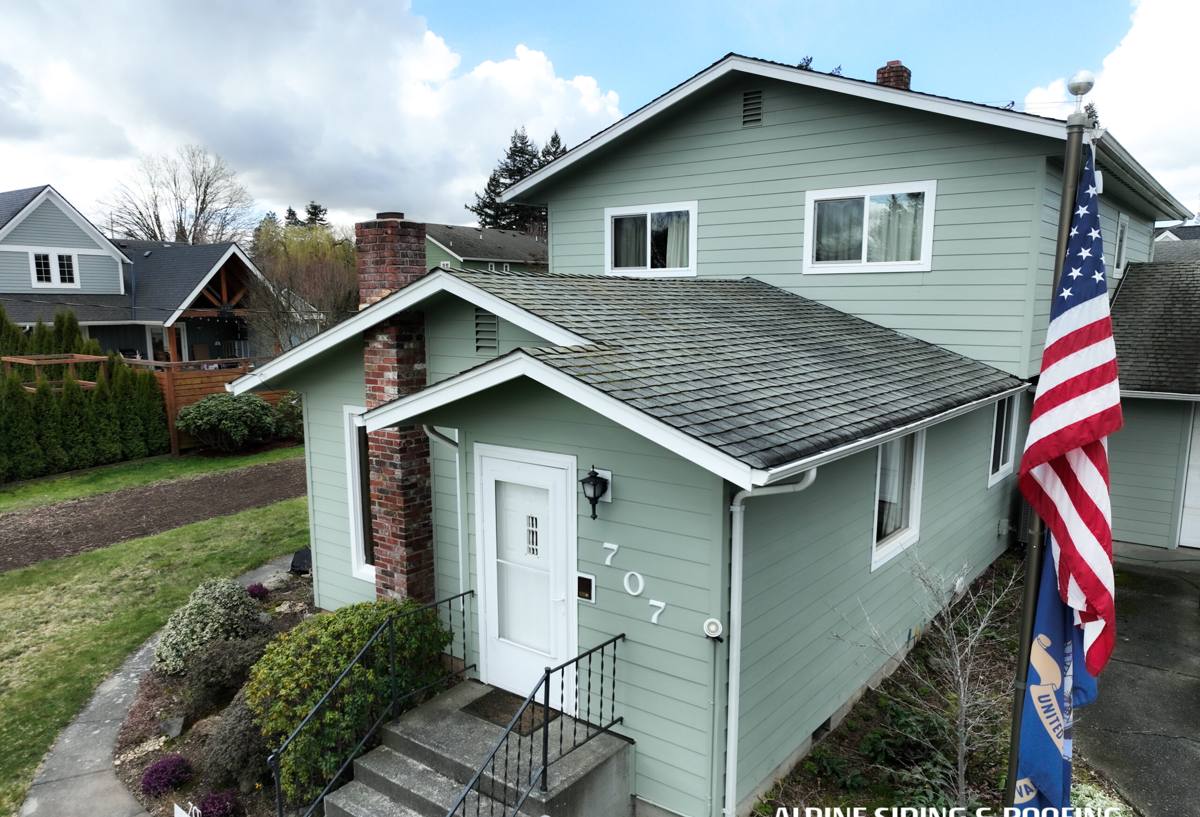
What Peace Arch's Climate Actually Does to Siding
Blaine's location on Whatcom County's northwest corner means Peace Arch homes deal with a few climate pressures at once, and they compound each other rather than acting alone.
Salt Air
Proximity to the water puts a fine mist of salt-laden air on exterior surfaces most days of the year. Salt is corrosive to fasteners and hard on paint film, and it accelerates the breakdown of any siding product that relies on a surface coating rather than a factory-cured finish. Over years, that means chalking, fading, and eventually coating failure on products not built for a marine-adjacent environment.
Driving Rain
Storms coming off the Strait of Georgia don't just fall straight down — wind pushes rain sideways into wall assemblies, especially on west and south-facing elevations. That means water testing at seams, laps, and penetrations matters more here than it would on a sheltered inland lot. A siding job that looks fine on a calm day can still leak during a January blow if the flashing and lap details weren't done right.
Long Moss Season
Northwest Washington's wet stretch runs long — often eight or nine months of the year with enough sustained moisture for algae and moss to establish on shaded, north-facing walls and anywhere airflow is poor. Moss holds water against the siding surface far longer than open air would, which is exactly the condition that rots wood-based products and stains painted surfaces.
Why This Matters More in Peace Arch Than Other Blaine Neighborhoods
Every property in Blaine deals with Pacific Northwest weather, but Peace Arch's closeness to the water pushes the salt air and driving rain factors higher than they'd be a few miles inland. We treat that as a baseline assumption on every estimate here — not an upsell, just the standard we install to because it's what the location actually calls for.
Why We Only Install James Hardie Fiber Cement
We install one siding system, on every job, in every Blaine neighborhood: James Hardie fiber cement. That's not a marketing position — it's a decision built around exactly the conditions described above.
- Non-combustible material. Fiber cement doesn't feed a fire the way wood-based sidings can, which matters for insurance and long-term peace of mind regardless of climate.
- ColorPlus factory finish. The color is baked on in a controlled factory process rather than field-applied, which gives it far better resistance to salt air fading and chalking than site-painted products.
- Engineered for wet climates. Hardie's HZ10 product line is formulated specifically for regions like ours with prolonged moisture exposure — it resists moisture-related damage that shortens the life of wood, particleboard, and some composite sidings.
- Doesn't feed moss and mildew growth. Fiber cement doesn't provide the organic material that wood-based products do, so moss and algae sit on the surface rather than taking hold in the material itself, which makes periodic cleaning far more effective.
- Strong transferable warranty. A meaningful warranty only matters if the product is actually built to last that long in this climate — Hardie's track record and warranty structure back that up.
We don't install LP SmartSide, vinyl, Cemplank, Allura, primed spruce, or cedar. Each of those has legitimate use cases somewhere, but none of them hold up to Peace Arch's combination of salt air, wind-driven rain, and moss season as well as fiber cement does, and we'd rather stand behind one product we trust completely than offer several we'd have reservations about.
What a Correct Installation Involves Here
Fiber cement performs the way it's supposed to only when it's installed correctly. In a marine-adjacent, high-rain environment like Peace Arch, a few details matter more than they would elsewhere.
Water Management Behind the Siding
A weather-resistant barrier and properly integrated flashing at every window, door, and penetration is non-negotiable here. Driving rain finds gaps that vertical rain never would, so laps and flashing have to be sequenced correctly — each layer shedding water onto the one below it, never trapping moisture behind the cladding.
Correct Clearances and Fastening
Hardie's installation instructions specify minimum clearances from grade, roofing, and decks, along with specific fastener spacing and placement. Skipping these clearances is one of the most common ways an otherwise good product ends up with moisture problems at the bottom courses — exactly where splash-back from driving rain concentrates.
Caulking and Sealant Discipline
Butt joints, trim intersections, and penetrations need the right sealant, applied correctly, not just enough caulk to look finished. In a salt-air environment, sealant quality and application matter more because coastal conditions age sealants faster than inland ones.
Ventilation Behind the Cladding
Proper rainscreen or drainage plane detailing lets any moisture that does get behind the siding find its way back out instead of sitting against the wall assembly — a meaningful factor during a moss season that can stretch most of the year.
Cost Factors for a Peace Arch Siding Job
| Factor | Why It Affects Peace Arch Jobs |
|---|---|
| House size and elevation count | More wall area and more corners/penetrations means more flashing and lap details to get right |
| Existing siding removal | Older wood or vinyl siding often hides moisture damage that needs repair before new siding goes on |
| Substrate condition | Sheathing and framing exposed to years of driving rain may need repair before installation |
| Product line and profile | HZ10 boards, plank width, and trim style all affect material cost |
| Site access | Waterfront and view lots in Peace Arch can have tighter access or scaffolding needs on certain elevations |
| Color and finish selection | ColorPlus finishes cost more upfront than field-painted trim but avoid a repaint cycle |
We give straightforward, honest ranges during the estimate rather than a single number pulled from a generic price list, because these factors genuinely move the cost from house to house.
Our Process for a Peace Arch Installation
- On-site assessment. We look at every elevation, noting which walls take the most direct weather exposure and where existing moisture damage might be hiding.
- Tear-off and substrate inspection. Once old siding is off, we check sheathing and framing before anything new goes up — this is where hidden rain damage from years of exposure gets caught.
- Repair before covering. Any compromised sheathing or framing gets fixed. Installing new siding over a damaged substrate just hides the problem instead of solving it.
- Weather barrier and flashing installation. This is the layer that actually keeps water out — done to spec, not rushed.
- Hardie board installation. Correct clearances, fastener spacing, and lap sequencing throughout.
- Trim, caulking, and finish details. The details that determine how the job looks and performs for the next several decades.
- Final walkthrough. We go over the finished work with the homeowner before calling the job done.
Why a Crew That Already Works Peace Arch Matters
A siding crew that regularly works this specific area already knows which elevations tend to take the worst of the wind-driven rain, how moss establishes on shaded walls locally, and what substrate condition tends to look like on homes of a given age near the water. That familiarity shows up in fewer surprises once tear-off starts and in installation decisions — like where to add extra flashing attention — that come from local pattern recognition rather than a generic checklist.
Signs Your Current Siding Is Losing the Fight
- Soft or spongy spots when pressed near the bottom courses or below windows
- Persistent moss or algae staining that returns quickly after cleaning
- Paint that's chalking, peeling, or fading unevenly, especially on water-facing walls
- Visible gaps or separation at butt joints and trim corners
- Interior signs like musty smells or discoloration on walls that back up to exterior siding
Any one of these is worth a look before it turns into a larger repair. Caught early, most of these issues are still cosmetic; left alone through another wet season, they tend to become structural.
Maintenance After Installation
Correctly installed Hardie siding is low-maintenance, not no-maintenance. A periodic rinse to keep salt residue and moss spores from accumulating, an eye kept on caulking at trim joints over the years, and prompt attention to any landscaping that starts shading a wall and keeping it damp longer than it should be are really all it takes to get the full life out of the material in this climate.
If you're weighing a siding replacement for a Peace Arch home, we're glad to walk the exterior with you and give a straightforward, no-pressure estimate — just fill out the form below to get started.