 Blaine Siding
 Roofing Point Roberts Homes for a Genuinely Tough Climate
Point Roberts sits out on its own peninsula, surrounded on three sides by water, which means every roof out there takes a different kind of beating than a roof a few miles inland. The marine air carries salt that works on metal fasteners and flashing year-round. Storms come off the water with driving, wind-blown rain instead of straight-down rain, which finds every weak seam a roof has. And the tree cover that gives so many Point Roberts properties their privacy also keeps roofs shaded and damp for long stretches, which is exactly what moss needs to take hold. None of this makes asphalt shingle roofing a bad choice here — it's still one of the most practical, cost-effective roofing systems available — but it does mean the details of the installation matter more than they would in a drier, more sheltered part of Whatcom County.
This page is about that one job, done right, for that one location: what a correct asphalt shingle roof looks like for a Point Roberts home, and why the installation details we insist on aren't optional extras.
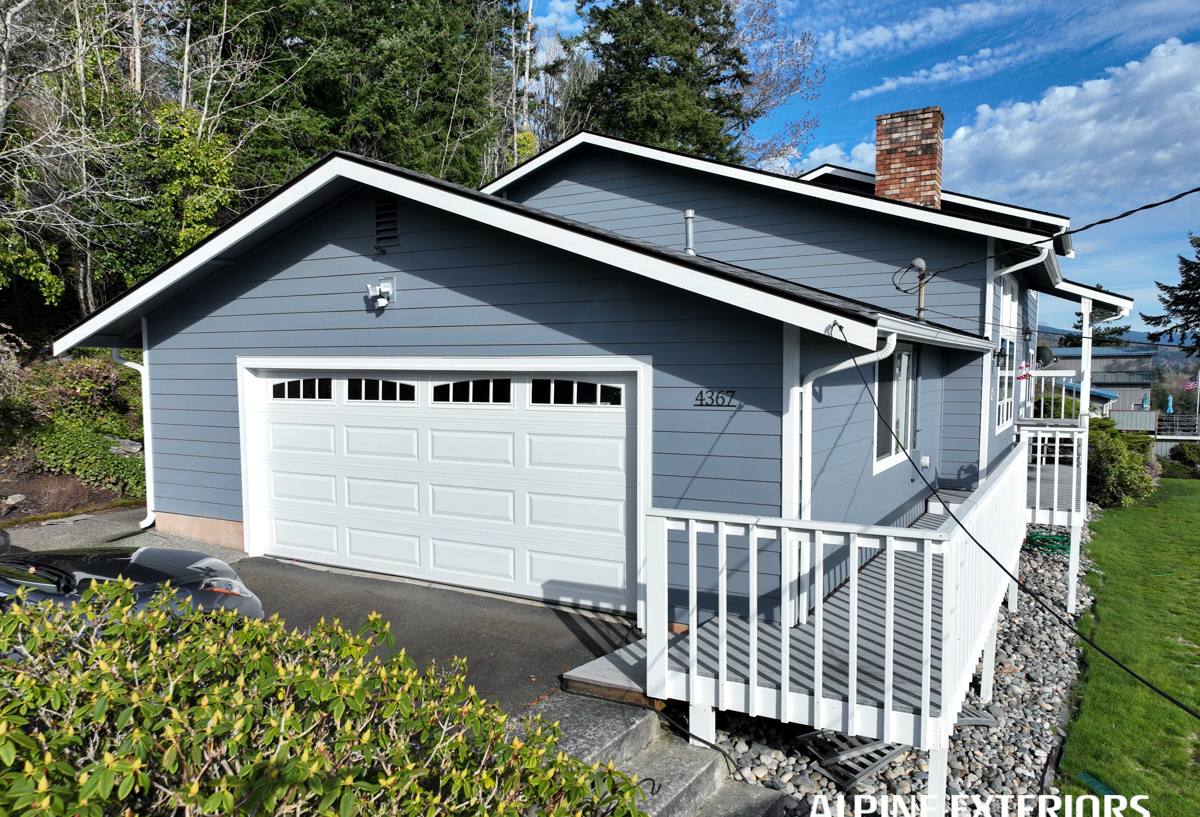
What Salt Air, Rain, and Moss Actually Do to a Shingle Roof
Salt Air and Corrosion
Airborne salt accelerates corrosion on anything metal on your roof — nails, flashing, vent caps, drip edge. When those components corrode faster than the shingles around them age, you end up with leaks at the flashing and fastener points long before the shingles themselves are due for replacement. The fix isn't a special shingle; it's using corrosion-resistant fasteners and flashing metals and making sure every metal component is sealed and lapped correctly the first time, since re-doing flashing later means pulling shingles.
Wind-Driven Rain
Rain that comes in sideways off Boundary Bay doesn't just run down a roof slope — it can be pushed under shingle tabs, up under ridge caps, and into any gap in a valley or around a chimney. A roof that would perform fine in calm, straight-down rain can still leak in these conditions if the underlayment, valley work, and shingle sealing aren't built for wind-driven exposure specifically.
Shade, Moisture, and Moss
Moss needs shade and sustained moisture, and a lot of Point Roberts lots have both from tree cover and the general damp of a coastal climate. Moss isn't just cosmetic — as it spreads, it holds water against the shingle surface, lifts shingle edges as it grows, and can work its way under tabs and flashing over time. Left unchecked for years, it shortens the life of an otherwise sound roof.
Choosing the Right Asphalt Shingle for This Climate
Not every asphalt shingle is built the same way, and the differences matter more in a climate like this one. The table below is a general comparison of the shingle categories we discuss with Point Roberts homeowners — actual specs vary by manufacturer, and we'll go over specific product lines during your estimate.
| Shingle Type | Wind Resistance | Algae/Moss Resistance | Typical Lifespan | Best Fit |
|---|---|---|---|---|
| 3-Tab Asphalt | Standard-rated | Varies by line; often basic | Shorter end of asphalt range | Budget-focused re-roofs on less exposed slopes |
| Architectural (Laminate) Asphalt | Higher wind rating than 3-tab | Better with algae-resistant granule options | Mid-to-long end of asphalt range | Most Point Roberts homes — our typical recommendation |
| Impact-Resistant (Class 4) Asphalt | High wind rating | Available with algae-resistant granules | Long end of asphalt range | Exposed roofs, storm-prone lots, or homeowners wanting maximum durability |
For most Point Roberts homes, we lean toward architectural shingles with algae-resistant granules as the practical middle ground — a meaningful step up in wind performance and moss resistance over basic 3-tab, without the added cost of impact-rated product where it isn't needed. On more exposed or heavily shaded lots, the upgrade to a Class 4 shingle is worth discussing.
The Parts of the System Most Homeowners Never See
The shingle is the part everyone notices, but it's rarely the part that fails first. In a climate with this much wind-driven rain, the layers underneath the shingle do most of the actual waterproofing.
Ice and Water Shield at Vulnerable Points
Self-adhering waterproof membrane belongs at eaves, valleys, and around roof penetrations like chimneys and skylights — the spots where wind-driven rain and standing water are most likely to find a way in. This is a place where cutting corners doesn't show up as a problem for a year or two, then shows up as a stained ceiling.
Synthetic Underlayment Over the Full Deck
A quality synthetic underlayment across the whole roof deck is a second line of defense if wind ever drives water past the shingle surface. It also holds up far better than older felt products through the wet install season this region often requires.
Flashing Details
Step flashing at walls, counter-flashing at chimneys, and properly lapped valley metal are where most roof leaks actually originate — not in the open field of shingles. Given the corrosion pressure from salt air, we use flashing materials and fasteners chosen to hold up to that exposure, not just whatever's cheapest.
Ventilation
A balanced intake-and-exhaust ventilation system keeps the underside of the roof deck dry and temperature-stable. That matters here because a damp, poorly ventilated attic adds moisture pressure from inside the roof at the same time salt air and rain are working on it from outside.
Our Installation Process
A correct re-roof follows a consistent sequence — skipping or rushing any step is where problems start.
- Full tear-off of the existing roofing down to the deck — never installing new shingles over old ones.
- Deck inspection and repair of any soft, rotted, or water-damaged sheathing before anything new goes down.
- Ice and water shield installed at eaves, valleys, and all penetrations.
- Synthetic underlayment across the full deck.
- Drip edge and starter strip installed correctly at eaves and rakes.
- Field shingles installed to manufacturer nailing and exposure specs — not just "close enough."
- Step flashing, counter-flashing, and valley metal installed or replaced as needed.
- Ridge vent and any additional ventilation components installed and balanced with intake vents.
- Full site cleanup and a final walk-through inspection with the homeowner.
Maintenance That Actually Extends Roof Life Here
An asphalt shingle roof in a shaded, coastal climate needs a little more attention than one in a dry, open location — but it's manageable with a short seasonal routine.
- Keep gutters clear so water isn't backing up under the eaves during heavy rain.
- Trim back overhanging branches to reduce shade and let the roof surface dry out between rains.
- Have moss growth treated and removed before it spreads across a slope, rather than after.
- Check flashing around chimneys, vents, and skylights periodically for lifting or corrosion.
- Schedule a roof inspection after major windstorms, not just on a fixed yearly schedule.
- Address small leaks or missing shingles promptly — deck damage from a slow, hidden leak costs far more to fix than the original repair would have.
Repair or Replace? How to Tell
Not every roofing issue on a Point Roberts home means a full replacement. A few missing shingles after a windstorm, an isolated flashing leak, or moss on one shaded section can often be repaired. Signs that point toward replacement instead include widespread granule loss, shingles that are curling or brittle across multiple slopes, repeated leaks in different spots after storms, or a roof that's already near the end of its expected lifespan and starting to show it. We'll always tell you honestly which category your roof falls into rather than defaulting to the more expensive answer.
Why Hire a Crew That Already Works Point Roberts
Point Roberts isn't like working a typical inland neighborhood — it takes planning to get crews, equipment, and materials out there efficiently, and a contractor unfamiliar with the area can turn a straightforward project into a logistics headache. We already schedule and staff jobs out on the peninsula as part of our regular service area from Blaine, so material deliveries, crew scheduling, and site access are worked out ahead of time rather than figured out on the fly. Combine that with knowing firsthand what this specific coastal, tree-shaded environment does to a roof over time, and you get a job built for the conditions your house actually faces — not a generic install.
If you're weighing a repair, a full replacement, or just want an honest read on where your roof stands, we're happy to take a look. Reach out for a free, no-pressure estimate using the form below.