 Blaine Siding
 Point Roberts Puts Siding Through a Harder Test
Point Roberts sits on its own little peninsula off the Tsawwassen coast, surrounded on three sides by the Strait of Georgia and Boundary Bay. That exposure means homes here take a steadier beating from salt-laden air, wind-driven rain, and shade-grown moss than most inland Whatcom County properties ever see. Siding that would hold up fine in Lynden or Ferndale can start showing problems years earlier out here, especially on the west- and north-facing walls that catch the worst of the weather off the water.
We install James Hardie fiber cement siding exclusively, and Point Roberts is exactly the kind of environment that product was engineered to handle. This page walks through what the climate actually does to a home's exterior, what a correct fiber cement installation looks like, and why hiring a crew that already understands this stretch of coastline matters more here than in most parts of Whatcom County.
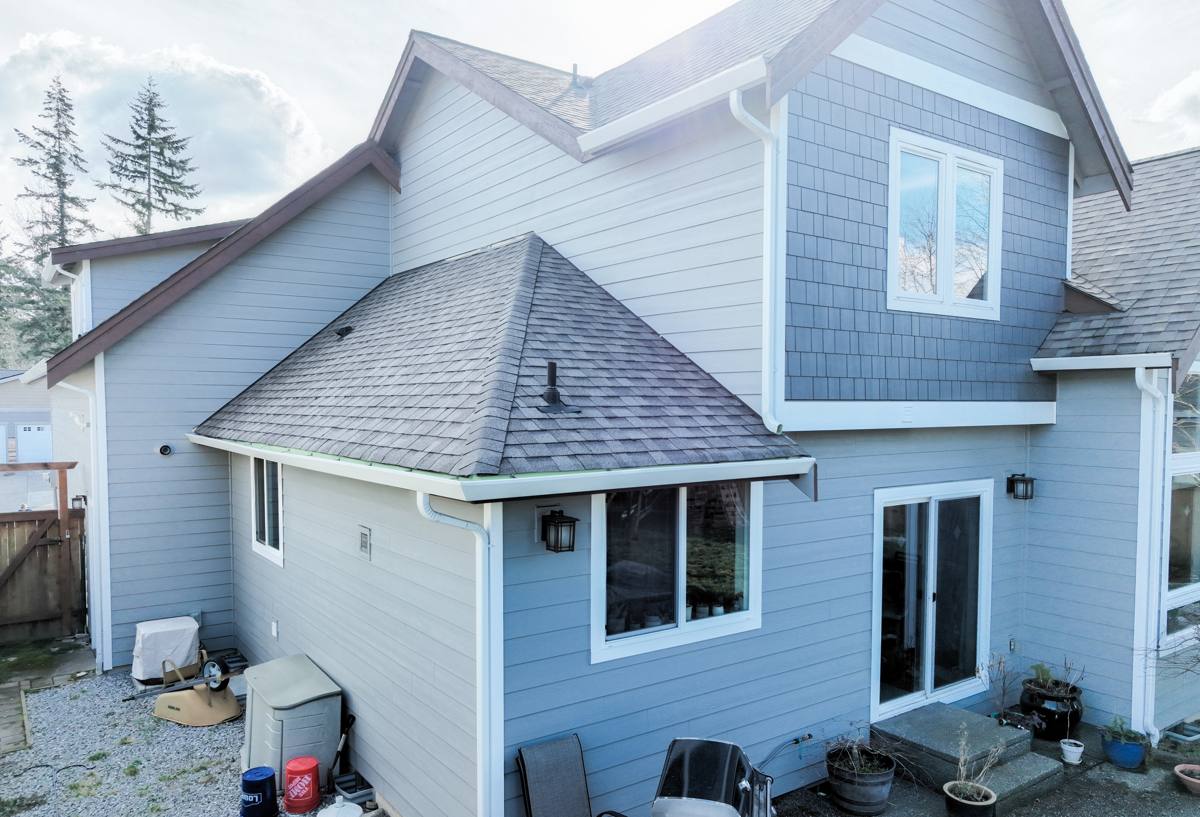
What Salt Air, Rain, and Moss Actually Do to a Home
Salt Air
Airborne salt is corrosive to metal fasteners, flashing, and trim, and it accelerates the breakdown of paint films and caulk. On wood and engineered wood sidings, salt exposure combined with moisture speeds up swelling, cracking, and coating failure at the seams and butt joints — the places where water first finds a way in.
Driving Rain
Point Roberts gets wind off open water, which pushes rain sideways into wall assemblies instead of letting it run straight down. That means lap joints, window and door trim, and any penetration in the siding face are under more pressure than a calm-weather installation would ever experience. Sloppy flashing or caulk-only seams that might survive in a sheltered yard can fail here in a few wet seasons.
Moss and Shade
Mature trees and coastal humidity keep north and east walls damp for long stretches, which is exactly what moss and algae need to take hold. Once organic growth gets a foothold on a porous or poorly finished surface, it holds moisture against the wall and keeps that section wetter, longer, than the rest of the house — a slow cycle that eventually shows up as soft trim, peeling paint, or rot at the bottom courses.
Why Fiber Cement Is the Right Material for This Peninsula
Fiber cement is cement, sand, and cellulose fiber — it doesn't swell with moisture the way wood or wood-composite siding can, and it isn't a food source for the mold and moss spores that thrive in a damp coastal microclimate. James Hardie's factory-applied ColorPlus finish is baked on under controlled conditions, which gives it better adhesion and UV/moisture resistance than field-applied paint, and it holds color longer under the kind of gray, humid stretches Point Roberts sees for much of the year.
Hardie also builds region-specific product lines under its HardieZone system. HZ5 products are engineered for wetter, colder climates like ours, with moisture management built into the manufacturing process rather than left entirely to the paint job. That's a meaningful difference on a peninsula where the siding is wet more often than it's dry for parts of the year.
We don't install LP SmartSide, vinyl, Cemplank, Allura, or bare cedar or spruce siding, and Point Roberts is one of the clearest examples of why. Engineered wood products rely on an intact resin-treated surface to resist moisture — any cut edge, fastener hole, or caulk failure becomes a vulnerable point in a climate that gives water constant opportunities to find it. Vinyl can warp and fade under UV and temperature swings and doesn't offer the same fire performance. Bare wood needs a maintenance schedule most homeowners can't realistically keep up with in a climate this wet. Fiber cement, installed correctly, removes most of that risk.
What a Correct Fiber Cement Installation Involves
Fiber cement siding is only as good as the assembly behind it. In a high-exposure environment like Point Roberts, the details matter more than usual:
- Weather-resistive barrier and drainage plane — a properly lapped house wrap with a drainage gap so any water that gets behind the siding has somewhere to go besides the sheathing.
- Flashing at every penetration — windows, doors, hose bibs, light fixtures, and roof-to-wall transitions all need metal or membrane flashing, not caulk alone, to shed water driven sideways by wind.
- Correct fastener pattern and type — corrosion-resistant fasteners, set to Hardie's specified pattern and depth, so panels stay secure without cracking or overdriving.
- Proper clearances — siding held up off decks, patios, and grade per manufacturer spec so splash-back and standing moisture don't sit against the bottom edge.
- Joint treatment — butt joints and trim seams caulked with a product rated for the movement and moisture load they'll see, not just whatever's on the truck.
- Factory-finished cuts sealed — any field-cut edge on ColorPlus siding gets Hardie's touch-up or edge sealer so the cut face doesn't become the weak point in the whole system.
Skip any one of these and the siding itself can be doing its job perfectly while the wall behind it still takes on water. That's why we treat the installation as a system, not just a stack of boards.
James Hardie Product Lines We Use in Point Roberts
| Product | Best Use | Why It Fits Here |
|---|---|---|
| HardiePlank lap siding | Most home exteriors | Classic profile, HZ5 formulation resists our wet cycle, ColorPlus finish holds up under salt and UV |
| HardiePanel vertical siding | Accent walls, gables, modern facades | Fewer horizontal joints for water to work into, works well on shed dormers and gable ends |
| HardieTrim boards | Corners, window and door casing, fascia | Dense, stable trim that holds paint and caulk lines better than wood in a damp climate |
| HardieSoffit panels | Eaves and overhangs | Vented options manage moisture in roof and attic assemblies exposed to coastal humidity |
Our Process, Start to Finish
Assessment and Estimate
We walk the exterior, check the condition of the current siding and trim, and look specifically at the sides of the house most exposed to wind and moisture. That inspection shapes the estimate and flags any sheathing or framing repair that needs to happen before new siding goes on.
Prep and Tear-Off
Old siding and any compromised sheathing come off, and we inspect what's underneath before closing the wall back up. This is the point where hidden moisture damage — if there is any — gets found and fixed rather than covered over.
Weather Barrier and Flashing
House wrap, flashing, and drainage details go in before a single piece of Hardie siding is hung. This step matters more on an exposed peninsula lot than almost anywhere else in the county.
Installation
Panels and planks go up to Hardie's fastening and clearance specs, with joints staggered and sealed as the wall comes together.
Finish and Walkthrough
Trim, caulking, and touch-up sealing get checked, then we walk the finished exterior with the homeowner before calling the job done.
Maintenance in a Coastal, Moss-Prone Climate
Fiber cement cuts the maintenance burden compared to wood, but no siding is maintenance-free in an environment like Point Roberts. A little seasonal attention keeps it looking and performing the way it should:
- Rinse salt residue and grime off the exterior once or twice a year with a garden hose and soft-bristle brush — avoid high-pressure washing, which can force water behind panels and joints.
- Keep tree branches and shrubs trimmed back from north- and east-facing walls to cut down on shade and airflow blockage that feeds moss.
- Check caulk lines at trim, windows, and butt joints every year or two and re-caulk anywhere it's cracked, shrunk, or pulled away.
- Look at the bottom courses near grade, decks, and patios for any staining or soft spots, which can signal a clearance or drainage issue rather than a siding failure.
- Touch up any exposed cut edges or fastener heads if the factory finish has been disturbed since installation.
Cost Factors for a Point Roberts Siding Job
| Factor | Why It Matters Here |
|---|---|
| Home size and wall complexity | More corners, gables, and trim detail mean more labor and material |
| Existing siding removal | Tear-off and disposal of old material adds time versus a bare-wall install |
| Sheathing or framing repair | Any moisture damage found during tear-off needs to be fixed before new siding goes on |
| Product selection | Plank versus panel siding, trim profiles, and color all affect material cost |
| Site access and logistics | Point Roberts' location affects material delivery and crew scheduling, which factors into project timelines |
Why a Crew That Already Works Point Roberts Matters
Point Roberts is a U.S. exclave — the only way to drive in or out is through Canada. That's not a trivia point, it's a practical reality for any contractor working here: material deliveries, crew scheduling, and even simple mid-job supply runs all take more planning than a job across town in Blaine. A crew that doesn't already account for that can end up with delays that have nothing to do with the actual siding work.
Beyond logistics, a contractor who's worked this stretch of coastline knows which walls take the worst weather, how moss tends to establish itself on shaded elevations here, and what level of flashing and sealing detail actually holds up through a Point Roberts winter. That local knowledge shows up in fewer callbacks and a siding job that's built for the specific conditions of this peninsula, not just a generic coastal spec.
If you're planning a siding project in Point Roberts, we're happy to take a look and walk you through what James Hardie fiber cement would involve for your home. Fill out the form below for a free, no-pressure estimate.