 Blaine Siding
 Point Roberts Puts Roofs Through More Than Most Places
Point Roberts sits on its own peninsula off the tip of Whatcom County, surrounded on three sides by water and cut off by land from the rest of Washington. That geography is part of what makes it a special place to live, but it's also exactly the kind of setting that shortens the life of an ordinary roof. Salt-laden air drifts in off the water and settles on every exposed surface. Wind-driven rain comes in sideways during winter storms, working its way into laps and seams that would stay dry in a calmer inland location. And the long, damp shoulder seasons here give moss and algae months at a time to get established on anything that holds moisture.
Asphalt shingles take the brunt of all three. Salt air accelerates the breakdown of the granules that protect shingles from UV and weather. Driving rain finds the weak points in shingle laps faster than in drier climates. And moss doesn't just sit on top of a shingle roof — it works into the mat and lifts edges, which is how small leaks start. A correctly installed metal roof handles all three of these stresses far better, which is why we get asked about it so often out here.
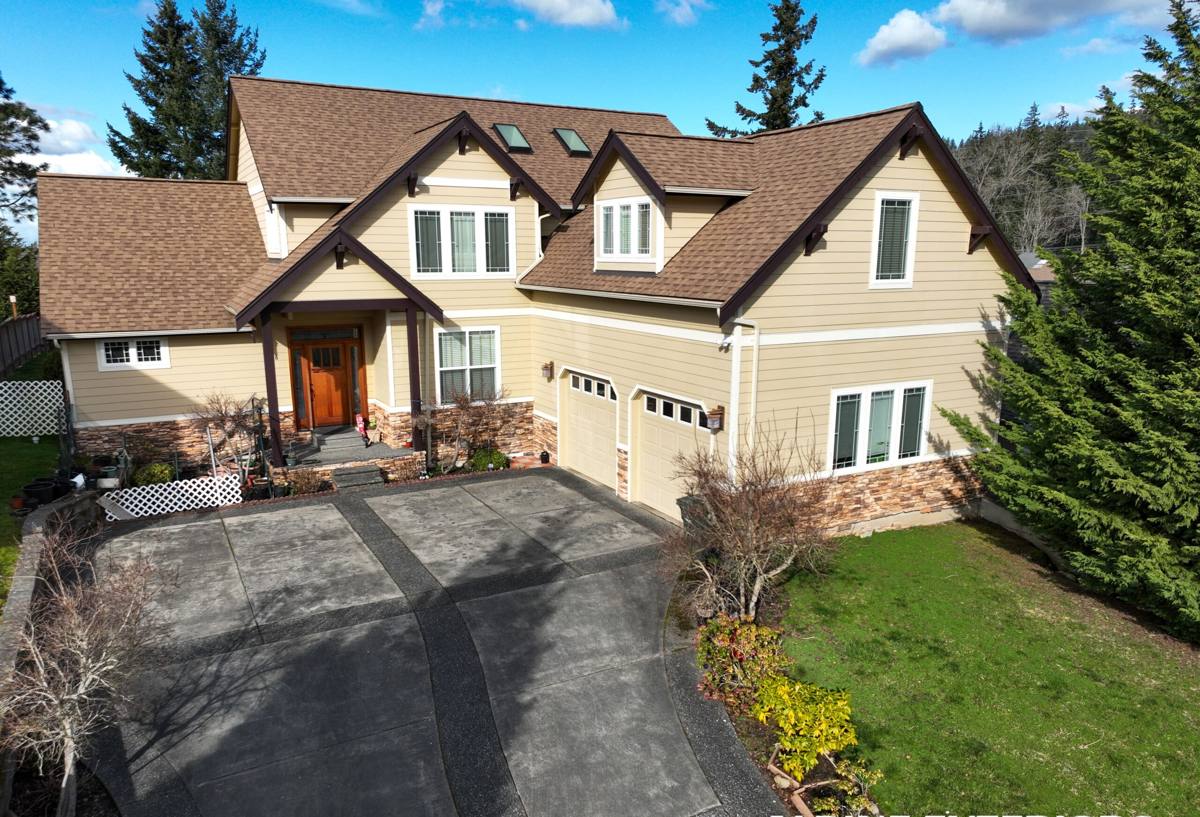
What a Metal Roof Has to Get Right in This Climate
Not every metal roof performs the same way near saltwater. The material, the fasteners, and the details around penetrations all matter more here than they would on a roof twenty miles inland.
Corrosion Resistance Isn't Optional
Coastal air is genuinely harder on metal than most homeowners expect. That means the coating and metal alloy matter as much as the panel style. We only recommend systems designed for coastal exposure, and we're upfront when a lower-grade product isn't a good fit for a property this close to the water — even if it costs less up front.
Fasteners and Flashing Are Where Roofs Actually Fail
Most metal roof problems that show up years later trace back to fasteners or flashing, not the panels themselves. Standard fasteners can corrode faster than the roof around them in salt air, and flashing that isn't properly lapped and sealed is where wind-driven rain finds its way in. We spec corrosion-resistant fasteners and take extra care at every valley, chimney, vent, and wall transition — the places a rushed install skips.
Slope and Panel Seams Matter for Wind-Driven Rain
On a peninsula exposed to storms coming off the water, rain doesn't always fall straight down. Panel seam design and how a roof handles low-angle, wind-driven rain is part of what separates a roof that stays dry from one that develops slow leaks nobody notices until there's water damage inside.
Comparing Metal Roofing Options for a Coastal Property
There isn't one "right" metal roof for every home — it depends on the roof's slope, the home's style, and the budget. Here's how the common options stack up for a property dealing with salt air and heavy seasonal rain.
| System | Coastal Durability | Best For | Trade-Offs |
|---|---|---|---|
| Standing seam steel or aluminum | Excellent — concealed fasteners, fewer penetration points | Most Point Roberts homes, especially waterfront or exposed lots | Higher upfront cost than exposed-fastener panels |
| Exposed-fastener metal panels | Good, if fasteners and gaskets are maintained | Outbuildings, budget-conscious projects, lower-slope roofs | Fasteners need periodic inspection; more penetration points for water to test |
| Metal shingles/shakes | Good, depends on coating and underlayment quality | Homes wanting a traditional look with metal's durability | More seams than standing seam; installation quality matters more |
| Aluminum vs. steel panels | Aluminum resists salt corrosion naturally; steel needs a quality coating | Aluminum for the most exposed, waterfront sites | Aluminum costs more; steel is a reasonable choice with the right finish |
For most homes on the Point, we lean toward standing seam in a coastal-rated finish. It has the fewest exposed fasteners, which is the single biggest factor in how a metal roof ages near saltwater.
Our Process for a Point Roberts Metal Roof
- On-site assessment. We look at slope, exposure, existing decking condition, and how the home currently handles wind and rain before recommending a system.
- Material selection. We walk through panel and finish options honestly, including what's overkill and what's genuinely worth the extra cost for this specific site.
- Tear-off and deck inspection. Any soft or water-damaged decking gets replaced before a single panel goes on — installing metal over a compromised deck just hides a bigger problem.
- Underlayment and moisture barrier. This layer is what protects the home if wind ever drives rain past the panels themselves, so we don't cut corners here.
- Panel installation. Careful attention to seams, laps, and fastener spacing — the details that determine whether the roof performs in year one and year fifteen.
- Flashing and penetration detail. Chimneys, vents, skylights, and wall transitions get the most careful work on the whole roof, because that's where failures start.
- Final walkthrough. We go over the finished roof with the homeowner and explain what maintenance, if any, it actually needs.
Moss, Salt Film, and Ongoing Maintenance
One of the real advantages of metal roofing in a moss-heavy climate is that moss has a much harder time getting a foothold on a smooth metal surface compared to the textured surface of shingles. That doesn't mean zero maintenance — organic debris can still collect in valleys, around penetrations, and against any adjoining structures, and salt film can build up over time on panels close to the water.
- Clear leaves, needles, and debris from valleys and gutters at least once or twice a year
- Rinse accumulated salt film off panels periodically if the home is close to the shoreline
- Check sealant at penetrations (vents, chimneys, skylights) during a yearly visual inspection
- Trim back overhanging branches that keep panels shaded and damp longer than necessary
- Watch for any fastener heads on exposed-fastener systems that may need re-torquing over time
- After major windstorms, do a quick visual check for lifted flashing or displaced debris
Compared to the moss removal, shingle patching, and granule loss that shingle roofs need in this climate, that's a short list — and it's a big part of why metal pays for itself over time on a property like this.
Why It Matters That We Already Work on the Point
Point Roberts isn't like scheduling a job anywhere else in Whatcom County. Because it's physically separated from the rest of the U.S. by land, getting crews, tools, and materials onto the Point means planning around border crossings — not something every roofing contractor is set up to handle efficiently. A crew that doesn't already have a routine for this can turn a straightforward install into a logistics headache, with delays that show up as extra cost or a longer timeline for the homeowner.
We treat this as part of the job, not an inconvenience. That means staging materials properly, planning crew and equipment logistics in advance, and not showing up short a tool or a part because nobody accounted for the crossing. It's a small thing that makes a real difference in how smoothly a roofing project actually goes for a Point Roberts homeowner.
What Affects the Cost of a Metal Roof Here
| Factor | Why It Matters |
|---|---|
| Panel material and finish | Aluminum and premium coastal-rated coatings cost more than standard steel finishes, but they hold up longer near salt air |
| Roof complexity | Valleys, dormers, and multiple penetrations add labor time and flashing detail |
| Existing deck condition | Rot or water damage found during tear-off adds material and labor to replace it before installation |
| Panel profile | Standing seam generally costs more than exposed-fastener panels, largely due to labor and specialized tooling |
| Access and logistics | Site access, staging space, and the Point's border-crossing logistics can affect scheduling and cost |
Metal roofing costs more upfront than asphalt shingles almost everywhere, and Point Roberts is no exception. The honest way to think about it is lifespan and reduced maintenance against the higher initial investment — for a property dealing with salt air and heavy rain, that math tends to favor metal over the life of the roof.
Signs It's Time to Talk About a Metal Roof
- Your current roof needs moss treatment or cleaning more than once a year
- Shingles are curling, losing granules, or showing bald spots facing the water
- You've had leaks or water staining after wind-driven storms
- You're planning to stay in the home long-term and want to stop re-roofing every couple decades
- You're doing an exterior renovation and want the roof to match a longer-term plan
If any of that sounds familiar, it's worth having a straight conversation about whether metal makes sense for your specific roof — not every home needs it, and we'll tell you honestly if a repair or a different system is the better call.
Get a Straight Answer for Your Roof
Every roof on the Point deals with the same salt air and rain, but slope, condition, and layout still make each job different. If you want an honest look at what your roof actually needs and what a metal system would cost for your specific home, request a free estimate using the form below. No pressure, no upsell — just a clear assessment from a crew that already knows how to get the job done out here.