 Blaine Siding
 Roof Repair in Point Roberts: Built for a Peninsula That Takes a Beating
Point Roberts sits on its own piece of ground — a small peninsula hanging off the bottom of the Tsawwassen headland, cut off from the rest of Whatcom County by the international border. It's surrounded by water on three sides, which means every roof out here deals with conditions that a roof twenty miles inland in Bellingham or Ferndale simply doesn't see. Salt-laden air off the Strait of Georgia, wind-driven rain that comes in sideways during winter storms, and a moss season that seems to start earlier and last longer every year. When a roof needs repair out here, it needs a repair done by someone who understands why it failed in the first place — not just a patch that buys a few dry months.
We work on roofs throughout Blaine and Whatcom County, and Point Roberts is part of that territory. This page is about roof repair specifically for Point Roberts homes — what the climate does to a roof out here, what a repair should actually include, and how we handle the logistics of a job on a peninsula that isn't connected by road to the rest of the state.
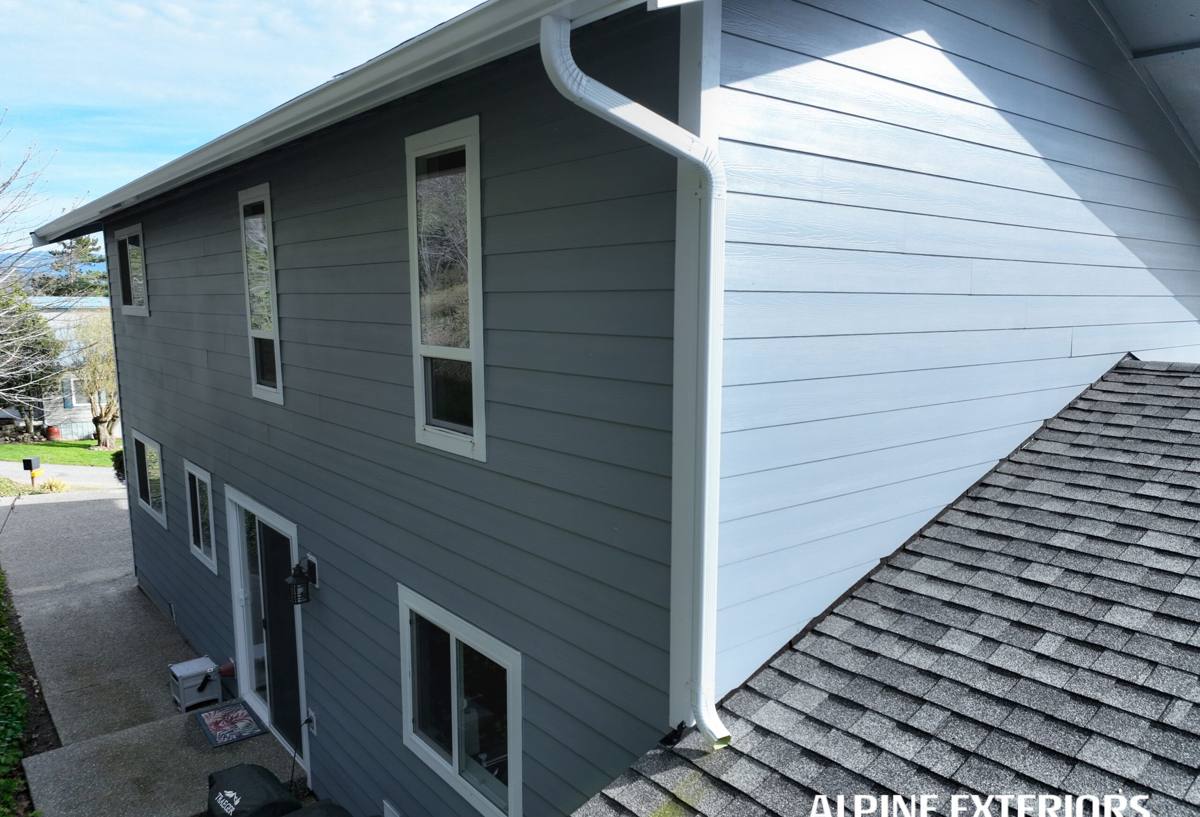
Why Point Roberts Roofs Fail Differently
Salt Air and Metal Corrosion
Airborne salt doesn't just affect siding and outdoor fixtures — it works on every exposed metal component of a roof system. Flashing around chimneys, valleys, vent pipes, and skylights is often the first thing to show wear on a Point Roberts roof, well before the shingles or panels themselves are due for replacement. Fasteners corrode from the inside of the roof deck outward if they're not rated for coastal exposure, and that corrosion is usually invisible until a leak shows up on the ceiling below.
Driving Rain and Wind-Driven Moisture
Point Roberts catches weather systems coming straight off the Strait, and storms here tend to push rain sideways rather than straight down. That matters because a roof designed only to shed water vertically can still let moisture in around laps, seams, and fastener penetrations when wind is forcing water uphill or sideways under a shingle edge. Repairs that don't account for wind-driven rain — using standard nailing patterns or skipping sealant at vulnerable transitions — tend to fail again within a season or two.
A Long, Aggressive Moss Season
The combination of shade, moisture, and mild temperatures across much of the year gives moss and algae a long runway on north-facing and shaded roof slopes. Moss isn't just cosmetic — it holds moisture against the roofing material, lifts shingle edges as it grows, and accelerates granule loss. A repair on a moss-heavy roof that doesn't also address the moss itself is treating the symptom, not the cause.
Signs a Point Roberts Roof Needs Repair
Most roof problems don't announce themselves with an obvious hole. They show up as small signals that are easy to write off until they become a bigger repair — or an interior repair as well. Before you call anyone, it's worth doing a quick visual check from the ground:
- Dark streaking or thick moss growth concentrated on shaded or north-facing slopes
- Granules collecting in gutters or at the base of downspouts
- Curling, cupping, or lifted shingle edges, especially near ridges and eaves
- Rusty streaks below metal flashing, vents, or fasteners
- Soft or discolored ceiling patches, particularly after a windy rainstorm
- Daylight visible through the roof deck from inside an attic
- Sagging or uneven rooflines along a valley or ridge
- Loose, cracked, or missing flashing around chimneys and skylights
Any one of these on its own might be minor. Two or three together, especially after a storm, usually means water is already getting past the surface layer.
What a Correct Roof Repair Actually Involves
A lasting repair is not just about replacing what's visibly damaged. It's about tracing the failure back to its source and rebuilding that section of the roof so it performs as well as — or better than — it did originally.
Finding the Real Source of the Leak
Water rarely enters a roof at the exact spot where it shows up inside the house. It can travel along the underlayment, a rafter, or a piece of flashing before dripping somewhere else entirely. A proper repair starts with tracing the path, not just patching the ceiling stain's rough location on the roof above it.
Matching Materials, Not Just Covering the Gap
Shingles, panels, and flashing all age and weather over time. A patch using mismatched materials — different granule color, a different metal for flashing, or incompatible sealant — can create a new failure point even while it hides the old one. We match materials as closely as the existing roof allows, and we're upfront when an exact match isn't realistic so you know what to expect visually.
Rebuilding Flashing Correctly
Flashing failures are behind a large share of the leaks we see on Point Roberts roofs. A correct flashing repair means removing and replacing the compromised piece — step flashing, counter-flashing, valley metal, or pipe boots — rather than just sealing over a gap with caulk. Caulk is a short-term fix; it dries out, cracks, and fails again, usually within a wet season or two.
Addressing Moss and Debris Before Closing Up the Repair
If moss or organic debris contributed to the failure, we clear it and treat the area as part of the repair, not as an afterthought. Closing up a repair over existing moss growth just sets up the same failure to happen again in the same spot.
Common Point Roberts Roof Repairs
Not every repair is the same scope or cost. The table below breaks down the repair types we handle most often out here and what typically drives the cost of each one.
| Repair Type | Typical Cause on Point Roberts Roofs | What Drives Cost |
|---|---|---|
| Flashing replacement | Salt-air corrosion, aging sealant at chimneys/vents | Number of penetrations, metal type, roof pitch |
| Shingle or panel section repair | Wind-driven rain lifting edges, storm damage | Size of affected area, material matching |
| Valley repair | Concentrated water flow, debris buildup | Valley length, underlayment condition |
| Moss and algae remediation | Shaded slopes, prolonged moisture | Coverage area, growth severity, access |
| Deck or sheathing repair | Long-term hidden leaks reaching the wood deck | Extent of rot, structural framing involved |
| Gutter and drainage correction | Overflow driving water behind fascia and trim | Length of run, downspout rework |
Broadly, small flashing or spot repairs tend to be the least expensive fix on this list, while deck and structural repairs — where hidden rot has to be cut out and rebuilt — run higher because of the additional carpentry involved. We give you a firm number after we've actually looked at the roof, not a phone estimate based on square footage alone.
Our Repair Process
- Inspection. We get on the roof (or use a pole camera where pitch or access makes that unsafe) and document the actual condition — not just the area you're concerned about, but flashing, valleys, and vents nearby that tend to fail together.
- Honest assessment. We tell you what's a repair and what's actually a sign the roof is nearing the end of its service life. If a full replacement makes more financial sense than repeated patching, we'll say so directly.
- Written scope and estimate. You get a clear description of the work, materials, and price before anything starts — no vague line items.
- Repair work. We remove and rebuild the failed section properly, matching materials where possible and rebuilding flashing rather than sealing over it.
- Cleanup and walkthrough. We clear debris, photograph the finished repair for your records, and walk you through what was done.
Why Point Roberts Logistics Actually Matter
Point Roberts is a U.S. exclave — the only way to reach it by land is by driving through Canada, since it's cut off from the rest of Whatcom County by the border. That's not a small detail for a roofing job. It affects how a crew plans a repair day: border wait times, customs considerations for tools and materials, and the simple fact that you can't run back for a forgotten part the way you could on a job in Blaine or Bellingham. A crew that already works this area builds that reality into scheduling and material staging from the start, so a repair day doesn't stall out waiting on something that should have been loaded on the truck the first time. That's a real advantage of hiring a contractor who already routes work through Point Roberts regularly, rather than one taking on a first job here.
Materials: Honest Trade-Offs for This Climate
There's no single "best" roofing material for every home here — the right choice depends on the roof's pitch, sun and shade exposure, and your budget. A few honest trade-offs worth knowing when a repair involves replacing materials:
Algae-Resistant Shingles
Shingles with algae-resistant granules cost a bit more upfront but hold up noticeably better on shaded, moss-prone slopes common in this area. Given the long moss season here, we generally recommend them for any section being repaired or replaced, even if the rest of the roof is standard shingle.
Metal Flashing Choices
Not all flashing metals age the same way in salt air. We choose flashing material based on what's already on the roof and what will hold up best against corrosion in this specific exposure — sometimes that means upgrading the metal used in a repair even if it wasn't what was originally installed, because a like-for-like replacement would just corrode again on the same timeline.
Underlayment
Synthetic underlayment generally performs better than older felt products under wind-driven rain conditions, and we use it as standard practice on repairs where the underlayment is being disturbed anyway. It's a modest cost difference for a real improvement in how the roof handles sideways rain.
Maintenance Between Repairs
A repair extends the life of a roof, but a few habits stretch that further, especially given how hard this climate is on roofing:
- Keep gutters and downspouts clear so water doesn't back up under shingle edges
- Have moss treated before it establishes heavy growth, not after
- Trim back overhanging branches that keep shaded areas damp longer
- Walk the roofline visually after major windstorms and note anything that looks off
- Get flashing checked every few years, since it tends to fail before the field material does
Get a Straight Answer on Your Roof
If you're dealing with a leak, storm damage, or a roof that's showing its age out on Point Roberts, we're happy to take a look and give you a straight assessment — repair, monitor, or replace, whichever is actually true for your roof. Reach out for a free, no-pressure estimate using the form below.