 Blaine Siding
 Why Roofs in Lynden Wear Differently Than Roofs Elsewhere
Lynden sits in the Nooksack River valley, a few miles inland from Blaine and the Strait of Georgia. That location shapes how a roof ages here. Homes closer to the water deal with salt-laden air that accelerates corrosion on fasteners, flashing, and metal roofing components. Lynden itself sees less of that direct salt exposure, but it gets its own version of the same problem: heavy valley fog, persistent dampness off the river bottomland, and long stretches of the year where a roof simply never gets a chance to fully dry out.
Add in driving, wind-pushed rain off the Pacific systems that move through Whatcom County most of the fall, winter, and spring, and you have conditions that punish weak points in a roof system — laps that aren't sealed correctly, flashing that's been caulked instead of properly integrated, or underlayment that was never rated for sustained wetting. Then there's moss. Whatcom County's moss season isn't a two-month nuisance; on north-facing slopes and shaded sections under trees, moss and moisture can be active nearly ten months a year, working into shingle laps and lifting edges a little more with every freeze-thaw cycle.
None of this means a roof in Lynden needs to be replaced more often out of bad luck. It means the roof needs to be installed correctly the first time, with materials and detailing chosen for exactly this kind of exposure, not a generic warm-climate install.
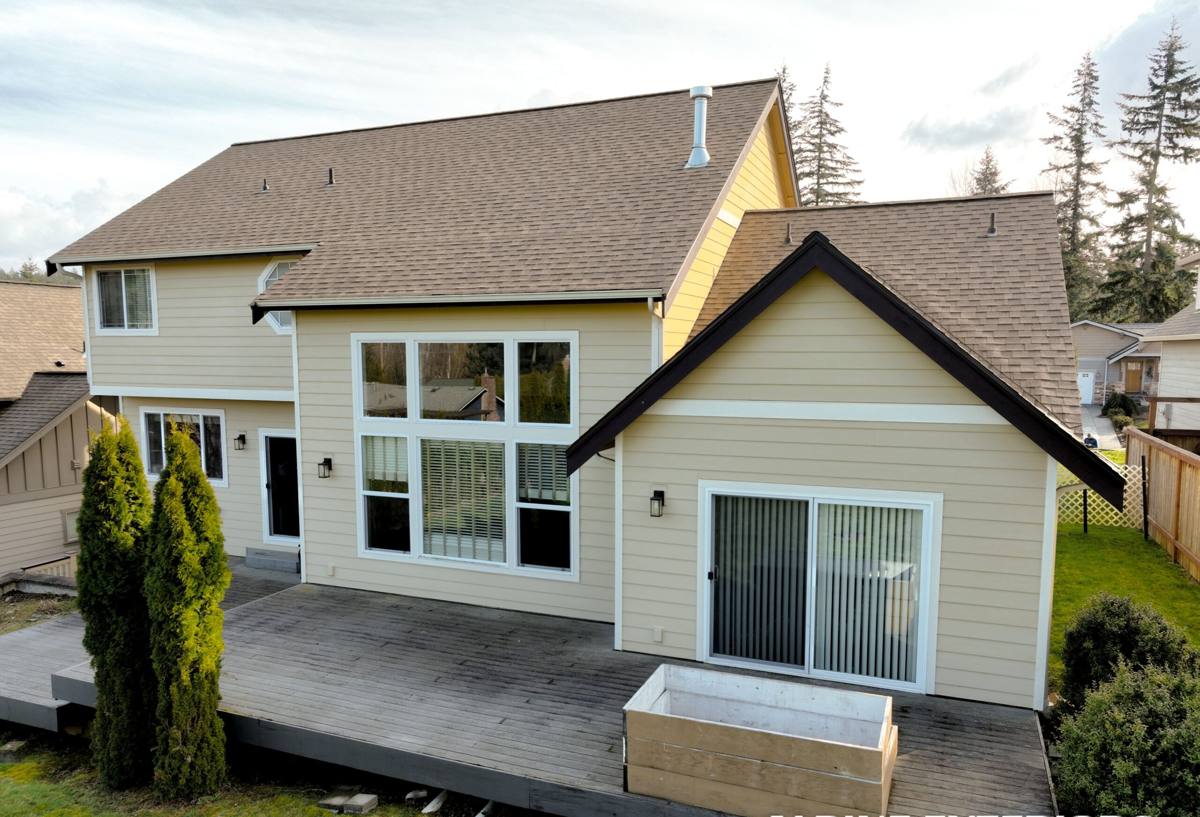
Signs a Lynden Roof Needs Replacement, Not Another Patch
A lot of roofs get patched two or three times before anyone steps back and asks whether patching still makes sense. In this climate, chasing leaks on an aging roof usually costs more over a few years than one properly done replacement. Here's what tends to separate a roof that still has life in it from one that's done:
- Granule loss heavy enough that you can see bare, shiny patches of asphalt on multiple slopes, not just one worn spot
- Shingles that are cupping, curling at the edges, or cracking when you walk the roof
- Moss growth that's established under the shingle line, not just sitting on the surface — this lifts shingles and holds water against the deck
- Soft or spongy decking felt from the attic side, or daylight visible through the roof sheathing
- Repeated leaks in different spots each winter, rather than one isolated failure
- Roof age past 20–25 years for a standard asphalt composition roof, even if it "looks okay" from the ground
If a roof is showing two or more of these at once, patching is usually a delay tactic, not a fix. Isolated flashing leaks or a handful of wind-lifted shingles on an otherwise sound roof are a different story — that's a repair, and we'll tell you so.
What a Correct Roof Replacement Actually Involves
A roof replacement is more than swapping old shingles for new ones. In a climate like this, the parts you can't see after the job is done matter as much as the shingles you can see.
Tear-Off and Deck Inspection
We remove the existing roofing down to bare deck rather than layering over it. That's the only way to actually see the plywood or OSB sheathing underneath — and in a valley climate with a long moss and moisture season, it's common to find soft or delaminated decking around old leak points, chimneys, and valleys. Any compromised sheathing gets replaced before anything new goes down. Roofing over a wet or soft deck just hides a problem that will resurface.
Underlayment and Flashing
This is where a lot of the difference between a roof that leaks in year four and one that's still tight in year twenty gets decided. We use synthetic or ice-and-water-rated underlayment at eaves, valleys, and around penetrations — the areas where wind-driven rain gets pushed backward under the shingle line rather than running straight down. Flashing around chimneys, skylights, and wall intersections gets properly stepped and integrated into the roofing layers, not just caulked over the top. Caulk fails; correctly lapped flashing doesn't rely on caulk to do the work.
Ventilation
A roof deck that can't breathe stays damp longer, which feeds both rot and moss. We check that intake and exhaust ventilation are balanced — enough soffit intake to match the ridge or box vent exhaust — so moisture from the living space and the outside air can actually move through the attic instead of condensing on the underside of the deck.
Choosing a Roofing Material for This Climate
Most Lynden homes are well served by a quality architectural asphalt composition shingle, but the right choice depends on the home, the roof's exposure, and how long you want to go before thinking about it again.
| Material | Typical Lifespan Here | How It Handles Moss & Moisture | Trade-Offs |
|---|---|---|---|
| Architectural asphalt shingle | 25–30 years | Good with proper underlayment; algae-resistant granules help but don't eliminate moss on shaded slopes | Best value; wide color range; needs periodic moss treatment on shaded roofs |
| Standing seam metal | 40–50+ years | Sheds water and moss growth far better than shingle; smooth surface gives moss less to hold onto | Higher upfront cost; requires a crew experienced with metal detailing at valleys and penetrations |
| Cedar shake | 20–30 years with upkeep | Naturally moisture-tolerant when maintained, but demands regular cleaning and treatment in a wet climate | Highest maintenance burden; we'll walk you through what ongoing care actually requires before you commit |
We don't push one material on every home. A shaded, north-facing roof in a low spot near the river bottom is a different conversation than an open, sun-exposed roof on higher ground — and we'll tell you honestly which option fits your specific roof rather than defaulting to whatever's easiest for us to install.
How Our Roof Replacement Process Works
- On-site inspection. We walk the roof and the attic, not just look from the driveway, and check for soft decking, ventilation issues, and the actual cause of any existing leaks.
- Written estimate. You get a clear scope of work — materials, underlayment spec, flashing approach, and price — before any work starts. No vague allowances.
- Scheduling around weather windows. We plan tear-off days around forecasted dry stretches whenever possible and can dry-in a roof same-day if conditions turn.
- Tear-off and deck repair. Old roofing comes off, the deck gets inspected, and any damaged sheathing is replaced before we move forward.
- Underlayment, flashing, and material installation. Installed to the specification in your estimate — no substitutions without talking to you first.
- Final walk-through. We review the finished roof with you, including ventilation and any gutter or trim work that was part of the job.
Timing a Roof Replacement in Whatcom County
There's a common assumption that roofing only happens in summer here. In practice, a well-run crew can replace a roof in most months as long as work is scheduled around dry weather windows and the job is dried in properly if rain moves in mid-project. That said, late spring through early fall does offer the most predictable stretches of dry days, which usually means a faster, less interrupted install. If your roof is showing real signs of failure heading into fall or winter, it's worth acting before the rainy season is in full swing rather than waiting and hoping it holds through another moss season.
Why Hiring a Crew That Already Works in Lynden Matters
Roofing crews that work Whatcom County regularly already know which details matter here: how far up a valley to run ice-and-water protection, how much ventilation a tight attic in this climate actually needs, and which slopes on a given lot orientation tend to hold moss longest. That local pattern recognition shows up in fewer callbacks and fewer surprises during tear-off, because a crew that's opened up dozens of roofs in this valley has a good sense of what they're likely to find underneath before they even start.
It also matters for accountability. A local, licensed and insured contractor is easy to reach if a question comes up after the job — not a name from a storm-chasing crew that worked the area for one season and moved on.
Questions Worth Asking Before You Sign a Roofing Contract
- Is the estimate itemized — materials, underlayment type, flashing approach — or just a lump sum?
- Does the contractor tear off down to the deck, or offer to roof over the existing layer?
- What underlayment is specified at eaves and valleys, and is it rated for sustained wet exposure?
- Will they inspect and price deck repair before starting, or handle it as a surprise change order?
- Is attic ventilation part of the scope, or only the shingles themselves?
- Are they licensed and insured in Washington, and can they provide proof before work begins?
- What's the manufacturer's warranty on materials, and what does the contractor separately warranty on labor?
A contractor who answers these clearly, in writing, without hedging, is generally a safe bet. One who brushes past them is worth a second look before you sign anything.
Get a Straight Answer on Your Roof
If your roof is showing wear, or you just want an honest read on how much life it has left, we're glad to take a look. We'll give you a clear, no-pressure estimate based on what we actually find on your roof and in your attic — not a guess from the ground. Use the form below to request a free estimate for your Lynden home.