 Blaine Siding
 Roofing Built for the Sumas and Blaine Climate
Homes around Sumas and Blaine sit in a stretch of Whatcom County that asks more of a roof than most parts of the state. You've got salt-laden air rolling in off the water near Blaine, driving winter rain that comes in sideways as often as it comes straight down, and a moss season that can run nearly nine months out of the year in shaded, north-facing sections of a roof. None of that is dramatic on its own, but stacked together year after year, it's exactly the combination that wears out a roof from the inside as much as the outside. A roof replacement in this area isn't just about swapping old shingles for new ones — it's about correcting whatever let the old roof fail in the first place, so the new one doesn't repeat the same slow decline.
Signs a Sumas-Area Roof Replacement Can't Wait
Most roofs don't fail all at once. They give warning signs for months, sometimes years, before a leak actually shows up inside the house. Catching those signs early is the difference between a planned replacement and an emergency one.
- Granule loss heavy enough that gutters fill with grit after every rain
- Shingles that are cupping, curling at the edges, or cracking when touched
- Dark streaking or thick moss growth, especially on the shaded slopes
- Soft or spongy decking felt underfoot when walking the roof
- Daylight visible through the attic decking or soffit venting
- Flashing around chimneys, skylights, or vent pipes that's rusted, lifted, or gapped
- A roof that's 20+ years old and has never had underlayment or ventilation upgrades
If more than one or two of these apply, it's worth having someone look at the roof from the deck up, not just the shingles down.
What a Correct Roof Replacement Actually Involves
A roof replacement done right is a full system rebuild, not a shingle swap. Every layer matters, and skipping one is usually how a roof that "should have" lasted 25-30 years starts leaking at year twelve.
Tear-Off and Decking Inspection
We remove the old roofing down to bare decking rather than layering new shingles over old — layering traps moisture and voids most manufacturer warranties. Once the decking is exposed, we check for soft spots, rot, and delamination, especially around valleys and roof penetrations where water has the most opportunity to sit. Any compromised sheathing gets replaced before anything new goes down; installing new roofing over weak decking just guarantees a shorter lifespan for the whole job.
Underlayment and Water Protection
Underlayment is the roof's real waterproofing layer — the shingles are the wear surface, but underlayment is what actually keeps water out if wind-driven rain gets under a shingle edge, which happens more often here than in drier parts of the state. We use synthetic underlayment across the field and self-adhering ice-and-water membrane at the eaves, valleys, and any low-slope transitions, where standing water and wind-blown rain are most likely to find a way in.
Ventilation
Poor attic ventilation is one of the most common hidden causes of premature roof failure in this region. Trapped moist air condenses against the underside of cold decking, which rots sheathing and grows mold from the inside — before the shingles above ever show a problem. A correct replacement balances intake venting at the eaves with exhaust venting at the ridge, sized to the attic space, not just reused from whatever was there before.
Flashing Details
Flashing around chimneys, skylights, sidewalls, and vent pipes fails more often than the field shingles do, because it's where two different materials meet and movement happens. We replace flashing as part of every full roof replacement rather than reusing old pieces, since bent or rusted flashing is a leak waiting to happen regardless of how new the shingles around it are.
Choosing the Right Roofing Material for This Climate
There's no single "best" roofing material — the right choice depends on your home's exposure, roof pitch, budget, and how much maintenance you're willing to keep up with. Here's how the common options compare for a Sumas or Blaine property.
| Material | Typical Lifespan | Moss/Moisture Resistance | Salt Air Considerations |
|---|---|---|---|
| Architectural asphalt shingle | 25-30 years | Good with proper ventilation; needs periodic moss treatment | Standard fasteners and flashing hold up well when properly installed |
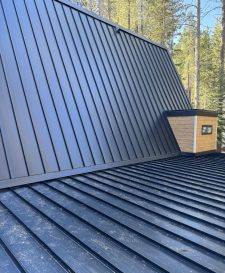
| Standing seam metal | 40-50+ years | Excellent — moss struggles to gain a foothold on smooth metal | Requires coastal-rated fasteners and coatings to resist corrosion |
| Cedar shake | 20-30 years with upkeep | Prone to moss and moisture retention without regular treatment | Higher maintenance burden in salt air; needs consistent sealing |
| Composite/synthetic shake | 30-50 years | Good — resists moisture absorption better than natural wood | Holds up well; less maintenance-intensive than real cedar |
We install what fits the home and the homeowner's priorities, but we're honest about trade-offs. Natural cedar, for example, has real appeal, but its ongoing maintenance burden in a moss-heavy, moisture-prone climate is significant enough that we make sure clients understand what they're signing up for before committing to it.
Our Roof Replacement Process
The process is straightforward, but we don't skip steps to save time.
- On-site inspection and estimate — we walk the roof (weather permitting) or inspect from the attic and eaves, measure, and give a written estimate with no pressure to sign on the spot.
- Material selection — we go over options and honest trade-offs based on your roof's pitch, exposure, and budget.
- Scheduling around weather — tear-off and dry-in are timed to minimize the number of hours the decking is exposed to rain, which matters a lot in a region where a dry weather window can close fast.
- Tear-off, decking repair, and dry-in — old roofing comes off, decking is inspected and repaired, and the roof is weathered in with underlayment the same day whenever possible.
- Installation — flashing, ventilation, and the finish material go on per manufacturer specification, not shortcuts.
- Final walkthrough — we walk the site with you, check gutters and downspouts for debris from the job, and confirm everything meets spec.
Moss and Algae: A Long-Running Whatcom County Problem
Moss isn't just cosmetic. Once it establishes on a roof, its root structure lifts shingle edges and holds moisture directly against the roofing material, which accelerates granule loss and, eventually, decking rot underneath. The long, damp shoulder seasons common to this part of Washington give moss more time to take hold than it gets in drier climates, particularly on north-facing slopes and sections shaded by trees. A new roof doesn't make a home moss-proof forever, but proper ventilation, a material with better moss resistance, and simple periodic maintenance go a long way toward keeping it from becoming a recurring problem.
What Roof Replacement Typically Costs
Every roof is different, so we don't quote numbers without seeing the job, but homeowners appreciate knowing what actually drives the price up or down before they call around for estimates.
| Cost Factor | Why It Matters |
|---|---|
| Roof size and number of squares | More material and labor hours directly scale the cost |
| Pitch and accessibility | Steep or hard-to-access roofs take longer and require more safety setup |
| Layers of existing roofing to remove | Multiple tear-off layers add disposal and labor time |
| Decking condition | Rotted sheathing found during tear-off adds material and labor |
| Material choice | Asphalt, metal, and shake vary widely in material cost per square |
| Ventilation and flashing upgrades | Correcting inadequate original ventilation adds scope but prevents future failure |
Whole-roof replacements on typical single-family homes in this area often land anywhere from the low five figures to well beyond it, depending heavily on the factors above. The only way to get a real number is a site visit — anything quoted sight-unseen should be treated as a rough placeholder, not a firm price.
Why Hiring a Crew That Already Works Sumas and Blaine Matters
A roofing crew that regularly works this specific stretch of Whatcom County already knows how the local exposure behaves — which roof orientations take the worst of the driving rain, which properties need extra attention to moss-prone shading, and how salt air near Blaine's waterfront affects fastener and flashing choices over time. That's knowledge you don't get from a crew that mostly works inland or in a different climate zone. It also matters for practical reasons: local crews know local permitting requirements, can respond quickly if a weather window changes mid-project, and have a reputation in the community to protect, which tends to show up in how carefully a job gets done.
Keeping a New Roof Performing Long-Term
A correctly installed roof doesn't need much, but a little attention goes a long way toward hitting its full expected lifespan in this climate.
- Clear gutters and downspouts at least twice a year so water isn't backing up under the eaves
- Have moss growth treated or removed before it spreads, rather than after it's established
- Trim back overhanging branches that keep sections of the roof shaded and damp
- Check attic ventilation isn't blocked by insulation or debris
- Have flashing and seals inspected after any major windstorm
- Schedule a professional roof check every few years, even with no visible problems
If your roof in Sumas or Blaine is showing its age or you just want an honest opinion on where it stands, we're glad to take a look. Reach out for a free, no-pressure estimate using the form below.