 Blaine Siding
 Sandy Point's Climate Is Hard on Vertical Siding
Sandy Point sits close to the water, and that changes what a siding job needs to survive out here compared to a home a few miles inland. Salt-laden air off the bay works into any gap, seam, or fastener that isn't sealed correctly. Driving rain off the water hits walls at an angle, not straight down, which means horizontal laps and board seams take more direct wetting than they would on a sheltered lot. And Whatcom County's long, wet moss season keeps north- and west-facing walls damp for weeks at a stretch, which is exactly the environment where the wrong siding material starts to show problems.
Board and batten is a popular look for waterfront and near-waterfront homes in this part of Whatcom County because the strong vertical lines read well against the coastline and pair naturally with the cabin-and-cottage character common around Sandy Point. But the same vertical seams that give board and batten its look are also where water intrusion happens if the battens, flashing, and fastening aren't done to spec. This page is about what that job actually requires here, not in a generic climate zone somewhere else.
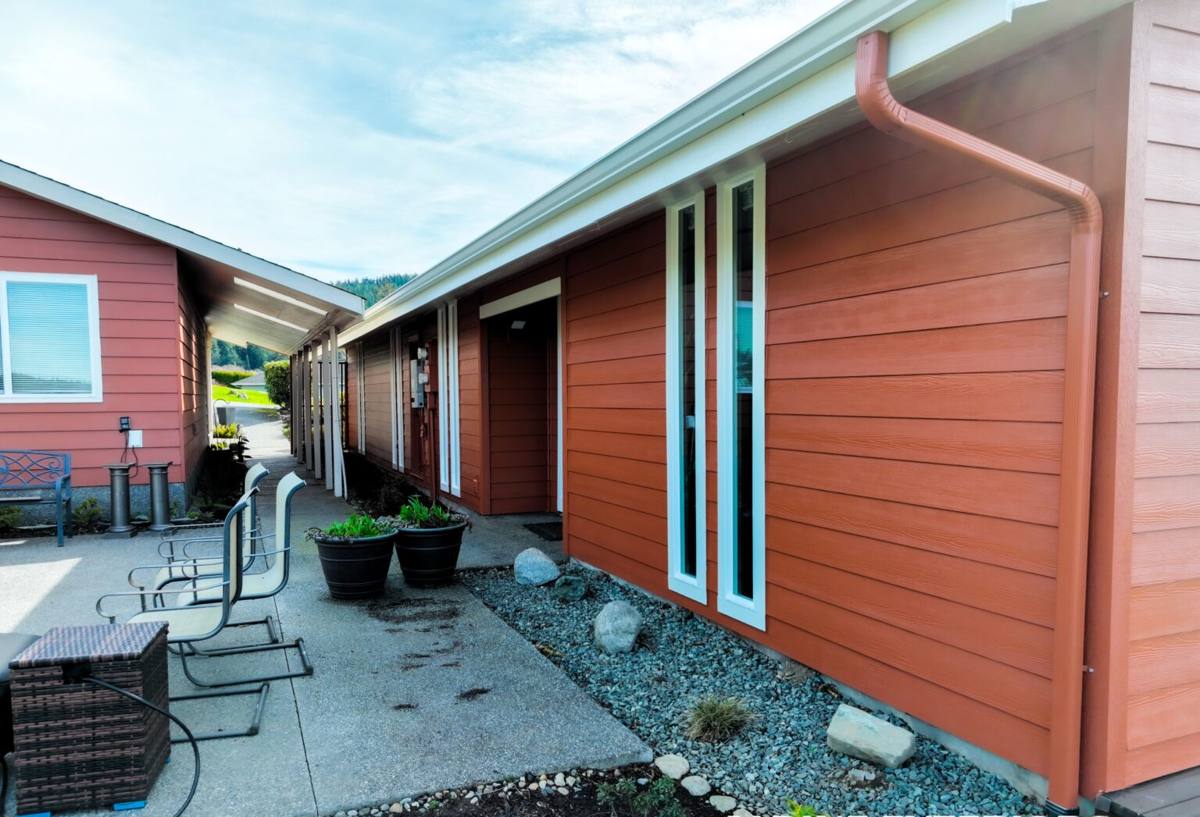
What Board & Batten Siding Is, and Why It Suits This Area
Board and batten is a vertical siding pattern: wide flat panels or boards installed side by side, with narrower strips (the "battens") covering the seams between them. Done right, it sheds water down the face of the wall instead of letting it pool in horizontal laps, which is part of why it holds up reasonably well in wet coastal conditions when the underlying materials and installation are correct.
The look works especially well on Sandy Point homes because:
- The strong vertical lines complement the simple, low-profile forms common in shoreline and near-shoreline construction.
- It reads as substantial and well-built from the water and the street, which matters on visible waterfront lots.
- It can be mixed with lap siding on the same home — board and batten on gables or accent walls, lap on the main field — to break up large wall areas without looking busy.
None of that matters, though, if the material behind the look can't handle sustained salt exposure and moisture cycling. That's the part homeowners often don't get told until something goes wrong.
What a Correct Board & Batten Job Actually Involves
Board and batten looks simple, which is exactly why it's easy to install poorly and not notice for a year or two. A correct installation in a salt-air, high-rain environment like Sandy Point involves several details that don't show up in a drive-by look at the finished wall:
Weather-Resistive Barrier and Drainage Plane
Every board and batten wall needs a continuous weather-resistive barrier behind it, with a drainage gap that lets any water that does get past the siding run down and out instead of sitting against the sheathing. On a house this close to the water, we don't treat this as optional or "good enough as-is" — it's the layer that actually keeps the wall assembly dry over time.
Fastener Placement and Type
Battens have to be fastened into solid backing, not just through the underlying board into thin air, and the fasteners themselves need to be corrosion-resistant enough for a salt-air environment. Cheap or mismatched fasteners are one of the most common failure points we see on vertical siding near the water — they streak, corrode, and eventually let the batten work loose.
Butt Joints and Vertical Seams
Where boards meet end-to-end, or where a wall transitions at a corner or window, the joint has to be flashed and sealed correctly — not just butted together and caulked over. Caulk is a maintenance item, not a waterproofing strategy on its own.
Clearance at Grade and Hard Surfaces
Board and batten that runs too close to grade, a deck, or a walkway stays damp longer and is one of the first places moss and mildew take hold. Proper clearance is a small detail during installation that saves years of maintenance headaches later.
James Hardie Board & Batten vs. Other Materials
We install James Hardie fiber cement exclusively — we don't do vinyl, LP SmartSide, cedar, or other fiber cement brands. That's a deliberate standard, not a sales pitch, and it matters most on vertical siding in a climate like this one, where seams and moisture exposure are the whole ballgame. Here's the honest comparison:
| Material | Behavior in Salt Air / High Moisture | Where It Struggles |
|---|---|---|
| James Hardie fiber cement | Non-combustible, dimensionally stable, factory-applied ColorPlus finish resists moisture-driven fading and peeling | Heavier material, requires correct fastening and installer experience |
| Vinyl board and batten | Won't rot, but panels expand/contract more with temperature swings and can warp or bow over time | Seams and battens are often just overlapped, not truly sealed; UV and salt exposure can chalk the finish |
| LP SmartSide (engineered wood) | Treated to resist moisture, but it's still a wood-based substrate | Cut edges and seams need diligent field-sealing; any lapse in maintenance shortens lifespan near water |
| Cedar / primed spruce | Traditional look, but solid wood absorbs and releases moisture constantly | Highest maintenance burden of the group — refinishing, checking, and moss control are ongoing near the water |
Every one of these products has legitimate use cases somewhere. Our position is narrower: for the moisture load and salt exposure a Sandy Point wall actually sees, we've standardized on Hardie because it holds its finish and dimensional stability with the least ongoing maintenance burden, and it carries a strong transferable warranty that backs that up.
Our Process for a Sandy Point Board & Batten Install
- On-site assessment — we look at wall exposure, existing moisture damage, grade clearance, and how much of the home faces prevailing wind and rain off the water.
- Tear-off and sheathing check — we don't side over rot or hidden moisture damage; anything compromised gets repaired before new siding goes up.
- Weather barrier and drainage plane installation — continuous coverage, properly lapped and sealed at every penetration.
- Hardie board and batten installation — installed to manufacturer spec with corrosion-resistant fasteners, correct batten spacing, and proper flashing at every joint, window, and corner.
- Final inspection and walkthrough — we check fastener lines, caulk joints, and clearance points before calling the job done.
Maintenance Checklist for Salt-Air Board & Batten Homes
Even correctly installed siding benefits from a little seasonal attention out here. This is what we tell Sandy Point homeowners to keep an eye on:
- Rinse salt residue off exterior walls a few times a year, especially after storms with onshore wind.
- Check caulk joints at windows, doors, and butt joints annually — reseal before you see a gap, not after.
- Keep gutters and downspouts clear so water isn't sheeting down the wall face during heavy rain.
- Watch north- and west-facing walls for moss or algae buildup during the wet season and address it early.
- Trim back vegetation that keeps any wall section shaded and damp for long stretches.
- Have fastener heads and batten edges checked every few years — small movement is easier to fix before it becomes a moisture path.
Cost Factors for a Board & Batten Project Here
Every Sandy Point property is different, so we won't quote a number without seeing the home, but these are the variables that actually move the price:
| Factor | Why It Matters |
|---|---|
| Existing wall condition | Rot or moisture damage behind old siding adds repair scope before new siding goes on |
| Wall exposure | Walls facing prevailing wind and water may warrant extra attention to flashing and drainage detailing |
| Home access and site logistics | Waterfront and near-waterfront lots can have tighter access, which affects labor time |
| Trim, corners, and window count | More transitions mean more flashing and detail work per square foot |
| Full re-side vs. accent application | Board and batten on gables/accents only costs less than siding the whole home |
Why a Crew That Already Works Sandy Point Matters
A siding crew that's worked this specific stretch of Whatcom County coastline knows which wall orientations take the worst weather, how fast moss establishes on shaded north walls here, and what level of fastener and flashing detail actually holds up against sustained salt exposure — not just what passes inspection inland. That's the difference between a board and batten job that looks right on installation day and one that's still performing correctly five and ten years out, after a few winters of driving rain off the bay.
We're a Blaine-based crew, and Sandy Point is inside the area we regularly work — not a stretch assignment. If you're weighing board and batten for a Sandy Point home, we're happy to walk the property, look at your specific exposure, and give you a straight answer on what the job needs. Reach out for a free, no-pressure estimate — there's a form right below this page.