 Blaine Siding
 Sandy Point's Coastal Conditions Are Tough on Decks
Sandy Point sits right on Blaine's coastline, and homes here take a beating that inland properties in Whatcom County never have to plan for. Wind off the water carries salt that speeds up corrosion on anything metal. Rain doesn't just fall here, it drives sideways into gaps in flashing and fastening that would stay dry elsewhere. And because the wood rarely gets a long enough dry stretch between storms, moss and algae get a real foothold and hang on for most of the year. A deck built to a generic spec sheet shows problems within a few seasons: soft spots underfoot, rust streaks bleeding down the fascia, boards that turn slick every time the weather turns. A deck built specifically for this stretch of coastline holds up because the material choices and connection details account for that exposure from the start, not as an afterthought.
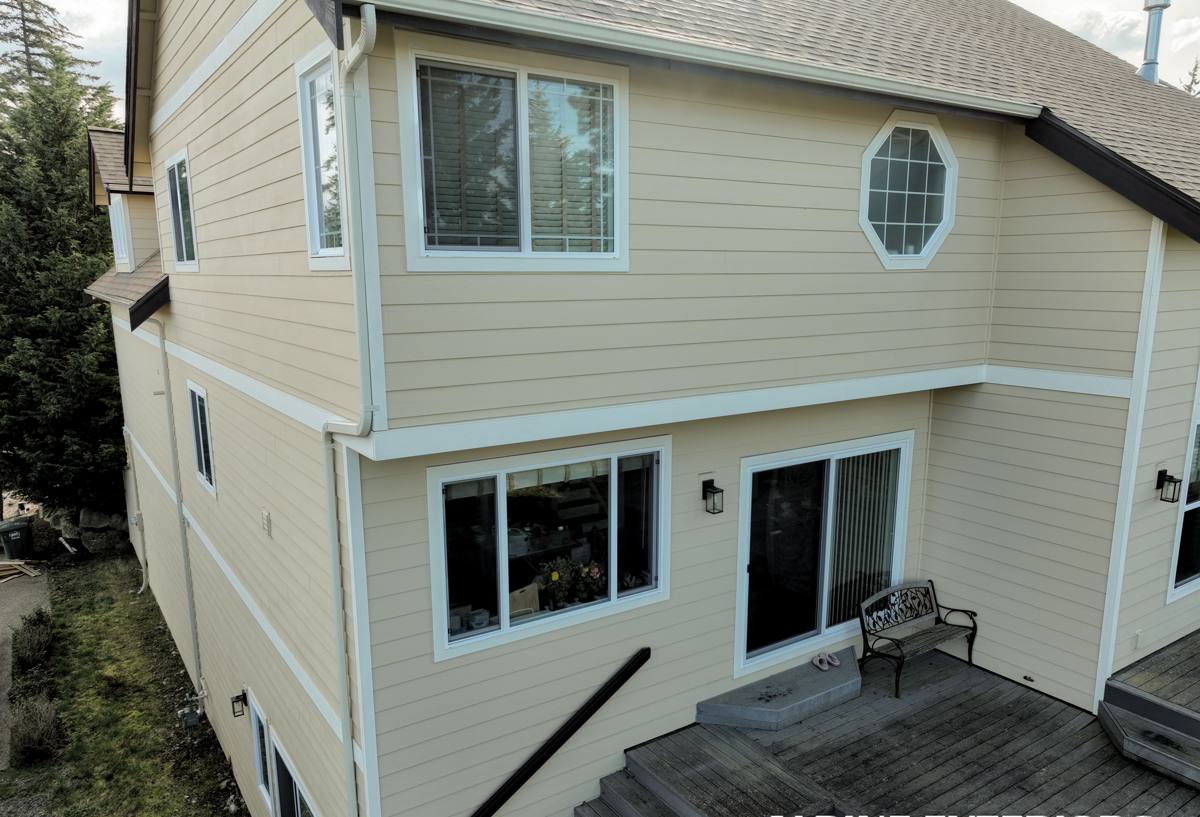
What Salt Air, Rain, and Moss Actually Do to a Deck
Corrosion Starts Where You Can't See It
The joist hangers, structural screws, and bolts holding a deck together take the worst of the salt exposure, and they're also the last thing anyone checks. Standard zinc-coated fasteners that hold up fine forty minutes inland can start rusting within a few years this close to the water. Once a fastener weakens, the problem isn't cosmetic anymore, it's structural, and it's usually hidden under the decking until something moves that shouldn't.
Trapped Moisture Causes Rot From the Inside Out
Driving rain combined with fewer fully dry days in between means water sits longer in end grain, around ledger board connections, and anywhere flashing was skipped or lapped the wrong direction. In our experience, rot in this area almost never starts on the visible surface of a deck board. It starts in the framing underneath, at a ledger that was never flashed correctly, or at a post base sitting in standing water. By the time it shows up on top, the damage below has usually been building for a while.
Moss and Algae Turn a Deck Slick and Hold Moisture Against the Wood
A long wet season gives moss real time to establish, especially on shaded decks, north-facing exposures, or anywhere near trees. Once moss takes hold, it doesn't just make a deck slippery, it holds water against the board surface long after the rain has stopped, which extends the time the wood stays wet and speeds up decay underneath it.
Choosing a Decking Material That Fits Sandy Point
Material choice matters more here than it does in a drier part of the state. The table below compares how common decking options actually perform under Sandy Point's specific mix of salt air, rain, and moss.
| Material | Salt Air / Moisture Resistance | Moss & Algae Resistance | Maintenance Level | Typical Lifespan Range |
|---|---|---|---|---|
| Pressure-treated lumber | Fair, depends on sealing | Low, needs regular cleaning | High, annual cleaning and resealing | 10-15 years |
| Cedar | Good, naturally rot-resistant | Fair, still needs cleaning | High, regular sealing to hold color and resistance | 15-20 years |
| Uncapped composite | Good | Fair, can still stain and hold algae | Moderate | 15-25 years |
| Capped composite / PVC | Excellent | Good, sheds moisture and cleans easily | Low, periodic washing | 25-30+ years |
Why We Lean Toward Capped Composite or PVC on Waterfront Lots
We recommend capped composite or PVC decking on most waterfront and near-waterfront lots in this area, not because wood is a bad product, but because the maintenance burden of keeping a wood deck sealed and moss-free in this climate is real and ongoing. That's a professional judgment call based on moisture behavior and upkeep, not a knock on wood as a material. Homeowners who want the look and feel of real wood, and are willing to stay on top of annual cleaning and resealing, can still get good years out of cedar, especially with the right fastening and drainage details underneath it.
What's Under the Boards Matters as Much as What's On Top
A correct deck build in this area includes a properly flashed ledger board where the deck meets the house, so water sheds away from the wall framing instead of running behind it. It includes protective tape or membrane over the top of every joist, which keeps water from sitting in the wood fibers at the exact spot where fasteners puncture the surface. And it includes footings set to the proper depth for the soil conditions on the lot, since a deck that shifts even slightly opens up gaps at every connection point above it.
Railings and Hardware: Corrosion Resistance Isn't Optional
On a lot exposed to salt air, we specify stainless steel fasteners and hardware rated for coastal exposure rather than standard exterior-grade coated screws, particularly anywhere metal touches pressure-treated lumber, which is more corrosive to fasteners on its own. Cable railing and other hardware-heavy railing systems need the same scrutiny, since the components are numerous and often harder to inspect once installed than a simple wood or composite guardrail.
Keeping Moss and Drainage Under Control Through a Long Wet Season
Proper board spacing lets water and debris drain through instead of collecting on the surface. A slight slope built into the deck frame keeps water moving toward the edge instead of pooling in the middle. Ventilation underneath the deck, meaning enough clearance and airflow beneath the framing, helps everything dry out between storms instead of staying damp for days at a stretch. Trimming back overhanging vegetation also cuts down on both moss growth and the debris that feeds it.
Here are signs worth a closer look, whether the deck was built by us or someone else:
- Boards that feel soft, spongy, or bounce underfoot
- Rust streaks bleeding from screw heads or around metal connectors
- Green film or moss that comes back within days of cleaning
- Gaps or dark staining where the deck meets the house at the ledger board
- Boards cupping, crowning, or pulling away from fasteners
- Railing posts that feel loose or wobble when pushed
- Standing water that takes more than a day to drain after a storm
Permitting Near the Shoreline in Whatcom County
Because Sandy Point sits close to the shoreline, projects here can fall under Whatcom County's shoreline and critical areas review in addition to the standard building permit, depending on exactly where the deck sits relative to the water and any bluff or slope on the property. We check that early in the design process rather than after plans are already set, since it can affect setback distances, deck footprint, or how a foundation gets engineered. Decks above a certain height also trigger guardrail requirements under the building code, which we account for at the design stage, not as a change order later.
What Drives the Cost of a Sandy Point Deck
Deck cost in this area comes down to a handful of factors more than any single line item. Square footage and shape drive material quantities, but height matters just as much on a lot with any grade change: a deck that sits well off the ground typically needs guardrails, sometimes stairs, and occasionally structural engineering depending on span and load. Material choice is the next biggest factor, with capped composite and PVC costing more upfront than pressure-treated lumber but less over time in resealing and repair. Site access and whether an old deck needs to be removed first also affect labor. We walk through each of these with homeowners before giving a number, so the estimate reflects the actual lot rather than a generic square-footage rate.
How We Approach a Sandy Point Deck Build
Every project starts with a site visit, not a template. We look at which direction the lot faces, how exposed it is to wind and driving rain, what the existing structure or foundation looks like if this is a replacement, and how much sun and shade the deck will actually get through the year, since that affects both moss risk and material choice. From there we design to code, select materials and hardware based on the specific exposure of that lot rather than a standard package, build it, and walk the finished deck with the homeowner before we consider the job done.
Timing matters too. Concrete footings need dry conditions to cure properly, and lumber or composite fastening goes smoother without rain interrupting every other step. We plan Sandy Point builds around the drier stretches of the year when we can, and when a project has to run through a wetter month, we sequence the work so framing and structural connections get covered or completed before extended rain moves back in.
Why Hiring a Crew That Already Works in Sandy Point Matters
We already know which parts of this area take the worst of the wind off the water, which lots tend to hold moisture in the soil longer, and what the county permitting process actually requires before a shovel goes in the ground. That familiarity means fewer surprises during the build and fewer callbacks after it. A crew that mostly works inland can build a technically sound deck and still get the exposure details wrong, because those details aren't part of their everyday work the way they are part of ours.
If you're planning a new deck or replacing one that's showing its age, we're happy to take a look and put together a straightforward, no-pressure estimate. There's a form below to get that started.