 Blaine Siding
 Why Siding Fails Faster on Sandy Point Homes
Sandy Point sits out on its own spit of land facing the open water of Boundary Bay, which means homes here take a different kind of weathering than a house a few miles inland in Blaine proper. There's almost nothing to break the wind before it reaches an exterior wall, and that wind is carrying salt spray a good part of the year. Add Whatcom County's long, wet winters and the shaded, damp conditions that let moss and algae take hold on north-facing walls, and you have three separate stresses hitting the same siding at the same time: salt-driven corrosion of fasteners and trim, wind-driven rain forcing water into any gap or seam, and organic growth that holds moisture against the wall long after a storm passes.
None of that is unusual for a beachfront community in this part of Washington. But it does mean siding installed to a generic, one-size-fits-all standard tends to show problems here years before it would somewhere more sheltered. Fastener corrosion, paint failure, swelling at butt joints, and moss staining are things we see disproportionately often on homes right up against the water on Sandy Point.
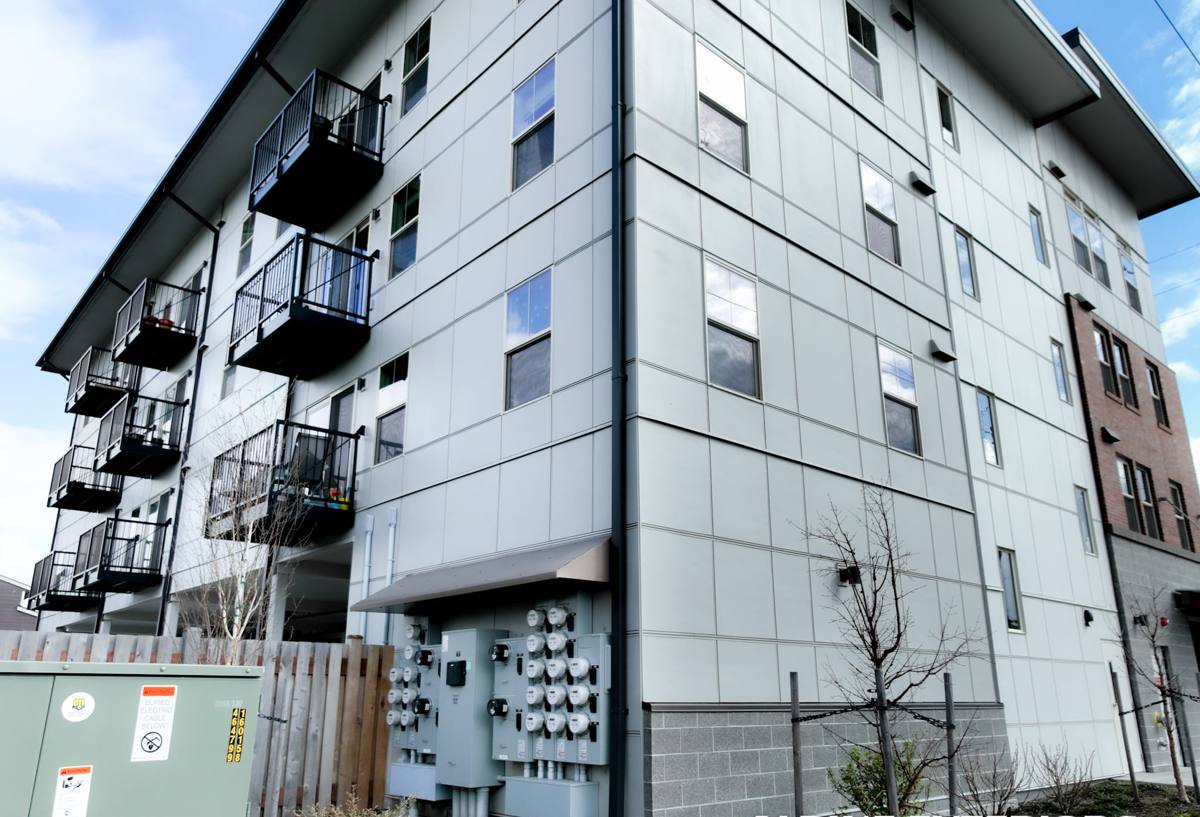
What Salt Air and Moisture Actually Do to Siding Over Time
It helps to understand the failure mechanism, not just the symptom. Salt air is hygroscopic — it pulls moisture out of the atmosphere and holds it against surfaces, which keeps wood-based and wood-fiber products wetter, for longer, than they'd be a few miles away. That constant low-level dampness is what drives:
- Fastener and flashing corrosion, especially with lower-grade galvanized nails or trim screws not rated for coastal exposure
- Paint and caulk breakdown at a faster rate than the manufacturer's inland warranty testing assumes
- Swelling, delamination, or soft spots in any siding product with wood content, particularly at cut ends and butt joints
- Moss and algae colonization on shaded or north-facing walls, which traps additional moisture against the substrate
This is exactly why we don't install vinyl, LP SmartSide, primed spruce, cedar, or generic fiber cement brands on this coastline. Vinyl expands, contracts, and can warp under direct wind-driven salt exposure and temperature swings. Wood-based products like LP SmartSide and solid wood siding are the most vulnerable to the moisture-and-organic-growth cycle described above — even with good maintenance, a coastal spit like Sandy Point accelerates that timeline. We install James Hardie fiber cement siding exclusively because it's a cement-and-cellulose composite, not a wood product — it doesn't feed moss and algae the way organic materials do, it doesn't rot, and it holds paint and factory finish far longer in salt-air conditions when installed correctly.
Siding Material Comparison for a Coastal Exposure Like Sandy Point
| Material | Salt Air / Wind Behavior | Moss & Moisture Resistance | Typical Maintenance |
|---|---|---|---|
| James Hardie fiber cement | Non-combustible, dimensionally stable, holds paint/finish well in wind-driven salt spray | Cement-based — doesn't rot or feed organic growth; periodic wash removes surface moss | Low — occasional rinse, repaint on a longer cycle with ColorPlus finish |
| Vinyl siding | Can warp, buckle, or become brittle under repeated wind and temperature swings | Doesn't feed moss but traps moisture behind panels if installed loose | Low-moderate — but hard to repair invisibly, panels can rattle loose over time |
| LP SmartSide / wood-based | Wood-fiber core is vulnerable to swelling at cut edges and fastener points in salt air | Higher risk of moisture intrusion and organic growth if any seal fails | Higher — regular caulk/paint inspection, faster edge deterioration near water |
| Cedar / primed spruce | Natural wood; most exposed material to salt-driven weathering | Most susceptible to moss, mildew, and rot without diligent upkeep | Highest — refinishing, sealing, and moisture monitoring on a short cycle |
What a Correct Installation Involves on a Home Like Yours
The material is only half the equation. A lot of the siding problems we get called out to inspect on Sandy Point aren't material failures — they're installation shortcuts that a coastal exposure exposes faster than an inland job would. A correct install here means:
Weather-resistant barrier and flashing first
Before a single piece of siding goes up, the wall needs a continuous, properly lapped weather-resistant barrier, correctly integrated flashing at every window, door, and penetration, and rainscreen or drainage detailing where the wall assembly calls for it. On a wind-driven-rain site, water will find any shortcut in this layer eventually — and once it's behind the siding, the fiber cement on the surface doesn't matter.
Coastal-rated fasteners and trim
We use fasteners and flashing rated for coastal/marine exposure, not standard galvanized hardware. This is one of the most common corners cut on beachfront jobs, and it's usually invisible until rust streaks or loose boards show up years later.
Correct clearances
James Hardie specifies minimum clearances from grade, roofing, decks, and horizontal surfaces for a reason — those gaps let water drain and air circulate instead of wicking up into the board. On tight beach lots this sometimes means adjusting grading or trim details rather than skipping the clearance.
Factory-finished ColorPlus where it counts most
On a salt-air exposure, the finish is doing a lot of the long-term work. Hardie's ColorPlus factory finish is baked on and warranted separately from field-applied paint, which holds up more consistently against salt exposure than a job-site paint job on any siding material.
Our Installation Process
- On-site assessment — we look at your wall's exposure (which sides face the water and prevailing wind), existing moisture or moss damage, and the condition of the sheathing and barrier underneath the current siding.
- Tear-off and substrate check — old siding comes off and we inspect sheathing for rot or soft spots before anything new goes up. This step is what catches hidden water damage before it's covered again.
- Weather barrier and flashing — a continuous, correctly lapped barrier and flashing package goes in around every opening and penetration.
- James Hardie installation to spec — panels, planks, or shingle-style siding installed with coastal-rated fasteners, correct clearances, and manufacturer-specified nailing patterns.
- Trim, caulking, and finish detail — joints and trim sealed with products suited to a marine climate, not generic caulk that will fail early here.
- Final walkthrough — we go over the finished exterior with you before calling the job done.
Signs a Sandy Point Home Needs New Siding
- Moss or algae staining that returns quickly after cleaning, especially on north or shaded walls
- Paint peeling, bubbling, or chalking faster than a normal repaint cycle would suggest
- Soft spots, swelling, or visible gaps at board seams and butt joints
- Rust streaking around fasteners or trim
- Warping, bowing, or panels that have pulled away from the wall
- Rising energy bills that track with drafts or cold spots near exterior walls
- Visible daylight or moisture at window and door trim during wind-driven rain
Any one of these on its own might be minor. Several together, especially on the water-facing side of the house, usually mean the siding system — not just the surface — has been compromised.
What Affects the Cost of a Sandy Point Siding Job
| Factor | Why It Matters Here |
|---|---|
| Wall exposure & access | Water-facing walls and tight beach lot access can change scaffolding and staging needs |
| Substrate condition | Hidden moisture damage found at tear-off adds repair scope before new siding goes on |
| Siding profile chosen | Hardie lap, shingle-style, and panel products carry different material and labor costs |
| Trim and detail work | Coastal-rated flashing, fasteners, and caulking cost more than standard-grade materials but last longer |
| Color/finish | Factory ColorPlus finish versus field-painted affects both upfront cost and repaint frequency |
We give a firm number after seeing the actual wall condition — not a phone estimate — because on a coastal property the difference between a straightforward re-side and one with hidden substrate repair can be significant.
Why Hire a Crew That Already Works This Coastline
Sandy Point isn't like siding a house in a sheltered inland neighborhood, and a crew that hasn't worked this specific stretch of Whatcom County coastline can miss details that only show up after a season or two of wind, salt, and rain. We know which walls on a typical Sandy Point lot take the worst of the exposure, which fastener and flashing grades actually hold up out here, and where clearance and drainage details need extra attention because of how close these lots sit to the water and how the ground drains. That local pattern-recognition is worth more than any brochure spec — it's the difference between a job that looks right on installation day and one that still looks right in five years.
If your home is showing wear from the salt air, driving rain, or moss that keeps coming back, we're happy to take a look and give you a straightforward, no-pressure estimate for a James Hardie siding installation built for Sandy Point's specific exposure. Fill out the form below and we'll set up a time to come out.