 Blaine Siding
 Sandy Point Roofs Face a Different Kind of Wear
Sandy Point sits right on the water at the edge of Whatcom County, and that location shapes everything about how a roof ages here. Homes get direct exposure to wind coming off the water, salt-laden air that works into metal fasteners and flashing over time, and long stretches of wet weather that keep roof surfaces damp far more often than homes even a few miles inland. Add in a moss season that can run most of the year in this part of the Pacific Northwest, and you have a roof environment that's simply harder on materials than a typical suburban lot.
None of that means a Sandy Point roof is doomed to fail early. It means storm damage here tends to show up in specific, predictable ways, and repairing it correctly means understanding those patterns rather than treating every roof the same. A patch job that would hold up fine in a sheltered inland neighborhood can fail fast on a home that takes wind and salt spray straight off the strait.
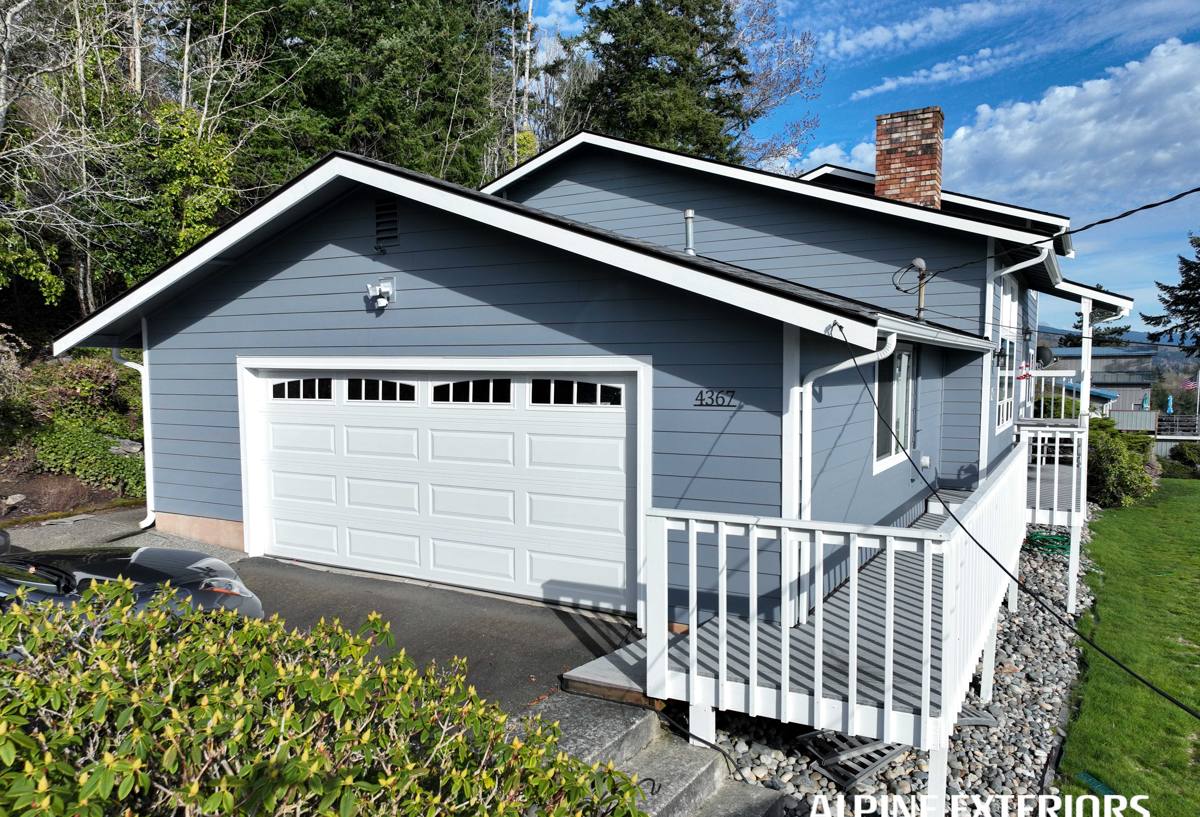
What Actually Counts as Storm Damage
Homeowners often assume storm damage means a hole in the roof or missing shingles you can spot from the driveway. In practice, a lot of storm damage is subtler than that, and it's the subtler damage that causes the most expensive problems if it sits too long.
Damage You Can Usually See
- Shingles that are cracked, curled, torn, or missing outright after high wind
- Visible gaps or lifted edges around chimneys, vents, and skylights
- Dented or bent metal flashing, gutters, or ridge caps
- Debris impact marks from wind-driven branches or blown debris
- Sagging or soft spots in the roof deck
Damage That Hides
Wind can loosen a shingle's seal without tearing it off, leaving it looking intact from the ground while it's no longer watertight. Driving rain can find its way under a slightly lifted shingle or through a flashing seam that's just barely compromised, and the resulting moisture doesn't show up as a stain on the ceiling until it's already been sitting in the roof deck for weeks or months. This is why a proper storm damage inspection isn't just a walk around the yard looking up — it involves getting on the roof and checking the parts of the system that hide problems best: flashing, valleys, penetrations, and the underlayment where it's exposed.
How Our Storm Damage Repair Process Works
We keep this process the same whether the call comes from Sandy Point or anywhere else we work in the Blaine area, because skipping steps is exactly how small leaks turn into rot repairs.
- Initial inspection. We walk the roof and check every vulnerable point — edges, valleys, flashing, penetrations, and any area you've flagged as a concern.
- Documentation. We record what we find in detail, which matters both for giving you an honest scope of work and for supporting an insurance claim if you're filing one.
- Scope and estimate. We tell you plainly what's damaged, what's cosmetic versus functional, and what the repair options are — including when a full section replacement makes more sense than patching.
- Repair. We match materials as closely as possible to your existing roof, seal and flash every repair to the same standard as new construction, and don't leave temporary fixes in place longer than necessary.
- Final check. We walk the repair with you (or send photos and a written summary if you're not on-site) so you know exactly what was done.
Common Repairs We Handle on Sandy Point Roofs
Wind-Lifted and Missing Shingles
Wind off the water doesn't need to reach dramatic speeds to lift shingles that are already aging or were installed with marginal sealing. We replace damaged shingles in kind, re-seal adjacent shingles that were loosened but not destroyed, and check the nailing pattern underneath — a lot of repeat wind damage traces back to a nailing issue from the original install, not just bad luck.
Flashing Failures
Flashing around chimneys, skylights, and roof-to-wall transitions is usually the first thing to fail on a coastal roof, because it's metal, it's full of seams, and it's exposed to the same salt air that accelerates corrosion everywhere else on a Sandy Point property. We repair or replace flashing rather than just re-caulking it, since caulk is a short-term fix and flashing is the actual water barrier.
Moss and Moisture Damage
A long moss season means moss isn't a once-a-year problem here — it's an ongoing maintenance issue that becomes a repair issue if ignored. Moss holds moisture against the roof surface, lifts shingle edges as it grows, and accelerates granule loss. When storm damage and moss growth overlap, we clean the affected area properly before repairing it, because patching over active moss just seals moisture in.
Gutters and Drainage
Driving rain events put real stress on gutters and downspouts, and a gutter system that can't keep up with volume sends water where it doesn't belong — behind fascia, into soffits, or pooling at the roofline. We check drainage as part of any storm repair, because a roof repair that ignores a failing gutter system tends to need repeating.
Repair or Replace: How We Help You Decide
Not every storm-damaged roof needs a full replacement, and not every roof is worth repairing indefinitely. The right call depends on the roof's age, how widespread the damage is, and what condition the rest of the roofing system is in.
| Factor | Favors Repair | Favors Replacement |
|---|---|---|
| Roof age | Under 12-15 years, in otherwise good condition | Nearing or past expected lifespan for the material |
| Extent of damage | Localized to one section or a handful of shingles | Spread across multiple roof planes |
| Underlying deck | Solid, no rot found during inspection | Soft spots or rot found in more than one area |
| History | First storm-related repair on this roof | Repeated repairs to the same sections over recent years |
| Coastal exposure | Roof has held up well against wind and salt air so far | Visible accelerated wear tied to exposure, not just age |
We'll always tell you honestly which side of that table your roof falls on. Recommending a full replacement when a targeted repair will hold up just as well doesn't do you any favors, and neither does patching a roof that's genuinely at the end of its service life.
Materials and Methods That Hold Up Near the Water
Coastal exposure is a real factor in material choice and installation method, not just a talking point. On repair work, we favor corrosion-resistant fasteners and flashing over standard-grade hardware, since the salt air in this part of Whatcom County will find the weak point in cheaper metal faster than it would a few miles inland. We also pay close attention to sealing at every penetration point — vents, pipe boots, chimney flashing — because those are the spots most likely to fail first when wind-driven rain is a regular occurrence rather than an occasional event.
Where a repair involves matching existing shingles, we source materials rated for the wind exposure your home actually sees rather than defaulting to whatever's cheapest. It costs a little more up front and saves you from calling us back after the next storm.
Documentation for Insurance Claims
Many storm damage repairs in this area end up going through homeowners insurance, and how the damage is documented matters for whether a claim goes smoothly. We photograph the damage before we touch anything, note the likely cause (wind, wind-driven rain, impact, etc.), and provide a written scope of work that adjusters can work from. We're not a public adjuster and we don't handle the claim itself, but we give you the documentation to support it and can talk through what we found if your insurance company has questions about the scope.
What to Do Right After a Storm
What you do in the first day or two after storm damage affects both how well the repair goes and how smoothly an insurance claim goes, if you're filing one.
- Take photos of any visible damage from the ground — don't get on the roof yourself
- Check attic or ceiling areas for water stains, especially after heavy rain
- Note the date and approximate weather conditions when damage was first noticed
- Cover any obvious active leak from the inside with a tarp or bucket if safely accessible
- Call for an inspection before the next storm system arrives, not after
- Avoid climbing on the roof to inspect or "fix" it yourself — storm-damaged roofs are unstable
Why It Matters to Hire a Crew That Already Works This Area
Sandy Point's roofs aren't like roofs in a typical inland Whatcom County subdivision, and a crew that mostly works sheltered neighborhoods can miss what matters here — how much salt exposure has already worked into existing flashing, how a moss problem this far into the season is going to behave once it's cleared, or which parts of a roof system take the brunt of wind coming straight off the water. Working in and around Blaine regularly means we're not learning the local conditions on your roof; we already know what tends to fail here and why, which makes for a faster, more accurate inspection and a repair that's built for the exposure your home actually gets.
If your roof has taken storm damage, or you're not sure whether what you're seeing is cosmetic or something that needs attention now, we're happy to take a look. Use the form below to request a free, no-pressure estimate — we'll give you a straight answer about what we find and what it would take to fix it right.