 Blaine Siding
 Building Decks for Semiahmoo's Marine Climate
Semiahmoo sits right where Whatcom County meets Semiahmoo Bay, and that location is exactly why decks here take a different kind of beating than decks fifteen miles inland. Homes along the bay and the spit get near-constant airflow off the water, which means salt-laden moisture settling into every joint, fastener, and board face almost year-round. Add in the region's long stretch of driving rain from fall through spring, plus a moss season that can run six months or more in shaded, north-facing yards, and you've got conditions that will find every weak point in a deck within a few winters.
A deck built the same way you'd build one in a dry inland subdivision does not hold up the same way out here. We've worked on enough homes in and around Semiahmoo to know which details actually matter for this specific stretch of coastline, and which shortcuts show up as rot, rust streaks, or slick green boards by the second or third winter.
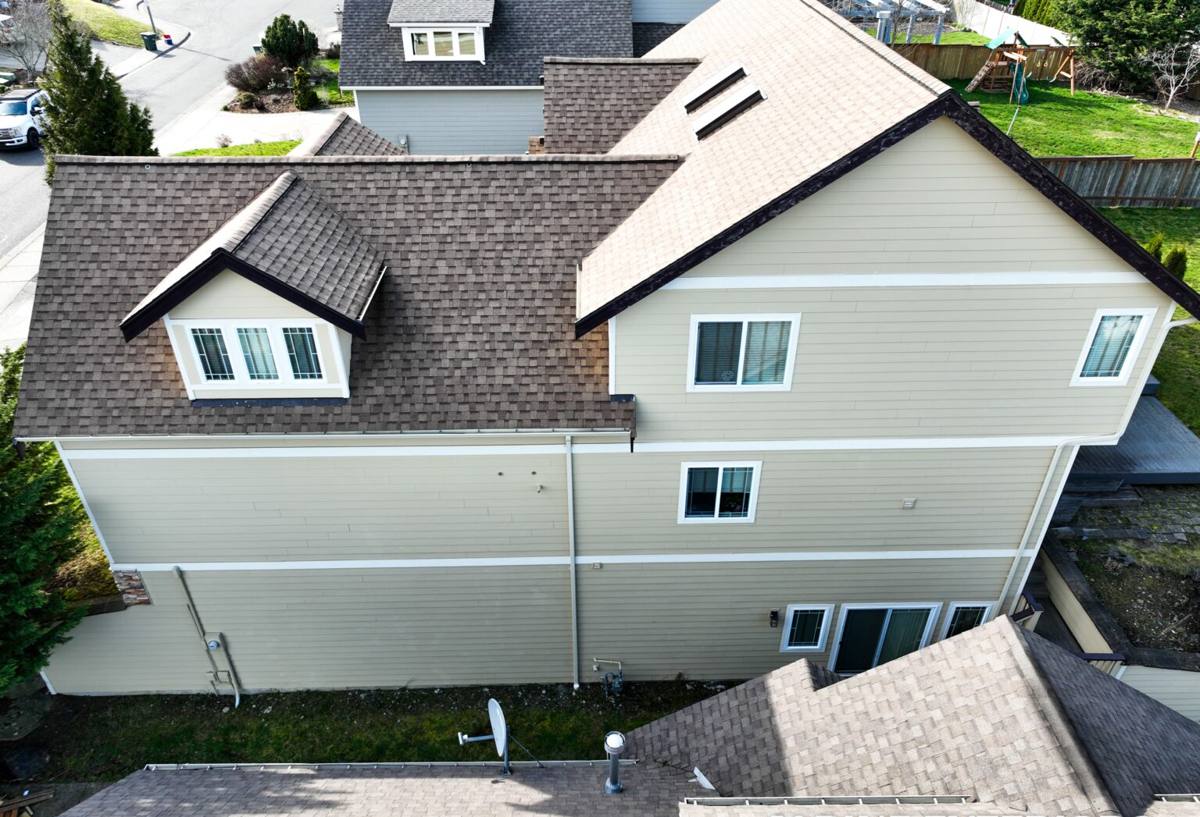
What Salt Air and Coastal Rain Actually Do to a Deck
It helps to understand the failure modes before talking about the fix, because the fix only makes sense in that context.
Salt Air and Metal Fasteners
Salt-laden air accelerates corrosion on any fastener, bracket, or connector that isn't rated for it. Standard galvanized screws and joist hangers can start showing rust bleed within a couple of seasons this close to the water. Once a fastener starts corroding, it loses holding strength long before it looks obviously bad, which is a real safety issue on structural connections like ledger boards and post bases.
Driving Rain and Water Intrusion
Whatcom County's rain doesn't just fall straight down — wind off the bay drives it sideways into ledger connections, stair stringers, and any spot where two materials meet. Over time, water finds its way behind poorly flashed ledger boards and into end grain that wasn't sealed, which is where rot actually starts. It's rarely the open, sun-exposed deck boards that fail first; it's the hidden framing underneath.
Moss and Shade
Semiahmoo's tree cover and long overcast season mean a lot of decks sit in shade for much of the day, especially on the north and east sides of homes. That combination of moisture and low light is ideal for moss and algae growth, which makes surfaces slippery and, if left unaddressed, holds moisture against the board surface long enough to encourage decay underneath.
What a Correctly Built Deck Involves Here
A deck that's going to hold up on a Semiahmoo lot needs to be built with these conditions in mind from the framing stage, not patched after the fact.
Substructure and Fasteners
We use stainless steel or heavy-duty coated fasteners and hardware rated for coastal exposure, not the standard galvanized hardware that's fine for a dry inland build. Joist hangers, post bases, and structural screws are the first thing to fail in salt air, and they're also the hardest to inspect once the decking is down, so we don't cut corners here.
Ledger Attachment and Flashing
The ledger board — where the deck ties into the house — is the single most common point of hidden water damage on any deck in this region. Proper flashing, correctly lapped with the house's existing water barrier, keeps wind-driven rain from working its way behind the ledger and into the rim joist. This is not a place to save time.
Decking Surface Choice
Board selection matters more here than in drier parts of the state. We'll walk through the honest trade-offs between wood and composite decking for your specific site — sun exposure, shade, and how much upkeep you actually want to do — rather than pushing one material as a default.
Railings and Hardware Finish
Railing hardware and any exposed metal brackets get the same coastal-rated treatment as the structural fasteners. Cheaper finishes look fine for a season, then start streaking rust down painted or stained surfaces, which is a hard stain to remove once it sets in.
Comparing Decking Materials for a Bay-Exposed Lot
| Material | How It Handles Salt Air & Moisture | Moss/Algae Resistance | Upkeep |
|---|---|---|---|
| Pressure-treated wood | Good if sealed and maintained; end grain and fastener points are the weak spots | Needs regular cleaning in shaded areas | Re-seal every 1-2 years |
| Cedar | Naturally decay-resistant but still needs sealing near the water | Same moss risk as any wood in shade | Re-stain/seal every 1-2 years |
| Composite decking | Very good — doesn't absorb moisture into the board itself | Can still grow surface moss/algae in deep shade; cleans off easier than wood | Periodic washing, no sealing |
| PVC/capped decking | Excellent — fully sealed surface resists moisture uptake | Lowest surface porosity for growth to grab onto | Lowest of the group; occasional washing |
None of these are the wrong answer across the board — it depends on your budget, how much sun your specific deck location gets, and how much maintenance you actually want to keep up with. We'll give you a straight answer on which fits your lot rather than steering you toward whatever's easiest for us to install.
Designing Around a Semiahmoo Lot
Beyond materials, the design itself should respond to the site. Many homes here are oriented to take advantage of bay views, which often means larger decks, multiple levels, or wraparound layouts that catch more wind and rain exposure than a small backyard deck would. That changes how we think about railing height and wind load, board spacing for drainage, and where we place any built-in seating or features so they don't become moisture traps.
Shade patterns matter too. If your lot has mature trees or sits on the north side of the home, we'll factor that into board spacing and material choice, since those areas are exactly where moss and slip risk build up fastest. A deck design that ignores the sun and wind pattern of the specific lot ages faster than one that's planned around it.
How Our Process Works
1. On-Site Visit and Assessment
We come out and look at the actual site — sun exposure, drainage, existing structure if there's a deck to replace, and how the house's siding and water barrier are set up at the ledger location. This tells us what we're really dealing with before any design conversation happens.
2. Design and Material Selection
We talk through layout, size, and material options based on what you actually want to use the space for and how much maintenance you're willing to take on, then put together a clear, honest scope.
3. Permitting
Most new decks and significant rebuilds require a permit through the local jurisdiction. We handle that process so you're not the one tracking down inspections.
4. Construction
We build the substructure first with coastal-rated hardware and correct ledger flashing, then move to decking, railings, and any stairs. Every connection point that will be hidden once the decking goes down gets checked before it's covered.
5. Final Walkthrough
We walk the finished deck with you, check railings, fastener finish, and drainage, and answer any maintenance questions before we consider the job done.
What Drives Cost on a Semiahmoo Deck Project
| Factor | Why It Affects Price |
|---|---|
| Size and number of levels | More square footage and multi-level layouts mean more framing, footings, and material |
| Decking material | Wood, composite, and PVC carry different material costs and installation labor |
| Fastener and hardware grade | Coastal-rated stainless hardware costs more than standard galvanized but is not optional this close to the bay |
| Site access and grade | Sloped lots or limited equipment access near the bay can add labor time |
| Railings and features | Custom railing styles, built-in seating, or lighting add to scope |
| Permitting requirements | Larger or elevated decks may need engineered plans, which adds time and fees |
We give straightforward, itemized estimates so you can see exactly where the money is going, rather than a single lump number that hides the trade-offs.
Maintaining a Deck in a Salt Air, High-Moss Environment
- Sweep off standing leaves and debris regularly, especially in shaded areas where moss takes hold fastest
- Rinse salt residue off railings and decking surfaces periodically, particularly after storms with onshore wind
- Check fastener heads and hardware finish once or twice a year for early rust bleed
- Keep gutters and downspouts near the deck clear so runoff isn't dumping extra water onto the structure
- Re-seal wood decking on the schedule recommended for the product — don't wait until it's visibly gray or cracking
- Trim back overhanging branches to reduce shade and speed up drying time after rain
- Address any soft or spongy boards immediately — that's early rot, not something to leave for next season
Why Local Experience on This Stretch of Coastline Matters
A crew that mostly builds decks in drier, inland parts of Whatcom County isn't necessarily thinking about ledger flashing details or fastener grade the way they need to be thought about right on Semiahmoo Bay. We've built and repaired enough decks in this specific environment to know where the failures actually start — and it's almost always the hidden connections, not the visible boards. That experience shows up in small decisions: which hardware we spec, how we detail the ledger, and where we adjust the design for wind and shade on a given lot.
It also means we're not guessing at how the local permitting process works or what inspectors here are looking for, which keeps the project moving instead of stalling on paperwork.
Get a Straight Answer on Your Deck
If you're planning a new deck or dealing with an aging one showing early signs of rot, rust, or moss, we're happy to take a look and give you an honest read on what it needs. Reach out for a free, no-pressure estimate using the form below.