 Blaine Siding
 Building a Deck That Actually Belongs on Semiahmoo
Semiahmoo sits right up against Semiahmoo Bay, which means any deck built here is going to spend its life in a different environment than a deck fifteen miles inland in Bellingham or Ferndale. Salt-laden air moves off the water and settles on every exposed surface. Rain comes in sideways more often than it falls straight down. And the long, gray stretch of fall through spring in Whatcom County gives moss and algae months at a time to get established on anything that stays damp. A deck built to a generic spec sheet will show its age here faster than the homeowner expects — soft spots in the decking, rust bleeding out of fastener heads, slick green film on the walking surface by the second winter.
None of that is inevitable. It comes down to choosing the right materials, detailing the framing correctly, and building in drainage and airflow from the start rather than trying to fix it later. That's the difference between a deck that needs real attention every few years and one that just gets used.
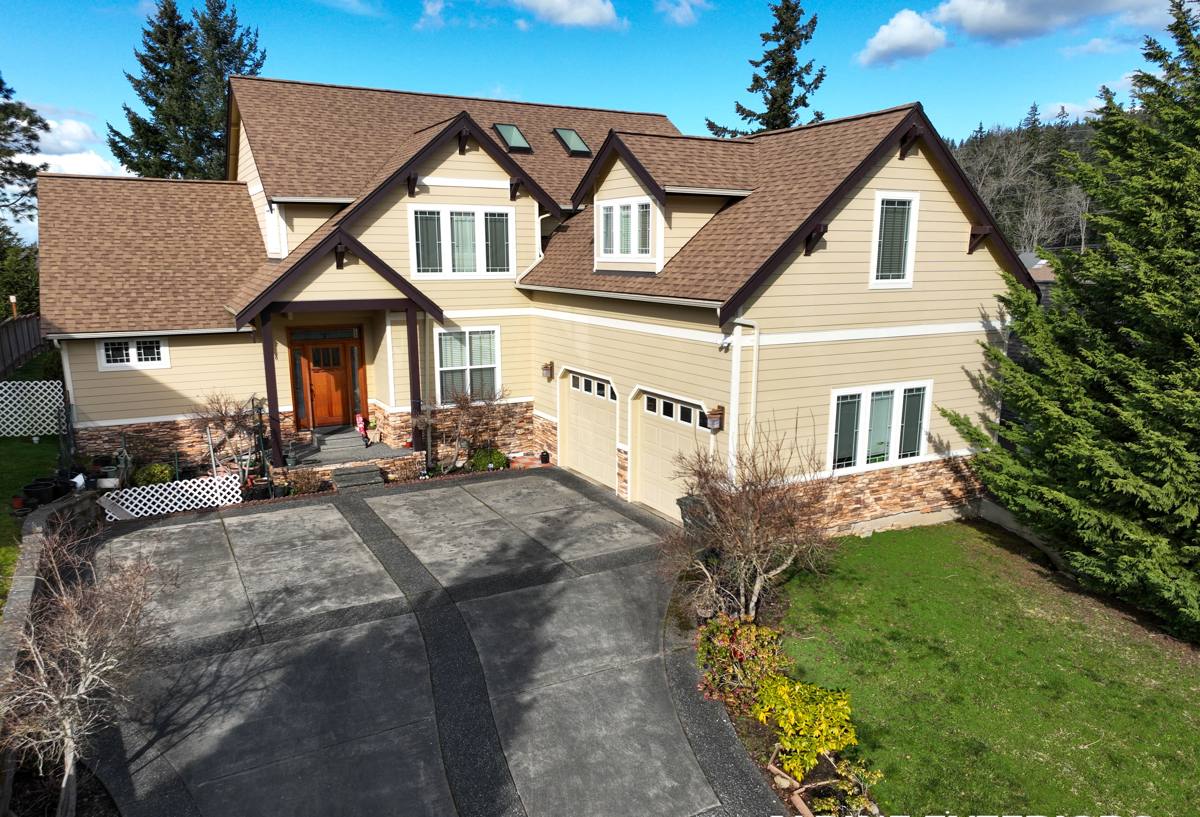
What Semiahmoo's Climate Actually Does to a Deck
Salt Air
Salt in the air accelerates corrosion on anything metal — nails, screws, joist hangers, bolts, and railing hardware. Standard galvanized fasteners can start showing rust streaks within a couple of seasons in a coastal exposure like this. Once a fastener starts corroding, it loses holding strength long before it looks obviously bad, which is part of why deck failures near the water are often more about hardware than about the boards themselves.
Driving Rain
Wind off the bay pushes rain at an angle, which means water gets into places a straight-down rain never would — under railing caps, behind ledger boards, into end-grain cuts on decking that weren't sealed. A deck design that assumes water only falls from above will leak, rot, and stain in ways the homeowner can't easily see until the damage is already done.
Moss and Algae Season
Whatcom County's wet season runs long, and a deck surface that doesn't drain and dry quickly becomes a moss farm. Moss doesn't just look bad — it holds moisture against the decking surface, which is exactly what accelerates wood rot and makes composite surfaces slick and unsafe underfoot.
Material Choices That Hold Up Near the Water
There's no single "best" decking material for every Semiahmoo home — it depends on budget, how the deck will be used, and how much upkeep the homeowner actually wants to do. What matters is picking a material honestly, with the coastal exposure factored in, rather than defaulting to whatever's cheapest at the yard.
| Material | How It Handles Salt Air & Rain | Moss/Algae Resistance | Upkeep |
|---|---|---|---|
| Pressure-treated fir/hem-fir | Decent if sealed and re-sealed on schedule; end cuts need field treatment | Low — needs regular cleaning | Annual inspection, re-seal every 2-3 years |
| Cedar | Naturally more rot-resistant, but still needs periodic sealing near salt air | Moderate | Sealing every 2-3 years, occasional cleaning |
| Composite decking | Doesn't rot or absorb water into the board itself | Moderate to good, varies by brand/texture | Periodic washing; no sealing needed |
| PVC/capped polymer decking | Fully sealed surface, best resistance to moisture intrusion | Good | Occasional washing |
We'll talk through these trade-offs honestly during the estimate — composite and capped polymer cost more up front but take rain and salt exposure out of the maintenance equation almost entirely. Wood costs less initially but only performs as well as the sealing schedule the homeowner actually keeps up with.
A Note on Fasteners and Hardware
This is the part of a deck build that gets overlooked the most, and it's the part that matters most in a salt-air environment. We use stainless steel or heavy-duty coated fasteners rated for coastal/salt exposure rather than standard galvanized hardware, and we match joist hangers, structural screws, and railing brackets to the same standard. A deck is only as strong as its weakest fastener, and near Semiahmoo Bay, standard-grade hardware is the weak point far more often than the lumber is.
Framing and Footings: What's Underneath Matters Most
A deck's surface gets all the attention, but the framing and footings determine whether it's still solid in ten years. A few things we pay particular attention to on Semiahmoo builds:
- Footing depth and bearing: Footings need to reach stable, frost-free bearing soil — coastal lots can have variable soil conditions, so we don't assume a standard depth works everywhere.
- Ledger board flashing: Where the deck attaches to the house is the single most common source of hidden rot on any deck, and it's worse where wind-driven rain is common. Proper flashing and a gap for drainage behind the ledger are non-negotiable.
- Joist hanger hardware: Matched to the fastener standard for the rest of the build — not mixed metals, which can actually accelerate corrosion through galvanic reaction.
- Airflow underneath: Decks built too close to grade or without adequate under-deck ventilation trap moisture and stay damp longer, which speeds up rot and moss growth on the underside of the structure.
Designing for Drainage and Airflow, Not Just Looks
A lot of moss and slip problems on decks aren't a materials failure — they're a design failure. Decking laid without adequate board spacing, or a layout that creates a low spot where water pools, will grow moss even with premium materials. Our approach is to grade and frame the deck so water actually gets off the surface, space boards correctly for the material being used, and avoid design choices — like solid skirting with no ventilation gaps — that trap moisture against the structure.
Railings deserve the same thought. Wind off the bay puts real lateral load on a railing system, and a lot of Semiahmoo lots are built for the view, which means railings need to be both structurally solid and unobtrusive. We detail railing posts and connections to handle that load rather than treating railings as a purely decorative add-on.
Our Process, Start to Finish
- On-site assessment: We look at the site, existing structure (if replacing a deck), grade, sun/wind exposure, and how the space will actually be used before recommending materials.
- Honest material walkthrough: We explain the real trade-offs between wood and composite/PVC options for this specific site, including realistic maintenance expectations for each.
- Permitting: Most new decks and many deck replacements in Whatcom County require a permit depending on size and height. We handle that process rather than leaving it on the homeowner.
- Framing and footings first: We don't rush past the structural work to get to the visible decking — footings, framing, ledger flashing, and hardware selection are set before a single deck board goes down.
- Decking, railings, and finish work: Installed to the spacing and fastening standard appropriate to the material chosen.
- Final walkthrough: We go over care and maintenance expectations specific to the material installed, so there are no surprises a year or two in.
Maintenance Semiahmoo Homeowners Should Actually Expect
Every deck near the water needs some level of upkeep — the difference is how much and how often, and that's largely determined by material choice. Wood decks in this environment need real attention: annual inspection, re-sealing every couple of years, and prompt cleaning if moss starts to establish. Composite and capped polymer decks cut that burden significantly but aren't zero-maintenance — periodic washing to keep organic growth from getting a foothold is still worthwhile, especially through the wetter months.
Signs a deck is losing the battle with Semiahmoo's climate, worth a look before they become bigger problems:
- Rust streaking around fastener heads or hardware
- Soft or spongy spots in decking boards, especially near the ledger or stair stringers
- Persistent green or black film that comes back quickly after cleaning
- Gaps opening up around the ledger board where it meets the house
- Railing posts that feel loose or flex under load
- Water pooling on the surface instead of draining off
Cost Factors for a Semiahmoo Deck Project
Every deck is priced around its own specifics — size, height off grade, material, railing style, and site access — so we won't quote a number without seeing the site. What generally moves the price:
| Factor | Why It Affects Cost |
|---|---|
| Decking material | Pressure-treated lumber costs less upfront than composite or PVC; composite/PVC cost more but reduce long-term maintenance |
| Height off grade | Taller decks need more substantial footings, framing, and code-required railing/stair details |
| Site access | Waterfront and hillside lots can complicate equipment access and material staging |
| Fastener/hardware grade | Coastal-rated stainless or coated hardware costs more than standard-grade but is worth it here |
| Railing style | Cable, glass, or custom railing systems cost more than standard baluster railing |
Why It Matters to Hire a Crew That Already Works Semiahmoo
A contractor who only builds decks inland doesn't run into salt air corrosion, wind-driven rain, or moss the same way we do out here, and it shows in the details — the fastener grade they default to, whether they think about under-deck ventilation, how they detail a ledger board against wind-driven rain instead of just straight-down rain. Building decks specifically for Whatcom County's coastal communities means those details aren't an afterthought — they're the starting point for every material and framing decision we make.
If you're planning a new deck or need to replace one that hasn't held up to the Semiahmoo climate, we're happy to take a look and talk through honest options for your site. Reach out for a free, no-pressure estimate using the form below.