 Blaine Siding
 Semiahmoo Sits Where the Weather Doesn't Let Up
Homes around Semiahmoo face a different set of conditions than siding manufacturers assume when they write their standard installation guides. This is a spit and shoreline community exposed to open water on multiple sides, which means the air itself is working against your exterior every single day, not just during storms. Add in Whatcom County's long, wet winters and the moss that comes with them, and you have a combination that punishes siding choices that would hold up fine twenty miles inland.
We install fiber cement siding on homes in this area regularly, and the failures we get called out to fix almost always trace back to the same root cause: siding, trim, or flashing detailing that was installed correctly for a drier, calmer climate but not for this one. This page covers what fiber cement siding needs to do differently here, what a correct installation actually involves, and why the crew doing the work matters as much as the material itself.
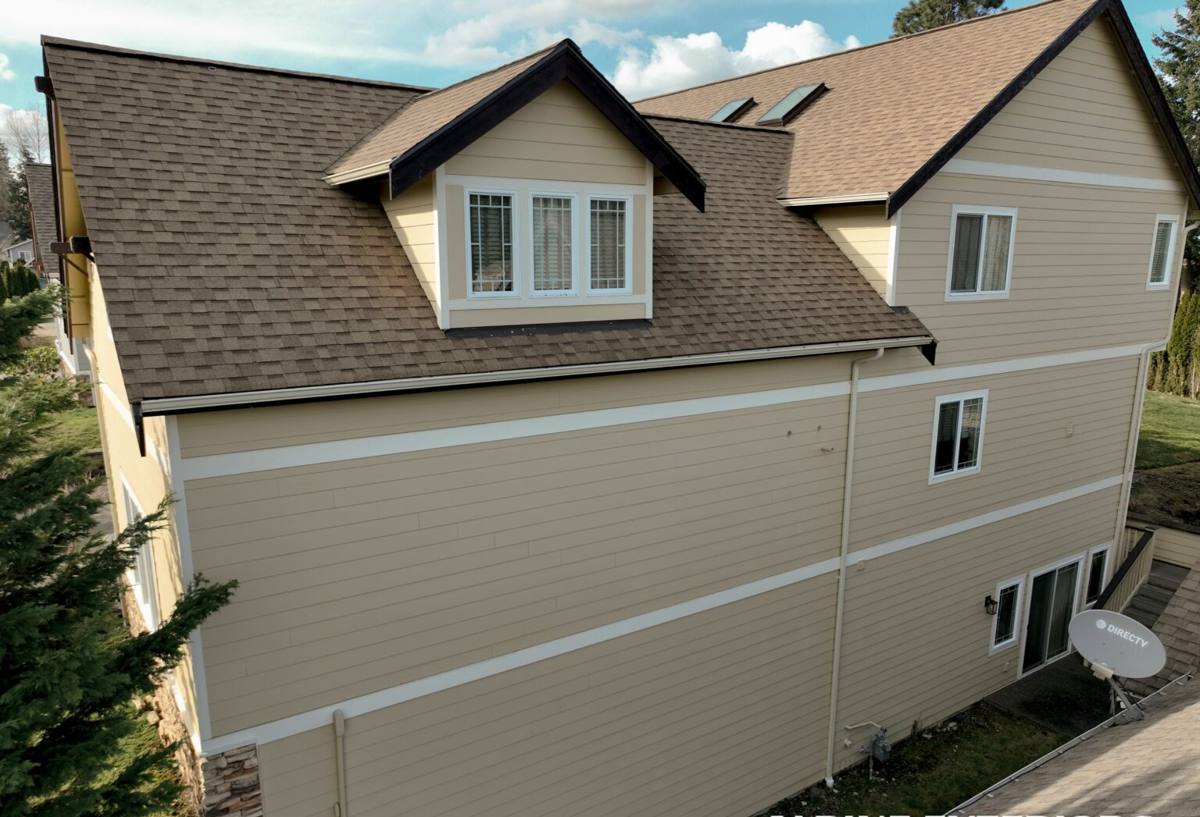
What Semiahmoo's Climate Actually Does to Siding Over Time
Salt Air and Slow Corrosion
Airborne salt doesn't just affect boats and dock hardware. It settles on exterior surfaces, works into fasteners, and accelerates corrosion on anything metal that wasn't specified for a marine-adjacent environment — nail heads, flashing, hose bibs, light fixture mounts, even the trim screws around window returns. On a siding job, this shows up years later as rust streaking down the face of the boards, corroded fastener heads that lose their grip, and flashing that fails quietly behind the wall before anyone notices water intrusion.
Driving Rain Off the Bay
Wind-driven rain off the water doesn't fall straight down — it gets pushed sideways into laps, seams, and butt joints that would stay dry in a calmer setting. That means every horizontal seam, every window and door transition, and every inside corner on a Semiahmoo home has to be treated as a place water will actively be pushed into, not just a spot where it might occasionally land. Standard installation tolerances that pass inspection elsewhere can still let water behind the cladding here.
A Long, Wet Moss Season
Whatcom County's moss season runs long — shaded north and east elevations, tree-lined lots, and the persistent damp near the water all feed it. Moss and algae hold moisture against a siding surface far longer than open air would, and on the wrong material that constant dampness accelerates rot, swelling, or paint failure. Siding that can shed water fast and resist sustained moisture contact matters more here than it does in a drier part of the state.
Why Fiber Cement Is the Right Material for This Location
Vinyl siding is lightweight and inexpensive, but it's also a plastic product that becomes brittle in cold, salt-laden air and can warp or crack under the combination of temperature swings and wind load this shoreline sees. Its seams and J-channels also give wind-driven rain more places to work its way behind the panel over time. Untreated or minimally treated wood siding — cedar and similar products — looks the part but requires an ongoing maintenance commitment that most homeowners underestimate: repainting or restaining on a tight cycle, constant inspection for rot at end grain and butt joints, and real vulnerability in a moss-prone, high-moisture setting like this one.
Fiber cement splits the difference in the right direction. It's dimensionally stable across temperature and moisture swings, it's non-combustible, and it doesn't feed rot the way wood does because it isn't an organic material to begin with. It still needs to be installed correctly — fiber cement is not forgiving of sloppy flashing or fastening — but the material itself is suited to exactly the punishment Semiahmoo's coastline delivers.
Why We Install James Hardie and Nothing Else
We standardized on James Hardie fiber cement for every job we take on, including here. A few reasons that matter specifically for this location:
- HZ5 engineering: Hardie's HZ5 product line is engineered for regions with more moisture cycling and freeze-thaw exposure, which describes this stretch of coastline well.
- ColorPlus factory finish: a baked-on finish applied under controlled conditions holds color and resists the fading and chalking that field-applied paint struggles with in a coastal environment.
- Non-combustible core: not a coastal-specific benefit, but a real one — fiber cement doesn't contribute fuel to a fire the way wood siding can.
- A transferable warranty backed by one manufacturer's own testing and specifications, rather than a patchwork of aftermarket products layered together.
We don't install LP SmartSide, vinyl, or other fiber cement brands, and we don't apply cedar or primed spruce siding. That's a deliberate standard, not a lack of options — we'd rather install one system correctly and stand behind it than offer a menu of products with different failure modes and warranty terms.
What a Correct Installation Involves on a Semiahmoo Home
The Water Management Layer Behind the Siding
The siding itself is the least important layer when it comes to keeping a home dry — it's the water-resistive barrier, flashing, and drainage plane behind it that actually stop bulk water. On a home this exposed, that means a continuous weather-resistive barrier lapped correctly from bottom to top, flashing integrated at every window, door, and roofline transition, and a drainage gap that lets any water that does get behind the cladding find its way back out instead of sitting against the sheathing.
Fastening and Clearances
Fiber cement has specific fastener requirements — corrosion-resistant nails or screws, driven to the manufacturer's depth and spacing, not just "close enough." In a salt-air environment, using the correct fastener material isn't optional; the wrong fastener will show rust streaking within a few seasons. Clearances matter too: siding needs proper gaps above roof lines, decks, and grade so it isn't sitting in standing water or trapped moisture.
Joints, Caulking, and Trim Details
Butt joints, corners, and trim transitions are where driving rain finds its way in. That means correct joint flashing behind butt seams (not just caulk), properly detailed outside and inside corners, and trim sized and installed so water sheds away from the wall instead of pooling at a horizontal ledge.
Painting and Field Touch-Up
ColorPlus finish minimizes field painting, but any cut edges exposed during installation still need factory-matched touch-up sealant so the fiber cement core isn't left exposed to moisture at the cut.
Our Process for a Semiahmoo Siding Project
| Stage | What Happens | Why It Matters Here |
|---|---|---|
| Walkthrough and assessment | We inspect existing siding, trim, and any signs of moisture or rot damage, and check elevation exposure to wind and water | Coastal exposure varies a lot even within a few hundred feet on a shoreline lot |
| Detailed estimate | Written scope covering siding, trim, flashing, and any sheathing repair, with a straightforward price — no vague allowances | Hidden moisture damage is more common here and needs to be priced honestly upfront |
| Tear-off and inspection | Remove existing siding and inspect the sheathing and framing underneath before anything new goes up | This is the only point where hidden salt-air or moisture damage is fully visible |
| Water barrier and flashing | Install or repair the weather-resistive barrier and flash every penetration and transition | This layer does more work than the siding itself in driving rain |
| Hardie installation | Install fiber cement siding and trim to manufacturer fastening and clearance specs | Correct fastening prevents the corrosion streaking this environment causes on shortcuts |
| Final detailing and walkthrough | Caulk, touch-up paint, and a final walkthrough with the homeowner | Confirms every joint and seam is sealed before the next storm off the water tests it |
What Fiber Cement Siding Costs in Semiahmoo — and What Drives the Price
Every home is different, and we won't quote a number without seeing the house, but the factors that actually move the price on a project like this are consistent:
| Cost Factor | Why It Matters |
|---|---|
| Condition of the sheathing underneath | Salt air and past moisture intrusion sometimes mean repair work is needed before new siding can go up |
| Home size and number of stories | More surface area and more staging/access work on taller elevations |
| Trim and architectural detail | Corners, window surrounds, and dormers all add labor beyond flat wall area |
| Siding profile and accessories | Lap width, trim boards, and any specialty accessories affect material cost |
| Site access | Waterfront and hillside lots can require more setup for scaffolding or lifts |
Broad ranges for full siding replacement on this type of coastal home generally run higher than an inland comparable home of the same size, mostly because of the added flashing and water-management detail described above — not because the material itself costs more.
A Homeowner's Checklist Before Hiring a Siding Crew
- Ask specifically how they detail flashing at butt joints and window transitions — not just "we use caulk"
- Confirm what fastener material they use and whether it's rated for coastal exposure
- Ask whether they've worked on homes in this specific area before, not just "the Pacific Northwest" broadly
- Get the manufacturer and product line in writing, not just "fiber cement" as a generic term
- Ask what happens if they find rot or moisture damage once the old siding comes off
- Confirm whether the warranty is backed by the manufacturer, the installer, or both, and what voids it
Why It Matters That We Already Work This Coastline
A crew that mostly works inland jobs can install fiber cement siding competently and still miss the details that matter on a shoreline property — because those details simply don't come up as often anywhere else. Working in and around Blaine and this stretch of Whatcom County regularly means we're not guessing at how much additional flashing attention a north-facing wall under tree cover needs, or how much more aggressively salt air corrodes an underspecified fastener. Those aren't things you learn from a manufacturer's installation manual alone — they're things you learn from doing the work in this exact environment repeatedly.
If you're weighing a siding replacement on a Semiahmoo home, we're happy to walk the property, look at what's there now, and give you a straightforward, no-pressure estimate using the form below.