 Blaine Siding
 Why Semiahmoo Roofs Wear Differently Than Roofs Inland
Semiahmoo sits right at the water's edge, on the spit and shoreline that separate Semiahmoo Bay from Drayton Harbor, just south of the Canadian border. That waterfront location is what makes the area beautiful, and it's also what makes roofing here harder than roofing a few miles inland in Blaine or elsewhere in Whatcom County. Homes facing open water take on a steady drift of salt-laden air, near-constant humidity, and wind-driven rain that behaves differently than a normal rainstorm. Add in the shade and moisture that feed moss growth through most of the year, and you have a combination that ages roofing materials faster than the manufacturer's data sheet ever accounts for.
None of this means a roof in Semiahmoo is doomed to fail early. It means the roof has to be built and maintained with that exposure in mind from day one — the right materials, the right fastener and flashing choices, and ventilation that actually keeps up with the moisture load. A roof replacement done without accounting for the local climate is a roof replacement that will underperform its warranty.
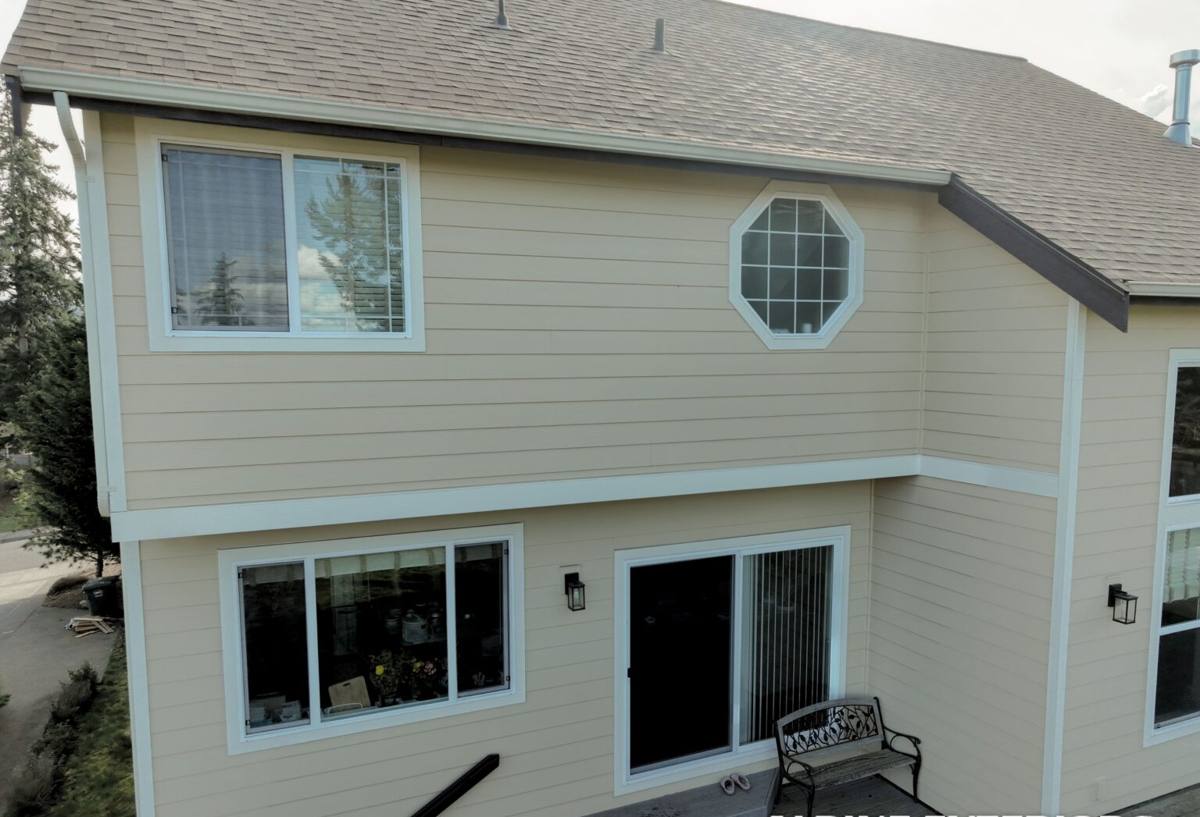
How Salt Air, Rain, and Moss Actually Damage a Roof
Salt Air
Airborne salt accelerates corrosion on any exposed metal — flashing, fasteners, roof vents, and gutter hardware. Standard fasteners and low-grade flashing can start showing rust streaks and pitting years before they would inland. This is one of the most overlooked factors in a waterfront roof job, because the damage is slow and often hidden under shingles until a leak shows up.
Driving Rain
Open water exposure means storms hit Semiahmoo roofs at an angle, not just straight down. Wind-driven rain gets pushed sideways and upward under shingle edges, around vents, and into any flashing gap that would never leak in a calmer setting. Roofs here need tighter underlayment coverage and more attention to flashing detail than a textbook install in a sheltered neighborhood.
Moss and Moisture
Whatcom County's long wet season and the shade common around many Semiahmoo properties create ideal conditions for moss and algae. Moss doesn't just look bad — it holds moisture against the roofing surface, works its way under shingle tabs, and can lift materials enough to let water in. A roof that isn't detailed and ventilated to shed moisture will grow it back no matter how many times it's cleaned off.
Signs a Semiahmoo Home Needs Replacement, Not Just Repair
Repairs make sense when the damage is isolated and the roofing underneath is still sound. Replacement becomes the right call once the roof's overall condition, age, and moisture exposure work against a patch holding up. Common signs we look for on waterfront homes include:
- Granule loss heavy enough to show bare asphalt on multiple slopes, not just one worn spot
- Rust staining or pitting on flashing, vents, or exposed fasteners
- Persistent moss or dark streaking that returns within a season of cleaning
- Soft spots in the decking found during inspection or from attic moisture signs
- A roof approaching or past the manufacturer's expected service life, especially one that's had heavy salt and rain exposure the whole time
- Multiple past repairs in different areas, suggesting the underlying system is failing broadly rather than in one spot
If only one or two of these apply and the roof is otherwise in the first half of its life, a targeted repair is usually the honest recommendation. We'll tell you that directly rather than push a replacement a home doesn't need yet.
What a Correct Roof Replacement Involves
Full Tear-Off
A proper replacement starts with removing the old roofing down to the deck, not layering new material over old. Layering hides existing deck damage and traps moisture that's already gotten in — a real risk on a property that's been absorbing salt air and driving rain for years.
Deck Inspection and Repair
Once the old roofing is off, the decking gets inspected for soft, rotted, or delaminated sections. Any compromised sheathing gets replaced before anything new goes down. Skipping this step is the single most common shortcut that leads to early failure.
Underlayment
Given the driving-rain exposure common on the water, we favor synthetic or self-adhered underlayment with full coverage, and ice-and-water shield style membrane at eaves, valleys, and any low-slope transitions where wind-driven rain is most likely to find a way in.
Flashing
Flashing around chimneys, skylights, walls, and vents is where waterfront roofs most often leak. We use corrosion-resistant flashing material and detail every penetration and roof-to-wall transition for wind-driven rain, not just straight-down rainfall.
Ventilation
Balanced intake and exhaust ventilation keeps the attic dry and temperature-regulated, which slows moss regrowth from underneath and protects the decking from condensation. On a humid, shaded waterfront lot, ventilation is doing real structural work, not just a code checkbox.
Roofing Material Installation
The final layer goes down to manufacturer spec with corrosion-resistant fasteners throughout — a detail that matters more here than almost anywhere else in the county because of the salt air.
Choosing a Roofing Material for This Climate
There's no single "best" roofing material for every home — it depends on the home's exposure, roof pitch, budget, and how much long-term maintenance the owner wants to take on. Here's how the common options actually perform under Semiahmoo's conditions:
| Material | Salt Air / Corrosion Resistance | Moss & Moisture Handling | Typical Lifespan | Maintenance Load |
|---|---|---|---|---|
| Architectural asphalt shingle | Good, with corrosion-resistant fasteners and flashing | Fair — needs periodic cleaning and good ventilation | 25-30 years | Moderate |
| Standing seam metal | Very good with proper coating and fastener choice | Very good — sheds moss and moisture well due to slick surface | 40-50+ years | Low |
| Cedar shake | Fair — natural material, sensitive to constant moisture | Poor without diligent upkeep — holds moisture, feeds moss | 20-30 years with upkeep | High |
| Synthetic/composite shingle | Good — engineered for weather resistance | Good, varies by product | 30-50 years depending on product | Low to moderate |
We don't install cedar shake as our standard recommendation on exposed waterfront homes. It's a legitimate, attractive material, but the maintenance burden it carries in a climate this wet and shaded doesn't line up with what most homeowners want from a roof they just paid to replace. If a homeowner wants that look, we'll talk through it honestly rather than steer around the conversation.
What Actually Drives the Cost of a Semiahmoo Roof Replacement
Every roof is priced on its own specifics, but the same handful of factors move the number up or down on almost every job we quote in this area:
| Cost Factor | Why It Matters Here |
|---|---|
| Roof size and number of planes | More square footage and more complex geometry mean more material and labor |
| Decking condition | Waterfront homes with hidden moisture damage sometimes need more sheathing replaced than expected |
| Material choice | Metal and higher-end synthetics cost more upfront but reduce long-term maintenance in this climate |
| Flashing and penetration count | Chimneys, skylights, and multiple vents each add detail work that's critical near the water |
| Access and site conditions | Steep pitches, tree cover, or tight waterfront lots can affect staging and disposal logistics |
| Ventilation upgrades | Adding proper intake/exhaust where an older roof lacked it adds some cost but pays off in roof longevity |
We walk every homeowner through which of these apply to their specific roof before we quote a number, so there are no surprises once the crew is on-site.
Our Process, Start to Finish
- On-site inspection. We walk the roof and attic, note the material condition, decking condition, flashing, ventilation, and any moss or moisture issues specific to the property's exposure.
- Honest recommendation. We tell you plainly whether the roof needs replacement now, can be repaired, or can reasonably wait, along with the material options that make sense for the home's exposure and budget.
- Written estimate. A clear scope of work and price, broken down so you know what you're paying for.
- Scheduling around weather. We plan the tear-off and install around the driest windows available, since an open roof deck and coastal rain don't mix.
- Tear-off and deck repair. Old roofing removed, decking inspected and repaired as needed, debris cleared as we go.
- Underlayment, flashing, and ventilation installed to the standard this climate requires.
- Final roofing material installed per manufacturer specification with corrosion-resistant fasteners.
- Final walkthrough. We review the completed roof with you, cover warranty paperwork, and answer any maintenance questions before we consider the job done.
Timeline and Scheduling Around Whatcom County Weather
Most straightforward roof replacements in this area take a few days from tear-off to final inspection, though complex rooflines, decking repairs, or weather delays can extend that. Because Semiahmoo's exposure to wind-driven rain off the water is real, we build in margin around the forecast rather than rushing an open deck against an incoming storm. Late spring through early fall generally offers the most predictable dry stretches in Whatcom County, but roof replacements can be done responsibly outside that window too — it just takes tighter weather planning and a crew that's used to working around it.
Why a Crew That Already Works Semiahmoo Matters
A roofing crew that mostly works drier, inland neighborhoods will often default to standard fastener grades, standard flashing details, and standard ventilation specs — because that's what works where they usually build. On a Semiahmoo roof facing open water, those defaults leave gaps: fasteners that corrode early, flashing that isn't detailed for wind-driven rain, ventilation that can't keep up with the humidity and moss pressure this location produces year-round.
Working this area regularly also means knowing what Whatcom County's permitting and inspection process expects for a re-roof, and knowing how local site conditions — waterfront lots, tree cover, tighter access on some properties — actually affect scheduling and logistics. That's the kind of knowledge that doesn't show up on a spec sheet but shows up in how long the roof lasts.
A Homeowner's Pre-Replacement Checklist
Before committing to a full roof replacement, it's worth confirming a few things regardless of which contractor you choose:
- Get a clear answer on whether decking repair is likely needed, and how that would affect the price
- Ask what fastener and flashing materials will be used, specifically because of salt air exposure
- Confirm the ventilation plan — intake and exhaust, not just exhaust vents
- Get the warranty terms in writing, including what's covered on labor versus materials
- Ask how debris and old roofing material will be removed and disposed of
- Confirm the contractor is licensed and insured to work in Washington and specifically in Whatcom County
- Get a written timeline and understand how weather delays will be handled
If your Semiahmoo roof is showing its age, showing moss it won't shed, or just due for an honest look, we're glad to come take that look. The estimate is free, there's no pressure attached to it, and you'll get a straight answer about whether you need a full replacement or something less.