 Blaine Siding
 Semiahmoo's Weather Is Harder on Siding Than Most of Whatcom County
Homes on and around the Semiahmoo spit sit closer to open salt water than almost anywhere else in Blaine. That location is the whole appeal of the area, but it also means the siding on these homes works harder than siding on a house a few miles inland. Salt-laden air off Semiahmoo Bay and Drayton Harbor gets carried onto exterior walls by wind almost daily, and it settles into whatever surface it touches. Add Pacific storm systems that come in sideways more often than straight down, and you have a combination that tests every seam, joint, and fastener in a siding system.
Then there's the moss. Whatcom County's long wet season — often eight or nine months of the year with meaningful moisture in the air — gives moss, algae, and mildew a long runway to establish themselves on north-facing walls, under eaves, and anywhere airflow is limited. Siding that can't shed water quickly or that traps moisture behind it becomes a host surface for growth long before it becomes a structural problem, but the two are related. Where moss holds moisture against a wall, that moisture eventually finds a way in.
None of this means Semiahmoo homes need exotic materials or unusual construction. It means the installation has to be done correctly, with the right product, by a crew that understands what this specific stretch of coastline does to a house over time.
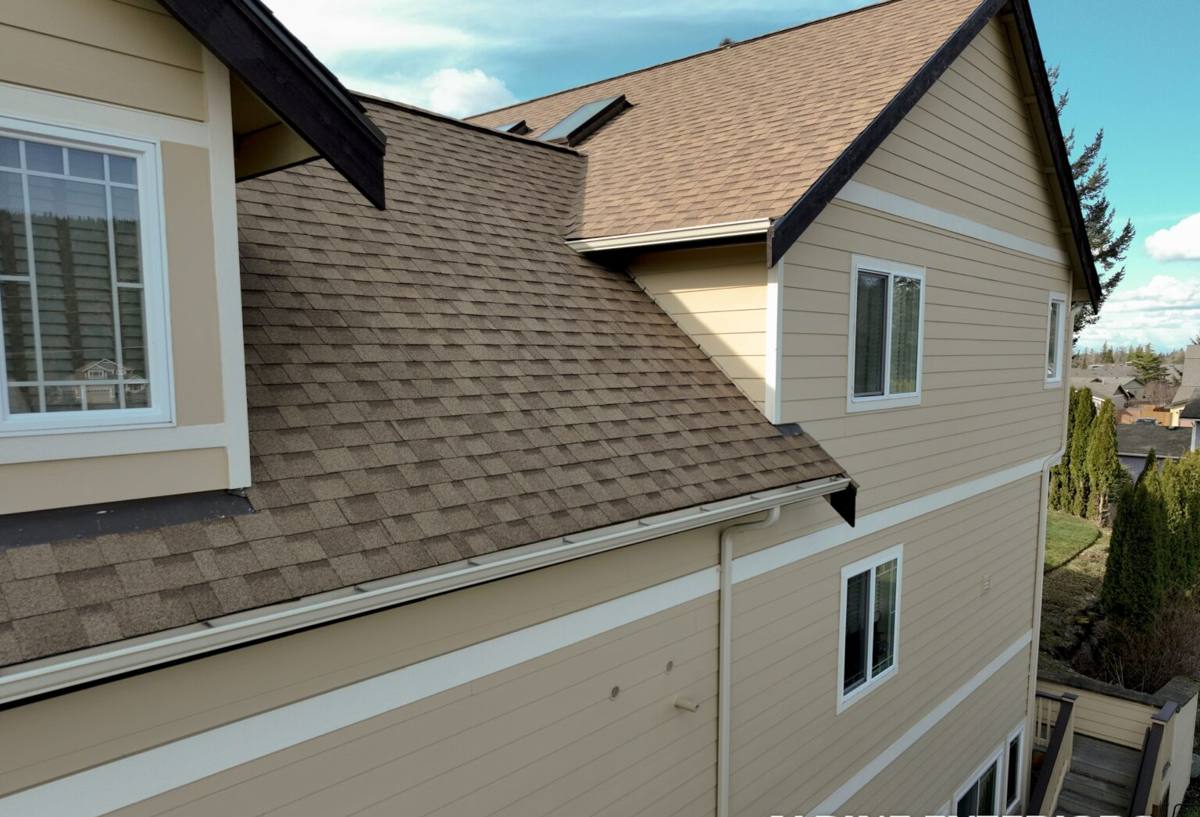
What "Correct" Siding Installation Means Here
A siding installation is more than fastening panels to a wall. In a salt-air, high-rainfall environment like Semiahmoo, the details that don't show up in a quick visual inspection are usually the ones that determine whether a job lasts fifteen years or fifty. Correct installation means:
- A continuous weather-resistant barrier behind the siding, installed without gaps, tears, or improper overlaps
- Properly integrated flashing at every window, door, and roofline intersection — not caulk used as a substitute for flashing
- Correct fastener type, spacing, and depth, matched to the manufacturer's specifications for the product and the local exposure category
- Adequate clearance between the bottom of the siding and grade, decks, patios, and roof lines, so splash-back and standing water don't sit against the material
- Rainscreen or drainage plane detailing that lets any moisture that does get behind the siding find its way back out
- Sealed and back-primed cut edges, especially at corners, penetrations, and butt joints
Skip any one of these and the siding may still look fine for a year or two. In a marine environment, the failures that come from cut corners tend to show up as rot, staining, or bubbled paint film — and by the time they're visible, the damage is usually already behind the wall.
Why This Matters More on the Water Than It Does a Few Miles East
Wind-driven salt spray finds every unsealed gap a normal rainstorm would miss. Homes tucked away from the water in Blaine's interior neighborhoods get a version of this weather, but Semiahmoo properties get it directly and often. That's the reason we treat every Semiahmoo installation as a full-exposure job, not a standard one — the fastening schedule, flashing details, and product selection all get evaluated with that in mind.
Why We Install Only James Hardie Fiber Cement Siding
We made a deliberate decision to install one siding system: James Hardie fiber cement. We don't install vinyl, LP SmartSide, cedar, primed spruce, or other fiber cement brands. That's not a marketing position — it's a standard we hold because of what we've seen these products do, and not do, in coastal Pacific Northwest conditions over the long haul.
Fiber cement is non-combustible and dimensionally stable, meaning it doesn't expand and contract with moisture the way wood-based products do. That stability matters directly here: siding that swells and shrinks with every wet-dry cycle eventually opens up joints and finish cracks, which is exactly where salt air and moisture get their foothold. James Hardie's ColorPlus factory finish is baked on under controlled conditions rather than field-applied, which gives it better adhesion and fade resistance against sun and salt exposure than most site-applied paint systems achieve.
James Hardie also engineers specific product lines for different climate zones. The HZ5 line, designed for colder, wetter regions, is what's typically specified for Whatcom County installations — including Semiahmoo. It's built with this kind of weather in mind rather than being a general-purpose product stretched to fit. James Hardie backs its products with a long, transferable limited warranty, which matters to homeowners who may sell in a market where buyers are increasingly asking what the exterior is made of and how it's maintained.
We're not going to tell you every other product is unusable — plenty of homes around the country wear vinyl or wood siding without incident. But for the specific combination of salt exposure, driving rain, and moss pressure that Semiahmoo homes face, we've standardized on the product we believe holds up best, and we'd rather turn down work than install something we don't stand behind in this environment.
Our Installation Process
- On-site assessment. We look at wall orientation relative to prevailing wind and water exposure, existing moisture damage, current cladding condition, and any trim, window, or flashing issues that need addressing before new siding goes on.
- Removal and substrate inspection. Old siding comes off and the sheathing underneath gets inspected for rot, soft spots, or prior water intrusion. This is often where hidden problems from a previous installation surface — and it's far cheaper to fix them now than after new siding is up.
- Weather barrier and flashing installation. A new, continuous weather-resistant barrier goes on with correctly lapped and taped seams. Flashing is integrated at every penetration point before a single piece of siding is hung.
- James Hardie panel or lap installation. Product is installed to James Hardie's published fastening and clearance specifications, not shortcuts we've picked up elsewhere. Correct nailing pattern and spacing are non-negotiable.
- Trim, caulking, and detail work. Corners, butt joints, and transitions get finished per manufacturer guidance, using sealants rated for the exposure rather than whatever's convenient.
- Final walkthrough. We walk the finished job with the homeowner, confirming clearances, finish quality, and answering questions about care going forward.
Comparing Siding Options for a Semiahmoo Home
| Factor | Vinyl Siding | Wood / Primed Spruce | James Hardie Fiber Cement |
|---|---|---|---|
| Salt air resistance | Can become brittle and fade faster under UV and salt exposure | Prone to moisture absorption and salt-driven decay without diligent upkeep | Engineered non-combustible material, factory finish resists fade |
| Moisture / moss behavior | Doesn't rot, but trapped moisture behind panels can go undetected | Absorbs moisture, feeds moss and rot if not maintained closely | Doesn't absorb moisture into the board itself; proper drainage detail sheds water |
| Maintenance | Low, but repairs can be visually mismatched over time | High — regular repainting and sealing required | Moderate — periodic cleaning and repaint on the manufacturer's cycle |
| Fire resistance | Can melt or deform under heat exposure | Combustible | Non-combustible |
| Typical warranty | Varies by manufacturer, often prorated | Manufacturer warranty on material only, workmanship separate | Long-term limited warranty, transferable to new owners |
This isn't a claim that other products fail outright — it's a summary of the trade-offs we weigh when we tell homeowners why we recommend one system for this specific coastal setting.
Signs a Semiahmoo Home Needs New Siding Soon
Homeowners often wait until siding looks obviously bad before calling anyone. In a salt-air environment, the early signs are subtler:
- Persistent moss or algae staining that returns quickly after cleaning, especially on north- or water-facing walls
- Soft spots, bubbling, or visible warping near the base of walls or below windows
- Caulk that's cracked, pulled away, or missing at trim and window edges
- Fading or chalking finish that exposes bare substrate underneath
- A musty smell near exterior walls inside the home, which can indicate moisture already behind the cladding
Any of these on their own may not mean full replacement is needed. Together, or left unaddressed for a season or two through another wet Whatcom County winter, they usually do.
What to Look for in a Semiahmoo Siding Contractor
Not every siding crew that works in Blaine has real experience with the specific demands of Semiahmoo's exposure. Before hiring, it's worth asking:
- Do they have documented experience installing on homes with direct salt-water exposure, not just general Blaine or Whatcom County jobs?
- Are they a certified or factory-trained installer for the product they're proposing?
- Will they explain their flashing and weather-barrier details specifically, not just say "we do it right"?
- Do they carry proper licensing and insurance, and will they provide it in writing before work starts?
- Is the warranty they offer — both manufacturer and workmanship — clearly explained and in writing?
A contractor who's done this work up and down the Semiahmoo waterfront will have specific, concrete answers to these questions rather than general reassurances.
Caring for Hardie Siding in This Climate
James Hardie siding is low-maintenance relative to wood, but "low-maintenance" isn't "no-maintenance," especially this close to the water. A rinse-down once or twice a year removes salt residue and slows moss growth before it takes hold. Keeping gutters clear and vegetation trimmed back from walls reduces the moisture and shade that moss and algae need to establish. Repainting on the cycle recommended for ColorPlus finishes — which is considerably longer than typical field-applied paint — keeps the surface protected without becoming a recurring chore. None of this is heavy labor, but skipping it in a climate this wet lets small issues become bigger ones faster than they would inland.
Get an Honest Look at Your Home's Siding
If you're noticing moss buildup, staining, or wear on a Semiahmoo home and aren't sure whether it's a cleaning issue or a siding issue, we're glad to take a look. We'll give you a straight answer about what we see, walk you through what correct installation involves for your specific exposure, and provide a free, no-pressure estimate for James Hardie siding installation.