 Blaine Siding
 Siding Installation for Birch Point's Waterfront Exposure
Birch Point sits close enough to the water that homes there deal with a different set of siding stresses than houses a few miles inland in Blaine or elsewhere in Whatcom County. Salt-laden air, wind-driven rain coming off the Strait, and a moss season that can stretch for months all work on exterior cladding in ways that generic siding advice doesn't account for. A siding installation that's correct for a sheltered inland lot can fail early on a waterfront-adjacent property if the crew doesn't plan for that exposure from the start.
This page covers what Birch Point homes specifically need from a siding installation, what a correct job actually involves, how our process works, and why it matters to hire a crew that already understands this stretch of coastline rather than one learning it on your house.
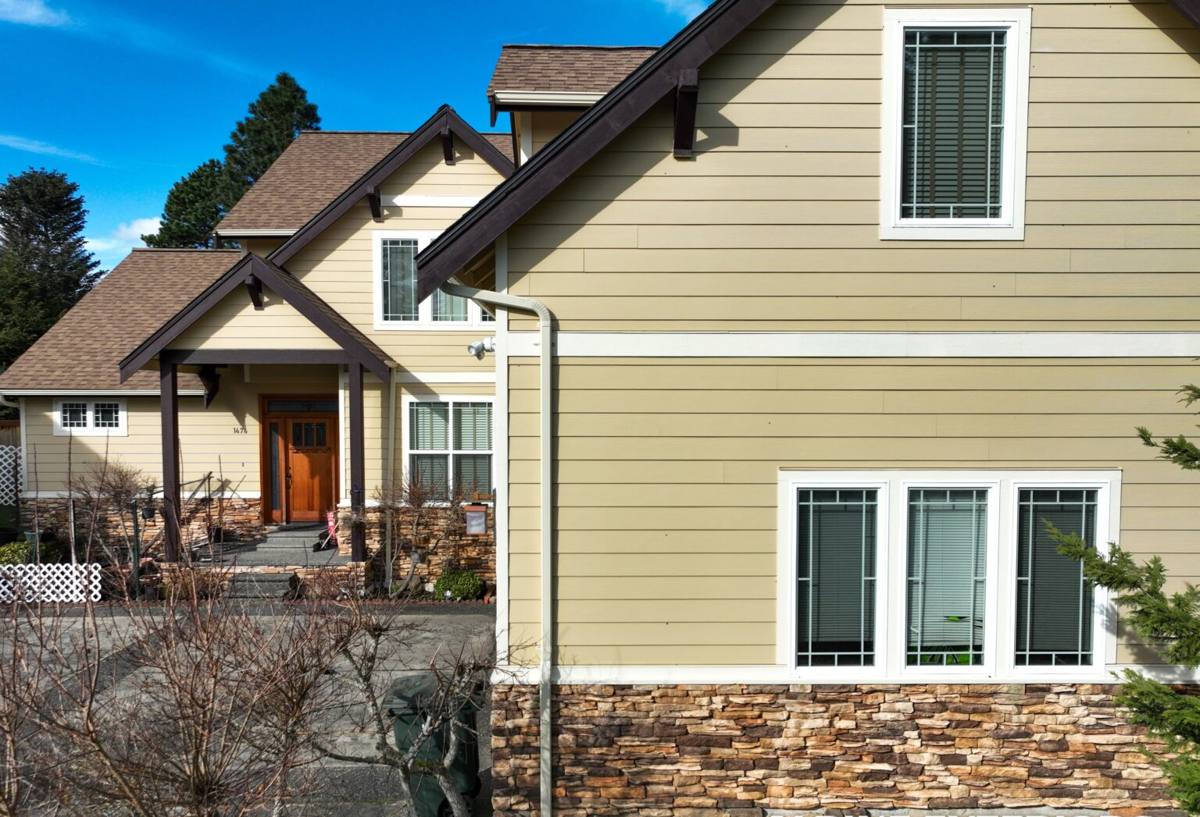
What Salt Air, Driving Rain, and Moss Season Do to Siding
Salt-Laden Air
Airborne salt from the Strait of Georgia settles on exterior surfaces and accelerates corrosion of anything metal — fasteners, flashing, trim edges. On siding materials that rely on paint film or factory coatings to stay protected, salt exposure combined with UV and moisture cycling breaks that protection down faster than it would a few miles inland. Fastener corrosion is a particular concern because a failed fastener doesn't just look bad — it lets water behind the siding.
Wind-Driven Rain
Birch Point's exposure means rain doesn't just fall straight down — it gets pushed sideways into wall assemblies, especially on the water-facing elevations. That changes what "watertight" actually requires. Lap siding, seams, butt joints, and every penetration (hose bibs, vents, light fixtures) need to be detailed for rain that's actively being driven into them, not just rain that's running down the face of the wall.
Long Moss Season
The Pacific Northwest's wet, mild winters and shaded north- and west-facing walls give moss and algae months of favorable conditions to establish on exterior surfaces. Moss holds moisture against siding, and on materials that are moisture-sensitive at the core, that sustained dampness is where premature failure starts — swelling, delamination, or rot, depending on the material. Even on materials that resist moisture damage, moss buildup still needs to be planned for in terms of surface texture, color retention, and maintenance access.
Why We Install Only James Hardie Fiber Cement Here
We standardized on James Hardie fiber cement siding for every home we work on, including Birch Point, and we don't install vinyl, LP SmartSide, Cemplank, Allura, primed spruce, or cedar. That's not a marketing position — it's a decision based on how those products actually perform against the specific stresses described above.
Fiber cement doesn't have an engineered-wood core that can swell or delaminate if moisture gets past a seam. It's non-combustible, which matters on properties near dry brush or with wood decking nearby. Hardie's ColorPlus factory finish is baked on and warrantied against fading and peeling in a way field-applied paint on wood siding isn't, which matters when salt air and UV are already working against paint film. And Hardie engineers specific product lines — the HZ5 and HZ10 systems — for different climate zones, which lets us match the product to Whatcom County's marine, wet-winter climate rather than installing something engineered for a drier region.
We're honest that other products have real strengths — vinyl is inexpensive, cedar has a look some homeowners specifically want, LP SmartSide is lighter to handle. But when we weigh those strengths against long-term performance in this exposure, fiber cement is what we're willing to put our name behind and warranty.
What a Correct Siding Installation Actually Involves
Siding failures in exposed coastal locations are rarely about the cladding material itself — they're almost always about what's happening behind it. A correct installation gets the assembly right from the sheathing out.
| Component | Why It Matters at Birch Point |
|---|---|
| Weather-resistive barrier (WRB) | Second line of defense against wind-driven rain that gets past the siding face; must be continuous and properly lapped |
| Flashing at penetrations and openings | Windows, doors, vents, and fixtures are the most common points where driven rain finds a way in |
| Rainscreen / drainage gap | Lets any moisture that does get behind the siding drain and dry instead of sitting against the wall |
| Corrosion-resistant fasteners | Standard fasteners degrade faster in salt air; stainless or hot-dip galvanized fasteners are worth the upfront cost |
| Manufacturer-spec clearances | Gaps at grade, roofline, and decks keep siding from sitting in standing water or trapped moisture |
| Caulking and sealant at joints | Must be rated for the movement and moisture cycling this exposure creates, not general-purpose caulk |
Skip any one of these and the visible siding can look fine for a while even as water is finding its way into the wall assembly behind it. This is why we don't treat siding installation as a surface-level swap — it's a full exterior water-management system, and Birch Point's exposure leaves less room for shortcuts than a sheltered inland lot would.
Our Process for Birch Point Homes
- On-site assessment — we walk the property, note which elevations take the most wind-driven rain and salt exposure, check existing moss and moisture patterns, and inspect the current wall assembly where accessible.
- Product and line selection — we recommend the James Hardie product line and profile that fits the home's exposure, style, and your color preferences from the ColorPlus palette.
- Removal and substrate check — old siding comes off and we inspect sheathing and framing underneath for existing moisture damage before anything new goes on.
- WRB, flashing, and drainage plane installation — the water-management layer goes in correctly, detailed for driven rain, before a single piece of siding is hung.
- Siding installation to manufacturer spec — correct fastener type and spacing, correct clearances, correct joint treatment, installed per James Hardie's published installation requirements so the warranty stays intact.
- Trim, caulking, and final detail work — the details that determine how the job weathers over the next 20-plus years, not just how it looks on day one.
- Final walkthrough — we go over the finished work with you and explain any maintenance specific to your home's exposure.
How Siding Materials Compare in This Climate
| Material | Moisture Behavior | Salt Air / Coastal Fit | Finish Longevity |
|---|---|---|---|
| James Hardie fiber cement | Non-combustible core, engineered for wet climates (HZ5/HZ10) | Strong — no organic core to break down | Factory ColorPlus finish, warrantied |
| Vinyl | Doesn't absorb moisture, but can warp with heat/cold cycling and gaps at seams let water behind it | Fasteners and trim pieces still vulnerable | Color is through-body but can fade and become brittle over time |
| Cedar | Absorbs and releases moisture; needs consistent maintenance to manage that cycle | Salt air accelerates weathering of finish | Requires refinishing on a recurring schedule |
| LP SmartSide (engineered wood) | Wood-strand core is moisture-sensitive if seals or coatings fail | Edge and seam sealing is critical near salt air and driven rain | Field or factory finish, coating maintenance matters |
This isn't a claim that other products are unusable — it's why our own standard, for the exposure homes in this area actually face, is fiber cement.
Cost Factors for a Birch Point Siding Installation
Every home is different, so we won't quote a number without seeing the property, but the main factors that move the cost of a siding installation here are worth understanding upfront:
| Factor | Why It Affects Cost |
|---|---|
| Home size and wall complexity | More corners, dormers, and cutouts mean more labor and material waste |
| Existing wall condition | Rot or moisture damage found during removal needs repair before new siding goes on |
| Siding profile and trim detail | Lap width, shingle-style panels, and custom trim add material and install time |
| Access and site conditions | Waterfront-adjacent lots can have grade, access, or staging challenges that affect labor time |
| Color and finish selection | Standard ColorPlus colors versus custom options can shift material cost |
What to Ask Before Hiring a Siding Contractor for a Home Like This
- Do you install a rainscreen or drainage gap behind the siding, or fasten directly to the WRB?
- What fastener type do you use, and is it rated for coastal/salt-air exposure?
- Are you a certified James Hardie installer, and do you follow their published installation requirements?
- How do you detail flashing around windows, doors, and penetrations for wind-driven rain specifically?
- What does your warranty cover, and what does the manufacturer's warranty cover separately?
- Have you worked on homes in this immediate area, and do you understand the exposure differences from inland properties?
Why Local Experience in Birch Point Matters
A siding crew that's worked this part of Whatcom County knows which elevations on a Birch Point home typically take the worst of the wind-driven rain, how aggressively moss establishes on the shaded sides, and how salt air shows up first in fastener corrosion and finish wear. That knowledge changes real decisions on the job — where extra flashing attention goes, which fastener spec is worth the upgrade, how clearances get handled at grade and decks. A contractor without that local exposure is making those calls from general guidelines instead of firsthand experience with how homes in this specific setting actually age.
We also know that Birch Point homeowners aren't looking for the cheapest possible re-side — they're looking for one that holds up to what this location actually throws at a house, without needing major intervention again in five or ten years.
If you're weighing a siding project for a Birch Point home, we're happy to take a look and walk you through what your specific property needs — no pressure, no hard sell. Use the form below to request a free estimate.