 Blaine Siding
 Siding in Custer Has to Work Harder Than Siding Inland
Custer sits close enough to the water and open farmland that homes here take a different kind of weather beating than a house tucked into a sheltered subdivision further south. Salt-laden air drifts in off the Strait and Boundary Bay, wind-driven rain comes in sideways during fall and winter storms, and the long stretch of grey, damp months every year gives moss, algae, and mildew plenty of time to get established on anything that stays wet. Siding that isn't specifically suited to this combination doesn't fail overnight — it fails slowly, in ways that are easy to miss until the damage is already behind the wall.
That's the backdrop for every siding installation we do in this area. We're not guessing at what Custer homes need; we've seen what holds up here and what doesn't, and it shapes both the material we install and how we install it.
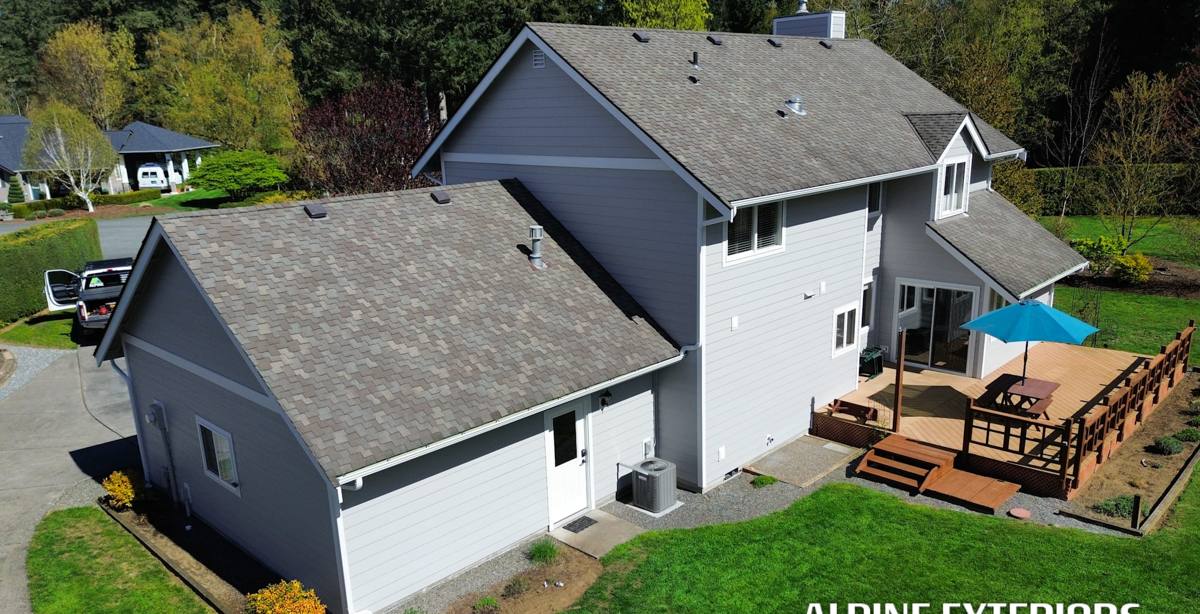
What Local Homes Actually Need From Their Siding
Resistance to Moisture Intrusion, Not Just Moisture Contact
Almost every siding product can shed rain when it's brand new and properly sealed. The real test is what happens over years of freeze-thaw cycles, UV exposure, and repeated wetting and drying. Whatcom County's rain isn't extreme in volume compared to some regions, but it's frequent and often wind-driven, which pushes water into seams, laps, and fastener points that a drier climate would rarely stress.
Tolerance for Salt Air
Homes closer to the water deal with airborne salt that accelerates corrosion on fasteners and metal trim, and can degrade some paint and coating systems faster than the manufacturer's rated lifespan would suggest inland. This doesn't mean every material fails — it means the coating, fastener choice, and finish quality matter more here than they would in a landlocked town.
Moss and Algae Resistance That Doesn't Depend on Constant Cleaning
Custer's tree cover and damp winters create ideal conditions for moss and algae growth on north-facing walls and anywhere siding stays shaded and damp. Some materials are more porous or more prone to holding moisture at the surface, which gives organic growth a foothold. A siding system with a factory finish and less surface porosity resists this longer without homeowners needing to pressure-wash every year.
Why We Install Only James Hardie Fiber Cement
We made a deliberate choice years ago to install James Hardie fiber cement siding exclusively, and we don't install vinyl, LP SmartSide, cedar, primed spruce, Cemplank, or Allura. That's not a marketing position — it's a standard we hold because of what we've seen play out on homes in exactly this kind of climate.
Fiber cement is non-combustible, dimensionally stable, and doesn't absorb and release moisture the way wood-based or engineered-wood products do. James Hardie's ColorPlus factory finish is baked on under controlled conditions, which gives it more consistent coverage and better long-term color retention than field-applied paint — a real advantage against UV and salt exposure. Hardie also engineers specific product lines (their HZ5 designation, for example) for wetter, more humid climates like the Pacific Northwest, which affects the resin and coating formulation, not just the marketing on the box.
None of this means other products are without merit — vinyl is inexpensive and low-maintenance in mild climates, cedar has real aesthetic appeal, and engineered wood has improved over the years. But when we weigh moisture behavior, installation sensitivity, long-term maintenance burden, and warranty structure against what Custer's climate demands, fiber cement is what we're willing to put our name behind and warranty.
Siding Material Comparison for This Climate
| Material | Moisture Behavior | Salt Air / Coastal Exposure | Maintenance |
|---|---|---|---|
| James Hardie Fiber Cement | Dimensionally stable, doesn't swell or rot | Factory finish holds up well; non-combustible | Occasional wash; repaint interval measured in decades |
| Vinyl | Doesn't absorb water but can warp/crack in cold or impact | Can fade and become brittle faster near salt air and UV | Low, but color is baked into the panel — no repainting option if faded |
| Cedar / Wood | Absorbs moisture; prone to rot without diligent upkeep | Salt air accelerates weathering and finish breakdown | Frequent refinishing and moisture monitoring required |
| LP SmartSide / Engineered Wood | Improved over plain wood but still wood-based and moisture-sensitive at cut edges | Edge sealing critical; failures often start at seams | Moderate; edge and seam inspection needed regularly |
What a Correct Installation Actually Involves
Material choice only accounts for part of how siding performs. Installation quality is where most premature failures in this region actually start, and it's rarely the siding itself that gets blamed first — it's usually a flashing detail, a fastening error, or a gap that let water in behind the cladding.
Weather-Resistive Barrier and Flashing First
Before any siding panel goes up, the wall needs a properly lapped weather-resistive barrier and correctly integrated flashing at every window, door, and penetration. In a climate with driving rain, this layer is what actually keeps water out of the wall assembly — the siding is the second line of defense, not the first.
Proper Clearances and Gaps
Fiber cement siding needs specific clearances from grade, roof lines, decks, and other transitions to avoid wicking moisture. It also needs correctly sized gaps at butt joints and corners, per manufacturer spec, to allow for expansion without trapping water.
Fastener Selection and Placement
Given the salt air exposure in this area, fastener corrosion resistance matters more than it would inland. Fasteners need to be the right type, length, and placement — over-driven or under-driven nails are one of the most common causes of siding call-backs, and they're entirely a workmanship issue, not a product issue.
Caulking and Sealant Details
Sealant is used at specific joints, not everywhere — over-caulking can actually trap moisture behind the siding instead of letting it drain and dry. Knowing where sealant belongs and where it doesn't is part of installing to manufacturer spec.
Our Process for a Custer Siding Installation
- On-site assessment — we walk the exterior, check existing siding and sheathing condition, and look at exposure (which walls face prevailing wind and rain, which stay shaded and damp).
- Product and color selection — we walk through James Hardie's lap, shingle, and panel options and ColorPlus finish colors suited to the home and neighborhood.
- Written estimate — a clear scope covering removal, prep, flashing and barrier work, installation, and cleanup, with no vague allowances.
- Prep and barrier work — old siding removal (where applicable), sheathing repair if needed, and correct weather-resistive barrier and flashing installation.
- Installation to manufacturer spec — proper clearances, fastening, and joint treatment throughout.
- Final walkthrough — we review the finished work with the homeowner before calling the job complete.
Why a Local Crew Matters for This Job
Siding installation isn't a one-size-fits-all trade, and a crew that regularly works Blaine and the surrounding Whatcom County communities builds a working knowledge of this specific stretch of coastline: which walls in Custer tend to take the worst of the winter wind, how much moss buildup is normal versus a sign of a bigger moisture problem, and how local building department expectations run. That's knowledge you don't get from a crew that mostly works drier, inland projects and treats every job the same regardless of exposure.
It also matters for accountability. A local crew is going to be back in this area for the next job, the one after that, and any warranty follow-up in between. That's a different incentive structure than a company that installed your siding and then moved on to a market three counties away.
Signs Your Custer Home May Need New Siding
- Persistent moss or algae growth that returns quickly after cleaning
- Soft or spongy spots when you press on the siding, especially near the bottom edges
- Visible warping, buckling, or gaps that have opened up at seams and corners
- Paint that's peeling, bubbling, or failing faster than expected
- Rising energy bills with no other clear explanation, which can point to a compromised weather barrier
- Visible rot or staining around window and door trim
If any of these are showing up on your home, it's worth having someone take a real look rather than waiting for a small issue to become a structural one.
Cost Factors Worth Understanding Up Front
Every home is different, so exact numbers depend on square footage, existing wall condition, and how much prep and trim work is involved. What we can tell you is what generally drives cost on a fiber cement installation: the amount of removal and sheathing repair needed, the complexity of the home's shape (corners, dormers, transitions all add labor), the siding profile and finish chosen, and access conditions on the property. A straightforward, honest estimate walks through each of these rather than handing you a single number with no explanation behind it.
If you're weighing a siding project on your Custer home, we're happy to come take a look and give you a straightforward, no-pressure estimate — no obligation, just an honest read on what your home actually needs. Use the form below to get started.