 Blaine Siding
 Siding Repair on the Semiahmoo Spit
Semiahmoo sits out on a narrow spit between Semiahmoo Bay and Drayton Harbor, right at the edge of Blaine and the U.S.-Canada border. It's one of the more exposed residential settings in Whatcom County, and siding out here takes a different kind of beating than siding a few miles inland. Salt-laden air works metal and finishes from more than one direction, wind-driven rain gets pushed sideways into wall assemblies with real force, and a mild, humid climate keeps moss and mildew active for most of the year rather than just a rainy stretch of winter.
That combination means siding repair on Semiahmoo isn't just cosmetic patchwork. A cracked board, a stained wall, or a soft spot near grade is often a visible symptom of something happening behind the cladding — and fixing the visible part without addressing the cause tends to bring the same problem back within a season or two. This page covers what actually damages siding out here, how we decide between repairing and replacing, what a correct repair job involves, and why it matters that we already work this specific stretch of coastline.
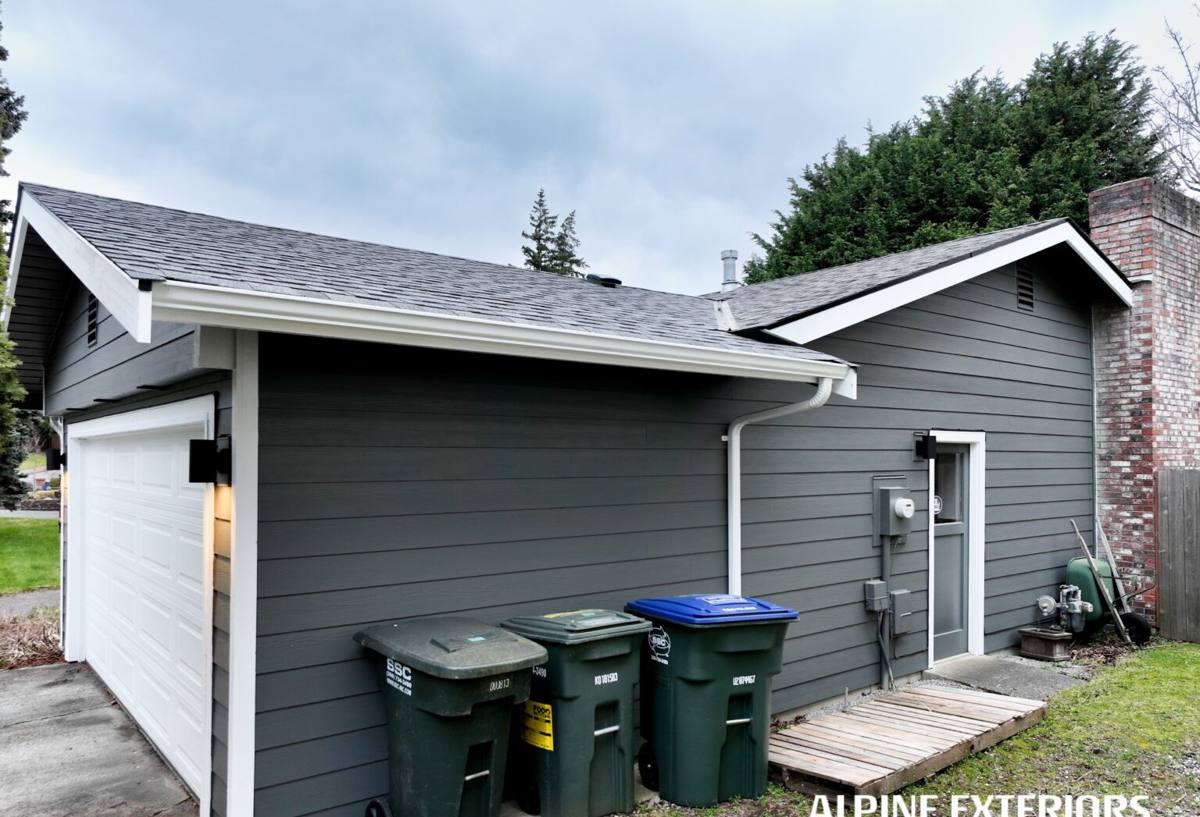
What Salt Air, Driving Rain, and Moss Actually Do to Siding
Salt Air and Finish Breakdown
Because Semiahmoo has water on more than one side, salt-laden air doesn't come from a single prevailing direction the way it might on a more sheltered lot. That salt accelerates corrosion in fasteners, trim, and flashing, and it breaks down lower-quality paints and coatings faster than a drier site would. Siding that looks fine from the street can already have fasteners or trim pieces corroding underneath, which shows up later as staining, loose boards, or a finish that's chalking well ahead of schedule.
Wind-Driven Rain Behind the Cladding
With almost no windbreak, rain on the spit rarely falls straight down. It gets driven sideways into siding joints, butt seams, and the transitions around windows, doors, and trim. Siding systems and installation details that hold up fine on a calmer inland lot can fail here specifically because water is finding a way in horizontally, through laps and joints that were never built to handle that kind of pressure. Once water gets behind the siding, the damage is often further along than what's visible from outside.
A Moss and Mildew Season That Doesn't Take a Break
Mild temperatures and near-constant humidity mean moss and mildew stay active across most of the year in this part of Whatcom County, and Semiahmoo's waterfront exposure doesn't shorten that window. Shaded, north-facing walls and anywhere landscaping sits close to the house tend to show it first and worst. On porous or moisture-holding siding materials, that staining is often more than cosmetic — it's a sign the surface is holding water longer than it should.
The Siding Repair Calls We Get Most Often Out Here
Some issues show up more often on exposed Semiahmoo properties than they do on a typical inland Blaine home. The most common ones we're called out for:
- Cracked, split, or impact-damaged boards, often near corners or lower courses where debris and moisture both collect
- Soft or delaminating siding near grade, deck ledgers, or downspout discharge points where water sits against the wall longer than elsewhere
- Failed caulking or sealant at trim, window, and door transitions, letting wind-driven rain track behind the siding
- Persistent moss or dark staining on shaded walls that keeps returning shortly after cleaning
- Warped, cupped, or bowed boards, usually a sign the material has been absorbing and releasing moisture repeatedly over time
- Rust streaking below fasteners or trim, pointing to corroding hardware underneath the visible surface
Any one of these can look minor on its own. The pattern that matters is whether it's isolated or whether it's showing up in several places on the same wall, which usually points to a moisture path rather than a single bad board.
Repair or Replace? How We Make That Call
Homeowners often assume any siding problem means a full re-side, or the opposite — that patching will always be the cheaper, equally durable option. Neither assumption holds up consistently, and the honest answer depends on what an inspection actually finds.
| What We Find | Repair Is Usually Reasonable | Replacement Is Usually the Better Call |
|---|---|---|
| Isolated cracked or impact-damaged boards | Yes, if the rest of the wall is sound | Only if damage recurs in the same area repeatedly |
| Failed caulk or trim sealant | Yes — resealing and minor trim work is standard repair scope | Rarely on its own |
| Soft or rotted sections at grade or a ledger | Yes, if the damage is contained to that section | Yes, if moisture has spread through several courses |
| Widespread warping, cupping, or moisture staining | Rarely — usually a sign of a systemic issue | Yes, especially on older or non-Hardie products |
| Original siding was never installed to spec | Only as a short-term fix | Yes — a repair just delays the same failure |
We'll give a straight answer on which category a given wall falls into, including when a targeted repair is genuinely the more sensible option, rather than defaulting to whichever job is larger.
What a Correct Siding Repair Actually Involves
Matching Material Honestly
We install James Hardie fiber cement exclusively, and that stance carries into repair work too. If a home already has Hardie siding, we match plank profile, exposure, and ColorPlus finish so a repair blends in rather than reading as a patch. If a home has vinyl, LP SmartSide, Cemplank, Allura, primed spruce, or cedar and needs isolated repair, we'll fix what's asked for honestly — but we won't extend a repair into new non-Hardie material, and we'll tell you plainly if the underlying product is the reason the damage keeps coming back. In that case, a Hardie replacement of the affected section or the full elevation is usually the more durable long-term answer, and we'll explain why rather than just quoting whichever job is in front of us.
Fixing the Moisture Path, Not Just the Board
A soft or stained board is a symptom. Poor drainage behind the cladding, a missing or failed weather-resistive barrier, or caulk that's been letting water track behind a joint is usually the cause. Replacing the visible damage without correcting what let water in tends to bring the same failure back in the same spot, often faster the second time because the underlying path was never closed off.
Fastener and Flashing Correction
Where we find corroding fasteners or degraded flashing, we replace them to current spec rather than doing a like-for-like swap with the same grade of hardware that failed the first time. On a property exposed to salt air from more than one direction, that upgrade is often what determines whether a repair holds for years or needs redoing on a similar timeline.
Structural Sections Get Full Attention
Repairs at grade transitions, deck ledgers, and window or door flashing integration are done to the same standard as new installation — correct fastener spacing, proper clearance, and drainage detailing behind the panel — not treated as a lesser scope because it's a repair rather than a full re-side.
Our Process
- On-site inspection. We look at the damaged area and the surrounding wall, checking for moisture behind the siding, not just what's visible on the surface.
- Honest diagnosis. We explain what we found — isolated damage, a moisture path, or a sign the underlying material or original installation is the real issue.
- Written scope and options. A clear repair scope, and where relevant, an honest comparison against replacing the affected section with Hardie, before any work starts.
- Repair work. Matching material where possible, correcting fasteners and flashing to current spec, and closing off the moisture path that caused the damage.
- Final walk-through. We review the completed repair with you and flag anything else on the wall worth keeping an eye on.
Why It Matters That We Already Work Semiahmoo
A crew that mostly repairs siding a few miles inland can still do competent work here, but Semiahmoo's exposure brings up variables that come up more often on this stretch of coastline than elsewhere in Blaine — salt exposure from more than one direction, wind-driven rain that tests joints and flashing harder than a sheltered lot would, and a moss season long enough that staining patterns alone can point to where water is getting behind the wall. Working this area regularly means we're not guessing at those patterns. We know which fastener grade actually holds up out here, where wind-driven rain tends to find its way in on a spit property, and how to tell a cosmetic issue from one that's further along underneath — because we've diagnosed it on siding like yours before.
A Simple Checklist Before Hiring for Siding Repair Here
- Ask whether they'll inspect for moisture behind the siding, not just patch what's visible on the surface
- Confirm current Washington contractor licensing and active liability insurance
- Ask what fastener and flashing grade they use for repairs on exposed, salt-air properties
- Ask them to be straight about whether a repair will actually hold, or whether replacement is the more honest answer
- Get a clear, written scope of work before signing anything
If you've got a section of siding that's cracked, staining, or just not looking right, we're glad to take a straight look at it and tell you honestly what it needs — repair or otherwise. Reach out below for a free, no-pressure estimate.