 Blaine Siding
 Point Roberts: A Different Kind of Exposure
Point Roberts sits on its own peninsula, with water on three sides and no direct road connection to the rest of Whatcom County — you drive through Canada to get there. That geography matters for more than logistics. It means most homes in Point Roberts take on wind and moisture from multiple directions at once, with very little in the way of inland buffer. Salt-laden air off the water, driving rain that comes in sideways during winter storms, and long stretches of damp, shaded conditions that feed moss and algae growth are simply part of owning a home there. Siding on these homes works harder than siding a few miles inland, and it shows up in how fast paint fails, how quickly trim rots, and how soon moss takes hold on north- and west-facing walls.
When we talk about siding replacement for Point Roberts specifically, we're not describing a generic Whatcom County job with a different zip code. The climate load is real, the access logistics are unusual, and the product and installation choices that hold up here are not the same ones that get away with cutting corners in a more sheltered location.
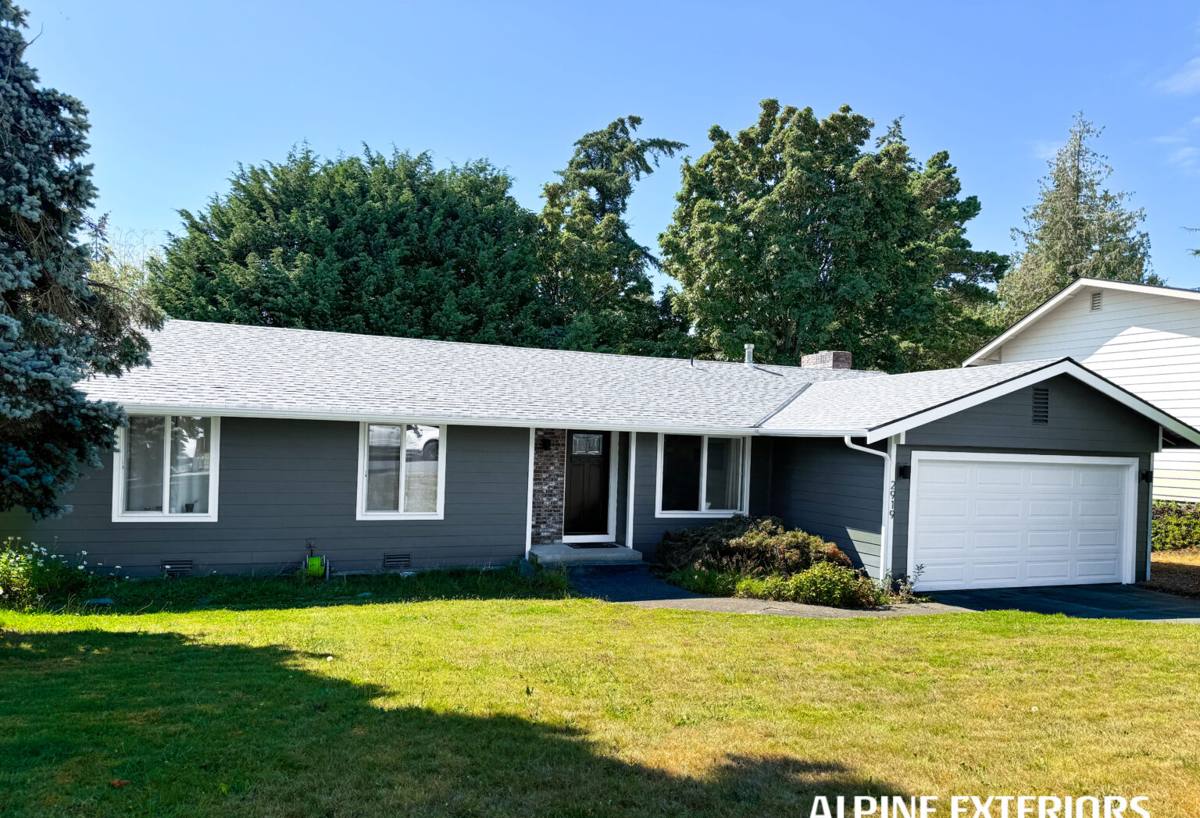
What This Climate Does to Siding Over Time
Salt Air and Corrosion
Airborne salt doesn't just sit on the surface of a wall — it works into fasteners, trim seams, and any exposed metal flashing. Over years, that accelerates corrosion in staples, nails, and hardware that weren't rated for coastal exposure, and it breaks down paint films faster than manufacturers' standard weathering estimates assume. Homes closer to the water see this first, but the effect reaches well back from the shoreline given how exposed the peninsula is to wind off Boundary Bay and the Strait of Georgia.
Driving Rain
Rain that falls straight down is manageable for almost any siding system. Rain that's driven sideways by sustained wind is a different problem — it gets pushed up under laps, behind trim, and into any gap in the water-resistive barrier that wasn't detailed correctly. Point Roberts gets more of this wind-driven rain than sheltered inland neighborhoods, which means flashing details and lap coverage that would be "good enough" elsewhere aren't good enough here.
Moss and Algae
Combine persistent moisture with shaded exposures — common on tree-lined lots and north-facing walls — and you get a long moss season. Moss holds water against the siding surface, and on products that aren't dimensionally stable or properly sealed at cut edges, that trapped moisture is what eventually causes swelling, delamination, or rot underneath.
Why This Isn't a Generic Siding Job
Point Roberts is a U.S. exclave — reaching it means crossing the Canadian border in both directions. That's not a reason to avoid working there, but it is a reason the job needs to be planned differently than a typical Blaine or Bellingham project. A crew that hasn't worked in Point Roberts before will often underestimate two things: how much material and equipment needs to be staged before the crew crosses, and how border wait times can affect a tight schedule if there's a mid-project supply run that wasn't planned for.
A contractor who already works Point Roberts regularly has this figured out — materials are ordered and confirmed in full before the crew crosses, tear-off debris hauling is scheduled around the same trip structure, and the whole job is sequenced so nobody is stuck waiting on a forgotten flashing coil or box of fasteners. This isn't a minor convenience. On a coastal exposure job, an exposed wall left uncovered overnight because a crew ran short on housewrap or trim is exactly the kind of gap that lets driving rain find its way into the wall assembly.
What a Correct Siding Replacement Involves
Tear-Off and Sheathing Inspection
Every full siding replacement starts with removing the old cladding down to the sheathing. This is the point where hidden problems get found — soft sheathing, rot around window and door openings, or old flashing that was never installed correctly. On a coastal property, we pay particular attention to areas that have been damp for a long time under moss or heavy shade, since that's where sheathing damage tends to concentrate.
Weather-Resistive Barrier and Flashing
A new weather-resistive barrier goes on before any siding, lapped correctly from the bottom up so water sheds outward at every seam. Flashing at windows, doors, and any wall penetration gets installed to direct water out and down, not behind the barrier. This is the single most important step for a driving-rain climate, and it's also the step that's hardest to verify later — get it wrong and the problem doesn't show up until years later, as hidden rot rather than a visible leak.
Fastening and Clearances
Correct fastener type, spacing, and penetration depth matter everywhere, but they matter more where salt air accelerates corrosion. We also maintain proper ground and roof-line clearances so the bottom edge of the siding isn't sitting in standing moisture or splash-back, which is one of the most common causes of premature failure at the base of a wall.
The Siding Product Itself
All of the correct prep work in the world doesn't compensate for a siding product that isn't built for this exposure. This is where product choice becomes the most important decision in the whole project.
Why We Install Only James Hardie Fiber Cement
We install James Hardie fiber cement siding exclusively. We don't install vinyl, LP SmartSide, Cemplank, Allura, or unprimed cedar or spruce siding, and on a property like Point Roberts, the reasons are practical, not a matter of brand preference.
Vinyl siding expands and contracts significantly with temperature swings and can become brittle in sustained cold wind — it also isn't engineered to resist moisture intrusion the way fiber cement is, and its seams and J-channels give wind-driven rain more opportunities to find a way in. Wood-based products, including primed spruce, cedar, and engineered wood siding like LP SmartSide, depend heavily on an intact factory or field-applied coating to keep moisture out; once that coating is compromised by UV, salt exposure, or a missed maintenance cycle, moisture gets into the substrate and the clock starts on rot. Other fiber cement brands may perform reasonably, but we've standardized on James Hardie because of its specific HZ (HardieZone) engineering for wet, moderate-humidity climates like ours, its factory-applied ColorPlus finish, and the strength of its transferable warranty when the product is installed to Hardie's specifications.
James Hardie fiber cement is non-combustible, doesn't swell or rot from moisture the way wood-based products can, and holds its factory finish far longer than field-applied paint on wood siding. In a salt-air, high-rainfall location like Point Roberts, that combination is what actually matters over a 20-30 year ownership horizon, not just how the siding looks on installation day.
| Factor | James Hardie Fiber Cement | Vinyl / Engineered Wood |
|---|---|---|
| Moisture response | Dimensionally stable, engineered for wet climates (HZ5) | Prone to swelling, warping, or seam gaps over time |
| Salt air resistance | Non-combustible cement composite, factory-sealed finish | Coating and seams more vulnerable to coastal weathering |
| Finish longevity | Factory ColorPlus finish, typically decades before repaint | Field paint or factory color that fades/chalks sooner |
| Fire resistance | Non-combustible material | Combustible (wood) or heat-sensitive (vinyl) |
| Warranty structure | Strong transferable manufacturer warranty when installed to spec | Varies widely; often shorter or prorated |
Our Process for a Point Roberts Project
- On-site assessment. We walk the exterior, check for existing moisture damage, moss buildup, and problem areas around windows, trim, and grade level.
- Scope and product selection. We recommend the appropriate James Hardie product line and profile for the home's exposure, and walk through color and trim options.
- Material staging. Everything needed for the job — siding, trim, housewrap, flashing, fasteners — is ordered and confirmed complete before the crew crosses the border, so the crew isn't waiting on a mid-project supply run.
- Tear-off and sheathing repair. Old siding comes off, sheathing is inspected, and any damaged sections are repaired or replaced before anything new goes on.
- Weather barrier, flashing, and installation. New barrier and flashing go in first, followed by James Hardie siding installed to manufacturer fastening and clearance specifications.
- Final walkthrough. We review the finished work with you before considering the job complete.
Cost Factors for Point Roberts Siding Replacement
Every home is different, and we'll always give you a specific number after seeing the property, but the main factors that move the price on a Point Roberts job are worth knowing up front.
| Factor | Why It Matters Here |
|---|---|
| Extent of hidden sheathing damage | Long-term moisture and moss exposure can mean more repair than expected once old siding comes off |
| Home size and wall complexity | More corners, dormers, and trim detail means more labor and material |
| Siding profile and trim selection | Lap width, trim style, and accessories affect material cost |
| Access and logistics | Border-crossing scheduling and material staging are planned into the job, not billed as surprises |
| Existing exterior condition | Homes with long-neglected moisture issues may need more prep work before new siding goes on |
What to Ask Before You Hire
- Have you completed siding jobs in Point Roberts before, and do you understand the border-crossing logistics?
- What specific James Hardie product line and profile are you recommending for this exposure, and why?
- What's your plan for flashing and weather-resistive barrier detailing around windows and doors?
- How do you handle sheathing repair if damage is found once the old siding is off?
- Is the James Hardie warranty transferable, and is your crew a factory-trained installer?
- What's the full material and equipment plan so the crew isn't caught short mid-project?
Getting It Right the First Time
Siding replacement is not a job worth revisiting every few years, and on a coastal, salt-exposed property like a Point Roberts home, the margin for error is smaller than it is inland. Correct prep work, proper flashing and barrier detailing, and a fiber cement product engineered for exactly this kind of moisture and salt exposure are what keep the job done once, not done twice.
If you'd like a straightforward look at what your home's siding needs, we're happy to come take a look. Use the form below to request a free, no-pressure estimate — no obligation, just an honest read on the condition of your siding and what it would take to get it right.