 Blaine Siding
 Storm Damage Roof Repair Built for Cherry Point's Coastline
Cherry Point sits right where Whatcom County meets the Strait of Georgia, and that location shapes everything about how a roof ages here. Homes in this area take a steady beating from onshore wind, driving winter rain, and salt-laden air moving off the water. When a storm rolls through with gusts strong enough to lift shingles or drive rain sideways under flashing, the damage isn't always obvious from the ground. We repair storm-damaged roofs for Cherry Point homeowners with an eye toward what actually causes failures out here — not generic wind-and-hail assumptions pulled from a national playbook.
A storm repair job done right in this part of Whatcom County has to account for salt exposure on metal components, a moss season that runs long and wet, and wind patterns that hit roof edges and ridge lines harder than most inland jobs ever see. Get the assessment wrong, and a "repaired" roof can start leaking again the very next storm.
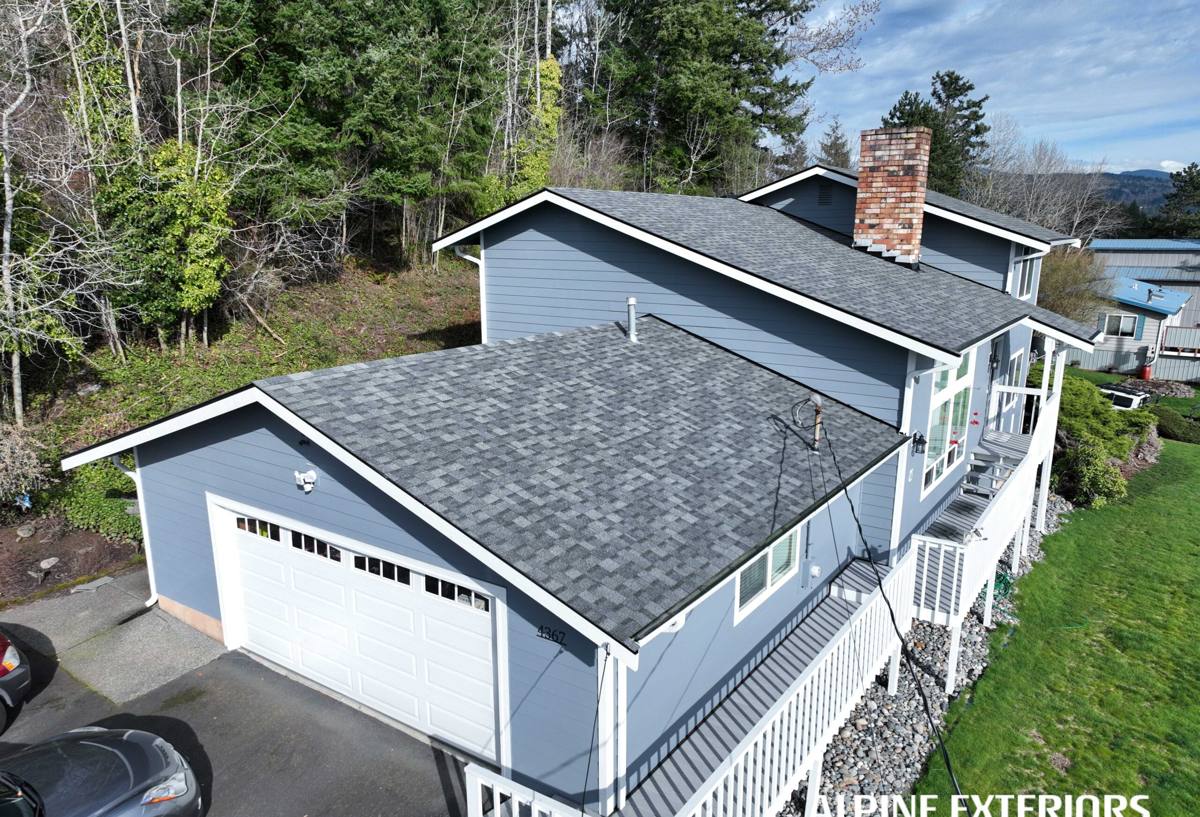
Why Cherry Point Roofs Take a Different Kind of Beating
Salt Air and Metal Fatigue
Roofs close to the water deal with airborne salt settling on flashing, fasteners, and any exposed metal edges. Over time, salt accelerates corrosion on lower-grade fasteners and can pit galvanized flashing years before it would fail on a roof further inland. After a storm, we specifically check whether wind has exposed metal that was previously protected by shingles or sealant — because once that metal is exposed to salt air full-time, its clock starts ticking faster.
Driving Rain and Wind-Driven Water Intrusion
Storms coming off the Strait don't just drop rain straight down — wind pushes it sideways and up under roof edges, at valleys, and around any penetration (vents, chimneys, skylights). A shingle that looks intact from the ground can have a broken seal or lifted tab that lets wind-driven rain track underneath during the next storm, even if it didn't leak the first time. This is the single most common failure mode we find on storm calls in this area.
A Long, Wet Moss Season
Whatcom County's mild, damp climate means moss has a long growing window on north-facing and shaded roof slopes. Moss holds moisture against the roofing material, and after a storm loosens or lifts shingles, that trapped moisture has an easier path underneath. A storm repair that ignores existing moss growth is treating the symptom, not the setup for the next leak.
What a Correct Storm Damage Repair Actually Involves
A thorough storm repair isn't just "replace the shingles that blew off." It's a sequence, and skipping steps is how homeowners end up calling us back after the next windstorm.
- Full-slope inspection, not just the visible damage. We check every slope, not only the side facing the reported wind direction — wind in this area often wraps around structures and lifts shingles on sides you wouldn't expect.
- Underlayment and decking check at the damage site. If wind lifted shingles enough to expose underlayment, we check whether water already reached the decking before covering it back up.
- Flashing integrity at every penetration near the damaged area. Flashing around chimneys, vents, and skylights takes the brunt of wind-driven rain and is frequently the actual entry point, even when the visible damage is a few feet away.
- Matching materials, not just patching. Mismatched shingle age, granule loss, or color can accelerate uneven wear at the repair seam if we don't match the existing roof's material and exposure.
- Moss and debris clearing before sealing anything. Sealing a repair over trapped moisture just relocates the leak a few months down the road.
- Documentation for insurance. Photos and a written scope of the damage and repair, useful if you're filing a claim.
Repair vs. Replacement: How We Make the Call
Not every storm-damaged roof needs full replacement, and not every roof can be safely patched. The decision comes down to the roof's age, how widespread the damage is, and what condition the underlying materials are in once we're actually up there looking.
| Factor | Favors Repair | Favors Replacement |
|---|---|---|
| Roof age | Under 10-12 years, shingles still flexible | Nearing or past manufacturer service life |
| Extent of damage | Isolated to one section or a few penetrations | Spread across multiple slopes |
| Decking condition | Dry, solid decking under damaged area | Soft spots or rot found once shingles are pulled |
| Moss/moisture history | Minimal prior moss, good ventilation | Heavy moss history, poor attic ventilation |
| Material availability | Matching shingles still obtainable | Discontinued product, visible mismatch unavoidable |
We'll walk you through which column your roof falls into and why, with plain language about the tradeoffs — not a sales pitch toward the bigger job.
Our Process for Cherry Point Storm Calls
1. Prompt Assessment
After a storm, we prioritize getting eyes on the roof quickly, especially if there's any sign of active leaking. Waiting even a few days in a wet climate like this one can turn a contained repair into a decking replacement.
2. Temporary Protection if Needed
If the roof has an active opening and full repair can't happen immediately (weather, materials, scheduling), we make sure it's protected against further water intrusion in the meantime.
3. Written Scope Before Work Starts
You get a clear explanation of what we found, what we recommend, and why — before any work begins. No vague line items.
4. The Repair
Matched materials, proper flashing technique, and attention to the moss and drainage issues that are specific to this stretch of coastline — not a generic patch job.
5. Follow-Up
We stand behind the work and want to know if anything looks off after the next few storms come through.
Insurance Claims: What Homeowners Should Know
Storm damage is one of the more straightforward insurance claim categories, but the claim is only as good as the documentation behind it. We provide a written scope and photos of the damage before repair, which gives you something solid to hand your adjuster. We're not a public adjuster and we don't handle the claim for you — but we make sure the physical evidence supporting your claim is accurate and complete.
- Photograph visible damage yourself as soon as it's safe to do so, before any cleanup
- Avoid full cleanup or disposal of debris until your adjuster has had a chance to see it, if possible
- Get a written repair scope from your contractor, not just a verbal estimate
- Ask whether the recommended repair is patch-level or requires broader work, and get that in writing too
- Keep records of any temporary protective measures taken and their cost
Why Local Experience in This Area Matters
A crew that regularly works roofs in and around Blaine and Whatcom County knows what an actual storm-damage pattern looks like out here versus what a roof three counties inland deals with. That means recognizing wind-driven rain intrusion at flashing points before it becomes a stained ceiling, knowing which moss growth patterns signal a ventilation problem rather than just cosmetic buildup, and understanding how salt exposure changes the expected lifespan of exposed metal components. It also means we're not guessing at appropriate materials for this climate — we're using what holds up here, because we see the roofs that didn't hold up.
Familiarity with the area also means faster response. When a storm damages several roofs in the same weather event, having a crew that already knows the neighborhood and can prioritize based on actual severity — not just who called first — gets urgent leaks addressed sooner.
Signs You Need a Storm Damage Inspection
- Missing, cracked, or curled shingles visible from the ground
- Granules collecting in gutters or downspouts after a storm
- Water stains on interior ceilings or upper walls following heavy rain
- Visible gaps or lifted edges at flashing around chimneys, vents, or skylights
- Sagging or soft-feeling roof sections
- Debris impact marks, especially from tree limbs during high wind
- New or spreading moss growth in areas that previously looked dry
If you're seeing any of these after a recent storm, it's worth having someone look before the next weather system moves through.
If a recent storm has left your Cherry Point roof with missing shingles, exposed flashing, or a leak you're not sure about, we're happy to take a look. Fill out the form below for a free, no-pressure estimate — we'll tell you honestly what we find and what it would take to fix it right.