 Blaine Siding
 James Hardie Siding for Sumas Homes
We're a Blaine-based crew, and Sumas falls within the stretch of Whatcom County we regularly work in. It's a different kind of property than the ones sitting right on Blaine's shoreline — set back from open water, closer to the Canadian border, with more farmland and open ground around it. But the underlying weather pattern that drives our siding recommendations doesn't stop at the city line. Marine air, driving rain, and a moss season that runs most of the year all reach Sumas too, and they shape what we install there the same way they shape what we install everywhere else in this corner of the state.
This page is specifically about James Hardie fiber cement siding for Sumas homes — not a general overview of every exterior service we offer, and not a county-wide pitch. It's what a correct Hardie installation looks like on this kind of property, what the local climate actually does to a wall assembly out here, and why we don't hand this job to a crew that's only worked closer to town.
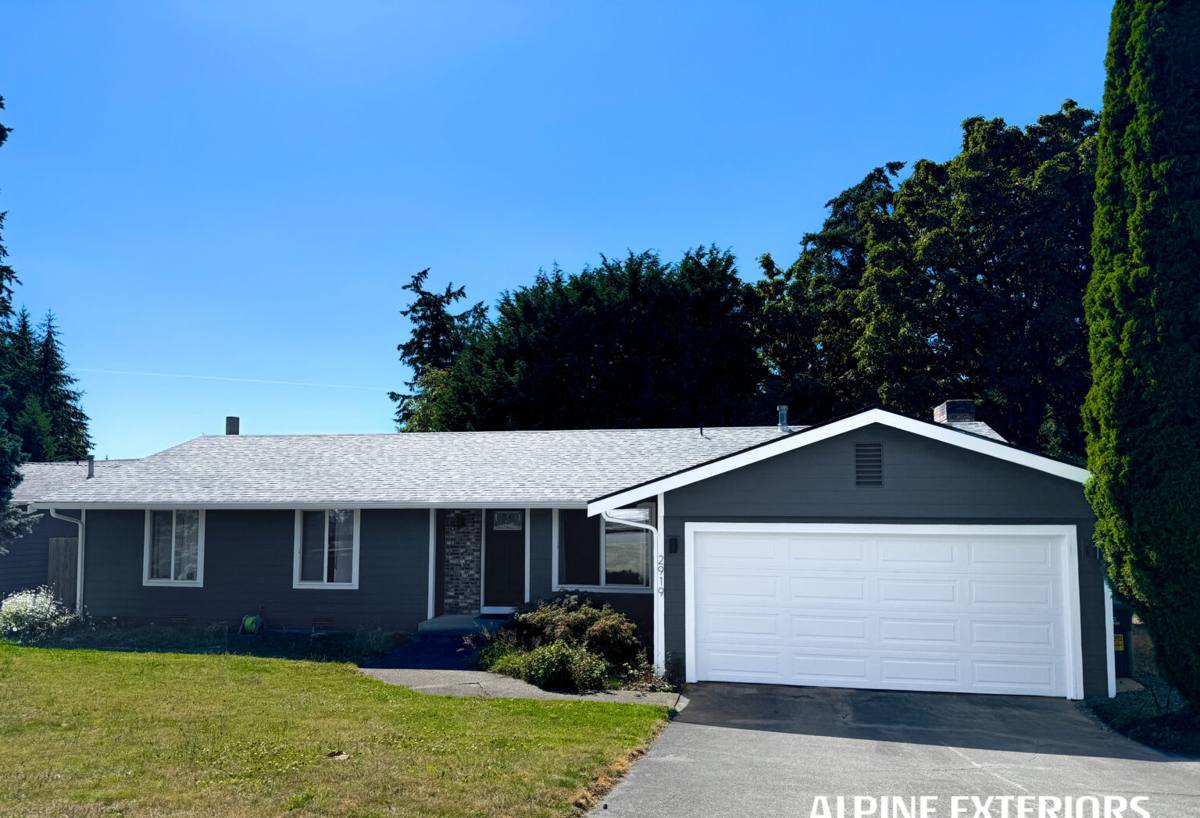
What This Corner of Whatcom County Does to a Home's Siding
Marine Air That Reaches Inland
Sumas sits farther from open water than a shoreline Blaine property does, so it doesn't take the same direct salt spray a waterfront home does. But this part of Washington sits in a corridor where marine air moves inland regularly, especially when winter storm systems push through, and that air still carries a salt-tinged edge with it. Over years, not months, that low-grade exposure adds up on lower-quality finishes and unprotected fasteners the same way it does closer to the water, just more gradually. We don't treat a Sumas property as if it were immune to the same weather pattern that shapes work across the rest of the county.
Wind-Driven, Sideways Rain
Rain in this part of Washington rarely falls straight down for long. It gets pushed sideways by wind, which means it lands on siding, trim, and window flashing at an angle instead of running cleanly off a wall. That's a harder test for lap joints, caulked seams, and any material that depends on an intact surface coating than a simple annual rainfall total would suggest. Homes in Sumas see this pattern just as much as homes closer to Blaine's coastline, and installation details that only account for rain falling straight down tend to fail here first.
A Moss Season That Doesn't Really End
Mild temperatures and steady regional moisture add up to active moss and mildew growth across most of the calendar in Whatcom County, and Sumas is no exception. Shaded walls, north-facing sections, and anywhere tree cover blocks direct sun tend to stay damp longest and show growth first. Moss on a siding surface isn't just cosmetic — it holds moisture directly against the wall behind it, and that trapped dampness is where a lot of long-term siding problems actually start.
Why We Install James Hardie Fiber Cement, and Nothing Else
We used to install a wider range of siding products. We stopped after years of seeing which materials actually held up under this specific combination of marine-influenced air, wind-driven rain, and a long wet season, and which ones quietly became maintenance problems for the homeowner a few years down the road.
- Non-combustible core: Fiber cement doesn't feed a fire the way wood-based siding products can, which matters for both household safety and, often, insurance considerations.
- Factory-applied ColorPlus finish: The color is baked on in a controlled factory setting, in multiple coats, rather than brushed on in the field, which holds up longer against fading and moisture intrusion than site-applied paint.
- Climate-engineered HZ5 formulation: Hardie builds different product formulations for different climate zones, and the HZ5 line is engineered for regions with sustained moisture exposure and freeze-thaw cycling, which fits a Whatcom County winter well.
- Dimensional stability: Fiber cement doesn't swell, cup, or warp the way engineered wood products can after repeated wetting over a long rainy season.
- Strong transferable warranty: Hardie backs its product with a solid warranty structure that generally transfers to a future owner, provided installation follows spec.
We don't install LP SmartSide, vinyl siding, Cemplank, Allura, primed spruce, or cedar. Every one of those has a legitimate place in the market, and plenty of homeowners elsewhere are happy with them. But we made a professional call that we'd rather fully stand behind one system, installed correctly every time, than offer a cheaper option that quietly shifts long-term maintenance risk onto the homeowner. In a climate that doesn't forgive shortcuts, that trade-off matters more than it might in a drier part of the country.
Matching the Right Hardie Product to a Sumas Home
James Hardie isn't a single product — it's a system of siding, trim, and panel options, and the right combination depends on the home's style and exposure.
| Product Line | Best Use | Why It Fits This Area |
|---|---|---|
| HardiePlank lap siding | Most standard single-family homes | Traditional lap profile sheds wind-driven rain effectively when overlapped and flashed correctly |
| HardiePanel vertical siding | Gables, accent walls, board-and-batten looks | Clean vertical lines with fewer horizontal laps for water to work into |
| HardieShingle siding | Craftsman-style homes and accent sections | Textured look without the moisture absorption and repainting cycle of real wood shingle |
| HardieTrim boards | Corners, window and door casing, fascia | Factory-finished trim resists the same moisture and cycling stress as the field siding around it |
Color and profile come down to the homeowner's preference and the home's style, but the underlying approach doesn't change: we spec what fits the property's actual exposure, not whatever is fastest to install.
What Correct Installation Actually Involves
Hardie's reputation depends heavily on installation quality, and we're upfront about that rather than pretending the material does all the work by itself. A rushed or out-of-spec install can undercut even the best siding product.
Clearance and Flashing
Siding needs proper clearance from grade, rooflines, and decks so splash-back and standing moisture don't sit against the board edge, and flashing at every window, door, and penetration needs to actually direct water out and away rather than trap it behind the wall.
Fastening and Panel Handling
Correct fastener type, spacing, and depth keep the board from cracking and preserve the water-resistive barrier underneath. Field cuts need to be sealed to protect the factory finish at every exposed edge, and factory-finished pieces should be used wherever the layout allows it.
Rain Screen and Drainage
A drainage plane or rain screen behind the siding lets any moisture that gets past the surface drain and dry out instead of sitting against the wall assembly. On a property that sees this much sustained wet weather, that detail is what keeps a small amount of incidental moisture from turning into a rot problem years later.
Our Process, Start to Finish
- An on-site walk-through of the existing siding, trim, and any visible moisture or moss issues before we recommend anything
- A written scope covering product line, color, and any substrate repair we can already see
- Tear-off and a check of the sheathing underneath for hidden rot or water damage before new siding goes up
- Installation to Hardie's published spec — clearances, fastening, flashing, and drainage detailing, not shortcuts
- A final walkthrough with the homeowner and warranty registration paperwork
Cost Factors for a Sumas James Hardie Project
| Factor | What It Affects | Why It Matters Here |
|---|---|---|
| Tear-off vs. overlay | Labor scope and access to the sheathing underneath | Tear-off reveals moisture damage that's common under older siding in this climate |
| Substrate condition | Repair cost before new siding goes on | Long-term trapped moisture behind old siding can rot sheathing and framing |
| Home size and trim complexity | Material quantity and labor hours | More corners, gables, and window trim mean more flashing and cutting detail |
| Site access | Staging and equipment setup | Rural and larger lots common around Sumas can mean different staging than an in-town property |
We don't quote off a generic price list. Exact numbers depend on the specific home, its current siding condition, and what we find once tear-off starts, which is why we walk the property first.
Why Hiring a Crew That Already Works Sumas Matters
A contractor who only works close-in Blaine properties doesn't necessarily think about a Sumas home the same way. The exposure is a little different — less direct salt spray, more distance from the water, but the same driving rain and the same long moss season, plus a setting where site access and lot size can look different from an in-town property. A crew that already works this area accounts for that instead of applying an identical approach to every job regardless of where it sits.
- Ask what siding material they install and why, and whether they'll put a written warranty behind it
- Confirm current Washington contractor licensing and active liability insurance
- Ask whether the installer is manufacturer-certified for the specific product they're proposing
- Ask how they detail flashing at windows, doors, and roof-to-wall transitions for wind-driven rain
- Get a clear, written scope of work before signing anything
Get a Free, No-Pressure Estimate
If your Sumas home needs new siding, or you just want an honest read on what's happening behind the siding you have now, we're glad to take a look. Reach out using the form below to schedule a free estimate — no pressure, no upsell script.