 Blaine Siding
 Why Sumas Roofs Wear Differently Than Roofs Inland
A roof in Sumas doesn't fail the way a roof does in a dry climate. Out here, the problem is rarely a single storm — it's the slow, steady grind of months of low-angle rain, humid air moving through Whatcom County, and long stretches where a roof surface never fully dries out before the next system rolls through. Add in salt-laden air drifting inland from the coast, and metal fasteners, flashing, and vent components corrode faster than most manufacturers' spec sheets assume. None of this is dramatic. It's cumulative, and that's exactly why it gets missed until a roof is already failing from underneath.
When we install a new roof in this area, we're not building for a "typical" climate zone in a manual — we're building for a roof that will spend a large share of its life wet, shaded, or growing something green on its surface. That changes decisions about underlayment, ventilation, flashing metal, and even how the roof deck itself should be prepped before anything new goes down.
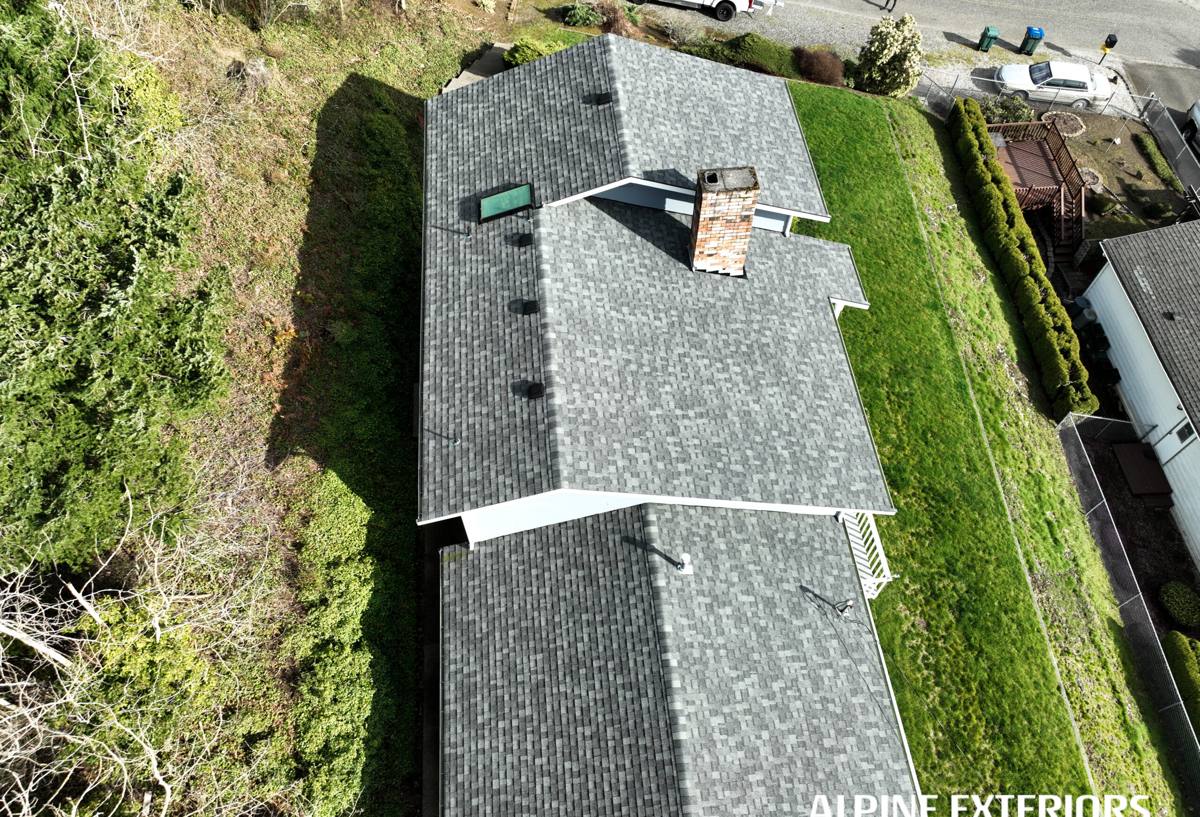
Signs a Sumas Home Needs a New Roof, Not Another Patch
We get calls every year from homeowners who've had the same leak "fixed" two or three times. Repeated patching usually means the underlying roof system — not just one shingle or one flashing detail — has reached the end of its service life. A few honest signs it's time to talk about full replacement instead of another repair:
- Moss or dark streaking that comes back within a season of cleaning, even after treatment
- Granule loss heavy enough that shingles look patchy or bald in sun-exposed sections
- Soft spots, sagging, or visible unevenness across roof planes
- Daylight visible through the attic, or insulation that's damp or matted
- A roof that's already 18-25+ years old, regardless of how it looks from the ground
- Leaks that show up in a new spot each time it rains hard, rather than the same spot every time
That last one matters more than most homeowners realize. A leak that moves around usually means water is getting in somewhere upslope and traveling along the deck or underlayment before it finds a gap — a sign the whole roof system is compromised, not just one section.
What a Correct New Roof Installation Actually Involves
"New roof" gets used loosely. A roof that's built to hold up in this climate involves a specific sequence, and skipping any step is where premature failures come from.
Tear-Off and Deck Inspection
We remove the old roofing down to the deck rather than layering over it. That's the only way to actually see the plywood or plank sheathing underneath — and in a wet climate, hidden rot under old roofing is common, not rare. Any soft or delaminated decking gets replaced before anything else happens.
Ice and Water Barrier at Vulnerable Points
Eaves, valleys, and areas around chimneys and skylights get a self-adhering waterproof membrane, not just standard felt. These are the spots where wind-driven rain and ice damming (on the rare hard freeze) push water backward under the shingle line — a self-sealing barrier stops it before it reaches the deck.
Synthetic Underlayment Across the Field
Over the rest of the roof, synthetic underlayment holds up far better than old-style felt paper when a roof is exposed to weather for days during a multi-stage install, and it resists the wrinkling and tearing that felt develops after repeated wet-dry cycles.
Flashing That Matches the Climate, Not Just the Code Minimum
Step flashing, counter-flashing, and valley metal all get built up in layers rather than relying on caulk or sealant to do the work long-term. In salt-influenced air, we favor flashing materials and fastener coatings chosen for corrosion resistance, since standard galvanized components can start showing rust well before the shingles themselves age out.
Ventilation Balance
Intake at the eaves and exhaust at the ridge have to be balanced, or moisture gets trapped in the attic no matter how good the roofing above it is. In a climate this humid, poor attic ventilation is one of the most common hidden causes of roof deck rot — and it's invisible from the ground.
Choosing the Right Roofing Material for This Climate
There's no single "best" roofing material — there's a best fit for a given roof shape, budget, and how much upkeep a homeowner wants to do. Here's how the common options actually compare for a home in the Sumas area:
| Material | Moss/Moisture Behavior | Typical Lifespan | Maintenance | Relative Cost |
|---|---|---|---|---|
| Architectural asphalt shingle | Good with algae-resistant granules; needs periodic moss removal | 25-30 years | Low-moderate; occasional cleaning | $ |
| Standard 3-tab shingle | More prone to moss retention in shaded areas | 15-20 years | Moderate | $ |
| Standing seam metal | Excellent — moss struggles to hold on smooth metal | 40-50+ years | Low | $$$ |
| Synthetic/composite shake | Good; resists moisture absorption better than wood | 30-40 years | Low | $$-$$$ |
We don't install cedar shake or untreated wood shingle roofing in this climate as a matter of professional standard. Wood roofing needs consistent airflow and dry-out time to perform, and Whatcom County's extended damp seasons work against exactly that — it's a maintenance and moisture-management burden we'd rather steer a homeowner away from than sell and manage complaints about later. If the look of a shake roof matters, composite shake products get you close without that ongoing vulnerability.
Our Installation Process, Start to Finish
- On-site assessment — we walk the roof (or use appropriate access for steep or fragile roofs), check the attic from inside, and document current conditions before quoting anything.
- Written estimate — material options, scope, and a real price range, explained in plain terms, not a single vague number.
- Scheduling around weather windows — in this climate, timing a tear-off matters; we plan for realistic dry stretches and have a plan if weather turns mid-project.
- Tear-off and deck inspection — old roofing removed, deck assessed and repaired as needed.
- Underlayment, ice/water barrier, and flashing installed per the details above.
- Roofing material installed to manufacturer spec, including proper nailing pattern and exposure — this is where corners get cut on rushed jobs, and it's where we don't.
- Ventilation components set and verified for intake/exhaust balance.
- Cleanup and final walkthrough — magnetic sweep for stray fasteners, debris hauled off, and a walk-through so you know what was done and what to watch for going forward.
Why Hiring a Crew That Already Works in the Sumas Area Matters
Roofing code minimums are the same on paper everywhere, but how a roof actually performs depends on decisions that aren't on the permit drawing — which flashing metal to use given the air quality here, how much ventilation is genuinely needed for a house that stays shaded and damp much of the year, and which materials hold moss at bay long enough to matter. A crew that works regularly in Whatcom County has already seen which shortcuts fail first in this specific climate, because we've been the ones called back to fix them.
There's also a practical side: knowing local permitting requirements, typical inspection expectations, and how to sequence a job around this area's weather patterns means fewer surprises and fewer delays once work starts.
Questions Worth Asking Before You Hire a Roofer in Sumas
- Are you licensed and insured in Washington State, and can I see current proof of both?
- Do you tear off down to the deck, or do you offer to install over existing roofing?
- What underlayment and ice/water barrier do you use, and where specifically does it go?
- How do you handle attic ventilation as part of a re-roof, not as an afterthought?
- What's your plan if weather interrupts the job partway through?
- What warranty covers workmanship specifically, separate from the manufacturer's material warranty?
A contractor who answers these clearly and specifically, without deflecting to "we always do it right," is worth trusting more than one with the lowest bid and vague answers.
Protecting Your New Roof After Installation
A properly installed roof still needs basic upkeep in this climate. Gutters clear of debris so water isn't backing up under the eave line. Moss growth addressed early with gentle treatment rather than aggressive pressure washing, which can strip granules and shorten shingle life. And a periodic visual check after major windstorms, since driving rain can work small debris or displaced flashing loose even on a well-built roof. None of this is intensive — it's the difference between a roof that reaches its full expected lifespan and one that quietly loses years to neglect.
If your roof in the Sumas area is showing its age, or you just want an honest read on what condition it's actually in, we're glad to come take a look. The estimate is free, there's no pressure, and you'll get a straight answer about whether you need a new roof now, in a few years, or not at all — just fill out the form below to get started.