 Blaine Siding
 Windows in Everson Have a Harder Job Than People Think
Everson sits inland from Blaine but still shares the same weather pattern that defines this corner of Whatcom County: long stretches of wind-driven rain, salt-tinged air pushing in off the Strait, and a wet season that runs far longer than most homeowners expect when they first move here. Windows are one of the few parts of a house that have to fight all three of those conditions at once, every single day, for decades. A window that was installed correctly for a drier climate — or installed poorly for any climate — tends to show its weaknesses here faster than it would somewhere else.
This page is about one thing: window installation done right for Everson homes, given what this region actually throws at a building envelope. Not a general product pitch, not a national price list — just what matters locally and how we handle it.
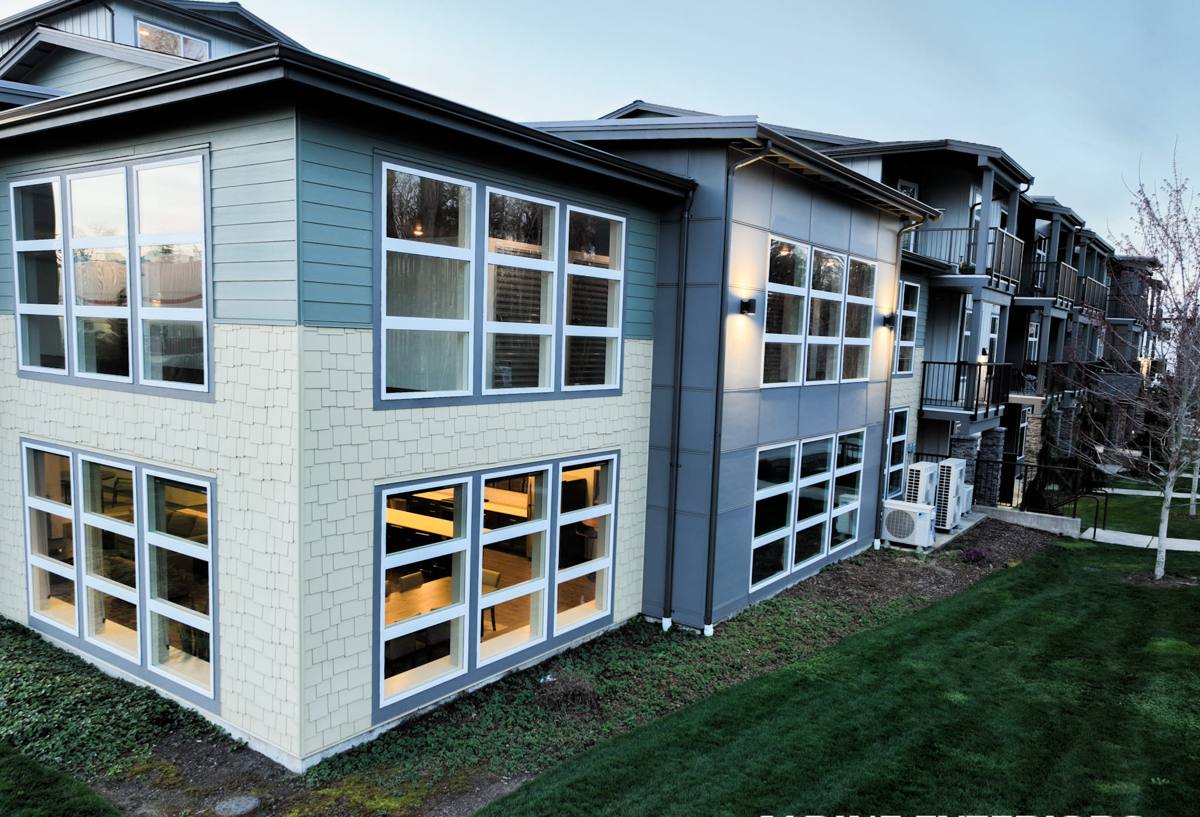
What Driving Rain, Salt Air, and Moss Season Actually Do to Windows
Driving Rain
Rain that comes in sideways doesn't just hit the glass — it hits the trim, the sill, and every seam around the frame. If flashing and sealant weren't installed correctly the first time, water finds its way behind the window and into the framing. That's a slow problem: it can take years to show up as staining, soft trim, or a musty smell, by which point the damage is already inside the wall.
Salt Air
Salt-laden air corrodes metal hardware, pits certain finishes, and accelerates the breakdown of lower-grade seals and gaskets over time. It's not dramatic — it's cumulative. A window rated for inland use without coastal-grade hardware will simply age faster here than the same product would forty miles east.
Moss Season
Whatcom County's long damp stretch is prime growing conditions for moss and algae, and window sills, tracks, and exterior trim are exactly the kind of shaded, moisture-holding surfaces moss likes. Beyond the cosmetic issue, moss and organic buildup trap moisture against wood trim and can hold water against seals that are supposed to stay dry.
None of these are reasons to avoid installing windows — they're reasons to install them correctly, with the right materials and the right technique, the first time.
Signs an Everson Home's Windows Are Losing the Battle
- Condensation building up between panes, not just on the inside surface — a sign the seal has failed
- Visible gaps, soft spots, or discoloration in the trim or sill
- Windows that feel drafty even when fully latched
- Difficulty opening, closing, or locking — frames can swell or warp with moisture cycling
- Moss or dark streaking building up on sills and tracks faster than it used to
- Noticeably higher heating bills without another clear cause
- Visible daylight or a whistling sound around the frame during wind events
Any one of these on its own might just mean a window needs cleaning or a minor adjustment. Several of them together, especially on the weather-facing side of the house, usually mean the window and its installation are past the point where repair makes sense.
What a Correct Window Installation Actually Involves
Installing a window is not just fitting a new unit into an old opening. Done right, it's a sequence, and skipping steps is exactly how water problems start years down the road.
- Opening inspection — checking the existing framing, sill, and sheathing for rot or moisture damage before anything new goes in
- Flashing — installing water-resistive flashing tape and pan flashing so any water that does reach the opening is directed back out, not into the wall
- Air and moisture sealing — sealing the gap between the window frame and the rough opening with appropriate sealant and backer rod, not just spray foam alone
- Leveling and shimming — making sure the unit is plumb, level, and square so it operates smoothly and seals evenly for its full lifespan
- Fastening — securing the window per manufacturer specification, which affects both structural performance and warranty validity
- Exterior trim and sealant finish — weatherproofing the outside so water sheds away from every seam
- Interior finish — trim, insulation of the gap, and a final function check on every operable window
Any one of these steps done wrong can undo the benefit of an otherwise good window. This is why installation quality matters at least as much as the window product itself — arguably more, in a climate like this one.
Choosing a Window Built for This Climate
Frame material and glass package both affect how a window holds up against salt air and sustained moisture. There's no single "best" option for every home — it depends on budget, exposure, and how the house is used — but here's how the common choices compare for Everson conditions.
| Frame Material | Moisture & Salt Air Resistance | Maintenance Needs | General Notes |
|---|---|---|---|
| Vinyl | Good — won't rot or corrode | Low — occasional cleaning | Most common choice for value and low upkeep in wet climates |
| Fiberglass | Very good — stable in temperature and moisture swings | Low | Higher upfront cost, holds paint well if a custom color is wanted |
| Wood-Clad | Depends heavily on cladding and seal quality | Higher — cladding seams need monitoring | Best suited to homes prioritizing a wood interior look, with realistic upkeep expectations |
| Aluminum | Prone to corrosion in salt air over time unless specifically treated | Moderate to high | We typically steer homeowners here toward vinyl or fiberglass instead, given long-term corrosion risk near the coast |
On glass, a double-pane, low-E, argon-filled unit is the standard baseline for this region and performs well for most homes. Triple-pane adds real value mainly on north- or west-facing walls that take the brunt of the weather, or for homeowners specifically prioritizing sound dampening and the lowest possible heating costs — it's a legitimate upgrade, not a necessity for every opening.
Our Installation Process for Everson Homes
- On-site assessment — we look at each window opening individually, not just the house as a whole, since sun exposure and wind direction vary wall to wall
- Honest recommendation — which openings need full replacement versus which could reasonably wait
- Product selection — matched to the specific exposure of each wall, not a one-size answer for the whole house
- Careful removal — checking sheathing and framing behind the old window for hidden moisture damage before it's covered back up
- Installation — following the flashing, sealing, and fastening sequence above, on every unit
- Final walkthrough — operating every window with the homeowner before we consider the job done
What Affects the Cost
We don't publish flat pricing because window jobs vary too much house to house — but these are the factors that actually move the number, so an estimate makes sense before you get one.
| Factor | Why It Matters |
|---|---|
| Number of openings | Per-window cost typically drops on larger whole-house jobs versus one-off replacements |
| Frame material chosen | Vinyl, fiberglass, and wood-clad sit at different price points, as shown above |
| Glass package | Double-pane low-E versus triple-pane changes both material and labor cost |
| Condition of the existing opening | Hidden rot or framing repair adds labor beyond the window itself |
| Window size and style | Large picture windows, bays, or custom shapes cost more than standard operable units |
| Access and second-story work | Height and access affect labor time and equipment needs |
As a broad guide, straightforward single-window replacements are generally a low-to-mid four-figure job per opening, with whole-house projects scaling from there depending on the factors above. The only way to get a number that means anything for your home is a walkthrough.
Why a Crew That Already Works Everson Matters
A contractor who works this specific corner of Whatcom County regularly already knows which wall orientations take the worst of the weather, how moss builds up on sills here compared to drier inland areas, and which flashing and sealing details actually hold up through a full wet season rather than just looking fine on installation day. That local pattern recognition is the difference between a window installed "to code" and one installed to actually last in this climate. It also means warranty follow-up and any adjustment down the road is a local call, not a wait for someone to drive in from out of the area.
After Installation: A Short Maintenance Checklist
A correctly installed window still needs a small amount of upkeep in this climate to reach its full lifespan.
- Rinse sills and tracks periodically to keep moss and algae from taking hold
- Check exterior caulk lines once a year for cracking or gaps
- Clear debris from weep holes on vinyl and fiberglass frames so water drains properly
- Operate every window at least a few times a season so hardware doesn't seize up
- Watch for condensation between panes as an early sign of seal failure
If your windows in Everson are drafty, fogging between the panes, or just original to a home that's due for an upgrade, we're glad to come take a look. The estimate is free, there's no pressure attached to it, and you'll walk away knowing exactly what your windows need and why — use the form below to get started.