 Blaine Siding
 Why Birch Point Roofs Wear Differently
Birch Point sits out on the water, and that changes what a roof has to deal with year-round. Homes here take on a steady mix of marine salt air, wind-driven rain coming off the Strait, and the long, damp moss season that Whatcom County is known for. None of that is dramatic on any single day — it's the accumulation over years that shortens the life of a shingle roof that wasn't installed with this exposure in mind.
A roof that would perform fine a few miles inland can start showing granule loss, fastener corrosion, or moss intrusion years earlier out here. That's not a knock on asphalt shingles as a product — they remain one of the most cost-effective, durable roofing options available when the underlayment, flashing, fasteners, and ventilation are all matched to the environment they're going into. The problem is almost always in the details that get skipped, not the shingle itself.
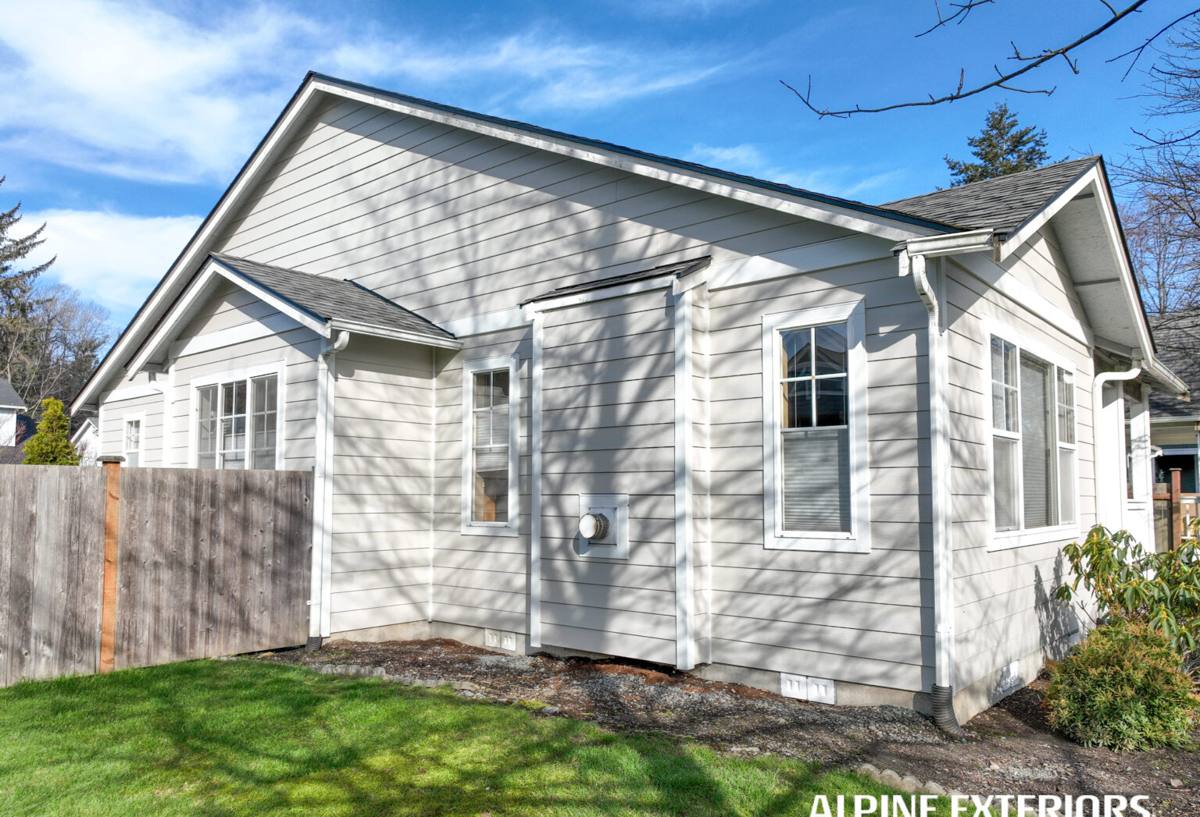
The Three Forces Working Against Your Shingles
Salt Air
Waterfront and near-waterfront homes get a slow, constant dose of airborne salt. Over time it accelerates corrosion on anything metal on the roof — nail heads, drip edge, flashing, vent stacks, and gutter hardware. Standard galvanized fasteners can start to rust and weep stain lines onto shingles well before the shingles themselves are due for replacement. This is one of the most common causes of premature-looking roof failure we see on point and shoreline properties: the shingles are fine, but the metal holding everything together isn't rated for the exposure.
Driving Rain
Being out on a point means less wind break than a roof tucked into a neighborhood with more tree and building cover. Wind-driven rain doesn't just fall straight down — it pushes sideways and works its way up under shingle laps, into valleys, and around any flashing detail that's slightly undersized or poorly lapped. A roof built for calmer, more sheltered conditions can leak here even when every individual shingle is intact, simply because water found a path the assembly wasn't built to stop.
Moss Season
Whatcom County's long stretch of cool, wet months is close to ideal moss and algae growing conditions, especially on north-facing slopes, shaded sections, and anywhere debris collects. Moss doesn't just look bad — its root structure lifts shingle edges, holds moisture against the roof deck, and accelerates the exact kind of wear that shortens a roof's service life. Left unmanaged for a few seasons, it can turn a 25-year shingle into a 15-year problem.
What a Correct Asphalt Shingle Roof Includes Here
None of the climate factors above are reasons to avoid asphalt shingles — they're reasons to install them correctly. A roof built for Birch Point's conditions should include, at minimum:
Underlayment and Ice-and-Water Protection
A synthetic underlayment rated for high-moisture exposure, with self-adhering ice-and-water membrane at eaves, valleys, and around every penetration — the spots where wind-driven rain is most likely to find a way in. This is cheap insurance during install and expensive to add later.
Corrosion-Resistant Metal and Fasteners
Stainless or high-corrosion-resistance fasteners, and flashing and drip edge specified for salt exposure rather than the standard-grade metal that's fine for an inland roof. This is the single biggest upgrade for waterfront and near-waterfront homes, and it's also the one that gets skipped most often because it costs more up front and the difference doesn't show for a few years.
Flashing Done Right, Not Just Present
Step flashing at walls and chimneys, properly lapped valley flashing, and counterflashing that's actually tucked and sealed rather than caulked over. Driving rain punishes shortcuts in flashing work faster than almost anything else on the roof.
Balanced Attic Ventilation
Intake at the eaves and exhaust at the ridge, sized to actually move air through the attic. Good ventilation keeps the underside of the roof deck dry and temperature-stable, which slows moss and algae growth from the inside out and protects the shingle warranty, which typically requires adequate ventilation to stay valid.
Algae-Resistant, Wind-Rated Shingles
Shingles with copper- or zinc-infused granules resist the algae staining and growth that's common in this climate, and a higher wind rating matters more on an exposed point lot than it does a few streets back from the water.
Choosing the Right Shingle for Birch Point
Not every asphalt shingle line is built the same way, and the right choice depends on your roof's exposure, slope, and how much shade or tree cover it gets.
| Shingle Type | Wind Rating | Algae Resistance | Best Fit |
|---|---|---|---|
| Standard 3-tab | Lower | Not included on most lines | Budget projects, less exposed roof faces |
| Architectural / laminate | Moderate to high | Often optional | Most Birch Point homes; better mass and profile |
| Algae-resistant architectural | Moderate to high | Built into the granule | Shaded slopes, tree-covered lots, waterfront exposure |
| Impact/high-wind rated | Highest available | Often included | Fully exposed point lots and open water-facing slopes |
For most Birch Point homes, an architectural shingle with algae-resistant granules is the practical middle ground — it costs more than a basic 3-tab up front but earns that back in reduced moss/algae maintenance and a longer real-world lifespan in this climate. Fully exposed, water-facing roofs are where we'll talk through a higher wind rating specifically.
Our Process, Start to Finish
We keep the process straightforward and walk you through each stage before we start, not after:
- Inspection and assessment. We look at the existing roof deck, current flashing condition, ventilation, and any moss or moisture damage before quoting anything — not just the shingle surface.
- Written scope and estimate. You get a clear breakdown of materials, underlayment and flashing specs, and timeline before any work begins. No vague allowances.
- Tear-off and deck check. Old material comes off down to the deck so we can catch soft spots or rot before they're covered up again — a step that gets skipped on cheaper "overlay" jobs.
- Underlayment, ice-and-water shield, and flashing. This is where most of the leak-prevention work actually happens, done to the standard described above.
- Shingle installation. Proper nailing pattern, starter strip, and ridge/hip detail — the fundamentals that determine wind performance more than the shingle brand does.
- Ventilation check and adjustment. We confirm intake and exhaust are balanced before closing out the job.
- Cleanup and walkthrough. Magnetic sweep for stray fasteners, debris hauled off, and a walkthrough so you know what was done and what to watch for.
Keeping Moss and Algae From Coming Back
A correctly installed roof still needs some seasonal attention in this climate. A few habits go a long way toward protecting the investment:
- Keep gutters and valleys clear of needles and debris — this is where moss gets its first foothold.
- Trim back overhanging branches where possible to cut down on shade and debris on north-facing slopes.
- Have moss physically removed rather than just treated when it's established — chemical treatment alone doesn't undo lifted shingle edges.
- Use zinc or copper strips near the ridge on shaded roofs as an ongoing, low-maintenance deterrent.
- Schedule a walk-through inspection every year or two, especially after a hard winter, rather than waiting for a visible leak.
- Avoid pressure washing shingles — it strips granules and shortens the roof's life faster than the moss it's removing.
Repair or Replace? Reading the Signs
Not every issue means a full tear-off. Isolated flashing leaks, a handful of wind-lifted shingles, or moss on one shaded section are often repairable if the underlying deck and ventilation are still sound. Full replacement makes more sense when you're seeing widespread granule loss, multiple past repairs in different spots, soft or spongy decking, or a roof that's simply reaching the end of its rated life with the fasteners and flashing showing their age faster than the shingles. We'll tell you honestly which category your roof falls into rather than defaulting to the bigger job.
Why a Crew That Already Works Birch Point Matters
A roofer who mainly works inland jobs isn't wrong about roofing in general — they're just applying specs built for a different environment. Corrosion-resistant fastener selection, the right underlayment package, and flashing details sized for wind-driven rain aren't automatic upgrades on every estimate; they're the kind of thing a crew learns to specify by default after seeing what fails on point and shoreline homes in this county. We also know the practical side of working out here: site access on point lots, protecting shoreline landscaping during tear-off, and coordinating with the City of Blaine on any permitting a project requires. That local familiarity shows up in fewer surprises during the job and a roof that's actually built for the conditions it has to survive, not a generic spec sheet.
If you'd like an honest look at what your roof needs — repair, partial replacement, or full tear-off — we're happy to walk the roof with you and put together a free, no-pressure estimate using the form below.