 Blaine Siding
 Bellingham's Climate Is Hard on Siding — Here's What "Correct" Actually Means
Homes in Bellingham sit close to the Salish Sea, which means siding here isn't just fighting rain — it's fighting salt-laden air, near-constant humidity, and long stretches of overcast, wet weather that can run from fall through spring. Add in the shaded, tree-lined lots common throughout Whatcom County, and you get ideal conditions for moss and algae to take hold on anything that stays damp for more than a day or two. Siding that works fine in a drier inland climate often struggles here within a decade.
"Correct" siding for a Bellingham home means a material and installation that can absorb repeated wetting and drying cycles without swelling, delaminating, or losing its finish — and that won't become a magnet for moss and mildew in shaded or north-facing sections of the house. That's a narrower standard than most siding products are built to meet, which is a big part of why we've standardized on one product system rather than offering several.
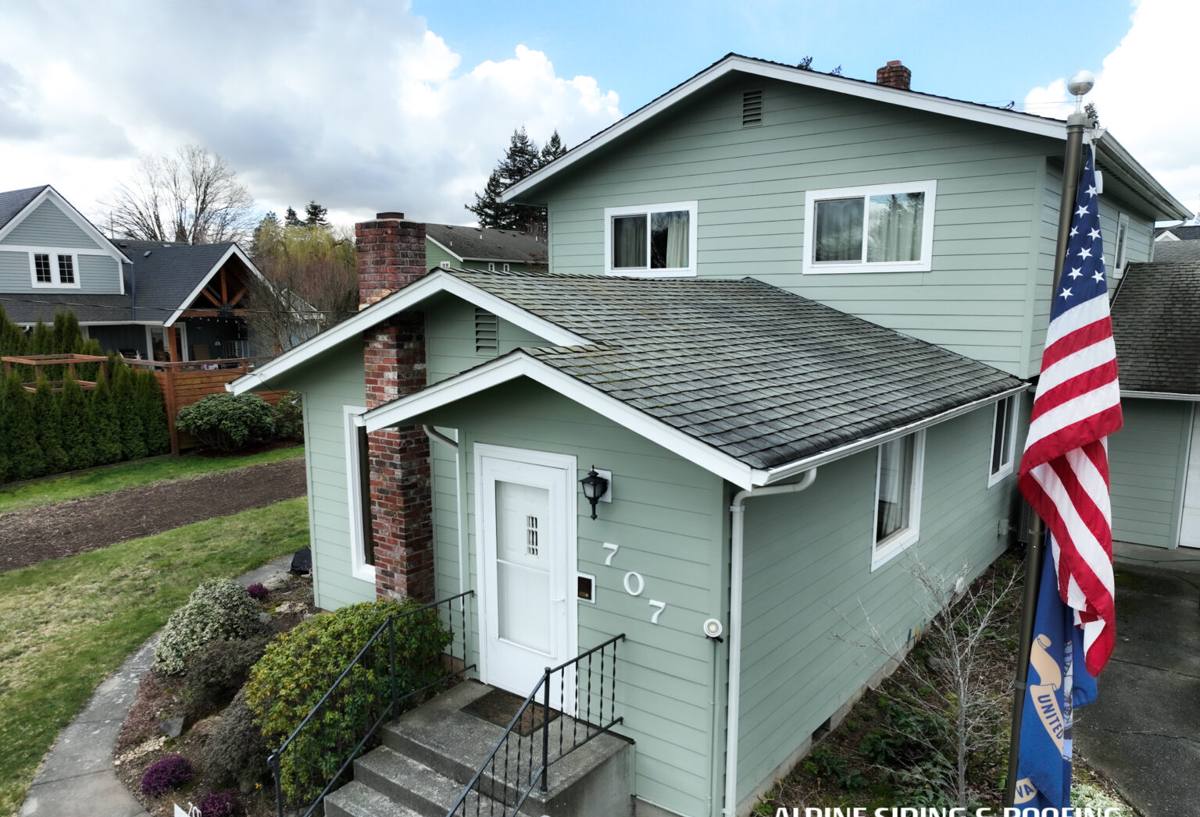
What Salt Air, Driving Rain, and a Long Moss Season Do to the Wrong Material
Every siding material reacts differently to a coastal, wet climate, and the failure patterns are predictable once you've seen enough of them:
- Salt air accelerates corrosion of exposed metal fasteners and trim, and it can dull or chalk lower-grade factory finishes faster than manufacturers' published fade ratings suggest.
- Driving rain, especially wind-driven rain that hits walls at an angle, finds any gap in flashing, caulking, or lap coverage. Materials that swell when wet — or that rely on paint alone to stay sealed — are the first to show water staining and soft spots.
- A long moss season means organic growth gets a head start every year and rarely fully dries out between storms. Porous or textured surfaces give moss spores something to grip; smooth, dense, factory-finished surfaces give them far less to hold onto.
None of this means Bellingham homes can't have great-looking siding for decades — it means the material and the installation both have to be chosen with this specific climate in mind, not a national-average climate.
Why We Install Only James Hardie Fiber Cement in This Area
We made the decision to install exclusively James Hardie fiber cement siding, and we don't offer vinyl, engineered wood products, or other fiber cement brands. That's not a marketing position — it's a response to what we've seen hold up in Whatcom County's climate versus what struggles.
Fiber cement itself — a blend of cement, sand, and cellulose fibers — is dimensionally stable in a way wood-based and vinyl products aren't. It doesn't absorb water the way wood or wood-composite sidings can, so it doesn't swell, warp, or rot from repeated wetting. James Hardie's HardieZone system goes a step further and engineers specific product formulations for regional climates; the HZ5 line is built for cooler, wetter climates like the Pacific Northwest, which matches what Bellingham and Blaine homes actually experience rather than a generic national spec.
The ColorPlus finish that comes baked onto the boards at the factory is the other piece of the equation. It's a multi-coat, oven-cured finish applied before the siding ever reaches a job site, which gives it more consistent coverage and better fade and moisture resistance than a coat of paint applied on-site after installation. In a climate where salt air and UV exposure both work against a finish over time, that factory process matters more than it does in a milder, drier region.
Backed by a Real Warranty
James Hardie backs its fiber cement products with a long, transferable limited warranty, and the ColorPlus finish carries its own separate finish warranty. That structure only holds up, though, if the product is installed to Hardie's published specifications — which is why installation quality matters as much as the product choice itself.
Comparing Siding Materials for Bellingham's Coastal Climate
We get asked fairly often why we don't offer alternatives. Here's an honest comparison of how the main siding categories tend to perform under Whatcom County's specific conditions — driving rain, salt air, and a long moss season — rather than under ideal, dry-climate conditions.
| Material | Moisture Behavior | Moss/Algae Resistance | Salt Air Durability | Maintenance Burden |
|---|---|---|---|---|
| James Hardie fiber cement | Doesn't absorb and swell; dimensionally stable when wet | Dense, factory-finished surface resists growth better than porous materials | Non-combustible cement substrate; finish engineered for regional exposure | Occasional wash-down; caulk and paint touch-ups over decades, not repainting the whole house |
| Vinyl siding | Doesn't absorb water, but can warp or bow with heat and doesn't stop moisture at the wall assembly behind it | Moderate — smooth but can trap moisture behind panels in wet climates | Can fade, chalk, and become brittle over time | Low, but panels are difficult to repair invisibly once faded or cracked |
| Cedar/wood siding | Absorbs moisture; prone to swelling, cupping, and rot without diligent upkeep | Higher risk — natural wood grain gives moss and mildew more to grip | Salt and moisture accelerate weathering of the wood and finish | High — regular refinishing, caulking, and rot inspection needed |
| Engineered wood (e.g. LP SmartSide) | Resin-treated to resist moisture better than raw wood, but strand-based substrate is still wood fiber | Moderate, dependent on finish upkeep | Finish and edge sealing need consistent maintenance to hold up near salt air | Moderate — edge sealing and touch-ups are important to prevent moisture entry |
Every one of these materials has legitimate uses somewhere. Our conclusion, after years of working exteriors in this specific coastal climate, is that fiber cement — installed correctly — gives Bellingham and Blaine homeowners the best combination of moisture resilience, finish durability, and low long-term maintenance for what this area actually throws at a house.
What a Correct Fiber Cement Installation Involves
Fiber cement siding's reputation is built almost entirely on installation quality. The product itself is durable, but a poor installation can undercut every advantage it offers — and in a wet climate, installation mistakes show up faster.
Flashing and the Weather-Resistive Barrier
Every penetration — windows, doors, hose bibs, light fixtures — needs proper flashing integrated with a continuous weather-resistive barrier behind the siding. In a climate with as much driving rain as Bellingham sees, this layer is what actually keeps water out of the wall assembly; the siding itself is the second line of defense, not the only one.
Clearances and Fastening
Hardie's specifications call for specific clearances from grade, roofing, and decking, along with correct fastener type, spacing, and depth. Fasteners driven too deep or too shallow, or placed in the wrong zone of the board, are one of the most common causes of premature failure — and they're invisible from the ground once the job is finished, which is exactly why they matter.
Caulking and Trim Details
Butt joints, corners, and trim transitions need the right sealant, applied correctly, to stay watertight through years of wetting and drying. In a climate where a wall can stay damp for days after a storm, corners and joints that were caulked carelessly are usually the first places moisture finds a way in.
Our Process for Bellingham and Blaine Homes
Because we work this specific area regularly, our process starts with reading the house for its actual exposure, not applying a one-size-fits-all plan:
- On-site assessment — we look at which walls take the most driving rain and salt exposure, which sides stay shaded and damp longest, and where existing moss or moisture staining is already showing.
- Substrate check — before new siding goes up, we check the sheathing and framing underneath for any hidden rot or moisture damage from the old siding, especially around windows and lower wall sections.
- Weather barrier and flashing — a continuous, correctly lapped weather-resistive barrier and properly flashed penetrations go in before a single piece of Hardie board is installed.
- Installation to Hardie spec — correct clearances, fastening, and joint treatment, following James Hardie's published installation guidelines for the HZ5 climate zone.
- ColorPlus-matched finishing — trim, caulk, and touch-up work matched to hold up alongside the factory finish rather than standing out or failing early.
Because we're not juggling multiple siding brands or systems, our crews aren't relearning specs from job to job — they're applying the same James Hardie standards on every Bellingham and Blaine project, which is where a lot of the consistency in the finished result comes from.
Living With Fiber Cement Siding Through a Whatcom County Moss Season
Even the right material benefits from a little seasonal attention in this climate. Fiber cement doesn't need the upkeep that wood siding demands, but it isn't zero-maintenance either:
- Rinse siding down periodically, especially on shaded or north-facing walls, to keep moss and algae from establishing before it takes hold.
- Keep gutters clear and downspouts directed away from the wall — overflow running down siding is one of the fastest ways to create a permanently damp strip that moss loves.
- Trim back shrubs and tree limbs that keep a wall section shaded and damp longer than the rest of the house.
- Check caulking at trim joints and penetrations every year or two, and re-caulk any spots that have cracked or pulled away.
- Address any small chips or dings in the ColorPlus finish promptly with a matched touch-up product so the substrate underneath stays fully protected.
None of this is heavy work — it's the kind of light seasonal maintenance that keeps fiber cement siding looking and performing the way it's supposed to for decades in a climate that doesn't give many materials that kind of longevity without help.
Checklist: What to Ask Before Hiring a Siding Contractor in Bellingham
Because installation quality determines so much of how fiber cement siding performs here, vetting the crew matters as much as choosing the material:
- Do they install to James Hardie's published specifications for the HZ5 climate zone, not a generic national standard?
- Will they inspect and address sheathing or framing issues found once the old siding comes off, before installing new siding over a problem?
- Do they detail exactly how they'll handle flashing around windows, doors, and other penetrations?
- Can they explain their fastening and clearance approach, and why it matters in a wet climate?
- Do they carry manufacturer backing that supports Hardie's warranty terms, and can they explain what that warranty does and doesn't cover?
- Are they used to working on homes in Whatcom County's specific conditions, or is this an unfamiliar climate for them?
A contractor who can answer these clearly and specifically — rather than in general terms — is usually one who's done this enough times in this exact climate to know where the real risks are.
If you're weighing siding options for a home in Bellingham or Blaine, we're happy to take a look and talk through what your specific walls and exposure actually need. Fill out the form below for a free, no-pressure estimate.